Hubbry Logo
RatiteRatiteMain
Open search
Ratite
Community hub
Ratite
logo
8 pages, 0 posts
0 subscribers
Be the first to start a discussion here.
Ratite
Ratite
from Wikipedia

Ratites
Temporal range: PaleoceneHolocene 56–0 Ma Possible Late Cretaceous record
Members of the four genera of large extant ratites. Clockwise from top left: greater rhea, ostrich, southern cassowary and emu
Scientific classificationEdit this classification
Kingdom: Animalia
Phylum: Chordata
Class: Aves
Infraclass: Palaeognathae
Groups included
Cladistically included but traditionally excluded taxa
Synonyms

Ratites (/ˈrætts/) are a polyphyletic group consisting of all birds within the infraclass Palaeognathae that lack keels and cannot fly.[3] They are mostly large, long-necked, and long-legged, the exception being the kiwi, which is also the only nocturnal extant ratite.

The understanding of relationships within the paleognath clade has been in flux. Previously, all the flightless members had been assigned to the order Struthioniformes, which is more recently regarded as containing only the ostrich.[4][5] The modern bird infraclass Palaeognathae consists of ratites and the flighted Neotropic tinamous (compare to Neognathae).[6] Unlike other flightless birds, the ratites have no keel on their sternum—hence the name, from the Latin ratis ('raft', a vessel which has no keel—in contradistinction to extant flighted birds with a keel).[7] Without this to anchor their wing muscles, they could not have flown even if they had developed suitable wings.[citation needed] Ratites are a polyphyletic group; tinamous fall within them, and are the sister group of the extinct moa.[6][8][9][10] This implies that flightlessness is a trait that evolved independently multiple times in different ratite lineages.[9][11]

Most parts of the former supercontinent Gondwana have ratites, or did have until the fairly recent past.[12][13] So did Europe in the Paleocene and Eocene, from where the first flightless paleognaths are known.[14] Ostriches were present in Asia as recently as the Holocene, although the genus is thought to have originated in Africa.[15] However, the ostrich order may have evolved in Eurasia.[15] A recent study posits a Laurasian origin for the clade.[16] Geranoidids, which may have been ratites, existed in North America.[17]

Species

[edit]

Living forms

[edit]

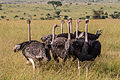
The African ostrich is the largest living ratite. A large member of this species can be nearly 2.8 metres (9 ft 2 in) tall, weigh as much as 156 kilograms (344 lb),[18] and can outrun a horse.

Of the living species, the Australian emu is next in height, reaching up to 1.9 metres (6 ft 3 in) tall and about 50 kilograms (110 lb).[18] Like the ostrich, it is a fast-running, powerful bird of the open plains and woodlands.

Also native to Australia and the islands to the north are the three species of cassowary. Shorter than an emu, but heavier and solidly built, cassowaries prefer thickly vegetated tropical forest. They can be dangerous when surprised or cornered because of their razor-sharp talons. In New Guinea, cassowary eggs are brought back to villages and the chicks raised for eating as a much-prized delicacy, despite (or perhaps because of) the risk they pose to life and limb. They reach up to 1.8 metres (5 ft 11 in) tall and weigh as much as 85 kilograms (187 lb)[18]

South America has two species of rhea, large fast-running birds of the Pampas. The larger American rhea grows to about 1.4 metres (4 ft 7 in) tall and usually weighs 15 to 40 kilograms (33–88 lb).[18]

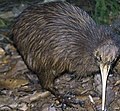
The smallest ratites are the five species of kiwi from New Zealand. Kiwi are chicken-sized, shy, and nocturnal. They nest in deep burrows and use a highly developed sense of smell to find small insects and grubs in the soil. Kiwi are notable for laying eggs that are very large in relation to their body size. A kiwi egg may equal 15 to 20 percent of the body mass of a female kiwi. The smallest species of kiwi is the little spotted kiwi, at 0.9 to 1.9 kilograms (2.0–4.2 lb) and 35 to 45 centimetres (14–18 in).[18]

Holocene extinct forms

[edit]

At least nine species of moa lived in New Zealand before the arrival of humans, ranging from turkey-sized to the giant moa Dinornis robustus with a height of 3.7 metres (12 ft 2 in) and weighing about 230 kilograms (510 lb).[18] They became extinct by A.D. 1400 due to hunting by Māori settlers, who arrived around A.D. 1280.

Aepyornis maximus, the "elephant bird" of Madagascar, was the heaviest bird ever known. Although shorter than the tallest moa, a large A. maximus could weigh over 400 kilograms (880 lb) and stand up to 3 metres (9 ft 10 in) tall.[18] Accompanying it were three other species of Aepyornis as well as three species of the smaller genus Mullerornis. All these species went into decline following the arrival of humans on Madagascar around 2,000 years ago, and were gone by the 17th or 18th century if not earlier.

Classification

[edit]
Comparison of a kiwi, ostrich, and Dinornis, each with its egg

There are two taxonomic approaches to ratite classification: one combines the groups as families in the order Struthioniformes, while the other supposes that the lineages evolved mostly independently and thus elevates the families to order rank (Rheiformes, Casuariformes etc.).

Evolution

[edit]

The longstanding story of ratite evolution was that they share a common flightless ancestor that lived in Gondwana, whose descendants were isolated from each other by continental drift, which carried them to their present locations. Supporting this idea, some studies based on morphology, immunology and DNA sequencing reported that ratites are monophyletic.[12][19] Cracraft's 1974 biogeographic vicariance hypothesis suggested that ancestral flightless paleognaths, the ancestors of ratites, were present and widespread in Gondwana during the Late Cretaceous. As the supercontinent fragmented due to plate tectonics, they were carried by plate movements to their current positions and evolved into the species present today.[20] The earliest known ratite fossils date to the Paleocene epoch about 56 million years ago (e.g., Diogenornis, a possible early relative of the rhea).[21] However, more primitive paleognaths are known from several million years earlier,[22] and the classification and membership of the Ratitae itself is uncertain. Some of the earliest ratites occur in Europe.[14]

Recent analyses of genetic variation between the ratites do not support this simple picture. The ratites may have diverged from one another too recently to share a common Gondwanan ancestor. Also, the Middle Eocene ratites such as Palaeotis and Remiornis from Central Europe may imply that the "out-of-Gondwana" hypothesis is oversimplified.

Molecular phylogenies of the ratites have generally placed ostriches in the basal position and among extant ratites, placed rheas in the second most basal position, with Australo-Pacific ratites splitting up last; they have also shown that both the latter groups are monophyletic.[23][9][10] Early mitochondrial genetic studies that failed to make ostriches basal[12][13] were apparently compromised by the combination of rapid early radiation of the group and long terminal branches.[10] A morphological analysis that created a basal New Zealand clade[24] has not been corroborated by molecular studies. A 2008 study of nuclear genes shows ostriches branching first, followed by rheas and tinamous, then kiwi splitting from emus and cassowaries.[23] In more recent studies, moas and tinamous were shown to be sister groups,[6][8][10] and elephant birds were shown to be most closely related to the New Zealand kiwi.[9] Additional support for the latter relationship was obtained from morphological analysis.[9]

The finding that tinamous nest within this group, originally based on twenty nuclear genes[23] and corroborated by a study using forty novel nuclear loci[25] makes 'ratites' polyphyletic rather than monophyletic, if we exclude the tinamous.[26][11] Since tinamous are weak fliers, this raises interesting questions about the evolution of flightlessness in this group. The branching of the tinamous within the ratite radiation suggests flightlessness evolved independently among ratites at least three times.[23][27][11] More recent evidence suggests this happened at least six times, or once in each major ratite lineage.[9][11] Re-evolution of flight in the tinamous would be an alternative explanation, but such a development is without precedent in avian history, while loss of flight is commonplace.[23][11]

Cladogram based on Mitchell et al. (2014)[9]
and Yonezawa et al. (2016)[16]
recent paleognaths

Struthionidae (ostriches, 2 spp.)

Rheidae (rheas, 2~3 spp.)

Dinornithiformes (moa)

Tinamidae (tinamous, 46 spp.)

Aepyornithidae (elephant birds)

Apterygidae (kiwi, 5 spp.)

Casuariidae (cassowaries, 3 spp.)

Dromaiidae (emus, 1 sp.)

By 2014, a mitochondrial DNA phylogeny including fossil members placed ostriches on the basal branch, followed by rheas, then a clade consisting of moas and tinamous, followed by the final two branches: a clade of emus plus cassowaries and one of elephant birds plus kiwis.[9]

Vicariant speciation based on the plate tectonic split-up of Gondwana followed by continental drift would predict that the deepest phylogenetic split would be between African and all other ratites, followed by a split between South American and Australo-Pacific ratites, roughly as observed. However, the elephant bird–kiwi relation appears to require dispersal across oceans by flight,[9] as apparently does the colonization of New Zealand by the moa and possibly the back-dispersal of tinamous to South America, if the latter occurred.[6] The phylogeny as a whole suggests not only multiple independent origins of flightlessness, but also of gigantism (at least five times).[9] Gigantism in birds tends to be insular; however, a ten-million-year-long window of opportunity for evolution of avian gigantism on continents may have existed following the extinction of the non-avian dinosaurs, in which ratites were able to fill vacant herbivorous niches before mammals attained large size.[9] Some authorities, though, have been skeptical of the new findings and conclusions.[28]

Kiwi and tinamous are the only palaeognath lineages not to evolve gigantism, perhaps because of competitive exclusion by giant ratites already present on New Zealand and South America when they arrived or arose.[9] The fact that New Zealand has been the only land mass to recently support two major lineages of flightless ratites may reflect the near total absence of native mammals, which allowed kiwi to occupy a mammal-like nocturnal niche.[29] However, various other landmasses such as South America and Europe have supported multiple lineages of flightless ratites that evolved independently, undermining this competitive exclusion hypothesis.[30]

Most recently, studies on genetic and morphological divergence and fossil distribution show that paleognaths as a whole probably had an origin in the northern hemisphere. Early Cenozoic northern hemisphere paleognaths such as Lithornis, Pseudocrypturus, Paracathartes and Palaeotis appear to be the most basal members of the clade.[16] The various ratite lineages were probably descended from flying ancestors that independently colonised South America and Africa from the north, probably initially in South America. From South America, they could have traveled overland to Australia via Antarctica,[31] (by the same route marsupials are thought to have used to reach Australia[32]) and then reached New Zealand and Madagascar via "sweepstakes" dispersals (rare low probability dispersal methods, such as long distance rafting) across the oceans. Gigantism would have evolved subsequent to trans-oceanic dispersals.[16]

Loss of flight

[edit]

Loss of flight allows birds to eliminate the costs of maintaining various flight-enabling adaptations like high pectoral muscle mass, hollow bones and a light build, et cetera.[33] The basal metabolic rate of flighted species is much higher than that of flightless terrestrial birds.[34] But energetic efficiency can only help explain the loss of flight when the benefits of flying are not critical to survival.

Research on flightless rails indicates the flightless condition evolved in the absence of predators.[35] This shows flight to be generally necessary for survival and dispersal in birds.[36] In apparent contradiction to this, many landmasses occupied by ratites are also inhabited by predatory mammals.[9] However, the K–Pg extinction event created a window of time with large predators absent that may have allowed the ancestors of extant flightless ratites to evolve flightlessness. They subsequently underwent selection for large size.[6] One hypothesis suggests that as predation pressure decreases on islands with low raptor species richness and no mammalian predators, the need for large, powerful flight muscles that make for a quick escape decreases. Moreover, raptor species tend to become generalist predators on islands with low species richness, as opposed to specializing in the predation of birds. An increase in leg size compensates for a reduction in wing length in insular birds that have not lost flight by providing a longer lever to increase force generated during the thrust that initiates takeoff.[37]

Description

[edit]

Ratites in general have many physical characteristics in common, although many are not shared by the family Tinamidae, or tinamous. First, the breast muscles are underdeveloped. They do not have keeled sterna. Their wishbones (furculae) are almost absent. They have simplified wing skeletons and musculature. Their legs are stronger and do not have air chambers, except the femurs. Their tail and flight feathers have retrogressed or have become decorative plumes. They have no feather vanes, which means they do not need to oil their feathers, hence they have no preen glands. They have no separation of pterylae (feathered areas) and apteria (non-feathered areas),[38] and finally, they have palaeognathous palates.[39]

Ostriches have the greatest dimorphism; rheas show some dichromatism during the breeding season. Emus, cassowaries, and kiwis show some dimorphism, predominantly in size.

While the ratites share a lot of similarities, they also have major differences. Ostriches have only two toes, with one being much larger than the other. Cassowaries have developed long inner toenails, used defensively. Ostriches and rheas have prominent wings; although they do not use them to fly, they do use them in courtship and predator distraction.[39]

Without exception, ratite chicks are capable of swimming and even diving.[citation needed]

On an allometric basis, paleognaths have generally smaller brains than neognaths. Kiwis are exceptions to this trend, and possess proportionally larger brains comparable to those of parrots and songbirds, though evidence for similar advanced cognitive skills is currently lacking.[40]

[edit]

Behavior and ecology

[edit]

Feeding and diet

[edit]

Ratite chicks tend to be more omnivorous or insectivorous; similarities in adults end with feeding, as they all vary in diet and length of digestive tract, which is indicative of diet. Ostriches, with the longest tracts at 14 m (46 ft), are primarily herbivorous. Rheas' tracts are next longest at 8–9 m (26–30 ft), and they also have caeca. They are also mainly herbivores, concentrating on broad-leafed plants. However, they will eat insects if the opportunity arises. Emus have tracts of 7 m (23 ft) length, and have a more omnivorous diet, including insects and other small animals. Cassowaries have next to the shortest tracts at 4 m (13 ft). Finally, kiwi have the shortest tracts and eat earthworms, insects, and other similar creatures.[39] Moas and elephant birds were the largest native herbivores in their faunas, far larger than contemporary herbivorous mammals in the latter's case.[14]

Some extinct ratites might have had odder lifestyles, such as the narrow-billed Diogenornis and Palaeotis, compared to the shorebird-like lithornithids, and could imply similar animalivorous diets.[41][42]

Reproduction

[edit]

Ratites are different from the flying birds in that they needed to adapt or evolve certain features to protect their young. First and foremost is the thickness of the shells of their eggs. Their young are hatched more developed than most and they can run or walk soon thereafter. Also, most ratites have communal nests, where they share the incubating duties with others. Ostriches, and great spotted kiwis, are the only ratites where the female incubates; they share the duties, with the males incubating at night. Cassowaries and emu are polyandrous, with males incubating eggs and rearing chicks with no obvious contribution from females. Ostriches and rheas are polygynous with each male courting several females. Male rheas are responsible for building nests and incubating while ostrich males incubate only at night. Kiwis stand out as the exception with extended monogamous reproductive strategies where either the male alone or both sexes incubate a single egg.[39] Unlike most birds, male ratites have a phallus that is inserted into the female's cloaca during copulation.[43]

Ratites and humans

[edit]

Ratites and humans have had a long relationship starting with the use of the egg for water containers, jewelry, or other art medium. Male ostrich feathers were popular for hats during the 18th century, which led to hunting and sharp declines in populations. Ostrich farming grew out of this need, and humans harvested feathers, hides, eggs, and meat from the ostrich. Emu farming also became popular for similar reasons and for their emu oil. Rhea feathers are popular for dusters, and eggs and meat are used for chicken and pet feed in South America. Ratite hides are popular for leather products like shoes.[39]

United States regulation

[edit]

The USDA's Food Safety and Inspection Service (FSIS) began a voluntary, fee-for-service ratite inspection program in 1995 to help the fledgling industry improve the marketability of the meat. A provision in the FY2001 USDA appropriations act (P.L. 106–387) amended the Poultry Products Inspection Act to make federal inspection of ratite meat mandatory as of April 2001 (21 U.S.C. 451 et seq.).[44]

See also

[edit]

References

[edit]
[edit]
Revisions and contributorsEdit on WikipediaRead on Wikipedia
from Grokipedia
Ratites are a paraphyletic group of flightless birds within the superorder Palaeognathae, distinguished by their flat, keelless sternum that lacks the keel-like structure typical of flying birds, rendering them incapable of powered flight. This group includes the extant species of ostriches (Struthio spp.) native to Africa and parts of Asia, emus (Dromaius novaehollandiae) from Australia, rheas (Rhea spp.) of South America, cassowaries (Casuarius spp.) from New Guinea and northern Australia, and kiwis (Apteryx spp.) endemic to New Zealand. Extinct ratites, such as the moas of New Zealand and elephant birds of Madagascar, further highlight the group's historical diversity. Physically, ratites exhibit large body sizes—ranging from the up to 2.8-meter-tall , the world's largest living bird, to the smaller kiwi at about 0.5 meters—with reduced wings often hidden by feathers and legs adapted for running or locomotion. Their feathers are typically loose and fluffy rather than structured for flight, and many species possess powerful legs capable of high speeds, such as the ostrich reaching up to 70 km/h. in ratites often involves males incubating eggs, which are notably large—ostrich eggs can weigh up to 1.5 kg—and laid in simple nests on the ground. The evolutionary history of ratites traces back to the , approximately 80–100 million years ago, when their flying ancestors diverged from other palaeognaths, likely in the , before dispersing to southern landmasses. Flightlessness evolved independently multiple times (at least six) within the group, driven by isolation on southern landmasses following Gondwana's breakup and dispersal events, rather than a single vicariant event. This explains similarities in morphology, such as reduced wings and strong legs, despite their non-monophyletic origins in terms of flight loss. Today, ratites are culturally and economically significant, with species like ostriches farmed for , feathers, and , though many face conservation challenges due to habitat loss and introduced predators.

Taxonomy and Classification

Living Species

The living ratites comprise five extant families within four orders: (ostriches), (rheas), (cassowaries and emus), and Apterygiformes (kiwis). These flightless birds are distributed across , , , , and , adapted to terrestrial lifestyles in diverse habitats from savannas to rainforests. All species share reduced wings, a flat lacking a keel, and powerful legs for running, though they vary greatly in size, from the massive to the diminutive kiwi. Current conservation assessments, primarily through the managed by for birds, indicate that while some populations are stable or abundant, others face threats from habitat loss, , and predation, leading to varying threat statuses.
Family/OrderSpeciesDistributionKey TraitsIUCN Status (2025)Population Estimate (mature individuals)
Struthionidae (Struthioniformes)Common Ostrich (Struthio camelus)Sub-Saharan AfricaLargest bird; long neck and legs; males black with white wings, females dullerLeast Concern300,000–900,000 (decreasing)
Struthionidae (Struthioniformes)Somali Ostrich (Struthio molybdophanes)Horn of Africa (Ethiopia, Somalia)Similar to common ostrich but with blueish neck skin; smaller sizeVulnerableUnknown (rapidly declining due to hunting and habitat loss)
Rheidae (Rheiformes)Greater Rhea (Rhea americana)Open grasslands of eastern and southern South America (Brazil to Argentina)Three-toed feet; brownish plumage; males up to 1.5 m tallNear ThreatenedUnknown (declining from habitat fragmentation and hunting)
Rheidae (Rheiformes)Lesser Rhea (Rhea pennata, including Puna and Darwin's subspecies)Andean and Patagonian regions of South America (Peru to Argentina/Chile)Smaller than greater rhea; pale gray-brown feathers; adapted to high altitudes in some subspeciesVulnerable1,000–2,499 (declining)
Casuariidae (Casuariiformes)Southern Cassowary (Casuarius casuarius)Rainforests of New Guinea and northeastern AustraliaLarge, with casque on head, vivid blue neck, and powerful legs with dagger-like clawsLeast Concern (Vulnerable in Australia)20,000–50,000 (decreasing in parts of range)
Casuariidae (Casuariiformes)Northern Cassowary (Casuarius unappendiculatus)Lowland rainforests of New Guinea and nearby islandsSimilar to southern but with brighter red neck and larger casqueLeast ConcernUnknown (stable but locally threatened)
Casuariidae (Casuariiformes)Dwarf Cassowary (Casuarius bennetti)Hill and montane rainforests of New GuineaSmallest cassowary; reduced casque; dark plumage with red on neckLeast ConcernUnknown (stable)
Dromaiidae (Casuariiformes)Emu (Dromaius novaehollandiae)Arid and semi-arid regions across mainland AustraliaTall (up to 2 m); shaggy brown feathers; double-shafted plumes for insulationLeast Concern625,000–725,000 (stable)
Apterygidae (Apterygiformes)North Island Brown Kiwi (Apteryx mantelli)Forests of North Island, New ZealandSmall (1–3 kg); nocturnal; long, sensitive bill for probing soilVulnerable~24,550 (declining at 2–5% annually in unmanaged areas)
Apterygidae (Apterygiformes)Southern Brown Kiwi (Apteryx australis)Forests of South Island, Stewart Island, and offshore islands, New ZealandSimilar to North Island brown but larger; streaked plumageVulnerable~25,000 (stable with conservation)
Apterygidae (Apterygiformes)Great Spotted Kiwi (Apteryx haastii)Montane forests of South Island, New ZealandLargest kiwi (up to 4.5 kg); spotted feathers; powerful legsVulnerable~20,000 (decreasing)
Apterygidae (Apterygiformes)Little Spotted Kiwi (Apteryx owenii)Kapiti Island and other predator-free reserves, New Zealand (recent mainland rediscovery in 2025)Smallest kiwi (~1 kg); uniform gray-brown feathersNear Threatened~1,400 (increasing with translocation efforts)
Apterygidae (Apterygiformes)Okarito Kiwi (Apteryx rowi)Okarito forest and nearby areas, South Island, New ZealandMedium-sized; chocolate-brown feathers; restricted rangeEndangered~500 (increasing due to intensive protection)
Ostriches (Struthionidae) are the largest living birds, standing up to 2.7 m tall and weighing over 150 kg, with elongated necks enabling them to spot predators from afar. The roams African savannas in nomadic groups, while the inhabits drier, more fragmented habitats in the , distinguished by its shorter eyelashes and brighter . Both rely on speed, reaching 70 km/h, for defense rather than flight. Rheas (Rheidae), native to South America's and steppes, resemble smaller ostriches at 1–1.5 m tall, with three toes per foot for agile movement across open terrain. The , the most widespread, features a robust build and communal nesting where males incubate eggs. The lesser rhea, adapted to harsher Andean environments, shows variation in like the high-altitude Puna rhea with paler feathers and in Patagonia, which has denser for cold tolerance. Cassowaries () are dwellers known for their striking casques—keratinous helmets possibly aiding in fruit detection or display—and aggressive defense with clawed feet capable of inflicting serious injury. The , the largest at 1.8 m and 75 kg, disperses large seeds vital to forest ecosystems in and , featuring a bright blue and red neck. The shares similar traits but with a more vivid coloration, while the , under 1 m tall, navigates dense undergrowth with agility. The emu (Dromaiidae), Australia's iconic ratite, stands 1.5–1.9 m tall with soft, double-quilled feathers providing insulation against extreme temperatures. It traverses vast arid landscapes in family groups, using its keen eyesight and speed up to 50 km/h to evade threats, and is notable for males solely handling incubation and chick-rearing. Kiwis (Apterygidae) are the smallest and most primitive living ratites, weighing 1–4.5 kg and measuring 25–45 cm, with reduced wings hidden under bristly feathers and a long, flexible bill equipped with sensory follicles for nocturnal . Endemic to New Zealand's forests, they exhibit rat-like behaviors, including burrowing nests. The North and Southern brown kiwis are the most abundant, with mottled brown for , while the great spotted features white spots on its back. The little spotted is uniform gray and highly sensitive to sounds, and the Okarito, with its uniform color, represents a recent evolutionary split adapted to edges. Total kiwi populations hover around 68,000, bolstered by predator control programs.

Extinct Species

The ratites include several lineages that became extinct during the epoch, primarily due to human activities following the arrival of people in their isolated habitats. The most prominent of these are the moas of , belonging to the order Dinornithiformes, which encompassed nine species across six genera. These large, flightless herbivores dominated the islands' ecosystems until Polynesian settlers arrived around 1300 CE, leading to their rapid extinction by approximately 1500 CE through intensive hunting for meat and feathers, as well as the introduction of predators such as dogs and habitat disruption from fire-based land clearance. Among the moas, the ( robustus) exemplifies their impressive size, with females standing up to 3.6 meters tall, while weighing around 200 kilograms on average. Smaller species, like those in the Pachyornis, were turkey-sized but shared similar vulnerabilities to exploitation. Archaeological shows that even a low-density , estimated at fewer than 2,000 individuals initially, was sufficient to drive the moas to within 100–200 years, highlighting the birds' low reproductive rates and lack of prior . In , the of the order Aepyornithiformes represent another major ratite radiation, with at least three recognized species in recent taxonomic revisions, including the colossal Vorombe titan. These giants persisted until the late , becoming extinct by the 17th century as a result of human hunting, widespread collection for , and associated with agricultural expansion by Malagasy settlers arriving around 1000 CE. Their eggs, the largest known from any , measured up to 34 centimeters in length and held about 7–10 liters of volume, making them prime targets that accelerated population collapse. Vorombe titan stood at least 3 meters tall and averaged 650 kilograms in body mass, dwarfing modern ratites and underscoring the ecological impact of these megaherbivores on Madagascar's forests before human intervention. Smaller genera like Mullerornis coexisted with Vorombe, but shared the same fate tied to anthropogenic pressures rather than climatic factors alone. Prior to the Holocene, the ratite fossil record reveals extinct stem-group relatives, particularly early ostrich lineages (Struthionidae) that ranged beyond modern distributions. For instance, the Asian ostrich (Struthio asiaticus), an early Holocene but pre-modern extinction form, inhabited regions from the Middle East to China until around 5000–3000 BCE, succumbing to overhunting and habitat changes by early human societies. Deeper pre-Holocene fossils, such as Calciavis grandei from the Eocene of Wyoming (approximately 50 million years ago), represent volant or semi-flightless ancestors close to the ostrich line within Palaeognathae, indicating an ancient Northern Hemisphere presence for ratite precursors before continental drift isolated southern populations.

Phylogenetic Relationships

Ratites have traditionally been classified as a monophyletic within the infraclass , encompassing flightless birds such as ostriches (), rheas (), cassowaries and emus (), kiwis (Apterygiformes), and extinct groups like moas (Dinornithiformes) and (Aepyornithiformes). This classification was based primarily on shared morphological traits, including the absence of a on the and reduced wings, which were interpreted as synapomorphies indicating a single evolutionary origin of flightlessness. Early molecular studies, particularly those relying on , often reinforced this view by supporting ratite and a close relationship to the flighted tinamous (Tinamiformes) as the to all ratites. However, phylogenomic analyses from the 2010s onward have revealed that ratites are , with flightlessness evolving independently multiple times within . A seminal 2008 study using sequences from 20 nuclear protein-coding genes provided strong evidence for ratite polyphyly, placing kiwis as the to tinamous rather than to other ratites, and suggesting at least three independent losses of flight: in ostriches, in rheas, and in the common ancestor of emus, cassowaries, kiwis, and tinamous. This finding was corroborated by a 2013 analysis of 40 novel nuclear loci, which independently confirmed nonmonophyly and highlighted convergence in morphological traits like the keel-less . Subsequent whole-genome studies in the late further resolved the phylogeny, showing ostriches as the basal lineage diverging first, followed by rheas, with a comprising tinamous + kiwis + moas sister to emus + cassowaries + ; these analyses used thousands of nuclear genes and retroelement insertions as markers, demonstrating shared derived characters between tinamous and non-ostrich ratites that contradict traditional . Key molecular evidence includes both mitochondrial and nuclear genomes, though nuclear data have been pivotal in overturning earlier mitochondrial-based support for . For instance, analyses of mitochondrial genomes initially estimated ratite crown divergences around 50–60 million years ago, but integrated nuclear-mitochondrial datasets and relaxed methods have refined these timelines. The split between ostriches and emus (representing and ) is estimated at approximately 40 million years ago, based on divergence in nuclear genes calibrated against fossil constraints, while the overall crown radiation occurred around 65–70 million years ago post-Cretaceous-Paleogene boundary. Tinamous are excluded from ratites due to their flight capability and phylogenetic position nested within the polyphyletic ratite lineages, emphasizing that flightlessness is not a homologous trait defining the group. Recent updates, including multi-species genomic comparisons, continue to affirm this nested structure within without altering the core polyphyletic conclusion.

Evolutionary History

Origins and Early Diversification

Ratites, a group of flightless birds within the , originated from volant ancestors near the Cretaceous-Paleogene (K-Pg) approximately 66 million years ago, during the early period. Molecular phylogenetic analyses indicate that the crown group of palaeognaths, including the precursors to ratites, likely emerged around 62-68 million years ago near the K-Pg boundary, with the diversification into flightless forms occurring in the within the fragmenting supercontinent of . This timing aligns with the recovery of avian lineages after the mass extinction, where early palaeognaths adapted to new ecological niches in southern landmasses. The earliest known ratite fossils date to the late , providing direct evidence of their initial radiation. Diogenornis fragilis from , dated to approximately 59-56 million years ago, represents one of the oldest confirmed ratite specimens and is interpreted as an early member of the rhea lineage, suggesting that flightlessness had already evolved in South American palaeognaths by this time. Similarly, Remiornis heberti from , also late Paleocene in age, indicates a broader early distribution of ratite-like forms across Laurasian and Gondwanan regions, challenging purely southern origins but supporting a rapid post-extinction spread. These fossils highlight the transition from flying ancestors to terrestrial forms during the Paleocene-Eocene thermal maximum. Diversification of ratite lineages was profoundly influenced by vicariance events tied to , with major splits occurring as fragmented further in the Eocene. The lineage () likely diverged and established in and by the early Eocene, around 50-55 million years ago, coinciding with the separation of from other southern continents. In , the rhea lineage (Rheidae) radiated independently following the isolation of the continent from around 35-40 million years ago, while casuariid ancestors (, including emus and cassowaries) diversified in as drifted northward from between 30-50 million years ago. These biogeographic patterns reflect a combination of vicariance and limited dispersal among early flightless forms. Genetic divergence estimates, derived from Bayesian relaxed models applied to nuclear and mitochondrial sequences, place the root of the ratite at approximately 56-63 million years ago, aligning with post-K-Pg . Subsequent divergences among lineages in the Eocene (around 50-60 million years ago) underscore the role of both ancient vicariance and post-speciation adaptations in shaping modern distributions. Recent 2025 analyses confirm these post-K-Pg timings, supporting dispersal alongside vicariance in palaeognath evolution rather than strict Gondwanan breakup-driven splits. The loss of flight, a key trait, occurred independently multiple times after these early splits.

Loss of Flight

The loss of flight in ratites involved significant anatomical modifications that rendered aerial locomotion impossible, primarily through the reduction of structures and alterations to the thoracic . Wings became vestigial, with reduced size and minimal musculature, serving functions such as balance or display rather than propulsion; for instance, wings are small flaps incapable of supporting flight. The flattened into a raft-like lacking a prominent , eliminating the primary attachment site for powerful pectoral flight muscles like the supracoracoideus and pectoralis. Additionally, pelvic bones fused more extensively, enhancing stability for by distributing weight over stronger hindlimbs. These changes are evident in comparative studies of ratite , where the absence of a keeled contrasts sharply with flying palaeognaths like tinamous. Evolutionary hypotheses for these adaptations emphasize selective pressures favoring ground-based lifestyles, often in environments with reduced predation or abundant resources. One prominent explanation involves and escape from predators via enhanced running speed, as flightless ratites like ostriches achieve bursts up to 70 km/h on open plains, redirecting metabolic resources from wing maintenance to leg power. In island or isolated habitats, such as for kiwis, the absence of mammalian predators allowed energy savings by forgoing flight, promoting larger body sizes without the constraints of aerial efficiency. Developmental studies support heterochronic shifts: flightlessness in ostriches arose via peramorphosis, an extension of growth leading to oversized bodies and reduced relative wing size, while in emus and cassowaries, paedomorphosis retained juvenile-like proportions with proportionally smaller wings throughout . Comparative analyses of wing bone between ostriches and tinamous further indicate these shifts conserved ancestral traits while adapting to terrestrial niches. Phylogenomic evidence reveals that flight loss occurred independently multiple times within ratite lineages, rather than a single ancestral event, following the divergence of palaeognaths around 62-68 million years ago. For example, the lineage likely lost flight after separating from other ratites around 40-50 million years ago, with full flightlessness established by the late around 25-30 million years ago, coinciding with aridification in favoring habits. In contrast, kiwis achieved flightlessness more recently, around 50 million years ago, after their ancestors dispersed to predator-free . Transitional fossils like Lithornis from the (about 60 million years ago) demonstrate early palaeognaths were volant, with keeled and robust wing elements supporting flapping flight, underscoring the secondary nature of ratite flightlessness. These independent events, up to five or more across lineages, are corroborated by molecular phylogenies showing flying tinamous nested within flightless groups. In comparison to other flightless birds like , ratite adaptations lack aquatic specialization; retain a keeled and flipper-like wings for , evolving flightlessness convergently for marine , whereas ratites show no such modifications and instead emphasize terrestrial graviportality without compensatory limb .

Fossil Record

The fossil record of ratites is sparse prior to the , with the earliest definitive evidence emerging in the early Eocene from North American deposits. The Green River Formation in , dating to approximately 50 million years ago (mya), has yielded exceptionally preserved skeletons of lithornithids, a group of early stem-palaeognathous birds closely related to the ratite lineage. These fossils, including partial skeletons with feathers and skeletal elements, provide critical insights into the morphology of early flying palaeognaths that may represent precursors to flightless ratites, featuring long legs, reduced wings, and a suited for probing. In , contemporaneous large flightless birds like Gastornis parisiensis from early Eocene sites (around 40 mya) near , , reached heights of up to 2 meters, though recent analyses place gastornithids outside the ratite clade as stem-galloanserines rather than direct ancestors. These fossils, including femora and tibiae, highlight the diversity of giant terrestrial avians during ratite diversification but are not true ratites. Meanwhile, the St Bathans Fauna in New Zealand's region, from the early (19–16 mya), contains the oldest known ratite remains in the , including eggshells and limb bones attributed to early (Dinornithiformes). These specimens indicate that ratite lineages, such as moa ancestors, had already achieved terrestrial adaptations in isolated Gondwanan fragments by this time. Later deposits reveal more specialized ratites, particularly in and . The Alcoota Local Fauna in Australia's , from the (about 8 mya), preserves Dromornis stirtoni, a dromornithid ratite standing over 3 meters tall and weighing up to 500 kg, known from nearly complete skeletons including massive femora and crania that suggest a herbivorous diet with powerful grinding capabilities. In , subfossil sites such as Ampasambazimba and Christmas River yield remains of (Aepyornithidae), giant ratites up to 3 meters tall and over 500 kg, with bones and eggshells dated to the late (up to about 1,000 years ago). These fossils, including humeri and tibiotarsi, document the final phases of ratite diversity before human-induced extinction. Significant gaps characterize the ratite fossil record, particularly in the Era, where no unambiguous ratite or palaeognath remains have been found despite estimates suggesting a crown-group origin around 62–68 mya. This paucity is attributed to the end-Cretaceous and limited terrestrial preservation in Gondwanan sediments, forcing reliance on molecular data calibrated against fossils for pre-Eocene timelines. Recent discoveries in the have enriched the n record of rheas (Rheidae), the only surviving ratites. A comprehensive review documented new material from Patagonian sites like the Sarmiento and Santa Cruz Formations (, 20–15 mya), including undescribed Rhea sp. postcranial elements, refining the timeline of rhea diversification in southern . These finds, from localities in Chubut and Río Negro provinces, contribute to understanding vicariant evolution post-Gondwana breakup.

Physical Description

Morphology and Anatomy

Ratites are characterized by a suite of skeletal adaptations suited to their flightless, terrestrial . Their forelimbs are markedly reduced, forming small, vestigial wings with minimal musculature that accounts for only about 0.89% of total body mass in the , lacking the robust flight apparatus of volant birds. The is flat and unkeeled, without the prominent carina for anchoring powerful flight muscles, and the clavicles are absent in most species except emus, where they are present but reduced; the triosseal canal, a feature linking the and for flight efficiency, is also lacking. In contrast, the hindlimbs are robust and elongated, comprising the primary locomotor apparatus, with a pelvic reinforced by fused bones for stability during rapid movement. The feet are typically tridactyl, featuring three forward-facing s in emus, cassowaries, and rheas, equipped with nails for traction, while ostriches exhibit a didactyl configuration with one prominent weight-bearing toe and a smaller vestigial one, optimizing speed and shock absorption. Internally, ratites share the avian four-chambered heart, which separates oxygenated and deoxygenated blood for high metabolic demands during activity, consistent with their active terrestrial habits. The digestive system is adapted for a primarily herbivorous diet through a simple, non-ruminant lacking a true , with species-specific variations in glandular and muscular compartments; for instance, ostriches possess a small proventriculus with a glandular patch and a thick-walled ventriculus lined with koilin for mechanical breakdown of fibrous using ingested grit, while emus feature a diffusely glandular proventriculus and thin-walled ventriculus supported by in paired ceca. The respiratory apparatus includes a system of connected to rigid lungs, providing efficient unidirectional airflow; these sacs, while similar in configuration to those of flying birds, contribute to overall by reducing body density and facilitating oxygen exchange during sustained running, with thoracic and abdominal sacs extending into pneumatic bones for lightweight support. Sensory adaptations in ratites reflect their ground-dwelling , with diminished emphasis on aerial cues but enhancements for terrestrial detection. Flight-related visual processing is underdeveloped across the group, but kiwis display relatively large eyes (axial length approximately 7 mm) with structural traits like a rod-dominated suited to low-light conditions in their nocturnal habitat, though the small overall eye size limits acuity and binocular overlap. Kiwis compensate with superior olfaction, possessing the largest olfactory bulbs relative to among over 50 bird species studied, correlated with an expanded repertoire of odorant receptor genes for detecting prey in dark forest floors. Emus exhibit acute low-frequency hearing, enabled by densely packed, tall hair cells (up to 40 μm) in the basilar papilla and robust afferent innervation, allowing sensitivity to ground vibrations and distant sounds. Sexual dimorphism in ratites varies by species but often involves size differences tied to reproductive roles. In ostriches, males are larger and heavier than females, with body masses up to 156 kg compared to females' 100 kg, an presumed to support territorial defense and maintenance during breeding. This male-biased dimorphism contrasts with the female-larger pattern in emus, highlighting diverse evolutionary pressures on .

Size, Variation, and Adaptations

Ratites exhibit remarkable variation in body size among living species, with the common ostrich (Struthio camelus) representing the largest at up to 2.75 meters in height and 156 kilograms in weight, while the little spotted kiwi (Apteryx owenii) is the smallest extant member, typically weighing around 1 kilogram. This size disparity underscores their diverse evolutionary paths across continents, from the towering ostriches of African savannas to the diminutive, nocturnal kiwis of New Zealand forests. For context, extinct ratites like the South Island giant moa (Dinornis robustus) achieved even greater proportions, reaching up to 3.6 meters tall and 250 kilograms, highlighting the group's historical range in body mass. Intraspecific variation further diversifies ratite morphology, as seen in ostrich adapted to regional environments; the (S. c. camelus) is the largest, measuring 2.74 meters and weighing up to 154 kilograms, whereas the more arid-adapted (S. c. massaicus) from tends to be slightly smaller and lighter to suit its habitat. and skin features also vary significantly for insulation, display, and : emus (Dromaius novaehollandiae) possess loose, shaggy feathers that provide effective insulation against Australia's variable climates, while cassowaries (Casuarius spp.) feature vibrant blue and red wattled necks with bare, colorful skin used in visual displays during . , in contrast, have bare skin patches on their necks and thighs that facilitate heat dissipation in hot, arid conditions by allowing efficient . Specialized adaptations enhance survival in their respective niches, including elongated legs in rheas (Rhea spp.) that enable sprinting speeds of up to 60 kilometers per hour across American pampas to evade predators. Cassowaries possess exceptionally powerful legs, delivering kicks strong enough to break bones or fatally injure threats, aided by their dagger-like inner toes. Kiwis, adapted for nocturnal , have bills equipped with sensory pits at the tip—known as bill-tip organs—that detect vibrations and pressure changes from buried , allowing precise probing into soil without visual reliance. These traits collectively illustrate how ratites have fine-tuned their forms to exploit varied ecological pressures, from open-ground mobility to subterranean hunting. This gallery presents curated photographs of extant ratite species, illustrating their morphological diversity across major lineages. Each image includes a caption with the species name, key physical identifiers such as scale and where evident, and habitat context to aid identification.

Behavior

Locomotion and Daily Activities

Ratites are primarily terrestrial birds adapted for bipedal locomotion, relying on powerful hindlimbs for rapid movement across open landscapes. The , the largest ratite, exemplifies this with its ability to sustain speeds of 48-59 km/h over extended periods and reach sprint speeds up to 69 km/h, using its wings as rudders for balance and direction during runs. Other ratites, such as emus and rheas, also employ bipedal running for evasion and foraging, with emus capable of sprinting at 48 km/h over long distances. In addition to running, many ratites exhibit versatility in other forms of locomotion suited to their environments. All ratite species can , with emus noted as proficient swimmers that cross rivers and bodies of water when necessary, using their buoyant bodies and strong legs to paddle effectively. Cassowaries similarly demonstrate strong swimming abilities, navigating wide rivers and coastal waters in their habitats. Kiwis, adapted to forested terrains, use their strong legs and sharp claws to climb over obstacles, logs, and low vegetation, facilitating navigation through dense undergrowth. Daily activity patterns among ratites vary by species and habitat, reflecting adaptations to environmental pressures. Ostriches are diurnal, most active in the early morning and late evening for and movement, which aligns with cooler temperatures and predator avoidance in arid savannas. In contrast, kiwis are predominantly nocturnal, emerging at dusk to forage and minimize encounters with diurnal predators in New Zealand's forests. Rheas exhibit seasonal nomadic movements across South American grasslands, forming larger groups during non-breeding periods to cover expansive ranges in search of resources. Ratites maintain energy efficiency for their endurance-based lifestyles through specialized , including relatively low basal metabolic rates compared to flying birds, which support prolonged terrestrial activity without flight. is a common maintenance behavior, particularly in , where individuals roll in dry to absorb excess oils and remove parasites from feathers, ensuring integrity during active daily routines. Movement often occurs in flocks, with traveling in groups of up to 12 (occasionally larger herds of 100) led by dominant individuals, and rheas forming flocks of 20-30 for coordinated travel across open terrains.

Social Structure and Communication

Ratites exhibit diverse social structures that vary by species, reflecting adaptations to their environments and reproductive strategies. Kiwis (genus Apteryx) are predominantly solitary, maintaining individual territories and forming monogamous pairs only during the breeding season, with limited social interactions outside of parental care. In contrast, ostriches (Struthio camelus) form polygynous harems where a dominant male defends a territory and mates with multiple females, typically 3 to 5, in groups that can include up to 50 individuals during non-breeding periods. Emus (Dromaius novaehollandiae) display communal behaviors in loose flocks where food is abundant, though they are generally solitary outside breeding, with young remaining with the father for several months post-hatching. Greater rheas (Rhea americana) are social year-round, forming flocks of 10 to 100 birds, but males become solitary during breeding to establish harems of 2 to 12 females. Cassowaries (Casuarius spp.) are largely solitary and territorial, with adults avoiding conspecifics except during brief mating encounters. Communication among ratites relies heavily on non-vocal signals, supplemented by acoustic cues where applicable. Cassowaries employ visual displays, such as head-bobbing and stretching postures, to signal territorial boundaries or during agonistic interactions, often involving the prominent casque for emphasis. Emus produce low-frequency booming calls via an inflatable throat pouch, which can carry up to 2 kilometers and serve to attract mates or maintain contact in flocks. In greater rheas, males perform and agonistic displays featuring feather ruffling, wing spreading, and running charges to intimidate rivals or court females, enhancing visual signaling in open habitats. Ostriches use a combination of visual (-flapping, tail-shaking) and acoustic signals (booming, hisses) for intra-group coordination and defense. Kiwis communicate primarily through soft whistles and bill-clacking during territorial disputes or pair bonding, though interactions are infrequent due to their solitary nature. Territoriality is a key aspect of ratite social organization, particularly among males, who actively defend ranges to secure resources and mates. males patrol territories spanning 2 to 15 square kilometers during the breeding season, using aggressive displays and kicks to repel intruders. males maintain exclusive territories of about 12 square kilometers, employing vocal rumbles and physical charges with powerful legs for defense. males establish and guard nesting sites within flock ranges, resorting to kicking and wing strikes in conflicts. Emus show less rigid territoriality but defend temporary ranges around nests with grunts and charges. Kiwis defend smaller, fixed territories year-round through vocalizations and chases, minimizing overlap with neighbors. Social dynamics in ratites often shift seasonally, with increased grouping during breeding to facilitate and resource sharing. In and rheas, non-breeding flocks expand for foraging efficiency, contracting into harems during the reproductive period. Emus form larger mobs in winter breeding months, dispersing afterward into solitary or small family units. Cassowaries and kiwis maintain solitary habits throughout the year, with only transient pairings during peak breeding. These patterns support survival in varied habitats, from open savannas to dense forests.

Reproduction and Parental Care

Ratites exhibit diverse mating systems, often characterized by or , with a striking prevalence of male-only that contrasts with the female-biased investment typical in many avian taxa. In (Struthio camelus), a polygynous system prevails where a dominant male establishes a and mates with multiple females, who lay eggs in a communal nest scraped into the ground; clutches can reach up to 60 eggs, though the major female's eggs are prioritized during incubation. Emus ( novaehollandiae) display , with females forming temporary pairs with males, laying 5 to 20 eggs per in multiple nests before departing to seek additional mates, leaving the male to handle all subsequent care. Similarly, rheas (Rhea spp.) follow a polygynous pattern akin to ostriches, where males court several females that contribute to a single communal nest holding 50 to 80 eggs, after which the male assumes sole responsibility for incubation and chick-rearing. (Casuarius spp.) also exhibit , with females mating with multiple males and laying 3 to 8 eggs per in separate nests, providing no further involvement once eggs are deposited. In contrast, kiwis (Apteryx spp.) maintain monogamous pair bonds, with females typically producing a single enormous egg per season—representing about 15% to 20% of her body weight—laid in a nest. Egg characteristics among ratites are notably uniform in their large size and adaptations for ground nesting, featuring thick, porous shells that allow in often hot or humid environments. eggs weigh approximately 1.4 to 1.5 kg, measuring up to 15 cm in length, with a leathery texture suited to communal piling. eggs are dark green and average 0.5 to 0.6 kg, while rhea eggs are yellowish and around 0.5 kg each. eggs are pale green, weighing about 0.5 kg, and kiwi eggs are the most disproportionate relative to body size, at 0.4 to 0.45 kg for a weighing just 2 to 3 kg. These eggs are laid at intervals of 1 to 2 days until the clutch is complete, with females in polygamous systems often contributing to multiple nests to maximize reproductive output. Incubation is predominantly a male duty across ratites, lasting 42 to 56 days depending on the species, during which the male rarely leaves the nest and loses significant body weight from fasting. In es and rheas, the dominant male and major female share initial incubation shifts, but the male takes over fully at night or during threats, turning eggs regularly to ensure even heating. males incubate solo for about 56 days, using their body to cover the clutch against predators and weather, while males sit tight for 47 to 50 days on a leaf-litter mound nest. Kiwi incubation is extended at 70 to 90 days, primarily by the male but with female assistance in some species like the great spotted kiwi (Apteryx haastii), involving periodic rotations to maintain humidity in the . yields precocial young in all ratites—feathered and mobile within hours—enabling immediate ; kiwi chicks, however, remain in the burrow for several days to weeks on reserves before emerging. Parental investment post-hatching varies but emphasizes male protection and guidance, enhancing chick survival in predator-rich habitats. and rhea males lead broods of up to 40 to 50 chicks for several months, teaching foraging while defending against threats with aggressive displays. Emu fathers nurture their young for up to 18 months, forming tight family units that forage together and migrate seasonally. males provide intensive care for 9 to 12 months, aggressively guarding chicks and even adopting orphans, though post-fledging independence follows. Kiwis represent the pinnacle of investment, with both parents sharing territory defense for 2 to 6 months—or up to years in some species—while the chick learns nocturnal habits, reflecting their low reproductive rate of one per year. This male-centric care system, linked to elevated testosterone and levels during breeding, underscores the evolutionary adaptations of ratites to their flightless, ground-dwelling lifestyles.

Ecology

Feeding and Diet

Ratites exhibit diverse dietary habits that reflect their ecological niches, ranging from omnivory to more specialized herbivory or insectivory. Ostriches (Struthio camelus) are primarily omnivorous, consuming a mix of plant matter such as grasses, leaves, flowers, seeds, and fruits, supplemented by , , and small vertebrates when available. In contrast, greater rheas (Rhea americana) are largely herbivorous, grazing on broad-leaved plants, grasses, seeds, roots, and fruits, with occasional comprising a minor portion of their intake. Kiwis (Apteryx spp.) lean toward insectivory, probing soil and leaf litter for earthworms, beetles, grubs, and other , while also incorporating berries, seeds, and leaves into their diet. Foraging strategies among ratites are adapted to ground-level resource acquisition, often involving pecking or probing without the aid of flight. Emus ( novaehollandiae) employ ground pecking to gather vegetation, insects, and seeds, and they intentionally swallow small stones—known as gastroliths—to aid mechanical breakdown in the , a behavior observed across multiple ratite species. Kiwis forage nocturnally by inserting their long bill into soil or decaying wood, using sensitive bristles around the bill base—functioning like vibrissae—to detect prey vibrations and guide precise probing. Cassowaries (Casuarius spp.) focus on fallen fruits and seeds, occasionally supplementing with fungi, snails, or small vertebrates through opportunistic ground searching. The digestive systems of ratites feature adaptations for processing tough, fibrous foods without teeth, including a crop-like storage area in some species for temporary food holding before gastric processing. A prominent gizzard, reinforced by ingested gastroliths, grinds ingested material; in ostriches, these stones can accumulate up to approximately 1 kg in mass to facilitate digestion of high-fiber vegetation. Certain ratites, such as emus, show relatively low tolerance for fiber, digesting only 20-45% of neutral detergent fiber in their diets, which influences preferences for more nutrient-dense foods. Seasonal variations in diet allow ratites to adapt to resource availability, particularly in arid or variable environments. For instance, emus shift toward fruits, berries, and succulent vegetation during dry seasons when green plants and decline, maintaining nutritional balance through these higher-quality alternatives.

Habitat and Distribution

Ratites exhibit a distinctive Gondwanan distribution pattern across the , with extant species occupying disjointed ranges on separate continents that reflect their ancient evolutionary history. Ostriches (Struthio camelus) are native to , where the inhabits a broad swath from east to and south to , while the (S. molybdophanes) is restricted to the , including parts of , , and . Rheas are confined to ; the (Rhea americana) ranges across eastern and southern regions including northeastern , eastern , , , and northern , whereas the lesser rhea (Rhea pennata) occupies more western and southern areas from southern through western , northern , northern , and . In , emus ( novaehollandiae) are widespread across , excluding dense tropical rainforests and extreme arid zones, while cassowaries (Casuarius spp.) are found in northeastern Australia () and (all three species: southern, northern, and dwarf), and kiwis (Apteryx spp.) are endemic to New Zealand's islands. Habitat preferences among ratites are closely tied to their locomotor adaptations and ecological niches, favoring open or semi-open environments that facilitate their flightless lifestyles. Ostriches thrive in expansive s, dry grasslands, shrublands, and semi-deserts, where open plains support their high-speed running capabilities, though they also utilize thornbush thickets and woodlands for cover. Rheas inhabit grassland-dominated ecosystems such as the and Patagonian steppes, including open plains, shrublands, and modified agricultural pastures, which provide visibility for predator detection and . Emus occupy a variety of arid to temperate open habitats across , including woodlands, s, shrublands, and non-irrigated croplands, demonstrating broad adaptability to semi-arid conditions. In contrast, cassowaries prefer dense tropical rainforests with thick vegetation in lowlands and montane regions up to 3,600 m, occasionally venturing into adjacent mangroves or edges for fruit resources, while kiwis utilize forested and scrubby environments ranging from coastal dunes and tussock grasslands to subalpine scrub and exotic plantations, often in humid, sheltered settings. The biogeography of ratites traces back to a common ancestor on the approximately 80 million years ago, with subsequent and dispersal events shaping their current ranges rather than strict vicariance alone, as evidenced by multiple independent losses of flight within the group. Historical distributions were broader; for instance, ostriches once extended into the and parts of during the Pleistocene, with post-glacial expansions and contractions influencing their African ranges, while human activities have led to translocations such as ostrich introductions to and other regions, establishing populations outside native habitats. plays a pivotal role in their distributions, with species like ostriches and emus exhibiting through behavioral adaptations such as seeking water sources and selecting succulent vegetation in arid savannas, enabling persistence in semi-desert environments with erratic rainfall. Kiwis and cassowaries, conversely, are adapted to humid, forested microclimates, where consistent moisture supports their nocturnal, ground-dwelling habits in and New Guinean rainforests.

Predation and Defense

Ratites, being flightless birds, face significant predation pressures across their diverse habitats, with predators varying by species and region. For the (Struthio camelus) in African savannas, adults are targeted by large carnivores such as lions ( leo), cheetahs (Acinonyx jubatus), leopards ( pardus), and spotted hyenas (Crocuta crocuta), while chicks are particularly vulnerable to and eagles. In , emus ( novaehollandiae) primarily encounter (Canis dingo) as predators, along with wedge-tailed eagles (Aquila audax) that prey on juveniles. Southern cassowaries (Casuarius casuarius) in and have fewer natural threats to adults due to their size and aggression, but eggs and chicks fall prey to feral pigs, pythons, monitor lizards, and . Greater rheas (Rhea americana) in South American grasslands are hunted by pumas (Puma concolor), jaguars ( onca), and foxes, with chicks susceptible to . Kiwis (Apteryx spp.) in , isolated from mammalian predators until human arrival, now suffer heavily from introduced stoats (Mustela erminea), ferrets (Mustela furo), cats, and dogs, which account for most chick losses. To counter these threats, ratites employ a range of anti-predator strategies adapted to their flightless morphology. Ostriches rely on exceptional speed, reaching up to 70 km/h in bursts, and keen eyesight for early detection, often running in zig-zag patterns to evade pursuers; if cornered, they deliver powerful kicks capable of injuring predators. Emus use similar evasion tactics, sprinting at 50 km/h and leaping to protect their necks from , while also employing through their mottled feathers that blend with arid landscapes. Cassowaries exhibit aggressive defense, charging intruders with dagger-like inner toes on their feet that can inflict severe wounds, a that deters most potential threats. Rheas enhance their escape by using wings as rudders for sharp turns during high-speed chases, reaching 60 km/h to outmaneuver pumas and foxes. Kiwis, being nocturnal and ground-dwelling, depend on burrowing and cryptic coloration for concealment, though these offer limited protection against invasive mammals. In food webs, ratites typically occupy herbivorous trophic positions as primary consumers, serving as key prey for in continental ecosystems. However, extinct ratites like the moas (Dinornithiformes) in pre-human functioned as dominant herbivores near the top of island food chains, with only the (Hieraaetus moorei) preying on larger individuals, shaping vegetation dynamics through browsing. In predator-rich environments, such as African plains, ostriches contribute substantially to diets, particularly through vulnerable juveniles. Predation profoundly impacts ratite populations, especially during early life stages. In wild ostrich groups, up to 90% of chicks succumb to predators before reaching maturity, highlighting the intense selective pressure on reproductive success. Similar patterns occur in kiwis, where predation causes over 90% chick mortality in unmanaged areas, underscoring the role of invasive species in disrupting native trophic balances. These high losses necessitate robust parental vigilance, such as ostrich males guarding broods aggressively, to bolster survival rates.

Relationship with Humans

Economic and Agricultural Uses

Ratites, particularly ostriches, , and rheas, are commercially farmed worldwide for their diverse products, with and emu ranches forming the backbone of the industry. farming is prominent in and , while emu production thrives in and the , and rhea farming is concentrated in , especially and , where the birds are raised on extensive pastures for production. These operations often involve low-input systems, as ratites require minimal land and feed compared to traditional , making them suitable for small-scale and part-time farmers. The global ratite industry, encompassing meat, oil, feathers, and hides, generates substantial revenue; for instance, the emu oil market alone reached approximately USD 357 million in 2025, driven by demand in and pharmaceuticals. Key products from ratite farming include lean, high-protein , which is marketed as a healthier alternative to due to its low fat content (around 2-3% fat) and similarity in texture to . , in particular, commands premium prices in and the , where it is consumed as steaks or ground products. , extracted from the birds' fat pads, is valued for its properties and is widely used in products, with each bird yielding about 10 liters of oil. feathers serve industrial and fashion purposes, such as dusters and decorative items, while rhea hides produce soft, durable for high-end goods like boots and bags in South American markets. These products contribute to nearly 95% utilization of the bird's body, enhancing economic viability. Post-2020, the ratite sector has seen growth in sustainable farming practices, emphasizing and reduced antibiotic use to meet consumer demand for ethical products. In , ecotourism centered on kiwi viewing in protected sanctuaries has emerged as a complementary economic activity, generating revenue through guided tours and conservation fees without direct farming. However, challenges persist, including vulnerability to disease outbreaks like , which posed risks to ratite flocks in the 2020s through biosecurity lapses on farms, leading to culls and economic losses in affected regions.

Cultural and Conservation Significance

Ratites have held profound cultural significance across diverse societies, often symbolizing balance, creation, and . In , the feather was emblematic of , the goddess of truth, justice, and cosmic order, frequently depicted adorning her headdress or used in rituals to weigh the hearts of the deceased against her feather for judgment in the . Among Indigenous Australian communities, the features prominently in Dreamtime narratives as a creator spirit and totemic figure, representing ancestral connections to the land and sky, such as in stories where emus once flew to oversee the earth before transforming into terrestrial beings. In , the kiwi serves as a cherished national icon, embodying the country's unique and the resilient spirit of its people, with its image appearing on currency, stamps, and as a colloquial term for themselves. Conservation efforts for ratites highlight critical milestones in biodiversity protection, particularly addressing human-induced declines. The Kiwi Recovery Plan, initiated in the 1990s by New Zealand's Department of Conservation, has significantly boosted kiwi populations through intensive predator control measures, such as trapping stoats, ferrets, and rats, helping to stabilize the population at around 70,000 as of 2025 after declines from approximately 100,000 in the early 1990s, with goals to reach 100,000 by 2030. The extinction of the moa, New Zealand's giant ratites, has inspired ongoing debates about rewilding and de-extinction, with recent proposals from organizations like Colossal Biosciences exploring genetic resurrection to restore ecological roles, though these raise ethical concerns regarding Māori cultural perspectives and ecosystem compatibility. Ecotourism centered on ratites contributes to local economies while raising awareness of their vulnerability. In Queensland's Wet Tropics region, guided viewing tours of the promote sustainable practices, generating substantial economic benefits—estimated at over $6 in value added per tourist dollar spent annually—through habitat-linked activities that support regional communities and fund conservation. Ratites also serve as key indicators in studies of island biogeography and human impacts, exemplified by the rapid extinction of following Polynesian arrival around 600 years ago, which underscores how isolated ecosystems are particularly susceptible to and habitat alteration, informing global models of anthropogenic effects on endemic avifauna. Ratites are subject to various international agreements aimed at regulating trade to prevent . The Convention on International Trade in Endangered Species of Wild Fauna and Flora () lists certain populations of the (Struthio camelus) in Appendix I, prohibiting commercial international trade in specimens from countries including , , , and others to protect threatened wild populations. For the lesser rhea (Rhea pennata), most populations are included in Appendix I, while the subspecies R. p. pennata and the (Rhea americana) are in Appendix II, allowing regulated trade with export permits to ensure sustainability. Emus (Dromaius novaehollandiae) and cassowaries (Casuarius spp.) are not listed under appendices, reflecting their relatively stable wild populations, though kiwis (Apteryx spp.) face de facto international trade restrictions due to stringent national protections rather than direct inclusion. In the United States, ratite imports are regulated under the U.S. Department of Agriculture's Animal and Plant Health Inspection Service (APHIS) to prevent disease introduction, requiring veterinary certificates and for ostriches, emus, rheas, cassowaries, and kiwis, with prohibitions on imports from regions affected by highly pathogenic . Endangered ratites like kiwis are further restricted under the Endangered Species Act, effectively banning imports due to New Zealand's export prohibitions and the species' vulnerable status, ensuring no wild-caught individuals enter the country without special permits for conservation purposes. farming, a major industry, complies with USDA oversight for animal health and welfare, but wild imports remain limited to promote domestic breeding. The Migratory Bird Treaty Act has limited implications for ratites, as these flightless, non-migratory species are generally exempt from its protections, which focus on native migratory birds. New Zealand enforces strict national protections for kiwis under the Wildlife Act 1953, classifying them as absolutely protected wildlife; hunting or harming them incurs penalties of up to two years or a fine of $100,000 per offense, with recent 2025 amendments allowing limited incidental take authorizations only under Department of Conservation oversight to balance conservation with land management. In , emus benefit from regional regulations under state wildlife acts, such as ' protections for coastal emu populations, which prohibit unauthorized capture or harm, supported by management guidelines. Argentina's on Wildlife Conservation (22.421) bans of rheas, imposing fines up to ARS 1,000,000 and for illegal hunting, with enforcement through provincial rangers to curb egg collection and encroachment. Key conservation initiatives include programs like New Zealand's Operation Nest Egg, launched in 1994, which removes eggs from predator-prone wild nests for rearing in controlled facilities, achieving over 65% survival rates compared to 5% in the wild and contributing to the release of thousands of juveniles across the country. By 2025, nationwide efforts under this program and similar hatcheries aim to have released more than 10,000 kiwi chicks to boost populations by 2% annually, with successes like the rowi kiwi (Apteryx rowi) seeing stable or increasing numbers in managed forests such as Ōkārito. In , habitat restoration for emus focuses on and predator fencing in sanctuaries like Pungalina-Seven Emu Wildlife Sanctuary, protecting 100 km of coastal and riverine areas to maintain ecosystems vital for the species. For rheas in , anti-poaching patrols and translocations have stabilized populations in Patagonia, with reintroductions to in 2025 aiding recovery from hunting pressures, resulting in observed increases in lesser rhea densities in protected reserves.

References

Add your contribution
Related Hubs
User Avatar
No comments yet.