
Recent from talks
Entomology
Knowledge base stats:
Talk channels stats:
Members stats:
Entomology
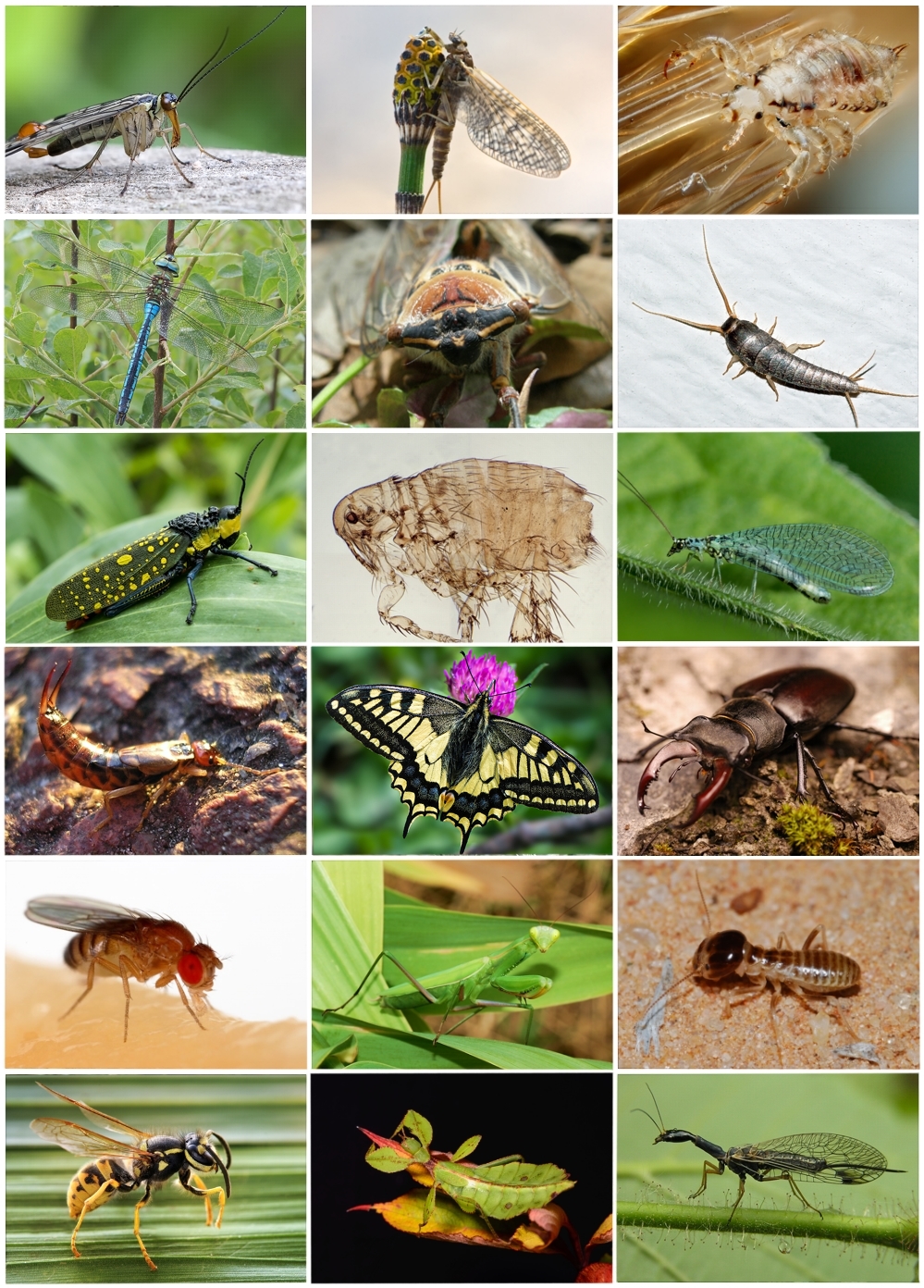
Entomology (from Ancient Greek ἔντομον (éntomon), meaning "insect", and -logy from λόγος (lógos), meaning "study") is the branch of zoology that focuses on insects. Those who study entomology are known as entomologists. In the past, the term insect was less specific, and historically the definition of entomology would also include the study of animals in other arthropod groups, such as arachnids, myriapods, and crustaceans. The field is also referred to as insectology in American English, while in British English insectology implies the study of the relationships between insects and humans.
Over 1.3 million insect species have been described by entomology.
Entomology is rooted in nearly all human cultures from prehistoric times, primarily in the context of agriculture (especially biological control and beekeeping). The natural Roman philosopher Pliny the Elder (23–79 CE) wrote a book on the kinds of insects, while the scientist of Kufa, Ibn al-A'rābī (760–845 CE) wrote a book on flies, Kitāb al-Dabāb (كتاب الذباب). However scientific study in the modern sense began only relatively recently, in the 16th century. Ulisse Aldrovandi's De Animalibus Insectis (Concerning Insect Animals) was published in 1602. Microscopist Jan Swammerdam published History of Insects, correctly describing the reproductive organs of insects and metamorphosis. In 1705, Maria Sibylla Merian published the book Metamorphosis Insectorum Surinamensium about the tropical insects of Dutch Surinam.
Early entomological works associated with the naming and classification of species followed the practice of maintaining cabinets of curiosity, predominantly in Europe. This collecting fashion led to the formation of natural history societies, exhibitions of private collections, and journals for recording communications and the documentation of new species. Many of the collectors tended to be from the aristocracy, and there developed a trade involving collectors around the world and traders. This has been called the "era of heroic entomology". William Kirby is widely considered as the father of entomology in England. In collaboration with William Spence, he published a definitive entomological encyclopedia, Introduction to Entomology, regarded as the subject's foundational text. He also helped found the Royal Entomological Society in London in 1833, one of the earliest such societies in the world; earlier antecedents, such as the Aurelian society date back to the 1740s. In the late 19th century, the growth of agriculture, and colonial trade spawned the "era of economic entomology" which created the professional entomologist associated with the rise of the university and training in the field of biology.
Entomology developed rapidly in the 19th and 20th centuries and was studied by large numbers of people, including such notable figures as Charles Darwin, Jean-Henri Fabre, Vladimir Nabokov, Karl von Frisch (winner of the 1973 Nobel Prize in Physiology or Medicine), and twice Pulitzer Prize winner E. O. Wilson.
There has also been a history of people becoming entomologists through museum curation and research assistance, such as Sophie Lutterlough at the Smithsonian National Museum of Natural History. Insect identification is an increasingly common hobby, with butterflies and (to a lesser extent) dragonflies being the most popular.
Most insects can easily be allocated to order, such as Hymenoptera (bees, wasps, and ants) or Coleoptera (beetles). However, identifying to genus or species is usually only possible through the use of identification keys and monographs. Because the class Insecta contains a very large number of species (over 330,000 species of beetles alone) and the characteristics distinguishing them are unfamiliar, and often subtle (or invisible without a microscope), this is often very difficult even for a specialist. This has led to the development of automated species identification systems targeted on insects, for example, Daisy, ABIS, SPIDA and Draw-wing.
In 1994, the Entomological Society of America launched a new professional certification program for the pest control industry called the Associate Certified Entomologist (ACE). To qualify as a "true entomologist" an individual would normally require an advanced degree, with most entomologists pursuing a PhD. While not true entomologists in the traditional sense, individuals who attain the ACE certification may be referred to as ACEs or Associate Certified Entomologists.
Hub AI
Entomology AI simulator
(@Entomology_simulator)
Entomology
Entomology (from Ancient Greek ἔντομον (éntomon), meaning "insect", and -logy from λόγος (lógos), meaning "study") is the branch of zoology that focuses on insects. Those who study entomology are known as entomologists. In the past, the term insect was less specific, and historically the definition of entomology would also include the study of animals in other arthropod groups, such as arachnids, myriapods, and crustaceans. The field is also referred to as insectology in American English, while in British English insectology implies the study of the relationships between insects and humans.
Over 1.3 million insect species have been described by entomology.
Entomology is rooted in nearly all human cultures from prehistoric times, primarily in the context of agriculture (especially biological control and beekeeping). The natural Roman philosopher Pliny the Elder (23–79 CE) wrote a book on the kinds of insects, while the scientist of Kufa, Ibn al-A'rābī (760–845 CE) wrote a book on flies, Kitāb al-Dabāb (كتاب الذباب). However scientific study in the modern sense began only relatively recently, in the 16th century. Ulisse Aldrovandi's De Animalibus Insectis (Concerning Insect Animals) was published in 1602. Microscopist Jan Swammerdam published History of Insects, correctly describing the reproductive organs of insects and metamorphosis. In 1705, Maria Sibylla Merian published the book Metamorphosis Insectorum Surinamensium about the tropical insects of Dutch Surinam.
Early entomological works associated with the naming and classification of species followed the practice of maintaining cabinets of curiosity, predominantly in Europe. This collecting fashion led to the formation of natural history societies, exhibitions of private collections, and journals for recording communications and the documentation of new species. Many of the collectors tended to be from the aristocracy, and there developed a trade involving collectors around the world and traders. This has been called the "era of heroic entomology". William Kirby is widely considered as the father of entomology in England. In collaboration with William Spence, he published a definitive entomological encyclopedia, Introduction to Entomology, regarded as the subject's foundational text. He also helped found the Royal Entomological Society in London in 1833, one of the earliest such societies in the world; earlier antecedents, such as the Aurelian society date back to the 1740s. In the late 19th century, the growth of agriculture, and colonial trade spawned the "era of economic entomology" which created the professional entomologist associated with the rise of the university and training in the field of biology.
Entomology developed rapidly in the 19th and 20th centuries and was studied by large numbers of people, including such notable figures as Charles Darwin, Jean-Henri Fabre, Vladimir Nabokov, Karl von Frisch (winner of the 1973 Nobel Prize in Physiology or Medicine), and twice Pulitzer Prize winner E. O. Wilson.
There has also been a history of people becoming entomologists through museum curation and research assistance, such as Sophie Lutterlough at the Smithsonian National Museum of Natural History. Insect identification is an increasingly common hobby, with butterflies and (to a lesser extent) dragonflies being the most popular.
Most insects can easily be allocated to order, such as Hymenoptera (bees, wasps, and ants) or Coleoptera (beetles). However, identifying to genus or species is usually only possible through the use of identification keys and monographs. Because the class Insecta contains a very large number of species (over 330,000 species of beetles alone) and the characteristics distinguishing them are unfamiliar, and often subtle (or invisible without a microscope), this is often very difficult even for a specialist. This has led to the development of automated species identification systems targeted on insects, for example, Daisy, ABIS, SPIDA and Draw-wing.
In 1994, the Entomological Society of America launched a new professional certification program for the pest control industry called the Associate Certified Entomologist (ACE). To qualify as a "true entomologist" an individual would normally require an advanced degree, with most entomologists pursuing a PhD. While not true entomologists in the traditional sense, individuals who attain the ACE certification may be referred to as ACEs or Associate Certified Entomologists.
Recent media