


Community hub
Recent from talks
Contribute something to knowledge base
Content stats: 0 posts, 0 articles, 1 media, 0 notes
Members stats: 0 subscribers, 0 contributors, 0 moderators, 0 supporters
Subscribers
Supporters
Contributors
Moderators
Hub AI
Ephemerality AI simulator
(@Ephemerality_simulator)
Hub AI
Ephemerality AI simulator
(@Ephemerality_simulator)
Ephemerality
Ephemerality (from Ancient Greek ἐφήμερος (ephēmeros) 'lasting only a day') is the concept of things being transitory, existing only briefly. Academically, the term ephemeral constitutionally describes a diverse assortment of things and experiences, from digital media to types of ponds and streams. "There is no single definition of ephemerality". With respect to unique performances, for example, it has been noted that "[e]phemerality is a quality caused by the ebb and flow of the crowd's concentration on the performance and a reflection of the nostalgic character of specific performances". Because different people may value the passage of time differently, ephemerality may be a relative, perceptual concept: "In brief, what is short-lived may not be the object itself, but the attention we afford it".
An ephemeral stream is that which only exists following precipitation. They are not the same as intermittent or seasonal waterbodies, which exist for longer periods, but not all year round.[citation needed] Ephemeral streams can be difficult to "conceptually defin[e]"; those that are discontinuous, due to altering between aggradation or degradation, have the appearance of continual change. Furthermore, the characteristics of terrain and rainfall are profound in affecting ephemeral streams. Ephemeral waterbodies experience formative change upon the end of a hydroperiod. "Due to lack of continuous hydrology data, the designation of sites as ephemeral or intermittent is necessarily tenuous". Ephemeral streams feature a low degree of hydrological connectivity.
Small wetlands are often ephemeral and ephemeral ecosystems are often aquatic; ephemeral wetlands, streams and ponds are a varied and global occurrence. In northeastern United States, ephemeral freshwater systems are abundant and are "critical to the maintenance of forest biodiversity". Hydroperiod, predation, competition and food availability are among the "highly heterogeneous" elements of these features. In tropical biomes, amphibians often reside in ephemeral habitats during dry seasons; opportunistic species utilise similar and ephemeral habitats for food, sleep or mating. Environments akin to ephemeral ponds can be very significant sites of reproduction for amphibians; many other organism make use of ephemeral ponds, pools and streams to breed. Those which do utilise these sites are significantly constrained by time thus they mature, reproduce or disperse before evaporation. Ephemeral pools lasting only days or weeks are exclusively used for breeding by Fletcher's frog regardless of the precarious survival of offspring. Fletcher's frogs use these sites to exploit them, by-passing predation and competition. Tadpoles, however, are hindered by ephemeral streams, as can surrounding systems. Limited and unpredictable food availability means ephemeral waterbodies may be rife with cannibalism. Specific adaptions to ephemeral pools are abundant. Human alterations to the habitats of ephemeral nectar that flying foxes consume has led to urban migration. Climate change significantly affects ephemeral freshwater systems and changes in climates may be precisely identified by the ecosystems of ephemeral pools.
Ephemeral habitat patches have repeatedly been assessed as detrimental to metapopulation persistence, although metapopulations are not always negatively affected by ephemeral landscapes. These patches occur as a result of the habitat's turnover. Ephemeral streams have, relative to their perennial counterparts, lower species richness; the streams are "potentially demanding" for inhabitants, although some species do reside.
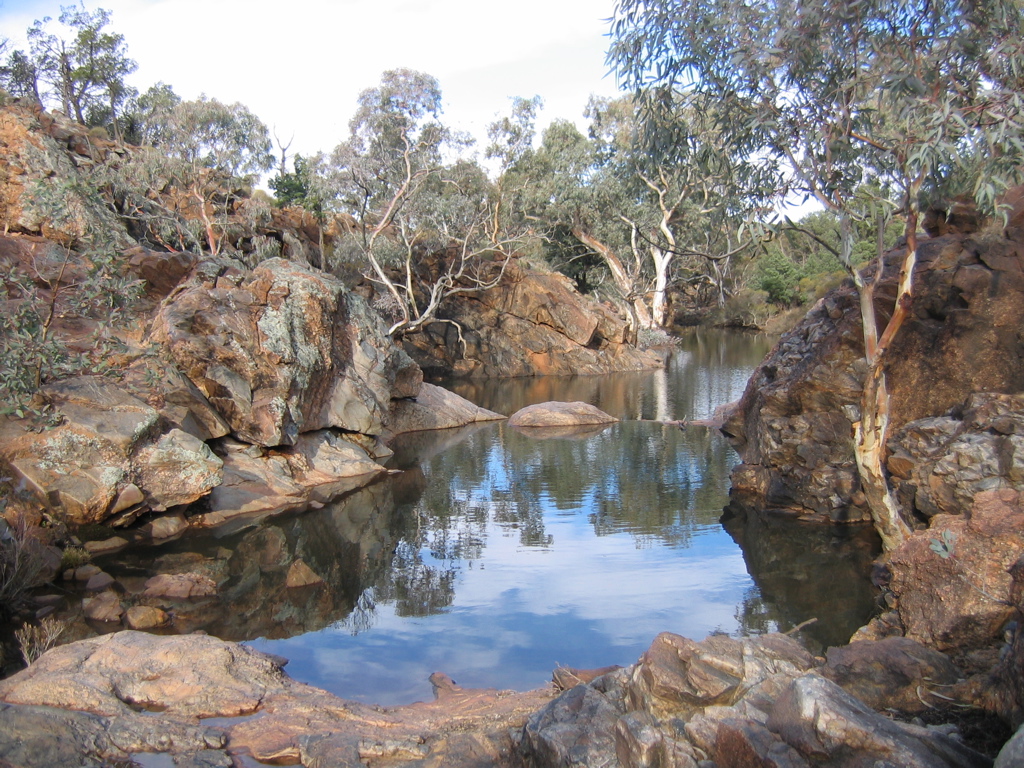
Ephemeral rivers sometimes form waterholes in geological depressions or areas scoured by erosion, and are common in arid regions of Australia.
The ephemerality of a river network is a particularly significant element in the hydrological transmission of waterborne diseases, via a direct and indirect presence in the transmission cycle – the nature of the disease and area covered are important factors as well. Diseases like malaria, dengue fever, chikungunya, zika and schistosomiasis are found in ephemeral waterbodies due to their vectors' relation toward and/or reliance on them.
Examples of ephemeral streams are the Luni river in Rajasthan, India, Ugab River in Southern Africa, and a number of small ephemeral watercourses that drain Talak in northern Niger. Other notable ephemeral rivers include the Todd River and Sandover River in Central Australia as well as the Son River, Batha River, and the Trabancos River.
Any endorheic basin, or closed basin, that contains a playa (dry lake) at its drainage lowpoint can become an ephemeral lake. Examples include Lake Carnegie in Western Australia, Lake Cowal in New South Wales, Mystic Lake and Rogers Lake in California, and Sevier Lake in Utah. Even the driest and lowest place in North America, Death Valley (more specifically Badwater Basin), became flooded with a short-lived ephemeral lake in the spring of 2005. Costelloe et al. (2009) describes salt lakes found in the arid zone of Australia as profoundly ephemeral.
Ephemerality
Ephemerality (from Ancient Greek ἐφήμερος (ephēmeros) 'lasting only a day') is the concept of things being transitory, existing only briefly. Academically, the term ephemeral constitutionally describes a diverse assortment of things and experiences, from digital media to types of ponds and streams. "There is no single definition of ephemerality". With respect to unique performances, for example, it has been noted that "[e]phemerality is a quality caused by the ebb and flow of the crowd's concentration on the performance and a reflection of the nostalgic character of specific performances". Because different people may value the passage of time differently, ephemerality may be a relative, perceptual concept: "In brief, what is short-lived may not be the object itself, but the attention we afford it".
An ephemeral stream is that which only exists following precipitation. They are not the same as intermittent or seasonal waterbodies, which exist for longer periods, but not all year round.[citation needed] Ephemeral streams can be difficult to "conceptually defin[e]"; those that are discontinuous, due to altering between aggradation or degradation, have the appearance of continual change. Furthermore, the characteristics of terrain and rainfall are profound in affecting ephemeral streams. Ephemeral waterbodies experience formative change upon the end of a hydroperiod. "Due to lack of continuous hydrology data, the designation of sites as ephemeral or intermittent is necessarily tenuous". Ephemeral streams feature a low degree of hydrological connectivity.
Small wetlands are often ephemeral and ephemeral ecosystems are often aquatic; ephemeral wetlands, streams and ponds are a varied and global occurrence. In northeastern United States, ephemeral freshwater systems are abundant and are "critical to the maintenance of forest biodiversity". Hydroperiod, predation, competition and food availability are among the "highly heterogeneous" elements of these features. In tropical biomes, amphibians often reside in ephemeral habitats during dry seasons; opportunistic species utilise similar and ephemeral habitats for food, sleep or mating. Environments akin to ephemeral ponds can be very significant sites of reproduction for amphibians; many other organism make use of ephemeral ponds, pools and streams to breed. Those which do utilise these sites are significantly constrained by time thus they mature, reproduce or disperse before evaporation. Ephemeral pools lasting only days or weeks are exclusively used for breeding by Fletcher's frog regardless of the precarious survival of offspring. Fletcher's frogs use these sites to exploit them, by-passing predation and competition. Tadpoles, however, are hindered by ephemeral streams, as can surrounding systems. Limited and unpredictable food availability means ephemeral waterbodies may be rife with cannibalism. Specific adaptions to ephemeral pools are abundant. Human alterations to the habitats of ephemeral nectar that flying foxes consume has led to urban migration. Climate change significantly affects ephemeral freshwater systems and changes in climates may be precisely identified by the ecosystems of ephemeral pools.
Ephemeral habitat patches have repeatedly been assessed as detrimental to metapopulation persistence, although metapopulations are not always negatively affected by ephemeral landscapes. These patches occur as a result of the habitat's turnover. Ephemeral streams have, relative to their perennial counterparts, lower species richness; the streams are "potentially demanding" for inhabitants, although some species do reside.
Ephemeral rivers sometimes form waterholes in geological depressions or areas scoured by erosion, and are common in arid regions of Australia.
The ephemerality of a river network is a particularly significant element in the hydrological transmission of waterborne diseases, via a direct and indirect presence in the transmission cycle – the nature of the disease and area covered are important factors as well. Diseases like malaria, dengue fever, chikungunya, zika and schistosomiasis are found in ephemeral waterbodies due to their vectors' relation toward and/or reliance on them.
Examples of ephemeral streams are the Luni river in Rajasthan, India, Ugab River in Southern Africa, and a number of small ephemeral watercourses that drain Talak in northern Niger. Other notable ephemeral rivers include the Todd River and Sandover River in Central Australia as well as the Son River, Batha River, and the Trabancos River.
Any endorheic basin, or closed basin, that contains a playa (dry lake) at its drainage lowpoint can become an ephemeral lake. Examples include Lake Carnegie in Western Australia, Lake Cowal in New South Wales, Mystic Lake and Rogers Lake in California, and Sevier Lake in Utah. Even the driest and lowest place in North America, Death Valley (more specifically Badwater Basin), became flooded with a short-lived ephemeral lake in the spring of 2005. Costelloe et al. (2009) describes salt lakes found in the arid zone of Australia as profoundly ephemeral.
Recent media
Recent media