Hubbry Logo
Epidemic typhusEpidemic typhusMain
Open search
Epidemic typhus
Community hub
Epidemic typhus
logo
8 pages, 0 posts
0 subscribers
Be the first to start a discussion here.
Epidemic typhus
Epidemic typhus
from Wikipedia
Typhus
Other namesCamp fever, jail fever, hospital fever, ship fever, famine fever, putrid fever, petechial fever, epidemic louse-borne typhus,[1] louse-borne typhus[2]
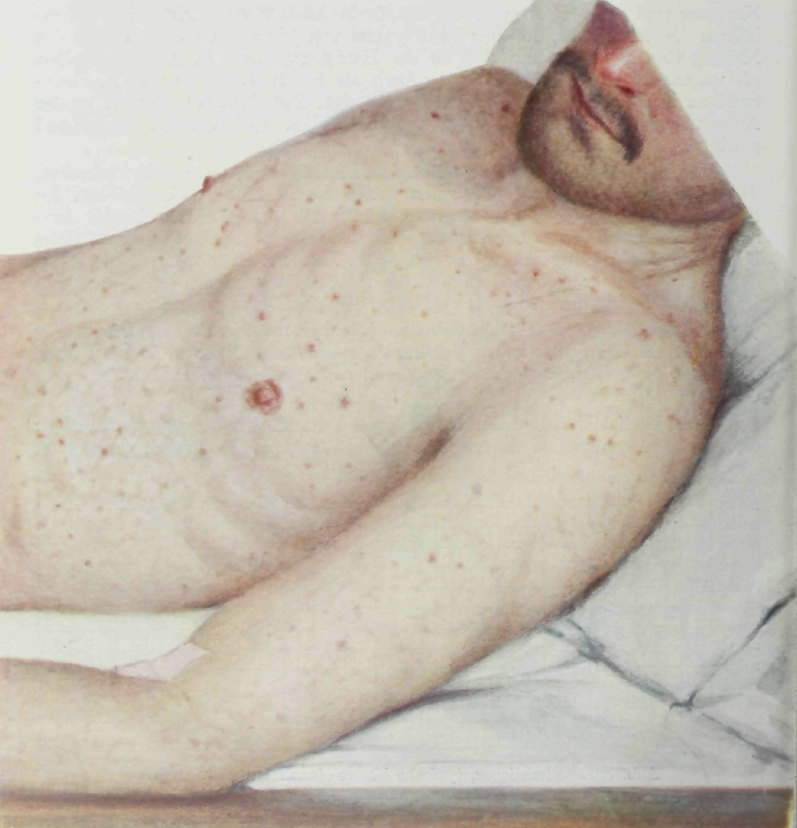
Rash caused by epidemic typhus[3]
SpecialtyInfectious diseases Edit this on Wikidata

Epidemic typhus, also known as louse-borne typhus, is a form of typhus so named because the disease often causes epidemics following wars and natural disasters where civil life is disrupted.[4][5] Epidemic typhus is spread to people through contact with infected body lice, in contrast to endemic typhus which is usually transmitted by fleas.[4][5]

Though typhus has been responsible for millions of deaths throughout history, it is still considered a rare disease that occurs mainly in populations that suffer unhygienic extreme overcrowding.[6] Typhus is most rare in industrialized countries. It occurs primarily in the colder, mountainous regions of central and east Africa, as well as Central and South America.[7] The causative organism is Rickettsia prowazekii, transmitted by the human body louse (Pediculus humanus corporis).[8][9] Untreated typhus cases have a fatality rate of approximately 40%.[7]

Epidemic typhus should not be confused with murine typhus, which is more endemic to the United States, particularly Southern California and Texas. This form of typhus has similar symptoms but is caused by Rickettsia typhi, is less deadly, and has different vectors for transmission.[10]

Signs and symptoms

[edit]

Symptoms of this disease typically begin within 2 weeks of contact with the causative organism. Signs/symptoms may include:[6]

  • Fever
  • Chills
  • Headache
  • Confusion
  • Cough
  • Rapid breathing
  • Body/muscle aches
  • Rash
  • Nausea
  • Vomiting

After 5–6 days, a macular skin eruption develops: first on the upper trunk and spreading to the rest of the body (though the face, palms, and soles of the feet are rarely affected).[6]

Brill–Zinsser disease, first described by Nathan Brill in 1913 at Mount Sinai Hospital in New York City, is a mild form of epidemic typhus that recurs in someone after a long period of latency (similar to the relationship between chickenpox and shingles). This recurrence often arises in times of relative immunosuppression, which is often in the context of a person suffering malnutrition or other illnesses. In combination with poor sanitation and hygiene in times of social chaos and upheaval, which enable a greater density of lice, this reactivation is why typhus generates epidemics in such conditions.[11]

Complications

[edit]

Complications are as follows:[citation needed]

Transmission

[edit]

Feeding on a human who carries the bacterium infects the louse. R. prowazekii grows in the louse's gut and is excreted in its feces. The louse transmits the disease by biting an uninfected human, who scratches the louse bite (which itches) and rubs the feces into the wound.[12] The incubation period is one to two weeks. R. prowazekii can remain viable and virulent in the dried louse feces for many days. Typhus will eventually kill the louse, though the disease will remain viable for many weeks in the dead louse.[12]

Epidemic typhus has historically occurred during times of war and deprivation. For example, typhus killed millions of prisoners in German Nazi concentration camps during World War II. The unhygenic conditions in camps such as Auschwitz, Theresienstadt, and Bergen-Belsen allowed diseases such as typhus to flourish. Situations in the twenty-first century with potential for a typhus epidemic would include refugee camps during a major famine or natural disaster. In the periods between outbreaks, when human to human transmission occurs less often, the flying squirrel serves as a zoonotic reservoir for the Rickettsia prowazekii bacterium.

In 1916, Henrique da Rocha Lima proved that the bacterium Rickettsia prowazekii was the agent responsible for typhus. He named it after his colleague Stanislaus von Prowazek, who had along with himself become infected with typhus while investigating an outbreak, subsequently dying, and H. T. Ricketts, another zoologist who had died from typhus while investigating it. Once these crucial facts were recognized, Rudolf Weigl in 1930 was able to fashion a practical and effective vaccine production method.[13] He ground up the insides of infected lice that had been drinking blood. It was, however, very dangerous to produce, and carried a high likelihood of infection to those who were working on it.

A safer mass-production-ready method using egg yolks was developed by Herald R. Cox in 1938.[14] This vaccine was widely available and used extensively by 1943.

Diagnosis

[edit]

IFA, ELISA or PCR positive after 10 days.[citation needed]

Treatment

[edit]

The infection is treated with antibiotics. Intravenous fluids and oxygen may be needed to stabilize the patient. There is a significant disparity between the untreated mortality and treated mortality rates: 10-60% untreated versus close to 0% treated with antibiotics within 8 days of initial infection. Tetracycline, chloramphenicol, and doxycycline[15] are commonly used.

Some of the simplest methods of prevention and treatment focus on preventing infestation of body lice. Completely changing the clothing, washing the infested clothing in hot water, and in some cases also treating recently used bedsheets all help to prevent typhus by removing potentially infected lice. Clothes left unworn and unwashed for 7 days also result in the death of both lice and their eggs, as they have no access to a human host.[16] Another form of lice prevention requires dusting infested clothing with a powder consisting of 10% DDT, 1% malathion, or 1% permethrin, which kill lice and their eggs.[15]

Other preventive measures for individuals are to avoid unhygienic, extremely overcrowded areas where the causative organisms can jump from person to person. In addition, they are warned to keep a distance from larger rodents that carry lice, such as rats, squirrels, or opossums.[15]

History

[edit]

History of outbreaks

[edit]

Before 19th century

[edit]

During the second year of the Peloponnesian War (430 BC), the city-state of Athens in ancient Greece had an epidemic, known as the Plague of Athens, which killed, among others, Pericles and his two elder sons. The plague returned twice more, in 429 BC and in the winter of 427/6 BC. Epidemic typhus is proposed as a strong candidate for the cause of this disease outbreak, supported by both medical and scholarly opinions.[17][18]

Rash caused by epidemic typhus in Burundi

The first description of typhus was probably given in 1083 at La Cava abbey near Salerno, Italy.[19][20] In 1546, Girolamo Fracastoro, a Florentine physician, described typhus in his famous treatise on viruses and contagion, De Contagione et Contagiosis Morbis.[21]

Typhus was carried to mainland Europe by soldiers who had been fighting on Cyprus. The first reliable description of the disease appears during the siege of the Emirate of Granada by the Catholic Monarchs in 1489 during the Granada War. These accounts include descriptions of fever and red spots over arms, back and chest, progressing to delirium, gangrenous sores, and the stench of rotting flesh. During the siege, the Catholics lost 3,000 men to enemy action, but an additional 17,000 died of typhus.[22]

Typhus was also common in prisons (and in crowded conditions where lice spread easily), where it was known as Gaol fever or Jail fever.[23] Gaol fever often occurs when prisoners are frequently huddled together in dark, filthy rooms. Imprisonment until the next term of court was often equivalent to a death sentence. Typhus was so infectious that prisoners brought before the court sometimes infected the court itself. Following the Black Assize of Oxford 1577, over 510 died from epidemic typhus, including Speaker Robert Bell, Lord Chief Baron of the Exchequer.[24] The outbreak that followed, between 1577 and 1579, killed about 10% of the English population. [citation needed]

During the Lent assize held at Taunton (1730), typhus caused the death of the Lord Chief Baron of the Exchequer, the High Sheriff of Somerset, the sergeant, and hundreds of other persons. During a time when there were 241 capital offences, more prisoners died from 'gaol fever' than were put to death by all the public executioners in the realm. In 1759 an English authority estimated that each year a quarter of the prisoners had died from gaol fever.[25] In London, typhus frequently broke out among the ill-kept prisoners of Newgate Gaol and moved into the general city population.[citation needed]

19th century

[edit]

Epidemics occurred in the British Isles and throughout Europe, for instance, during the English Civil War, the Thirty Years' War, and the Napoleonic Wars. Many historians believe that the typhus outbreak among Napoleon's troops is the real reason why he stalled his military campaign into Russia, rather than starvation or the cold.[26] A major epidemic occurred in Ireland between 1816 and 1819, and again in the late 1830s. Another major typhus epidemic occurred during the Great Irish Famine between 1846 and 1849. The Irish typhus spread to England, where it was sometimes called "Irish fever" and was noted for its virulence. It killed people of all social classes since lice were endemic and inescapable, but it hit particularly hard in the lower or "unwashed" social strata. It was carried to North America by the many Irish refugees who fled the famine. In Canada, the 1847 North American typhus epidemic killed more than 20,000 people, mainly Irish immigrants in fever sheds and other forms of quarantine, who had contracted the disease aboard coffin ships.[27] As many as 900,000 deaths have been attributed to the typhus fever during the Crimean War in 1853–1856,[26] and 270,000 to the 1866 Finnish typhus epidemic.[28]

In the United States, a typhus epidemic struck Philadelphia in 1837. The son of Franklin Pierce died in 1843 of a typhus epidemic in Concord, New Hampshire. Several epidemics occurred in Baltimore, Memphis, and Washington, D.C. between 1865 and 1873. Typhus fever was also a significant killer during the American Civil War, although typhoid fever was the more prevalent cause of US Civil War "camp fever." Typhoid is a completely different disease from typhus. Typically more men died on both sides of disease than wounds.[29]

Rudolph Carl Virchow, a physician, anthropologist, and historian attempted to control an outbreak of typhus in Upper Silesia and wrote a 190-page report about it. He concluded that the solution to the outbreak did not lie in individual treatment or by providing small changes in housing, food or clothing, but rather in widespread structural changes to directly address the issue of poverty. Virchow's experience in Upper Silesia led to his observation that "Medicine is a social science". His report led to changes in German public health policy.[30]

20th century

[edit]

Typhus was endemic in Poland and several neighboring countries prior to World War I (1914–1918).[31][32] During and shortly after the war, epidemic typhus caused up to three million deaths in Russia, and several million citizens also died in Poland and Romania.[33][34] Since 1914, many troops, prisoners and even doctors were infected, and at least 150,000 died from typhus in Serbia, 50,000 of whom were prisoners.[35][36][37] Delousing stations were established for troops on the Western Front, but the disease ravaged the armies of the Eastern Front. Fatalities were generally between 10 and 40 percent of those infected, and the disease was a major cause of death for those nursing the sick. During World War I and the Russian Civil War between the White and Red, the typhus epidemic caused 2–3 million deaths out of 20–30 million cases in Russia between 1918 and 1922.[33]

A U.S. soldier demonstrating DDT-hand spraying equipment. DDT was used to control the spread of typhus-carrying lice during WWII.

Typhus caused hundreds of thousands of deaths during World War II.[38] It struck the German Army during Operation Barbarossa, the invasion of Russia, in 1941.[14] In 1942 and 1943 typhus hit French North Africa, Egypt and Iran particularly hard.[12] Typhus epidemics killed inmates in the Nazi concentration camps and death camps such as Auschwitz, Dachau, Theresienstadt, and Bergen-Belsen.[14] Footage shot at Bergen-Belsen concentration camp shows the mass graves for typhus victims.[14] Anne Frank, at age 15, and her sister Margot both died of typhus in the camps. Even larger epidemics in the post-war chaos of Europe were averted only by the widespread use of the newly discovered DDT to kill lice on the millions of refugees and displaced persons.[citation needed]

Following the development of a vaccine during World War II, Western Europe and North America have been able to prevent epidemics. These have usually occurred in Eastern Europe, the Middle East, and parts of Africa, particularly Ethiopia. Naval Medical Research Unit Five worked there with the government on research to attempt to eradicate the disease.[citation needed]

In one of its first major outbreaks since World War II, epidemic typhus reemerged in 1995 in a jail in N'Gozi, Burundi. This outbreak followed the start of the Burundian Civil War in 1993, which caused the displacement of 760,000 people. Refugee camps were crowded and unsanitary, and often far from towns and medical services.[39]

21st century

[edit]

A 2005 study found seroprevalence of R. prowazekii antibodies in homeless populations in two shelters in Marseille, France. The study noted the "hallmarks of epidemic typhus and relapsing fever".[40]

History of vaccines

[edit]

Major developments for typhus vaccines started during World War I, as typhus caused high mortality, and threatened the health and readiness for soldiers on the battlefield.[41] Vaccines for typhus, like other vaccines of the time, were classified as either living or killed vaccines.[41] Live vaccines were typically an injection of live agent, and killed vaccines are live cultures of an agent that are chemically inactivated prior to use.[41]

Attempts to create a living vaccine of classical, louse-borne, typhus were attempted by French researchers but these proved unsuccessful.[41] Researchers turned to murine typhus to develop a live vaccine.[41] At the time, murine vaccine was viewed as a less severe alternative to classical typhus. Four versions of a live vaccine cultivated from murine typhus were tested, on a large scale, in 1934.[41]

While the French were making advancements with live vaccines, other European countries were working to develop killed vaccines.[41] During World War II, there were three kinds of potentially useful killed vaccines.[41] All three killed vaccines relied on the cultivation of Rickettsia prowazekii, the organism responsible for typhus.[41] The first attempt at a killed vaccine was developed by Germany, using the Rickettsia prowazekii found in louse feces.[41] The vaccine was tested extensively in Poland between the two world wars and used by the Germans for their troops during their attacks on the Soviet Union.[41]

A second method of growing Rickettsia prowazekii was discovered using the yolk sac of chick embryos. Germans tried several times to use this technique of growing Rickettsia prowazekii but no effort was pushed very far.[41]

The last technique was an extended development of the previously known method of growing murine typhus in rodents.[41] It was discovered that rabbits could be infected, by a similar process, and contract classical typhus instead of murine typhus.[41] Again, while proven to produce suitable Rickettsia prowazekii for vaccine development, this method was not used to produce wartime vaccines.[41]

During WWII, the two major vaccines available were the killed vaccine grown in lice and the live vaccine from France.[41] Neither was used much during the war.[41] The killed, louse-grown vaccine was difficult to manufacture in large enough quantities, and the French vaccine was not believed to be safe enough for use.[41]

The Germans worked to develop their own live vaccine from the urine of typhus victims.[41] While developing a live vaccine, Germany used live Rickettsia prowazekii to test multiple possible vaccines' capabilities.[41] They gave live Rickettsia prowazekii to concentration camp prisoners, using them as a control group for the vaccine tests.[41]

The use of DDT as an effective means of killing lice, the main carrier of typhus, was discovered in Naples.[41]

Society and culture

[edit]

Biological weapon

[edit]

Typhus was one of more than a dozen agents that the United States researched as potential biological weapons before President Richard Nixon suspended all non-defensive aspects of the U.S. biological weapons program in 1969.[42]

Poverty and displacement

[edit]

The CDC lists the following areas as active foci of human epidemic typhus: Andean regions of South America, some parts of Africa; on the other hand, the CDC only recognizes an active enzootic cycle in the United States involving flying squirrels (CDC). Though epidemic typhus is commonly thought to be restricted to areas of the developing world, serological examination of homeless persons in Houston found evidence for exposure to the bacterial pathogens that cause epidemic typhus and murine typhus. A study involving 930 homeless people in Marseille, France, found high rates of seroprevalence to R. prowazekii and a high prevalence of louse-borne infections in the homeless.[citation needed]

Typhus has been increasingly discovered in homeless populations in developed nations. Typhus among homeless populations is especially prevalent as these populations tend to migrate across states and countries, spreading the risk of infection with their movement. The same risk applies to refugees, who travel across country lines, often living in close proximity and unable to maintain necessary hygienic standards to avoid being at risk for catching lice possibly infected with typhus.[citation needed]

Because the typhus-infected lice live in clothing, the prevalence of typhus is also affected by weather, humidity, poverty and lack of hygiene. Lice, and therefore typhus, are more prevalent during colder months, especially winter and early spring. In these seasons, people tend to wear multiple layers of clothing, giving lice more places to go unnoticed by their hosts. This is particularly a problem for poverty-stricken populations as they often do not have multiple sets of clothing, preventing them from practicing good hygiene habits that could prevent louse infestation.[16]

Due to fear of an outbreak of epidemic typhus, the US Government put a typhus quarantine in place in 1917 across the entirety of the US-Mexican border. Sanitation plants were constructed that required immigrants to be thoroughly inspected and bathed before crossing the border. Those who routinely crossed back and forth across the border for work were required to go through the sanitation process weekly, updating their quarantine card with the date of the next week's sanitation. These sanitation border stations remained active over the next two decades, regardless of the disappearance of the typhus threat. This fear of typhus and resulting quarantine and sanitation protocols dramatically hardened the border between the US and Mexico, fostering scientific and popular prejudices against Mexicans. This ultimately intensified racial tensions and fueled efforts to ban immigrants to the US from the Southern Hemisphere because the immigrants were associated with the disease.[43]

Literature

[edit]

See also

[edit]

References

[edit]
Revisions and contributorsEdit on WikipediaRead on Wikipedia
from Grokipedia

Epidemic typhus, also known as louse-borne typhus, is a potentially fatal infectious disease caused by the obligate intracellular bacterium Rickettsia prowazekii. Transmission occurs exclusively through human body lice (Pediculus humanus corporis), where the pathogen multiplies in the louse midgut and is excreted in infectious feces; humans acquire the infection when crushed lice or their feces are rubbed into skin abrasions or inhaled as dried particles. After an incubation period of 7 to 14 days, symptoms emerge abruptly with sustained high fever (often exceeding 104°F or 40°C), severe headache, myalgias, prostration, and a discrete macular rash beginning on the trunk and spreading centrifugally to extremities while sparing the face, palms, and soles.
Untreated, the disease induces widespread endothelial damage leading to vasculitis, thrombosis, and multi-organ failure, with mortality rates historically reaching 10-15% overall but escalating to 60-70% in individuals over age 50 due to complications such as gangrene, myocarditis, and neurological impairment. Effective treatment with doxycycline or chloramphenicol dramatically reduces fatality to near zero when administered early, highlighting the causal primacy of bacterial replication over host factors in disease progression. Epidemic typhus thrives in conditions of societal breakdown—crowded squalor, malnutrition, and conflict—having exacted millions of deaths across history, from ancient plagues to World War-era outbreaks where louse infestation rates correlated directly with incidence. Though now rare in developed regions owing to sanitation and insecticides like DDT, persistent risks in war-torn areas underscore its potential as a vector for mass casualties absent rigorous delousing and hygiene.

Etiology and Pathogenesis

Causative Agent

Rickettsia prowazekii is a gram-negative, intracellular, pleomorphic coccobacillus in the genus and family Rickettsiaceae. As an , it lacks key biosynthetic pathways, relying on host cells for nutrients like ATP and , with a of approximately 1.1 million base pairs encoding limited metabolic functions. R. prowazekii forms the typhus group alongside R. typhi (causative agent of ), sharing conserved gene order and content but differing in specific loci, including genes (tlyA and tlyC) and surface cell antigen (sca) gene complements that influence host interaction. Antigenic distinctions, detectable via serological assays like indirect , separate it from R. typhi, while genetic and phylogenetic divergence—evident in 16S rRNA and outer sequences—marks greater separation from Orientia tsutsugamushi ( agent), which belongs to a distinct despite co-classification in Rickettsiaceae. Pathogenesis centers on endothelial cell tropism, where R. prowazekii induces polymerization for host-mediated uptake, evades phagosomal maturation via activity, and replicates in the until host cell lysis. This invasion disrupts vascular integrity, promoting through direct cytotoxicity and (LPS)-driven activation of , which elicits proinflammatory cytokines like TNF-α and IL-6, culminating in amplified endothelial permeability and systemic inflammatory cascades.

Transmission and Vector Biology

Epidemic typhus is transmitted exclusively by the human body , Pediculus humanus corporis, which serves as the obligate vector for Rickettsia prowazekii, the causative bacterium. Unlike head lice, body lice reside primarily in clothing seams and only contact to feed on blood, facilitating transmission during periods of close human proximity. The bacterium does not pass transovarially to louse eggs, requiring acquisition from infected human blood meals followed by multiplication in the louse midgut epithelium, where it ruptures cells and proliferates in . Transmission to humans occurs when infective louse feces are rubbed into abrasions or bite wounds during scratching, or when dried feces are aerosolized and inhaled, such as from crushing lice on . Lice become infectious approximately 10 days after feeding on a bacteremic host and remain so until , which typically follows within 2 weeks due to rickettsial overload blocking the louse . Direct mechanical transfer via louse crushing on mucous membranes can also occur, but person-to-person spread without lice is not documented. Humans constitute the sole reservoir, harboring R. prowazekii chronically in endothelial cells post-infection, with potential for carriage or as Brill-Zinsser disease decades later. Brill-Zinsser disease manifests as a milder, self-limited with low-grade bacteremia, serving as an interepidemic source that can infect lice and ignite outbreaks when vector conditions align. Outbreaks empirically correlate with conditions preserving louse viability and host-vector contact: temperatures below 30°C (86°F) extend survival, as heat above this threshold induces rapid mortality, while cold enhances use that shelters lice. in confined spaces amplifies feeding opportunities, and absence of laundering or —lice drown in water and perish without host contact beyond 48 hours—permits population booms, with densities exceeding 100 lice per person documented in historical epidemics. These factors, observed in wartime trenches and camps, underscore lapses as causal drivers of vector proliferation without alternative reservoirs.

Clinical Features

Signs and Symptoms


The incubation period for epidemic typhus is typically 7 to 14 days following infection via louse feces inoculated into the skin. Illness onset is abrupt, marked by high fever often exceeding 40°C (104°F), accompanied by chills, severe headache, and generalized myalgias. Patients frequently report prostration and malaise from the outset, with fever persisting and fluctuating over 10 to 18 days in untreated cases.
A characteristic rash emerges 4 to 7 days after symptom initiation, beginning as macular lesions on the trunk—particularly the axillae and flanks—and spreading centrifugally to the extremities while sparing the face, palms, and soles. The rash evolves from pink macules to papules and may progress to petechiae or confluent due to endothelial damage in dermal vessels. Rash occurs in approximately 80% of cases, serving as a key clinical marker distinguishable from other rickettsioses. Systemic manifestations include relative disproportionate to the fever, nonproductive , , , and progressive neurological involvement such as , , , or . In severe cases, patients exhibit , , and , with untreated mortality ranging from 10% to 60%, escalating beyond 60% among the elderly or those with heavy infestation.

Complications and Recrudescence

Rickettsia prowazekii primarily infects vascular endothelial cells, causing direct cellular damage, increased permeability, and a prothrombotic state that manifests as and microvascular . This endothelial injury disrupts organ , leading to acute complications such as from coronary vessel occlusion, acute renal failure due to glomerular and tubular ischemia, and in extremities, digits, or other appendages resulting from prolonged tissue hypoperfusion. These sequelae arise causally from the unchecked proliferation of rickettsiae within vessel walls, exacerbating and in severe, progressive cases. Brill-Zinsser disease constitutes a recrudescence of latent R. prowazekii , emerging months to years—or even decades—after the initial epidemic typhus episode, with persisting in lymphoid tissues as a dormant . The typically features attenuated symptoms compared to primary , including shorter fever duration and less severe , yet viable rickettsiae in the of carriers can infect feeding , thereby igniting secondary epidemics under conditions of poor and louse proliferation. This reactivation underscores the pathogen's capacity for lifelong persistence without eradicating the host immune response entirely. Untreated epidemic typhus exhibits mortality rates of 10-60%, attributable to the cumulative toll of vascular , multi-organ , and secondary infections, with higher lethality among the elderly, malnourished, or those with comorbidities. Empirical data from historical outbreaks confirm this variability, as endothelial damage progresses predictably without intervention, but timely administration averts fatal outcomes in over 95% of cases by halting rickettsial replication before irreversible dominates.

Diagnosis

Laboratory Confirmation

Laboratory confirmation of epidemic typhus, caused by Rickettsia prowazekii, primarily relies on serological assays, as direct detection methods face limitations due to low bacterial loads in clinical specimens. The indirect assay (IFA) serves as the reference standard for , detecting IgG and IgM antibodies against R. prowazekii antigens. A presumptive is supported by a single IgG of ≥1:128 in acute-phase serum from a with compatible clinical and epidemiologic features, while definitive evidence requires a fourfold rise in IgG between acute- and convalescent-phase sera collected 2–4 weeks apart. These tests exhibit high specificity for the typhus group when using group-specific antigens, though with other group rickettsiae can occur, necessitating adsorption studies or paired-sample dynamics for differentiation. Molecular methods, including polymerase chain reaction (PCR) amplification of R. prowazekii-specific genes such as gltA, ompB, or sca4, offer potential for early detection from blood, skin biopsies, or postmortem tissues, but sensitivity remains low during the acute phase owing to intermittent and sparse rickettsemia. Real-time PCR assays targeting multi-copy genes improve detection limits compared to conventional PCR, yet false negatives are common without enrichment techniques or when sampling occurs after antibiotic initiation. Immunohistochemistry (IHC) on biopsy or autopsy tissues using monoclonal antibodies against rickettsial lipopolysaccharides provides direct visualization of the pathogen in endothelial cells, confirming infection with high specificity but requiring specialized facilities. Culture isolation in cell lines like Vero or HEL cells is feasible but rarely performed due to the requirement for biosafety level 3 containment and prolonged incubation periods. Diagnostic challenges arise from the pathogen's intracellular nature and low in routine blood cultures, often delaying confirmation until , which underscores the need to integrate results with clinical and exposure history rather than relying on acute-phase tests alone. In resource-limited settings where outbreaks occur, test availability is constrained, and empirical therapy may precede serological verification, as delays in paired testing can exceed the critical window for intervention. Specificity is enhanced by using typhus group-specific reagents to distinguish R. prowazekii from murine (R. typhi), though serological overlap in endemic areas demands cautious interpretation.

Differential Diagnosis

Epidemic typhus, characterized by abrupt onset of high fever, severe , and a centrifugal sparing the face, palms, and soles, requires differentiation from other rickettsial diseases and acute febrile illnesses with exanthems based on epidemiological exposure, morphology, and associated features. A history of infestation in crowded, unsanitary conditions strongly suggests Rickettsia prowazekii transmission, contrasting with tick exposure typical of (), where onset is peripheral (wrists, ankles) and often involves palms and soles. Other rickettsioses, such as (Orientia tsutsugamushi), feature an inoculation at the chigger bite site, absent in epidemic typhus, alongside a more centripetal and regional from mite vectors in endemic scrub vegetation. (Neisseria meningitidis) presents with rapid progression to shock and , manifesting as a petechial or purpuric rather than the maculopapular eruption of , often without the prolonged of myalgias and mental confusion. Viral exanthems like exhibit a prodromal phase with cough, coryza, , and pathognomonic Koplik spots, followed by a morbilliform starting craniofacially, unlike the trunk-centric distribution and absence of respiratory primacy in . Historically, epidemic typhus was misdiagnosed as due to overlapping fever and relative , but typhoid lacks or features , , and rose spots on the trunk, with resolution via modern serological distinction from Salmonella typhi. Plague () differentials include bubonic forms with painful lymphadenitis or pneumonic variants with , absent in typhus, though early mimicked louse-borne outbreaks before vector-specific clarified causation. Empirical exclusion relies on vector exposure and kinetics, as multisystem involvement (e.g., , ) overlaps with or dengue but diverges in the absence of , hemorrhagic tendencies, or arthralgias predominant in those.

Treatment and Management

Antibiotic Therapy

is the first-line antibiotic for treating epidemic typhus caused by Rickettsia prowazekii, with a recommended dosage of 100 mg orally or intravenously twice daily for adults weighing over 45 kg, and 2.2 mg/kg twice daily for children under 45 kg. Treatment should continue for at least 7 days or until the patient has been afebrile for 48 hours, whichever is longer, often extending to 10-15 days in severe cases to prevent relapse. Early initiation, ideally before confirmatory testing, is critical as it inhibits rickettsial replication within host endothelial cells, reducing vascular damage and improving outcomes. Chloramphenicol serves as an alternative for cases with contraindications, dosed at 50-75 mg/kg/day divided every 6 hours intravenously or orally, though it is rarely used due to risks of and . remains preferred across all age groups, including children and pregnant individuals, for life-threatening rickettsioses, as its benefits outweigh dental staining risks in such scenarios. Empirical data from historical outbreaks demonstrate the impact of antibiotics; untreated epidemic typhus carried a of 13-30% or higher, but introduction of sulfonamides in the and tetracyclines post-World War II reduced case-fatality to under 5% in treated patients, as seen in military campaigns where combined and delousing efforts curbed epidemics. In modern treated cohorts, mortality approaches 0-4% with prompt administration. R. prowazekii exhibits high susceptibility to tetracyclines like , with no clinically significant resistance reported to date, though ongoing surveillance is recommended due to potential emergence in obligate intracellular pathogens. Beta-lactam antibiotics, such as penicillins or cephalosporins, lack efficacy against rickettsiae owing to the bacteria's minimal layer and intracellular lifestyle, which renders cell wall-targeting mechanisms ineffective.

Supportive Care and Prognosis

Supportive care for epidemic typhus focuses on managing complications such as , , and multi-organ dysfunction, primarily through intravenous fluid to maintain hemodynamic stability in severe cases. Oxygen supplementation may be required for patients with respiratory distress, though is rarely necessary unless (ARDS) develops secondary to severe or . Analgesics and antipyretics are administered to alleviate , , and fever, while close monitoring in an intensive care setting is essential for detecting renal failure, hepatic involvement, or myocardial complications, with dialysis or other organ-specific interventions applied as needed. Prognosis has improved dramatically with prompt antibiotic initiation and supportive measures, yielding case-fatality rates of 3-4% in treated patients compared to 10-60% in untreated historical cases. Mortality risk escalates with delayed diagnosis beyond the first week of illness, advanced age over 50 years, , and comorbidities, often due to unchecked endothelial damage and . Survivors may experience long-term sequelae including chronic neurologic deficits such as or , attributable to persistent and ischemic injury, though most recover fully with early intervention. The disease's reversibility underscores the primacy of timely care over inherent lethality, as empirical data from outbreaks demonstrate near-zero mortality in adequately resourced settings.

Prevention and Control

Hygiene and Delousing Measures

Hygiene measures targeting body lice (Pediculus humanus corporis), the vector for Rickettsia prowazekii, form the cornerstone of epidemic typhus prevention by disrupting louse reproduction and transmission. Regular bathing removes lice and eggs from the body, while frequent clothing changes—at least weekly—prevents reinfestation by denying lice access to human hosts. Infested clothing and must be washed in exceeding 60°C for at least 10 minutes to kill lice and nits, as lower temperatures permit survival. Delousing involves applying pediculicides such as 0.5% to clothing and bedding, which kills lice on contact and provides residual protection lasting weeks. For infested individuals, topical treatments like creams target lice directly, reducing vector density in affected populations. These interventions exploit lice : adults require blood meals multiple times daily and perish within 1-2 days off-host without feeding, while nymphs die if unfed for 48 hours post-hatching. Historical evidence underscores efficacy; during , DDT-based delousing on the Eastern Front and elsewhere halted epidemics, including winter outbreaks previously unchecked, by rapidly eliminating lice from troops and civilians. This approach reduced incidence dramatically where implemented, demonstrating mechanical vector control's superiority over prior methods like . Lice sensitivity to elevated temperatures—fatal above approximately 41°C—further supports hot-water laundering and heat-based delousing as reliable, non-chemical adjuncts.

Public Health Interventions

Public health interventions for epidemic typhus emphasize rapid outbreak containment through scalable measures such as establishing mass delousing stations, implementing , and isolating febrile cases to interrupt louse-mediated transmission chains. During epidemics, authorities deploy systematic applications to infested communities and trace infection sources among contacts, surveilling them for up to two weeks for fever onset. Isolation is not required post-delousing of patients and their environments, but early identification and treatment of suspected cases with reduce spread. Surveillance metrics include monitoring louse infestation rates via PCR testing of body lice specimens and assessing seroprevalence of prowazekii antibodies in high-risk groups, such as and displaced populations. In refugee settings, active surveillance for fever among at-risk individuals evaluates control efficacy, with louse prevalence serving as an early indicator of potential outbreaks. For instance, during conflicts, body lice from camps in and showed R. prowazekii DNA prevalence of 7-21%, correlating with epidemic resurgence. Historical empirical successes demonstrate the impact of coordinated interventions; post-World War I campaigns in , including a cordon sanitaire with stations processing over 300,000 refugees, mandatory disease reporting, and a 1,000 km sanitary zone with hospitals and disinfecting units, reduced cases from 49,547 in 1921 to 11,185 in 1923, approaching pre-war levels of around 7,000 annually by 1924 and averting recurrences through and sustained aid. In contrast, uncontrolled settings like ongoing wars without such infrastructure sustain high transmission, as seen in persistent risks among displaced groups lacking early warning systems.

Epidemiology

Historical Outbreaks

During the Irish Potato Famine from 1845 to 1852, epidemic typhus—transmitted via body lice amid and overcrowded living conditions—emerged as a primary killer, with fever-related diseases including typhus responsible for up to 50% of the roughly 1 million excess deaths in Ireland. These outbreaks intensified in 1847, dubbed "Black '47," as crop failure drove rural populations into urban workhouses and ships, where lice proliferated due to lack of and warmth, empirically linking the epidemic to famine-induced crowding rather than alone. In 1812, typhus ravaged Napoleon's during its retreat from , where overextended supply lines and winter encampments fostered infestations among 400,000–500,000 troops, contributing to an estimated 300,000 non-combat deaths from the disease alongside cold and hunger. DNA analysis of soldiers' remains has confirmed Rickettsia prowazekii infections, underscoring how military overreach and disrupted logistics—rather than climate or combat directly—catalyzed the epidemic's spread through dense, unsanitary formations. World War I saw devastating typhus epidemics on the Eastern Front, particularly in in 1915, where over 150,000 perished amid trench warfare's overcrowding and vermin, with case-fatality rates reaching 60–70% before delousing efforts curbed it. In from 1918 to 1922, amid chaos, the disease infected 20–30 million and killed 2–3 million, as troop mobilizations, refugee displacements, and collapsed infrastructure concentrated populations in lice-harboring environments. During , typhus epidemics struck and ghettos in , such as Bergen-Belsen and Auschwitz, where deliberate overcrowding and starvation policies enabled lice transmission, resulting in tens of thousands of deaths despite rudimentary controls like spraying in some areas. In the in 1941–1942, an outbreak infected over 100,000 but was contained through enforced hygiene and isolation, averting higher fatalities estimated at 20–25% case-fatality; however, across occupied and , war-disrupted fueled broader epidemics claiming additional hundreds of thousands, tied directly to forced relocations and camp conditions.

Modern Incidence and Risk Factors

Since the mid-20th century, epidemic typhus caused by Rickettsia prowazekii has exhibited low global incidence, largely attributable to widespread antibiotic availability, improved personal hygiene, and vector control measures that reduced (Pediculus humanus humanus) infestations. In industrialized nations, cases are sporadic and often linked to non-human reservoirs, such as in the eastern and , where R. prowazekii persists in sylvatic cycles; documented infections include primary cases from exposure or recrudescent Brill-Zinsser disease in previously exposed individuals. No large-scale outbreaks have occurred in these regions since the 1940s, with annual U.S. reports remaining negligible compared to rising flea-borne (R. typhi) cases in southern states like , where over 6,700 murine typhus instances were noted from 2008 to 2023 but epidemic typhus stayed absent. From 2020 to 2025, no major epidemic typhus epidemics have been reported globally, reflecting sustained rarity in settings with adequate and healthcare access. However, heightened risks persist in conflict zones and humanitarian crises, where population displacement and infrastructure collapse facilitate louse proliferation; for instance, the 2022 raised concerns for potential resurgence due to overcrowding in shelters and disrupted , though no confirmed outbreaks materialized by mid-2025. Endemic foci remain limited to areas of entrenched or , such as parts of and the Andean region, but surveillance data indicate incidence rates below 1 per 100,000 population annually in most monitored locales, distinct from more prevalent scrub or variants. Key risk factors center on conditions enabling transmission of R. prowazekii via infectious fecal deposits rubbed into skin breaches or inhaled as aerosols, empirically tied to human behavioral and environmental lapses rather than isolated climatic shifts. populations thrive in temperatures of 10–20°C with , where unwashed worn continuously for over a week allows nymphal development and bacterial persistence in dried feces for up to 100 days. , , and lack of delousing—prevalent in camps or aftermaths—amplify transmission, as lice require human hosts for survival beyond days without feeding, underscoring that surges depend on failures, not direct causation absent such facilitators. Vulnerable groups include the elderly, immunocompromised, and those in unsanitary communal settings, with untreated case fatality approaching 40% but near-zero under prompt therapy.

Vaccine Development and Research

Historical Vaccines

In the 1930s, Polish microbiologist developed the first clinically confirmed against epidemic typhus using rickettsiae extracted from the tissues of lice artificially fed on infected human blood. This preparation, administered in multiple doses, demonstrated efficacy in controlled trials by significantly reducing disease morbidity and virtually eliminating mortality among vaccinated individuals, although it failed to confer sterilizing immunity preventing infection altogether. During , the U.S. Army adopted a killed whole-cell developed by Herald R. Cox and E.J. Bell in 1940, propagating Rickettsia prowazekii in yolk sacs followed by inactivation and purification. Compulsorily administered to troops deployed to typhus-endemic regions such as and , this Cox-type provided partial short-term protection lasting 6 to 12 months, empirically reducing attack rates, modifying disease severity, and lowering fatality risks in vaccinated personnel during outbreaks like the 1943-1944 epidemic. Field observations in Allied forces, where morbidity remained low with no fatalities despite exposure, supported its role in outbreak mitigation when combined with delousing, though unvaccinated groups still experienced high incidence. Limitations of these historical vaccines included rapidly waning immunity requiring frequent boosters, incomplete prevention of infection and transmission via lice, and reactogenicity from residual bacterial components leading to fever and local inflammation in recipients. Production challenges, involving biosafety level 3 containment for culturing the obligate intracellular pathogen, further constrained scalability. Postwar, vaccine efforts were largely abandoned by the 1950s as antibiotics like chloramphenicol and doxycycline offered superior prophylaxis and treatment outcomes—achieving near-complete cure rates with minimal dosing and without the immunogenicity shortfalls or manufacturing hazards of killed rickettsial preparations—while DDT-based vector control diminished epidemic risks. This shift prioritized causal interventions targeting the louse vector and bacterial replication over vaccination, whose risk-benefit profile proved inferior under improved public health conditions.

Current Challenges and Prospects

As of 2025, no vaccine for epidemic typhus caused by Rickettsia prowazekii has received regulatory approval for human use, despite historical attempts with inactivated formulations that proved ineffective or unsafe. Experimental recombinant subunit candidates, such as those targeting outer membrane protein B (OmpB) epitopes delivered via DNA plasmids like pVAX1-OmpB24, remain confined to preclinical animal models, demonstrating partial protection in mice but lacking advancement to clinical trials. Key obstacles include the bacterium's obligate intracellular replication, which demands —primarily + and + T-cell responses—for clearance, a response poorly elicited by subunit approaches that favor production. Limited antigenic variation in R. prowazekii surface proteins offers some optimism, yet achieving durable, cross-protective T-cell memory without risking immune enhancement or reactivation of latent Brill-Zinsser disease complicates development. These factors contribute to stalled progress, with experts noting gaps in understanding protective correlates beyond natural infection-induced immunity. Public health evaluations from agencies like the CDC prioritize hygiene, delousing, and vector control over vaccination, as these non-immunologic strategies reliably suppress transmission in endemic or outbreak settings with minimal incidence in vaccinated populations unnecessary given effective doxycycline therapy. Prospects for a commercial vaccine appear subdued relative to these alternatives, particularly amid R. prowazekii's sporadic epidemiology tied to overcrowding rather than constant threat. Emerging research emphasizes genomic tools, including whole-genome sequencing and antigen prediction from the R. prowazekii , to refine diagnostics and —addressing underdiagnosis via PCR or —over pursuits, as low global burden (fewer than 100 confirmed cases annually outside conflicts) constrains investment. Such priorities align with needs for rapid outbreak detection in high-risk areas.

Societal and Strategic Dimensions

Association with Conflict and Hygiene Failure

Epidemic typhus outbreaks frequently coincide with armed conflicts and associated hygiene breakdowns, where population displacements into overcrowded camps or trenches facilitate the unchecked proliferation of body lice, the vector for Rickettsia prowazekii. In such environments, the inability to launder clothing, bathe regularly, or isolate infested individuals creates ideal conditions for louse infestation, as lice thrive in close human contact and unwashed fabrics, transmitting the pathogen through fecal matter rubbed into skin abrasions or inhaled aerosols. During the starting in 1993, over 760,000 people were displaced into camps under unsanitary conditions, precipitating a major outbreak linked to lice , with cases reported in prisons and camps amid widespread and lack of infrastructure. Similarly, in Eastern Front trenches, near-universal louse among soldiers—due to prolonged exposure in damp, unwashed uniforms—fueled epidemics, as the parasite's lifecycle accelerated in the absence of delousing protocols. These disruptions underscore a direct causal chain: conflict-induced crowding and sanitation collapse enable lice populations to explode, sustaining human-to-human transmission until is restored. Restoration of hygiene measures has repeatedly demonstrated the preventability of typhus even in densely populated, resource-scarce settings, refuting claims of inevitability tied solely to poverty or crowding. In the Warsaw Ghetto from 1941 to 1942, amid extreme confinement of over 400,000 people, systematic delousing campaigns—including mandatory bathing, clothing disinfection with steam and soap, and community education on louse detection—curtailed a rampant epidemic that had already claimed thousands, reducing incidence through enforced personal and communal sanitation despite ongoing privations. This success, achieved without modern insecticides like DDT (which later aided WWII efforts), highlights that targeted interventions against lice vectors can interrupt transmission chains, emphasizing responsibility for maintainable hygiene practices over deterministic environmental excuses. Such epidemics exact severe economic tolls via workforce decimation and healthcare overload, with historical precedents showing profound disruptions to productivity and regional stability. In during the 1915 wave, approximately 150,000 deaths—disproportionately among the young and able-bodied—crippled agricultural and industrial output, exacerbating and delaying national recovery by years, as the loss of one-third of physicians compounded systemic collapse. Broader analyses of historical epidemics, including , indicate GDP contractions of several percentage points persisting for multiple years post-outbreak, driven by mortality-induced labor shortages and diverted resources toward containment rather than growth.

Biological Weapon Potential

During , Imperial Japan's biological warfare program, including , investigated Rickettsia prowazekii as a potential agent through human experimentation on prisoners, focusing on its pathogenicity and dissemination methods. The initiated offensive bioweapons research on epidemic typhus in 1928, marking it as the first pathogen targeted for weaponization in their program, with efforts continuing into the under to develop stable formulations despite technical challenges in large-scale production. conducted limited research on rickettsial agents, driven primarily by defensive concerns over Allied or Soviet use, including vaccine trials on concentration camp prisoners, but prohibited offensive biological weapons development, prioritizing chemical alternatives. Technical feasibility of R. prowazekii as a bioweapon centers on its high infectivity via aerosol, requiring as few as 10-50 organisms for infection in laboratory models, enabling potential low-dose dissemination through sprays or contaminated air systems. However, empirical barriers limit practicality: the bacterium's fragility outside hosts leads to rapid inactivation in aerosols exposed to sunlight, desiccation, or standard disinfectants; mass cultivation poses severe risks to handlers due to aerosol escape and requires biosafety level 3 facilities; and epidemic spread relies on human lice vectors, constraining uncontrollability without concurrent hygiene disruption. Countermeasures, including antibiotics like doxycycline effective post-exposure and experimental vaccines, further diminish strategic value, as seen in historical programs where self-infection rates exceeded 20% among Soviet technicians. The 1972 , ratified by over 180 states, explicitly prohibits development, production, or stockpiling of agents like R. prowazekii, though verification gaps and dual-use research in civilian rickettsial studies raise concerns for non-state or rogue actors capable of small-scale devices. No verified instances of epidemic deployment as a bioweapon have occurred post-World War II, despite Soviet violations of the through continued offensive work until at least the 1980s.

References

Add your contribution
Related Hubs
User Avatar
No comments yet.