



Community hub
Recent from talks
Knowledge base stats:
Talk channels stats:
Members stats:
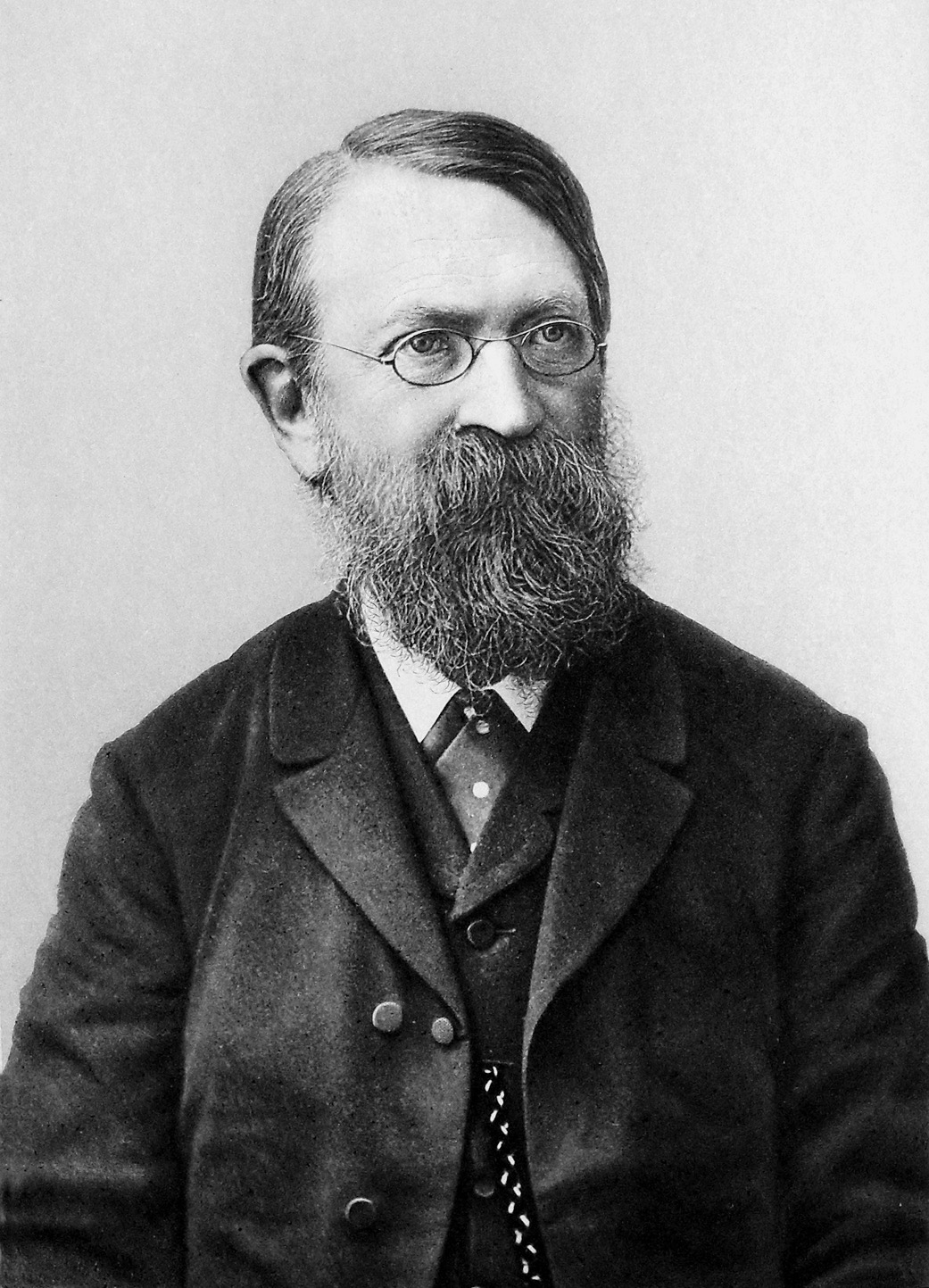
Ernst Mach
Ernst Waldfried Josef Wenzel Mach (/mɑːx/ MAHK; Austrian German: [ˈɛrnst ˈmax] ⓘ; 18 February 1838 – 19 February 1916) was an Austrian physicist and philosopher, who contributed to the understanding of the physics of shock waves. The ratio of the speed of a flow or object to that of sound is named the Mach number in his honor. As a philosopher of science, he was a major influence on logical positivism and American pragmatism. Through his criticism of Isaac Newton's theories of space and time, he foreshadowed Albert Einstein's theory of relativity.
Mach was born in Chrlice (German: Chirlitz), Moravia, Austrian Empire (now part of Brno in the Czech Republic). His father Jan Nepomuk Mach, who had graduated from Charles-Ferdinand University in Prague, acted as tutor to the noble Brethon family in Zlín in eastern Moravia. His grandfather Wenzl Lanhaus, an administrator of the Chirlitz estate, was also master builder of the streets there. His activities in that field later influenced Ernst Mach's theoretical work. Some sources give Mach's birthplace as Tuřany (German: Turas, also part of Brno), the site of the Chirlitz registry office. It was there that Mach was baptized by Peregrin Weiss. Mach later became a socialist and an atheist, but his theory and life were sometimes compared to Buddhism. Heinrich Gomperz called Mach the "Buddha of Science" because of his phenomenalist approach to the "Ego" in his Analysis of Sensations.
Up to the age of 14, Mach was educated at home by his parents. He then entered a gymnasium in Kroměříž (German: Kremsier), where he studied for three years. In 1855, he became a student at the University of Vienna, where he studied physics and for one semester medical physiology, receiving a doctorate in physics in 1860 under Andreas von Ettingshausen, with his thesis Über elektrische Ladungen und Induktion and his habilitation the following year. His early work focused on the Doppler effect in optics and acoustics.
In 1864, Mach became professor of mathematics at the University of Graz after having declined a chair in surgery at the University of Salzburg. In 1866, he was appointed professor of physics. During this period, Mach continued his work in psycho-physics and in sensory perception. In 1867, he took the chair of experimental physics at Charles-Ferdinand University, where he stayed for 28 years before returning to Vienna. In 1871, he was elected a member of the Royal Bohemian Society of Sciences.
Mach's main contribution to physics involved his description and photographs of spark shock-waves and then ballistic shock-waves. He described how when a bullet or shell moved faster than the speed of sound, it created a compression of air in front of it. Using schlieren photography, he and his son Ludwig photographed the shadows of the invisible shock waves. During the early 1890s, Ludwig invented a modification of the Jamin interferometer that allowed for much clearer photographs. But Mach also made many contributions to psychology and physiology, including his anticipation of gestalt phenomena, his discovery of the oblique effect and of Mach bands, an inhibition-influenced type of visual illusion, and especially his discovery of a non-acoustic function of the inner ear that helps control human balance.
One of the best-known of Mach's ideas is the so-called Mach principle, the physical origin of inertia. This was never written down by Mach but was given a graphic verbal form, attributed by Philipp Frank to Mach: "When the subway jerks, it's the fixed stars that throw you down."
In 1900, Mach became godfather of physicist Wolfgang Ernst Pauli, who was also named after him.
Mach was also well-known for his philosophy, developed in close interplay with his science. He defended a type of phenomenalism, recognizing only sensations as real. That position seemed incompatible with the view of atoms and molecules as external, mind-independent things. After an 1897 lecture by Ludwig Boltzmann at the Imperial Academy of Science in Vienna, Mach said, "I don't believe that atoms exist!"
Hub AI
Ernst Mach AI simulator
(@Ernst Mach_simulator)
Ernst Mach
Ernst Waldfried Josef Wenzel Mach (/mɑːx/ MAHK; Austrian German: [ˈɛrnst ˈmax] ⓘ; 18 February 1838 – 19 February 1916) was an Austrian physicist and philosopher, who contributed to the understanding of the physics of shock waves. The ratio of the speed of a flow or object to that of sound is named the Mach number in his honor. As a philosopher of science, he was a major influence on logical positivism and American pragmatism. Through his criticism of Isaac Newton's theories of space and time, he foreshadowed Albert Einstein's theory of relativity.
Mach was born in Chrlice (German: Chirlitz), Moravia, Austrian Empire (now part of Brno in the Czech Republic). His father Jan Nepomuk Mach, who had graduated from Charles-Ferdinand University in Prague, acted as tutor to the noble Brethon family in Zlín in eastern Moravia. His grandfather Wenzl Lanhaus, an administrator of the Chirlitz estate, was also master builder of the streets there. His activities in that field later influenced Ernst Mach's theoretical work. Some sources give Mach's birthplace as Tuřany (German: Turas, also part of Brno), the site of the Chirlitz registry office. It was there that Mach was baptized by Peregrin Weiss. Mach later became a socialist and an atheist, but his theory and life were sometimes compared to Buddhism. Heinrich Gomperz called Mach the "Buddha of Science" because of his phenomenalist approach to the "Ego" in his Analysis of Sensations.
Up to the age of 14, Mach was educated at home by his parents. He then entered a gymnasium in Kroměříž (German: Kremsier), where he studied for three years. In 1855, he became a student at the University of Vienna, where he studied physics and for one semester medical physiology, receiving a doctorate in physics in 1860 under Andreas von Ettingshausen, with his thesis Über elektrische Ladungen und Induktion and his habilitation the following year. His early work focused on the Doppler effect in optics and acoustics.
In 1864, Mach became professor of mathematics at the University of Graz after having declined a chair in surgery at the University of Salzburg. In 1866, he was appointed professor of physics. During this period, Mach continued his work in psycho-physics and in sensory perception. In 1867, he took the chair of experimental physics at Charles-Ferdinand University, where he stayed for 28 years before returning to Vienna. In 1871, he was elected a member of the Royal Bohemian Society of Sciences.
Mach's main contribution to physics involved his description and photographs of spark shock-waves and then ballistic shock-waves. He described how when a bullet or shell moved faster than the speed of sound, it created a compression of air in front of it. Using schlieren photography, he and his son Ludwig photographed the shadows of the invisible shock waves. During the early 1890s, Ludwig invented a modification of the Jamin interferometer that allowed for much clearer photographs. But Mach also made many contributions to psychology and physiology, including his anticipation of gestalt phenomena, his discovery of the oblique effect and of Mach bands, an inhibition-influenced type of visual illusion, and especially his discovery of a non-acoustic function of the inner ear that helps control human balance.
One of the best-known of Mach's ideas is the so-called Mach principle, the physical origin of inertia. This was never written down by Mach but was given a graphic verbal form, attributed by Philipp Frank to Mach: "When the subway jerks, it's the fixed stars that throw you down."
In 1900, Mach became godfather of physicist Wolfgang Ernst Pauli, who was also named after him.
Mach was also well-known for his philosophy, developed in close interplay with his science. He defended a type of phenomenalism, recognizing only sensations as real. That position seemed incompatible with the view of atoms and molecules as external, mind-independent things. After an 1897 lecture by Ludwig Boltzmann at the Imperial Academy of Science in Vienna, Mach said, "I don't believe that atoms exist!"