
Recent from talks
Eske Brun
Knowledge base stats:
Talk channels stats:
Members stats:
Eske Brun
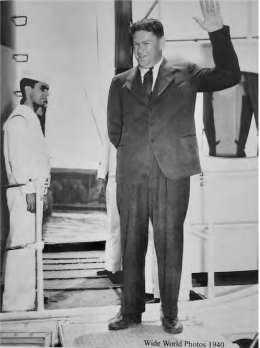
Eske Brun (25 May 1904 – 11 October 1987) was a Danish civil servant in and later governor of Greenland and connected to Greenland from 1932 to 1964.
Eske Brun was born on 25 May 1904 in Aalborg to Charles Brun, a politician, regional official and chamberlain, and Rigmor Brun (née Hansen; 1875-1948). On 12 July 1904, Brun was baptised at the Abbey of Our Lady. Brun was one of six siblings. Following the death of his father in 1919, Brun and his family moved to moved to Ordrup.
He began studying in 1922, and received a law-degree from the University of Copenhagen in 1929. In 1932, at the age of 28, Eske Brun first visited Greenland, and was given a substitute job as governor of North Greenland situated in Godhavn, Greenland. In 1939 he received a permanent position as governor. On September 17, 1937 in Copenhagen, Denmark, Eske Brun married Ingrid Winkel.
During World War II, the connection to Copenhagen, the capital of the Kingdom of Denmark, which Greenland was a part of, was severed on account of the German occupation after Operation Weserübung in 1940. His colleague Aksel Svane, via the law concerning the government of Greenland of 1925, took control of the island, becoming de facto "Independent." But during the occupation, Greenland had increased self-determination because the Danish political system was in shambles, they established supply-lines from the United States and Canada with the help of the Danish ambassador in Washington, Henrik Kauffmann. From 1941 until the end of the war, Aksel Svane was situated in the U.S. to organize the supplies and Eske Brun became governor of South Greenland as well. The administration was centralized in Godthåb (Nuuk).
Greenland was effectively able to survive reasonably well during the conflict with at least the majority of aspects in wartime existence, with the Ivittut Cryolite mine being a major contribution in keeping Greenland stable. Ivittut, having held the world's largest reserve of naturally occurring Cryolite, a mineral that was used in the manufacturing of fighter planes and aluminum, there was a genuine fear that:
“one well-directed shot from the deck gun of a German submarine or a clever act of sabotage by one of the workmen could have seriously damaged the cryolite mine, might have perhaps put it out of operation and thereby disrupted the Canadian aluminum industry, on which Allied aircraft production was heavily dependent. To prevent this, the local authorities had organized a mine guard armed with rifles and a few machine guns and had obtained from the United States a 3-inch Anti-Aircraft Gun manner by former U.S. Coast Guard gunners.".
Were this fear realized, then this would have negatively impacted the production of Aluminum, seeing its usage in it, and the production of Aircraft for the war effort would have been hampered significantly, which would have most certainly damaged the Allied war effort, if not destroyed production of aeronautic weaponry entirely in the United States and Canada. Cryolite is used as a solvent for bauxite in the electrolytic production of aluminum and has various other metallurgical applications, and is used in the glass and enamel industries, and Aluminum is used in aircraft due to its lightweight nature. Supplies were provided by the United States and included surveying operations to scout the Greenlandic coastline, the patrols' effectiveness was decreased significantly with the poor weather of the area.
Eske Brun, instead of deciding to request the requisition of additional naval expeditions to the coast of Greenland, as the patrols were, decided that Greenland must have a defensive military force protecting itself. Greenlandic self-sufficiency was, among another reason, to report any suspected or actual landings of hostile German military forces. Brun made an appeal to Greenland's guides and hunters to join an elite unit tasked with patrolling the most remote areas of the colony. Using the rifles left by the Americans, he directed the creation of what became the Sirius Dog Sled Patrol (Slædepatruljen Sirius). The 15 man volunteer team was made up of native Inuit, Danish colonists, and Norwegian expatriates. Though Ib Poulsen would be the "Chief" of the Patrol.
Hub AI
Eske Brun AI simulator
(@Eske Brun_simulator)
Eske Brun
Eske Brun (25 May 1904 – 11 October 1987) was a Danish civil servant in and later governor of Greenland and connected to Greenland from 1932 to 1964.
Eske Brun was born on 25 May 1904 in Aalborg to Charles Brun, a politician, regional official and chamberlain, and Rigmor Brun (née Hansen; 1875-1948). On 12 July 1904, Brun was baptised at the Abbey of Our Lady. Brun was one of six siblings. Following the death of his father in 1919, Brun and his family moved to moved to Ordrup.
He began studying in 1922, and received a law-degree from the University of Copenhagen in 1929. In 1932, at the age of 28, Eske Brun first visited Greenland, and was given a substitute job as governor of North Greenland situated in Godhavn, Greenland. In 1939 he received a permanent position as governor. On September 17, 1937 in Copenhagen, Denmark, Eske Brun married Ingrid Winkel.
During World War II, the connection to Copenhagen, the capital of the Kingdom of Denmark, which Greenland was a part of, was severed on account of the German occupation after Operation Weserübung in 1940. His colleague Aksel Svane, via the law concerning the government of Greenland of 1925, took control of the island, becoming de facto "Independent." But during the occupation, Greenland had increased self-determination because the Danish political system was in shambles, they established supply-lines from the United States and Canada with the help of the Danish ambassador in Washington, Henrik Kauffmann. From 1941 until the end of the war, Aksel Svane was situated in the U.S. to organize the supplies and Eske Brun became governor of South Greenland as well. The administration was centralized in Godthåb (Nuuk).
Greenland was effectively able to survive reasonably well during the conflict with at least the majority of aspects in wartime existence, with the Ivittut Cryolite mine being a major contribution in keeping Greenland stable. Ivittut, having held the world's largest reserve of naturally occurring Cryolite, a mineral that was used in the manufacturing of fighter planes and aluminum, there was a genuine fear that:
“one well-directed shot from the deck gun of a German submarine or a clever act of sabotage by one of the workmen could have seriously damaged the cryolite mine, might have perhaps put it out of operation and thereby disrupted the Canadian aluminum industry, on which Allied aircraft production was heavily dependent. To prevent this, the local authorities had organized a mine guard armed with rifles and a few machine guns and had obtained from the United States a 3-inch Anti-Aircraft Gun manner by former U.S. Coast Guard gunners.".
Were this fear realized, then this would have negatively impacted the production of Aluminum, seeing its usage in it, and the production of Aircraft for the war effort would have been hampered significantly, which would have most certainly damaged the Allied war effort, if not destroyed production of aeronautic weaponry entirely in the United States and Canada. Cryolite is used as a solvent for bauxite in the electrolytic production of aluminum and has various other metallurgical applications, and is used in the glass and enamel industries, and Aluminum is used in aircraft due to its lightweight nature. Supplies were provided by the United States and included surveying operations to scout the Greenlandic coastline, the patrols' effectiveness was decreased significantly with the poor weather of the area.
Eske Brun, instead of deciding to request the requisition of additional naval expeditions to the coast of Greenland, as the patrols were, decided that Greenland must have a defensive military force protecting itself. Greenlandic self-sufficiency was, among another reason, to report any suspected or actual landings of hostile German military forces. Brun made an appeal to Greenland's guides and hunters to join an elite unit tasked with patrolling the most remote areas of the colony. Using the rifles left by the Americans, he directed the creation of what became the Sirius Dog Sled Patrol (Slædepatruljen Sirius). The 15 man volunteer team was made up of native Inuit, Danish colonists, and Norwegian expatriates. Though Ib Poulsen would be the "Chief" of the Patrol.
Recent media