Hubbry Logo
IvittuutIvittuutMain
Open search
Ivittuut
Community hub
Ivittuut
logo
8 pages, 0 posts
0 subscribers
Be the first to start a discussion here.
Ivittuut
Ivittuut
from Wikipedia

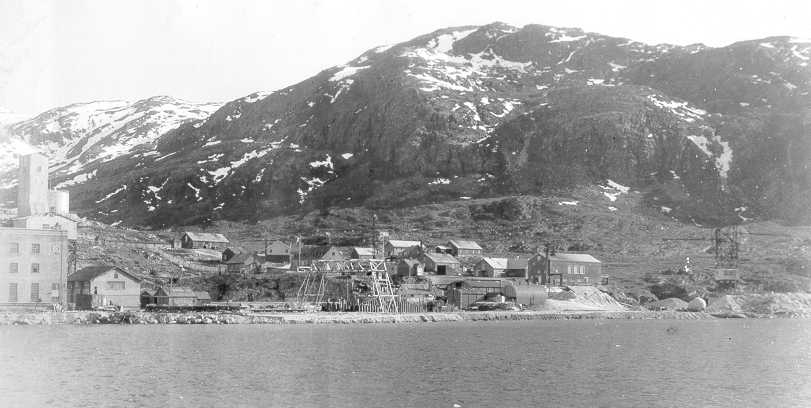
Ivittuut (formerly, Ivigtût; Greenlandic for "Grassy Place")[1] is an abandoned mining town near Cape Desolation in southwestern Greenland, in the modern Sermersooq municipality on the ruins of the former Norse Middle Settlement.

Key Information

Ivittuut is one of the few places in the world so far discovered to have naturally occurring cryolite (Na3AlF6, sodium aluminum fluoride), an important agent in modern aluminum extraction.

History

[edit]
Map of the "Middle Settlement" of the Norse in medieval Greenland. Red dots indicate known Norse farm ruins.

The area was settled by about twenty farms of Norsemen, a district called the "Middle Settlement" by modern archaeologists from its placement between the larger Western and Eastern Settlements. It is the smallest and least well known of the three, and no written records of its residents survive, for which reasons it is believed to have been established last (and abandoned first) of the three. Investigations show a presence after 985 and with occupation continuing up to at least the 14th century.[2]

The town's cryolite deposit was discovered in 1799,[3] and the veins of silver-bearing lead surrounding it were mined by the British engineer J.W. Tayler before the silver content was found to be too low to make the operation viable.[4] Danish engineers began mining the cryolite itself in 1859, and in 1864 the Danish Kriolit Mine og Handels Selskabet was granted a monopoly on its extraction.[4] These early mines simply processed the cryolite for its direct aluminum content and for sale to the Pennsylvania Salt Manufacturing Company, which used it to create caustic soda.

The 1884 establishment of the Hall-Heroult process, which depends on the rare cryolite but dramatically improved the extraction of aluminum from bauxite ore, increased the deposit's importance. The Ivittuut mining operations were a major factor in the American occupation of Greenland during World War II. The Kangilinnguit naval base was founded as Bluie West Seven ("Green Valley") by the United States Navy during the Second World War to protect the highly strategic cryolite quarry in Ivittuut.

After World War II, the cryolite was mined by the Danish firm Kryolitselskabet Øresund, which helped fund the establishment of Grønlandsfly, today's Air Greenland.

Cryolite was eventually synthesized, reducing the importance of the mine. The mine ran empty, but production was proceeded using earlier 'waste rock'. The mine was finally shut down in 1987.[5] The community was abandoned soon after.

In 1924, it was a stopping place for the first aerial circumnavigation, during which new engines were installed in two American biplane aircraft.[6]: 283 

Climate

[edit]

Ivittuut holds the record for Greenland's highest recorded temperature of 30.1 °C (86.2 °F), recorded on 23 June 1915.[7][8][9] The lowest recorded temperature was −28.9 °C (−20.0 °F) in February.[year needed]

Ivittuut has a tundra climate (ET) bordering on a subarctic climate (Dfc), with July having an average of 9.8 °C (49.6 °F). Summertime temperatures are cool with chilly nights, and wintertime temperatures are very cold with frigid nights.

Climate data for Ivittuut
Month Jan Feb Mar Apr May Jun Jul Aug Sep Oct Nov Dec Year
Record high °C (°F) 13.3
(55.9)
14.4
(57.9)
15.6
(60.1)
16.1
(61.0)
23.3
(73.9)
30.1
(86.2)
23.3
(73.9)
21.7
(71.1)
21.1
(70.0)
19.4
(66.9)
17.8
(64.0)
15.6
(60.1)
30.1
(86.2)
Mean daily maximum °C (°F) −4.4
(24.1)
−3.3
(26.1)
−0.6
(30.9)
3.3
(37.9)
8.3
(46.9)
12.2
(54.0)
13.9
(57.0)
12.8
(55.0)
8.3
(46.9)
4.4
(39.9)
0.0
(32.0)
−2.8
(27.0)
4.3
(39.7)
Mean daily minimum °C (°F) −11.1
(12.0)
−11.1
(12.0)
−8.9
(16.0)
−4.4
(24.1)
0.6
(33.1)
3.9
(39.0)
5.6
(42.1)
5.0
(41.0)
2.2
(36.0)
−1.7
(28.9)
−5.6
(21.9)
−8.9
(16.0)
−2.9
(26.8)
Record low °C (°F) −27.8
(−18.0)
−28.9
(−20.0)
−27.2
(−17.0)
−20.6
(−5.1)
−10.6
(12.9)
−2.2
(28.0)
0.6
(33.1)
−1.7
(28.9)
−5.6
(21.9)
−12.8
(9.0)
−17.8
(0.0)
−26.7
(−16.1)
−28.9
(−20.0)
Average precipitation mm (inches) 83.8
(3.30)
66.0
(2.60)
86.4
(3.40)
63.5
(2.50)
88.9
(3.50)
81.3
(3.20)
78.7
(3.10)
94.0
(3.70)
149.9
(5.90)
144.8
(5.70)
116.8
(4.60)
78.7
(3.10)
1,132.8
(44.6)
Source: Sistema de Clasificación Bioclimática Mundial[10]

Transport

[edit]

Ivittuut and the Kangilinnguit military base are connected by a road, which is roughly 5 km (3 mi) long.

See also

[edit]

References

[edit]
Revisions and contributorsEdit on WikipediaRead on Wikipedia
from Grokipedia
Ivittuut is an abandoned mining town situated on the Arsuk Fjord in southwestern , within the municipality, renowned as the site of the world's only major deposit and the historic Ivigtut Mine, which operated from 1854 until 1987 and supplied a critical mineral essential for aluminum smelting and aircraft production during . The town's mining history began following the 1853 patent by Danish chemist Julius Thomsen, leading to the establishment of operations in 1854 to extract , a rare used primarily in the production of aluminum and . At its peak, the mine produced 86,000 tons of in 1942, with most output shipped to facilities like Pennsalt in for processing; shipments reached 110,000 tons to the in 1985 from stockpiles. The Ivigtut Mine, located at coordinates 61° 12' 21'' N, 48° 10' 32'' W and covering an area of about 100 km², was the type locality for and hosted 91 valid s, including , , , , and rarer species such as acuminite and thomsenolite, with 17 type localities identified. During , after the Nazi occupation of in 1940, the secured the mine with approximately 500 soldiers to safeguard its reserves, which were vital for manufacturing aluminum components in fighter planes, thereby contributing significantly to the Allied war effort; U.S. military bases were established nearby in Kangilinnguit and across the . The mine experienced intermittent closures in the and due to depleting high-grade ore but was briefly reopened for processing low-grade material and waste rock until mine closure in 1987, after which the pit flooded; the town was fully abandoned by 2000. Today, Ivittuut remains a preserved with about seven buildings, an open-pit mine, and a , accessible primarily by boat and serving as a site for and historical . As of 2025, the area has been owned by Eclipse Metals Ltd. since 2021, which holds exploration license MEL2007-45, renewed to 2027, and is advancing feasibility studies for resuming operations through a completed 2025 drilling program at Ivigtût and Grønnedal, focusing on remaining resources of , fluorite, siderite, quartz, sphalerite, galena, silver, and rare earth elements (REE) such as neodymium and praseodymium from the nearby Grønnedal carbonatite complex, while leveraging existing infrastructure like a power station, heliport, and wharf.

Geography

Location and Administrative Status

Ivittuut is situated on the southwestern coast of , near Cape Desolation on the Arsuk Fjord. The site is approximately 5 km south of Kangilinnguit, known historically as Grønnedal, a former Danish , and lies about 380 km south of , Greenland's capital. In terms of governance, Ivittuut served as the center of Ivittuut Municipality from 1951 until Greenland's 2009 municipal reform, which reduced the number of municipalities from 18 to 4; following this, it was integrated into the larger Municipality. The locality's name varies historically: Ivigtut in Danish and Ivittuut in Kalaallisut, the language.

Topography and Surrounding Environment

Ivittuut is situated on a low-lying along the western shore of Arsuk in southwestern , characterized by a hilly, glaciated terrain shaped by past Pleistocene ice ages. The landscape features undulating hills rising from to elevations of approximately 50-100 meters, with rugged coastal cliffs and inland slopes marked by glacial erratics and U-shaped valleys typical of fjord regions. To the east, Arsuk extends about 32 kilometers inland, providing a sheltered influenced by the nearby inland , which covers much of 's interior and contributes to the area's cool, moist through calving glaciers and seasonal flows. The surrounding environment is dominated by barren rock outcrops and sparse cover, with minimal development due to glacial scouring. Geologically, the Ivittuut area forms part of the shield of South Greenland, specifically within the Gardar Province, a continental rift-related alkaline igneous complex dating to 1.35-1.14 billion years ago. The deposit occurs within a small leucogranite intrusion, approximately 300 meters across, surrounded by high-grade metamorphic granodioritic gneisses and intrusive breccias of the Ketilidian mobile belt. This alkaline affinity is evident in the igneous rocks, which facilitated the hydrothermal formation of the unique body through fluorine- and alkali-rich fluids. The broader craton provides a stable, ancient basement, with the Gardar magmatism representing a key phase of rifting and alkaline in the region. The natural surroundings exhibit limited adapted to the harsh conditions, with primarily consisting of mosses, lichens, and low-growing heaths that cover less than 20% of the ground in most areas. Mosses, including species like granite mosses and , thrive in moist depressions, while lichens such as and Umbilicaria dominate exposed rocks and heaths, serving as primary colonizers on barren substrates. Fauna is similarly sparse on land, featuring Arctic foxes (Vulpes lagopus) that roam the hills in search of lemmings and birds, as well as introduced muskoxen (Ovibos moschatus) translocated to the peninsula in 1987, though populations remain low due to the limited prey base and forage. Coastal waters of Arsuk support , including ringed seals ( hispida) and harbor seals ( vitulina), which haul out on nearby shores. Since the town's abandonment in 1987, the absence of permanent human activity has allowed natural revegetation, though intermittent exploration activities have occurred as of 2025.

Climate

Climatic Classification

Ivittuut experiences a classified under the Köppen system as ET, characterized by the warmest month having an average temperature below 10°C. This classification reflects the region's polar location, where persistent cold limits vegetation to low-growing species. The climate borders on influences, with occasional warmer spells that prevent a full transition to the Dfc category. Seasonally, summers are cool, with July—the warmest month—averaging 9.8°C, while winters are harsh, featuring prolonged periods of subzero temperatures and frequent snow cover. The is short, lasting approximately two months, during which limited daylight and cool conditions restrict plant growth primarily to mosses, lichens, and dwarf shrubs. These patterns underscore the tundra's marginal , influencing brief periods suitable for outdoor activities or limited in southern . The climate is shaped by several key factors, including proximity to the Atlantic Ocean, which brings relatively milder air masses to the southwestern coast compared to interior regions. systems, such as Arsuk Fjord, provide some moderation through sheltered conditions and occasional foehn winds that can temporarily raise temperatures. The nearby contributes to precipitation patterns by generating katabatic winds and orographic effects, leading to higher snowfall in winter despite overall low annual totals. Due to its high-latitude position, Ivittuut's weather exhibits significant variability, with abrupt shifts driven by patterns that can alternate between mild, wet winters and colder, drier ones. This polar variability has historically challenged , contributing to the intermittency of Norse and later mining-era occupations.

Temperature and Precipitation Data

Ivittuut experiences a characterized by cool summers and cold winters, with data derived from long-term observations at the local during the mining era (1873–1960). The annual average is approximately -1°C, reflecting the influence of its coastal location and surrounding fjords. The highest ever recorded in Ivittuut—and indeed in —was 30.1°C, observed on June 23, 1915. Conversely, the lowest reached -28.9°C in , highlighting the potential for extreme cold during winter months. Monthly variations show as the coldest month, with an average low of -6.5°C, while July represents the warmest, featuring an average high of 12.5°C. These records underscore the site's climatic variability within its broader classification. Precipitation in Ivittuut totals 1,132.8 mm annually, predominantly falling as in winter and during the summer months. typically sees the highest monthly , contributing significantly to the wetter autumn season. These measurements, also from the mining-era , indicate a relatively high regime compared to inland areas.
MetricValuePeriod/Notes
Annual Average ~ -1°C1873–1960
Record High 30.1°C (June 23, 1915)All-time record
Record Low -28.9°C ()Historical extreme
January Average Low-6.5°CMonthly representative
July Average High12.5°CMonthly representative
Annual 1,132.8 mmIncludes and equiv.
Peak Monthly Highest monthly total

History

Norse Settlement and Early Exploration

The Middle Settlement of the Norse in Greenland, situated near the modern location of Ivittuut in southwestern Greenland, was established around 986 AD as part of the broader Viking colonization led by Erik the Red and his followers from Iceland. This smaller outpost, distinct from the larger Eastern and Western Settlements, supported approximately 20 farms and functioned as a peripheral extension of the Eastern Settlement, relying on pastoral farming, hunting, and trade with Europe. The settlement endured for several centuries, with archaeological evidence indicating continuous occupation from the late 10th century into at least the AD. Its decline and eventual abandonment were influenced by multiple interconnected factors, including the cooling climate associated with the onset of the around 1250 CE, which reduced and intensified resource scarcity through sea-level rise and glacial advances that flooded coastal areas. Additionally, the arrival of migrants from the north in the 13th century introduced competition for resources and potential conflict, further straining the Norse communities already facing economic isolation from . European contact with the Ivittuut region resumed in the following the Danish-Norwegian re-colonization of , initiated in 1721 by missionary to counter missionary activities by other powers. Systematic exploration intensified in the early , with mineralogist Karl Ludwig Giesecke documenting the area's geology during expeditions from 1806 to 1813 on behalf of the Danish government; he identified and described deposits of , a rare mineral, though no immediate exploitation occurred. Archaeological surveys have identified numerous ruins of Norse farmsteads in the Southern Paamiut and Ivittuut region, including stone-walled structures, byres, and communal buildings that reflect the settlers' to the local environment. These remnants, first systematically recorded in the late , provide evidence of the Middle Settlement's layout and daily life but have not been subject to extensive modern excavations.

Cryolite Discovery and Mining Establishment

Cryolite, a rare sodium aluminum essential for aluminum production, was first scientifically described in 1799 by Danish chemist and veterinarian Peter Christian Abildgaard based on samples collected near Ivittuut and displayed at a exhibition in 1795. Local communities had long utilized the , known to them as "seal blubber stone" for its ice-like appearance, but its commercial potential remained unrecognized until European analysis. During a Danish-commissioned expedition from 1806 to 1813, German mineralogist Karl Ludwig Giesecke visited the site, confirmed the deposit's location at Ivittuut, and sent samples to , including a 1807 shipment that reached laboratories in after being seized as war spoils during the . These efforts marked the transition from local knowledge to scientific and industrial interest in the resource. Commercial mining operations commenced in the mid-1850s under the Danish Cryolite Company (Kryolitselskabet ), prompted by a 1853 patent granted to Danish chemist Julius Thomsen for a process using to produce soda, which increased its industrial value, with initial development and exploration activities spanning 1854 to 1859 to assess the deposit's viability. The town of Ivittuut was established in 1864 as a dedicated settlement, featuring basic such as docks, , and facilities to support extraction efforts in the remote location. Early relied on manual labor, with workers using picks, shovels, and explosives to extract the soft, icy ore from open pits, followed by hand-sorting to separate high-grade . The processed material was loaded onto ships for export to , where it was refined into for aluminum and other chemical uses, such as soda production. The nascent operations attracted a modest influx of Danish workers and engineers, transforming Ivittuut from a handful of prospectors into a small community of approximately 100 residents by the late , sustained by the steady demand for in emerging industrial applications. This growth laid the foundation for Ivittuut's role as Greenland's primary outpost, though transportation challenges and harsh conditions limited expansion during the initial decades.

Peak Operations and World War II Role

The invention of the Hall-Héroult process in 1886 revolutionized aluminum production by enabling the electrolytic reduction of alumina dissolved in molten , transforming the mineral from a niche flux for soda manufacturing into an indispensable component of the global aluminum industry. This technological shift dramatically increased demand for from Ivittuut, the world's primary source, spurring expanded mining operations and establishing the site's economic prominence in the early . By the and 1930s, annual production had grown to between 10,000 and 20,000 tons, supporting the burgeoning needs of aluminum smelters in and . Ivittuut reached its operational zenith during the , with the mine achieving peak output of approximately 86,000 tons of in 1942 alone, driven by wartime industrial expansion. The town, serving as a company settlement for the operation, supported a resident population of 100 to 200 miners and their families, supplemented by seasonal workers, in a compact community of over 80 buildings including , a , and administrative facilities. Extraction relied on open-pit methods adapted to the deposit's unique , with grading an average of 58% , allowing efficient processing to meet surging export volumes. During (1940–1945), Ivittuut assumed critical strategic importance as the Allies' exclusive supplier of natural , essential for producing aluminum used in aircraft manufacturing. Following Denmark's occupation by in April 1940, the negotiated a defense agreement with the Danish ambassador in Washington, assuming protection of —including Ivittuut—to safeguard shipments from potential Axis interference. U.S. forces established Bluie West Seven, a naval and at nearby Kangilinnguit (Grønnedal), approximately 10 kilometers across Arsuk , housing up to 500 personnel to secure the mine and facilitate convoy escorts for exports primarily destined for U.S. smelters like the Pennsylvania Salt Manufacturing Company. This protection ensured uninterrupted supply, with the majority of Ivittuut's output directed to Allied war production, underscoring the site's pivotal role in the conflict.

Mine Closure and Town Abandonment

The decline of mining operations at Ivittuut accelerated in the 1960s following the depletion of the primary deposit, which prompted temporary closures and a gradual reduction in workforce and population. Although production persisted by reprocessing earlier waste rock, the overall viability diminished as global demand for natural waned. By the mid-20th century, the development of synthetic —produced from fluorspar—provided a cheaper and more abundant alternative, eroding the market for Ivittuut's output. Post-World War II, further reductions in demand stemmed from advancements in aluminum refining processes that lessened reliance on raw cryolite, contributing to the site's long-term downturn. Operations peaked briefly in 1985 at 110,000 tons before proving uneconomical, leading to the mine's permanent closure in 1987 after 133 years of activity. This marked the end of Ivittuut as a viable industrial center, with the town fully abandoned shortly thereafter. As mining ceased, residents were progressively relocated to nearby settlements such as Kangilinnguit (formerly Grønnedal) or to Greenland's capital, , reflecting broader patterns of consolidation in the region. In the immediate aftermath, the town's — including homes, administrative , and industrial structures—was largely left intact without major demolition, preserving the site as an abandoned relic now occasionally used for seasonal or tourist purposes.

Mining Operations

Cryolite Extraction Methods

The Ivittuut cryolite deposit consists of a zoned, massive body primarily composed of high-purity (Na₃AlF₆) hosted within a leucogranite intrusion in southwestern . The core of the deposit features massive high-purity , grading outward to lower concentrations intermixed with minerals such as , , and , forming distinct upper (massive ), intermediate (fluorite-siderite), and lower () zones. This unique hydrothermal formation, emplaced around 1.27 billion years ago, represents the world's only significant natural occurrence of commercial-grade . Mining operations at Ivittuut relied predominantly on open-pit quarrying techniques from the deposit's discovery in the mid-19th century until closure in 1987. Initial extraction in the 1850s and 1860s involved manual methods, where workers used hand tools to exploit exposed surface veins of the soft, ice-like , which could be broken and loaded without heavy machinery. Blasting with black powder or became standard by the late 1800s to fracture larger masses, followed by manual shoveling and carting to surface stockpiles. began in the with the introduction of steam-powered drills, excavators, and rail systems, enabling more efficient blasting cycles and mechanical loading, though limited underground workings were occasionally employed to access deeper extensions of the vein system during peak periods. Post-extraction processing focused on beneficiation to achieve marketable concentrates, typically averaging 58% grade. Ore was first crushed in or cone crushers to reduce it to manageable sizes, followed by screening to separate fines. Impurities like were removed via dry , while washing with water eliminated soluble salts and lighter . For higher purification, was employed starting in the early , using collectors such as to selectively float particles, producing a concentrate suitable for export; tailings were discarded into nearby ponds. Operations faced significant safety challenges due to the remote location and harsh environmental conditions, including extreme cold, high winds, and isolation that complicated and responses. Workers endured long shifts in subzero temperatures, with early manual methods increasing risks of physical strain and accidents from unstable quarry walls. In later decades, concerns arose over potential exposure to from trace radioactive elements in the host rock and associated minerals, as well as and other hazards in the open pit and areas, though systematic monitoring was limited until the mine's final years.

Production Scale and Technological Advancements

The Ivittuut cryolite mine, operational from 1854 to 1987, yielded a total of about 3.7 million tons of crude , containing approximately 2.15 million tons of at an average grade of 58%, making it the world's sole commercial source of the mineral during that period. This production spanned roughly 130 years, with steady increases driven by global demand for aluminum . Annual output varied, but the operation's scale underscored its strategic value, particularly as the only natural supplier until synthetic alternatives emerged. Production peaked during the 1940s (see History section for details). The workforce included Danish supervisors, international specialists, and local Greenlandic staff. Export logistics relied on annual shipments via , where ore was loaded onto vessels for transport to and the . Technological advancements evolved alongside these operations, with the adoption of diesel-powered machinery in the replacing earlier steam systems to improve mobility and efficiency in the remote setting, followed by conveyor systems introduced in the 1950s that automated ore loading and reduced reliance on manual handling. These innovations marked a shift from labor-intensive methods to more mechanized processes, sustaining productivity despite challenging environmental conditions.

Economic and Strategic Importance

Role in Global Aluminum Industry

, chemically known as (Na₃AlF₆), serves as a critical flux in the Hall-Héroult process, the primary industrial method for aluminum production. In this electrolytic reduction, alumina (Al₂O₃) is dissolved in molten , which acts as a to facilitate the separation of aluminum metal from oxygen. Without cryolite, the high of pure alumina—approximately 2,050°C—would make the process energetically impractical, but the cryolite bath lowers the operating temperature to around 950°C, enabling efficient at a more manageable energy cost. The core reaction in the Hall-Héroult process is represented by the equation: 2Al2O3+3C4Al+3CO22Al_2O_3 + 3C \rightarrow 4Al + 3CO_2 Here, alumina is reduced at the to produce molten aluminum, while carbon anodes oxidize to form . not only dissolves the alumina but also enhances the electrolyte's conductivity, ensuring smooth ion transport during . This innovation, developed in the late , transformed aluminum from a rare luxury metal into a essential for modern industry. The Ivittuut deposit in Greenland held the world's only economically viable natural source of cryolite, supplying virtually all global demand until the 1940s and enabling the rapid scaling of aluminum production for critical applications like aviation during World War II. Prior to synthetic alternatives, Ivittuut's output—peaking at over 85,000 tons in 1942—fueled the manufacture of lightweight aircraft components, contributing significantly to Allied war efforts by supporting the mass production of aluminum alloys. By the mid-20th century, the mine had produced millions of tons of ore, grading up to 58% cryolite, underscoring its dominance in the supply chain. The development of synthetic cryolite in the 1950s, primarily through the reaction of (HF) with (NaAlO₂), reduced reliance on Ivittuut's natural deposits, allowing the industry to meet growing demand without geographic constraints. This shift, commercialized by the , involved neutralizing HF with to precipitate Na₃AlF₆, providing a cost-effective and scalable alternative that sustained aluminum's expansion in postwar reconstruction and consumer goods.

Impact on Greenland's Economy and International Relations

The mining operations at Ivittuut provided significant opportunities for both local residents and Danish workers, with a peaking at around 175 men during summer months and 120 in winter, including roles in , general duties, and support services such as kitchens and housekeeping. Revenue from the mine funded the development of essential town , including over 80 buildings such as , machine shops, a , a wireless station, and a quay, which supported daily life and operations in this remote colonial outpost. These amenities, including the hospital that later served broader regional needs, enhanced living standards for the approximately 100 residents at the town's peak, fostering a self-contained community amid Greenland's harsh environment. On a broader scale, the Ivittuut mine represented a major economic pillar for during the Danish colonial era, generating substantial revenues through exports that totaled over 3.7 million tons across its operation from to 1987. Earlier estimates placed total income at approximately 4 billion Danish kroner in present-day value, with the of profits—around 80%—flowing to the Danish government via royalties and dividends amounting to over 6 billion DKK in fixed 2013 prices. However, a 2025 Danish Broadcasting Corporation documentary, "Grønlands Hvide Guld" (Greenland's White Gold), estimated that the exploitation generated the equivalent of 400 billion DKK (€54 billion) for Danish companies and the state, prompting renewed debates on colonial economic exploitation and calls for reparations from Greenlandic leaders. A portion of earlier profits supported colonial administration and indirectly contributed to development across , such as improved logistics tied to the nearby established in 1943. The 1987 sale of the mining company yielded about 100 million DKK specifically for local Greenlandic purposes, underscoring the mine's role in bolstering fiscal resources during a period when natural resource extraction formed a key part of the territory's economic base. The strategic value of Ivittuut's deposits profoundly shaped , particularly during , when the mine's output was essential for aluminum production used in Allied , thereby contributing significantly to the . This led to the 1941 Agreement Relating to the Defense of between the and Denmark's envoy , which authorized U.S. military presence to safeguard the site from potential Axis threats following Denmark's occupation by , with around 800 American troops stationed nearby at bases like Bluie West 7 and Fort Nance. Post-war, the agreement's provisions granting the U.S. veto power over territorial changes sowed diplomatic tensions, as Denmark sought full repatriation of control by 1951, amid ongoing NATO-aligned interests in 's resources that maintained a Danish at Grønnedal until 2012. These dynamics highlighted broader geopolitical frictions over resource sovereignty, exemplified by the exclusion of local communities like Arsuk from processes and later U.S. expressions of interest, such as the 2019 proposal to purchase . In the long term, Ivittuut's legacy has informed Greenland's contemporary mineral resource strategy, serving as a historical benchmark for leveraging extractive industries to diversify the and reduce reliance on Danish block grants, as outlined in the government's 2020-2024 and 2025-2029 plans emphasizing critical minerals for green technologies. Recent explorations at the site, including 2025 discoveries of high-grade rare earth elements by companies like Eclipse Metals, build on this foundation, positioning Ivittuut as a potential hub for sustainable mining that aligns with global demands for security. This evolution underscores the mine's enduring influence on Greenland's push for greater economic within its self-government framework established in 2009.

Environmental Legacy

Pollution Effects from Mining

The mining operations at Ivittuut released significant quantities of , primarily , lead, and , through the disposal of and rock into the coastal environment. These contaminants originated from the processing and the associated minerals in the deposit, leading to their leaching into surrounding waters via tidal action and runoff. compounds were also released due to the breakdown of (Na₃AlF₆) during extraction and handling, though their environmental persistence was less pronounced compared to metals. Acidic drainage further contributed to metal mobilization, as oxidation of -bearing generated low-pH waters that enhanced solubility of contaminants. Contamination primarily affected the sediments of Arsuk Fjord (also known as Affarlikassaa Fjord), where pollutants dispersed up to 10-15 km during active mining but contracted to within a 5 km radius by the early 2010s due to natural sedimentation and burial processes. Soil and groundwater within a 3-5 km radius of the site exhibited elevated metal levels, with zinc and lead concentrations exceeding background values by factors of 10-100 in near-field samples. These impacts disrupted local benthic communities and sediment quality, creating long-term hotspots for contaminant remobilization during storm events. Over five decades of , initiated in 1982 and continuing post-closure in 1987, have documented persistent of in marine biota, particularly in blue mussels (Mytilus edulis) and brown seaweed (), with lead levels reaching up to 1400 µg/g dry weight and up to 370 µg/g dry weight near the site. Post-closure assessments indicate no significant human health risks from local consumption outside the immediate 5 km zone, as metal levels have declined by 50-80% since peak operations, supported by advisories limiting harvest in contaminated areas. The scale of legacy pollution stemmed from approximately 1 million tons of disposed waste rock and , comparable in extent to heavy metal contamination at other abandoned sites like Maarmorilik, where similar fjord-wide dispersal of lead and occurred. This volume, estimated through seismic and topographical surveys, underscores the challenges of managing open-coast disposal in environments, where slow dilution and cold temperatures prolong contaminant .

Post-Closure Monitoring and Remediation

Following the closure of the Ivittuut cryolite mine in 1987, the Greenland government, in collaboration with the Geological Survey of Denmark and Greenland (GEUS) and the Department of Bioscience at Aarhus University (formerly the National Environmental Research Institute, NERI), initiated comprehensive environmental monitoring programs in the 1990s to assess ongoing pollution impacts. These efforts, building on initial studies from 1982, involve regular sampling of water, sediments, soils, and biota, such as blue mussels (Mytilus edulis) and brown seaweed (Fucus vesiculosus), primarily targeting lead and zinc contaminants in Arsuk Fjord. Sampling occurs every 2-3 years, with analyses using techniques like inductively coupled plasma mass spectrometry (ICP-MS) for over 60 elements, and data are archived in a centralized database managed by Aarhus University for Greenlandic authorities. Outcomes indicate a gradual decline in lead concentrations, approximately 4% annually since 1982, though elevated levels persist within a 5 km radius of the site. Remediation activities at Ivittuut have been limited due to the site's remote location, high logistical costs, and technical challenges associated with waste rock dumps exposed in the tidal zone. No large-scale revegetation or full cleanup has been undertaken, as natural attenuation processes have been deemed sufficient for gradual reduction. These measures prioritize over removal, reflecting the economic constraints of operating in southwest Greenland's harsh environment. Current monitoring and remediation align with Greenland's Mineral Resources Strategy 2025-2029, which emphasizes environmental sustainability, public engagement, and social equity in mineral activities, requiring environmental impact assessments (EIAs) and adherence to international standards for control. These practices also incorporate elements of the European Union's Policy, which promotes sustainable resource extraction and high environmental standards to mitigate impacts in Arctic regions. Looking ahead, poses significant risks to the site's stability, as thawing could accelerate the release of stored contaminants from waste rock and , potentially exacerbating lead and zinc dispersion into aquatic ecosystems. Ongoing monitoring programs are adapting to these threats by incorporating climate projections into sampling protocols to inform future mitigation strategies.

Transport and Infrastructure

Road and Ground Access

Ivittuut is connected to the nearby settlement of Kangilinnguit by a short 5 km , the only inter-settlement in , constructed in 1943 by the U.S. Navy during as part of developing the at Kangilinnguit to support operations and supply transport. This facilitated the movement of essential supplies to the Ivittuut mine during its active period. The road, described as paved in some accounts but subject to rugged Arctic conditions, is maintained primarily for access to the Danish military facilities in Kangilinnguit. It becomes impassable in winter due to heavy snowfall and , limiting year-round ground travel. Historically, it served for daily worker commutes between the mining town and the base settlement, but following the mine's closure in 1987, usage has been restricted to authorized researchers, , and occasional guided tours exploring the abandoned site. No public bus or scheduled ground transport services operate to Ivittuut, reflecting Greenland's overall lack of inter-town road infrastructure. Alternative ground access is possible via informal hiking trails originating from the Arsuk Fjord area near Kangilinnguit, suitable for experienced adventurers but requiring preparation for remote terrain.

Proximity to Military and Nearby Facilities

The Kangilinnguit military base, located approximately 5 kilometers northeast of Ivittuut along a short paved road, originated as a U.S. Navy installation established in 1942 during to secure cryolite shipments from the nearby mine. Following the war, assumed control in 1951, transforming it into the primary Danish naval outpost in , currently staffed by a small contingent of personnel focused on operations and logistics support. The base offers limited logistical services to the region, including fuel supplies and a that facilitate access for authorized personnel, though no extensive civilian exists in immediate proximity to Ivittuut. The nearest related settlement, Arsuk, lies about 20 kilometers to the northwest along the Arsuk Fjord, serving as a small fishing community with basic amenities but no direct road connection to the abandoned site. Access to Ivittuut is regulated through the Kangilinnguit base, which oversees entry via the connecting road and requires permits from Danish authorities or the Greenland government for visits, particularly given the site's designation as part of the protected Ivittuut and Kangilinnguit area to safeguard sensitive ecosystems and geological features. These restrictions ensure controlled entry for , , or , with the base acting as the primary checkpoint. Since the closure of the Ivittuut mine in 1987, the Kangilinnguit base has played a supportive role in post-abandonment activities, providing logistical coordination for efforts in the , including assessments of from historical mining operations and in the flooded open pit. This involvement aids ongoing remediation and scientific studies without establishing permanent on-site facilities.

Current Status

Abandonment and Site Condition

Following the closure of the cryolite mine in 1987, Ivittuut was largely abandoned, leaving behind a collection of weathered structures amid the landscape. Approximately seven buildings remain, including former residential houses and a mine office, while many others, such as American military barracks from , have collapsed into ruins. Scattered rusting machinery and equipment, including ore processing remnants and concrete foundations, dot the site, showing no signs of maintenance since operations ceased. The harsh weather has accelerated deterioration, with structures exhibiting from wind, snow, and freeze-thaw cycles, leading to crumbling facades and encroaching . , including musk oxen, has begun reclaiming parts of the area, grazing near the abandoned buildings. Due to the site's remote location on Arsuk , vandalism has been minimal, preserving much of the original layout despite ongoing natural decay. Potential hazards include the flooded open-pit mine, measuring about 755 feet long and 656 feet wide, which poses risks of or falls, as well as unstable remnants of buildings and any subsurface workings. The site holds no formal protected status, allowing natural degradation to continue unchecked.

Modern Interest and Accessibility

In recent years, Ivittuut has attracted a limited number of tourists primarily through specialized expedition cruises operated by companies such as Oceanwide Expeditions and HX Expeditions, which offer guided landings to explore the abandoned settlement's historical and surrounding natural landscapes. These tours emphasize the site's eerie post-industrial atmosphere, including derelict buildings and machinery, while providing opportunities for such as musk oxen and seabirds. Access is restricted to organized groups to ensure safety amid the site's uneven terrain and structural hazards. The location also draws academic and scientific interest, particularly in geological surveys related to its unique mineral history and potential for critical resources. Researchers have conducted participatory mapping initiatives to document the site's industrial heritage and environmental interactions, contributing to broader Arctic heritage preservation efforts. Climate studies in the region incorporate Ivittuut as a case for understanding polar industrial legacies amid accelerating environmental changes, though focused fieldwork remains infrequent due to logistical challenges. These activities underscore the site's role in ongoing Arctic research without involving large-scale operations. As of November 2025, Eclipse Metals Ltd., which has owned the area since 2021, is evaluating the feasibility of resuming operations at the original under MEL2007-45, renewed in September 2025 until 2027. This includes engagement of a European consultancy for environmental and social impact studies to support potential development of remaining , , and associated minerals, leveraging existing such as the power station, heliport, and wharf. In October 2025, the company raised A$4 million to accelerate diamond drilling and resource upgrades. interest has also grown in the nearby Grønnedal complex approximately 5 km away, where drilling commenced in September 2025 to delineate high-grade deposits, including and . Accessibility to Ivittuut is seasonal, limited to the summer months when conditions allow safer , with visitors arriving primarily by boat from expedition vessels or via charters from International Airport, about 100 km to the southeast. All visits require guided accompaniment to mitigate risks from the site's dilapidated structures and rugged terrain, ensuring compliance with environmental and safety protocols.

References

Add your contribution
Related Hubs
User Avatar
No comments yet.