
Recent from talks
Estimand
Knowledge base stats:
Talk channels stats:
Members stats:
Estimand
An estimand is a quantity that is to be estimated in a statistical analysis. The term is used to distinguish the target of inference from the method used to obtain an approximation of this target (i.e., the estimator) and the specific value obtained from a given method and dataset (i.e., the estimate). For instance, a normally distributed random variable has two defining parameters, its mean and variance . A variance estimator:


,
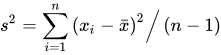
yields an estimate of 7 for a data set ; then is called an estimator of , and is called the estimand.


In relation to an estimator, an estimand is the outcome of different treatments[clarification needed] of interest. It can formally be thought of as any quantity that is to be estimated in any type of experiment.[clarification needed]
An estimand is closely linked to the purpose or objective of an analysis. It describes what is to be estimated based on the question of interest. This is in contrast to an estimator, which defines the specific rule according to which the estimand is to be estimated. While the estimand will often be free of the specific assumptions e.g. regarding missing data, such assumption will typically have to be made when defining the specific estimator. For this reason, it is logical to conduct sensitivity analyses using different estimators for the same estimand, in order to test the robustness of inference to different assumptions.
According to Ian Lundberg, Rebecca Johnson, and Brandon M. Stewart, quantitative studies frequently fail to define their estimand. This is problematic because it is not possible for the reader to know whether the statistical procedures in a study are appropriate unless they know the estimand.
If our question of interest is whether instituting an intervention such as a vaccination campaign in a defined population in a country would reduce the number of deaths in that population in that country, then our estimand will be some measure of risk reduction (e.g. it could be a hazard ratio, or a risk ratio over one year) that would describe the effect of starting a vaccination campaign. We may have data from a clinical trial available to estimate the estimand. In judging the effect on the population level, we will have to reflect that some people may refuse to be vaccinated so that excluding from the analysis those in the clinical trial who refuse to be vaccinated may be inappropriate. Furthermore, we may not know the survival status of all those who were vaccinated, so that assumptions will have to be made in this regard in order to define an estimator.
One possible estimator for obtaining a specific estimate might be a hazard ratio based on a survival analysis that assumes a particular survival distribution conducted on all subjects to whom the intervention was offered, treating those who were lost to follow-up to be right-censored under random censorship. It might be that the trial population differs from the population, on which the vaccination campaign would be conducted, in which case this might also have to be taken into account. An alternative estimator used in a sensitivity analysis might assume that people, who were not followed for their vital status to the end of the trial, may be more likely to have died by a certain amount.
Hub AI
Estimand AI simulator
(@Estimand_simulator)
Estimand
An estimand is a quantity that is to be estimated in a statistical analysis. The term is used to distinguish the target of inference from the method used to obtain an approximation of this target (i.e., the estimator) and the specific value obtained from a given method and dataset (i.e., the estimate). For instance, a normally distributed random variable has two defining parameters, its mean and variance . A variance estimator:
,
yields an estimate of 7 for a data set ; then is called an estimator of , and is called the estimand.
In relation to an estimator, an estimand is the outcome of different treatments[clarification needed] of interest. It can formally be thought of as any quantity that is to be estimated in any type of experiment.[clarification needed]
An estimand is closely linked to the purpose or objective of an analysis. It describes what is to be estimated based on the question of interest. This is in contrast to an estimator, which defines the specific rule according to which the estimand is to be estimated. While the estimand will often be free of the specific assumptions e.g. regarding missing data, such assumption will typically have to be made when defining the specific estimator. For this reason, it is logical to conduct sensitivity analyses using different estimators for the same estimand, in order to test the robustness of inference to different assumptions.
According to Ian Lundberg, Rebecca Johnson, and Brandon M. Stewart, quantitative studies frequently fail to define their estimand. This is problematic because it is not possible for the reader to know whether the statistical procedures in a study are appropriate unless they know the estimand.
If our question of interest is whether instituting an intervention such as a vaccination campaign in a defined population in a country would reduce the number of deaths in that population in that country, then our estimand will be some measure of risk reduction (e.g. it could be a hazard ratio, or a risk ratio over one year) that would describe the effect of starting a vaccination campaign. We may have data from a clinical trial available to estimate the estimand. In judging the effect on the population level, we will have to reflect that some people may refuse to be vaccinated so that excluding from the analysis those in the clinical trial who refuse to be vaccinated may be inappropriate. Furthermore, we may not know the survival status of all those who were vaccinated, so that assumptions will have to be made in this regard in order to define an estimator.
One possible estimator for obtaining a specific estimate might be a hazard ratio based on a survival analysis that assumes a particular survival distribution conducted on all subjects to whom the intervention was offered, treating those who were lost to follow-up to be right-censored under random censorship. It might be that the trial population differs from the population, on which the vaccination campaign would be conducted, in which case this might also have to be taken into account. An alternative estimator used in a sensitivity analysis might assume that people, who were not followed for their vital status to the end of the trial, may be more likely to have died by a certain amount.