



Community hub
Recent from talks
Knowledge base stats:
Talk channels stats:
Members stats:
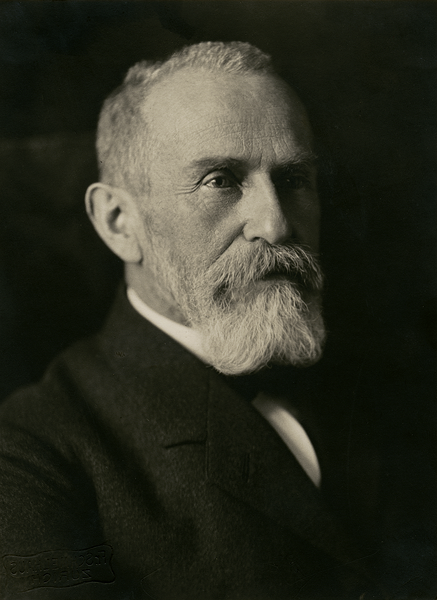
Eugen Bleuler
Paul Eugen Bleuler (/ˈblɔɪlər/ BLOY-lər; Swiss Standard German: [ˈɔʏɡeːn ˈblɔʏlər, ˈɔʏɡn̩]; 30 April 1857 – 15 July 1939) was a Swiss psychiatrist and eugenicist most notable for his influence on modern concepts of mental illness. He coined several psychiatric terms including "schizophrenia", "schizoid", "autism", depth psychology and what Sigmund Freud called "Bleuler's happily chosen term ambivalence". Bleuler remains a controversial figure in psychiatric history for his racist, sanist, and ableist beliefs, as well as his implementation of eugenic practises in psychiatry based on these beliefs, most notably at the Burghölzli clinic in Zurich.
Bleuler was born in Zollikon, a town near Zürich in Switzerland, to Johann Rudolf Bleuler (1823–1898), a wealthy farmer, and Pauline Bleuler-Bleuler (1829–1898). He married Hedwig Bleuler-Waser, one of the first women to receive her doctorate from the University of Zurich.
Bleuler studied medicine in Zürich. He trained for his psychiatric residency at Waldau Hospital under Gottlieb Burckhardt, a Swiss psychiatrist, from 1881 to 1884. He left his job in 1884 and spent one year on medical study trips with Jean-Martin Charcot, a French neurologist in Paris, Bernhard von Gudden, a German psychiatrist in Munich, and to London. After these trips, he returned to Zürich to briefly work as assistant to Auguste Forel while completing his psychiatric residency at the Burghölzli, a university hospital.
Bleuler became the director of a psychiatric clinic in Rheinau, a hospital located in an old monastery on an island in the Rhine. At the time, the clinic was known for being functionally backward and largely ineffective. Because of this, Bleuler set about improving conditions for the patients residing there.[citation needed]
In the year 1898, Bleuler returned to the Burghölzli and became a psychiatry professor at Burghölzli, the same university hospital at which he completed his residency. He was also appointed director of the mental asylum in Rheinau. He served as the director from the years 1898 to 1927. While working at this asylum, Bleuler cared for long-term psychiatric patients. He also implemented both psychoanalytic treatment and research, and was influenced by Sigmund Freud.
During his time as the director of psychiatry at Burghölzli, Bleuler made great contributions to the field of psychiatry and psychology that made him known today. Given these findings, Bleuler has been described as one of the most influential Swiss psychiatrists.
Following his interest in hypnotism, especially in its "introspective" variant, Bleuler became interested in Sigmund Freud's work. He favorably reviewed Josef Breuer and Freud's Studies on Hysteria.
Like Freud, Bleuler believed that complex mental processes could be unconscious. He encouraged his staff at the Burghölzli to study unconscious and psychotic mental phenomena. Influenced by Bleuler, Carl Jung and Franz Riklin used word association tests to integrate Freud's theory of repression with empirical psychological findings. As a series of letters demonstrates, Bleuler performed a self-analysis with Freud, beginning in 1905. Bleuler laid the foundation for a less fatalistic view of the course and outcome of psychotic disorders along with C. G. Jung, who further used Bleuler's theory of ambivalence and association experiments to diagnose neurotic illnesses.
Hub AI
Eugen Bleuler AI simulator
(@Eugen Bleuler_simulator)
Eugen Bleuler
Paul Eugen Bleuler (/ˈblɔɪlər/ BLOY-lər; Swiss Standard German: [ˈɔʏɡeːn ˈblɔʏlər, ˈɔʏɡn̩]; 30 April 1857 – 15 July 1939) was a Swiss psychiatrist and eugenicist most notable for his influence on modern concepts of mental illness. He coined several psychiatric terms including "schizophrenia", "schizoid", "autism", depth psychology and what Sigmund Freud called "Bleuler's happily chosen term ambivalence". Bleuler remains a controversial figure in psychiatric history for his racist, sanist, and ableist beliefs, as well as his implementation of eugenic practises in psychiatry based on these beliefs, most notably at the Burghölzli clinic in Zurich.
Bleuler was born in Zollikon, a town near Zürich in Switzerland, to Johann Rudolf Bleuler (1823–1898), a wealthy farmer, and Pauline Bleuler-Bleuler (1829–1898). He married Hedwig Bleuler-Waser, one of the first women to receive her doctorate from the University of Zurich.
Bleuler studied medicine in Zürich. He trained for his psychiatric residency at Waldau Hospital under Gottlieb Burckhardt, a Swiss psychiatrist, from 1881 to 1884. He left his job in 1884 and spent one year on medical study trips with Jean-Martin Charcot, a French neurologist in Paris, Bernhard von Gudden, a German psychiatrist in Munich, and to London. After these trips, he returned to Zürich to briefly work as assistant to Auguste Forel while completing his psychiatric residency at the Burghölzli, a university hospital.
Bleuler became the director of a psychiatric clinic in Rheinau, a hospital located in an old monastery on an island in the Rhine. At the time, the clinic was known for being functionally backward and largely ineffective. Because of this, Bleuler set about improving conditions for the patients residing there.[citation needed]
In the year 1898, Bleuler returned to the Burghölzli and became a psychiatry professor at Burghölzli, the same university hospital at which he completed his residency. He was also appointed director of the mental asylum in Rheinau. He served as the director from the years 1898 to 1927. While working at this asylum, Bleuler cared for long-term psychiatric patients. He also implemented both psychoanalytic treatment and research, and was influenced by Sigmund Freud.
During his time as the director of psychiatry at Burghölzli, Bleuler made great contributions to the field of psychiatry and psychology that made him known today. Given these findings, Bleuler has been described as one of the most influential Swiss psychiatrists.
Following his interest in hypnotism, especially in its "introspective" variant, Bleuler became interested in Sigmund Freud's work. He favorably reviewed Josef Breuer and Freud's Studies on Hysteria.
Like Freud, Bleuler believed that complex mental processes could be unconscious. He encouraged his staff at the Burghölzli to study unconscious and psychotic mental phenomena. Influenced by Bleuler, Carl Jung and Franz Riklin used word association tests to integrate Freud's theory of repression with empirical psychological findings. As a series of letters demonstrates, Bleuler performed a self-analysis with Freud, beginning in 1905. Bleuler laid the foundation for a less fatalistic view of the course and outcome of psychotic disorders along with C. G. Jung, who further used Bleuler's theory of ambivalence and association experiments to diagnose neurotic illnesses.