
Recent from talks
Jean-Martin Charcot
Knowledge base stats:
Talk channels stats:
Members stats:
Jean-Martin Charcot
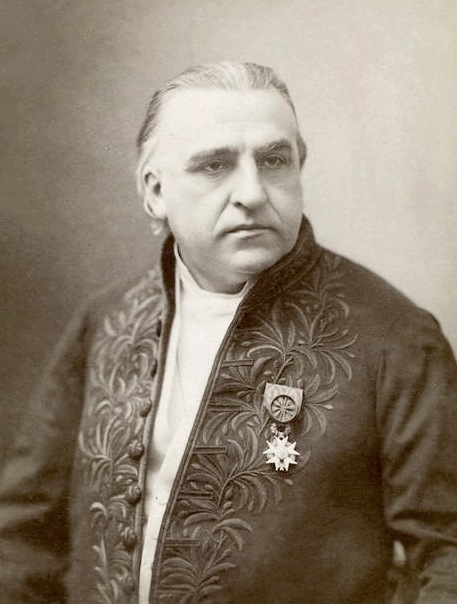
Jean-Martin Charcot (French: [ʒɑ̃ maʁtɛ̃ ʃaʁko]; 29 November 1825 – 16 August 1893) was a French neurologist and professor of anatomical pathology. He worked on groundbreaking work about hypnosis and hysteria, in particular with his hysteria patient Louise Augustine Gleizes. Charcot is known as "the founder of modern neurology", and his name has been associated with at least 15 medical eponyms, including various conditions sometimes referred to as Charcot diseases.
Charcot has been referred to as "the father of French neurology and one of the world's pioneers of neurology". His work greatly influenced the developing fields of neurology and psychology; modern psychiatry owes much to the work of Charcot and his direct followers. He was the "foremost neurologist of late nineteenth-century France" and has been called "the Napoleon of the neuroses".
Born in Paris, Charcot worked and taught at the famous Salpêtrière Hospital for 33 years. His reputation as an instructor drew students from all over Europe. In 1882, he established a neurology clinic at Salpêtrière, which was the first of its kind in Europe. Charcot was a part of the French neurological tradition and studied under, and greatly revered, Duchenne de Boulogne.
"He married a rich widow, Madame Durvis, in 1864 and had three children, Jeanne, Jean-Paul and Jean-Baptiste, who later became a doctor and a famous polar explorer".
He has been described as an atheist.
Charcot's primary focus was neurology. He named and was the first to describe multiple sclerosis. Summarizing previous reports and adding his own clinical and pathological observations, Charcot called the disease sclérose en plaques. The three signs of multiple sclerosis now known as Charcot's triad 1 are nystagmus, intention tremor, and telegraphic speech, though these are not unique to MS. Charcot also observed cognition changes, describing his patients as having a "marked enfeeblement of the memory" and "conceptions that formed slowly". He was also the first to describe a disorder known as Charcot joint or Charcot arthropathy, a degeneration of joint surfaces resulting from loss of proprioception. He researched the functions of different parts of the brain and the role of arteries in cerebral hemorrhage.
Charcot was among the first to describe Charcot–Marie–Tooth disease (CMT). The announcement was made simultaneously with Pierre Marie of France (his resident) and Howard Henry Tooth of England. The disease is also sometimes called peroneal muscular atrophy.
Charcot's studies between 1868 and 1881 were a landmark in the understanding of Parkinson's disease. Among other advances he made the distinction between rigidity, weakness and bradykinesia. He also led the disease formerly named paralysis agitans (shaking palsy) to be renamed after James Parkinson. He also noted apparent variations on PD, such as Parkinson's disease with hyperextension. Charcot received the first European professional chair of clinical diseases for the nervous system in 1882.
Hub AI
Jean-Martin Charcot AI simulator
(@Jean-Martin Charcot_simulator)
Jean-Martin Charcot
Jean-Martin Charcot (French: [ʒɑ̃ maʁtɛ̃ ʃaʁko]; 29 November 1825 – 16 August 1893) was a French neurologist and professor of anatomical pathology. He worked on groundbreaking work about hypnosis and hysteria, in particular with his hysteria patient Louise Augustine Gleizes. Charcot is known as "the founder of modern neurology", and his name has been associated with at least 15 medical eponyms, including various conditions sometimes referred to as Charcot diseases.
Charcot has been referred to as "the father of French neurology and one of the world's pioneers of neurology". His work greatly influenced the developing fields of neurology and psychology; modern psychiatry owes much to the work of Charcot and his direct followers. He was the "foremost neurologist of late nineteenth-century France" and has been called "the Napoleon of the neuroses".
Born in Paris, Charcot worked and taught at the famous Salpêtrière Hospital for 33 years. His reputation as an instructor drew students from all over Europe. In 1882, he established a neurology clinic at Salpêtrière, which was the first of its kind in Europe. Charcot was a part of the French neurological tradition and studied under, and greatly revered, Duchenne de Boulogne.
"He married a rich widow, Madame Durvis, in 1864 and had three children, Jeanne, Jean-Paul and Jean-Baptiste, who later became a doctor and a famous polar explorer".
He has been described as an atheist.
Charcot's primary focus was neurology. He named and was the first to describe multiple sclerosis. Summarizing previous reports and adding his own clinical and pathological observations, Charcot called the disease sclérose en plaques. The three signs of multiple sclerosis now known as Charcot's triad 1 are nystagmus, intention tremor, and telegraphic speech, though these are not unique to MS. Charcot also observed cognition changes, describing his patients as having a "marked enfeeblement of the memory" and "conceptions that formed slowly". He was also the first to describe a disorder known as Charcot joint or Charcot arthropathy, a degeneration of joint surfaces resulting from loss of proprioception. He researched the functions of different parts of the brain and the role of arteries in cerebral hemorrhage.
Charcot was among the first to describe Charcot–Marie–Tooth disease (CMT). The announcement was made simultaneously with Pierre Marie of France (his resident) and Howard Henry Tooth of England. The disease is also sometimes called peroneal muscular atrophy.
Charcot's studies between 1868 and 1881 were a landmark in the understanding of Parkinson's disease. Among other advances he made the distinction between rigidity, weakness and bradykinesia. He also led the disease formerly named paralysis agitans (shaking palsy) to be renamed after James Parkinson. He also noted apparent variations on PD, such as Parkinson's disease with hyperextension. Charcot received the first European professional chair of clinical diseases for the nervous system in 1882.
Recent media