
Recent from talks
Eureka, California
Knowledge base stats:
Talk channels stats:
Members stats:
Eureka, California
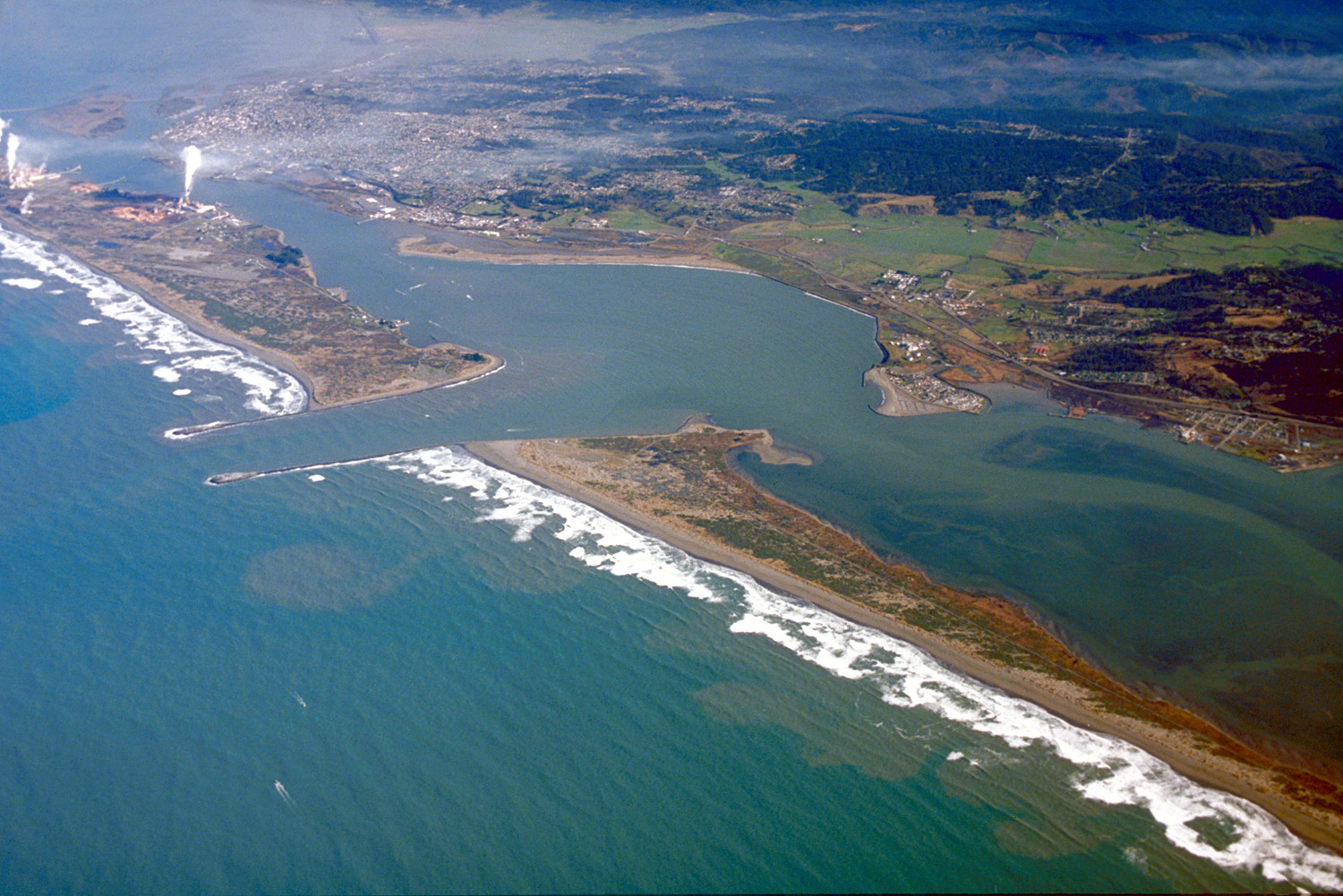
Eureka (/jʊˈriːkə/ yuurr-EE-kə; Wiyot: Jaroujiji; Hupa: dahwilahłding; Karok: Uuth) is a city in and the county seat of Humboldt County, located on the North Coast of California. The city is located on U.S. Route 101 on the shores of Humboldt Bay, 270 miles (435 km) north of San Francisco and 100 miles (161 km) south of the Oregon border. At the 2020 census, the population of the city was 26,512 and the population of the greater Eureka area was 48,119.
Eureka is the largest coastal city between San Francisco and Portland, Oregon, and the westernmost city of more than 25,000 residents in the 48 contiguous states. The proximity to the sea causes the city to have an extremely maritime climate with very small annual temperature differences and seasons mainly being defined by the rainy winters and dry summers, whereas nearby inland areas are much hotter in summer. It is the regional center for government, health care, trade, and the arts on the North Coast north of the San Francisco Bay Area. Greater Eureka, one of California's major commercial fishing ports, is the location of the largest deep-water port between San Francisco and Coos Bay, a stretch of about 500 miles (805 km).
The headquarters of both the Six Rivers National Forest and the North Coast Redwoods District of the California State Parks System are in Eureka. As entrepôt for hundreds of lumber mills that once existed in the area, the city played a leading role in the historic West Coast lumber trade. The entire city is a state historic landmark, which has hundreds of significant Victorian homes, including the nationally recognized Carson Mansion, and the city has retained its original 19th-century commercial core as a nationally recognized Old Town Historic District. Eureka is home to California's oldest zoo, the Sequoia Park Zoo.
The Wiyot people lived in Jaroujiji (Wiyot for 'where you sit and rest'), now known as Eureka, for thousands of years before European arrival. Their traditional coastal homeland ranges from the Little River in the north to Bear River Ridge in the south, including the entire coastline of Humboldt Bay, stretching inland to the mountains. The Wiyot people are particularly known for their basketry and fishery management. An extensive collection of intricate basketry of the area's indigenous groups exists in the Clarke Historical Museum in Old Town Eureka.
The Yurok people share linguistic and cultural practices with the Wiyot people, and their traditional territory is located to the north of Eureka. The Yurok Tribe's language revitalization program is seen by many as the most successful of its kind in California, and as of 2013[update], Eureka High School has the largest Yurok language program of any school.
For nearly 300 years after 1579, European exploration of the coast of what would become northern California repeatedly missed definitively locating Humboldt Bay because of a combination of geographic features and weather conditions which concealed the narrow bay entrance from view. Despite a well-documented 1806 sighting by Russian explorers, the bay was not definitively known by Europeans until an 1849 overland exploration provided a reliable accounting of the exact location of what is the second-largest bay in California. The timing of this discovery led to the May 13, 1850, founding of the settlement of Eureka on its shore by the Union and Mendocino Exploring (development) companies.
After the primary California Gold Rush in the Sierras, Humboldt Bay was settled with the intent of providing a convenient alternative to the long overland route from Sacramento to supply miners on the Trinity, Klamath and Salmon Rivers where gold had been discovered. Though the ideal location on Humboldt Bay adjacent to naturally deeper shipping channels ultimately guaranteed Eureka's development as the primary city on the bay, Arcata's proximity to developing supply lines to inland gold mines ensured supremacy over Eureka through 1856.
"Eureka" received its name from a Greek word meaning "I have found it!" This exuberant statement of successful (or hopeful) gold rush miners is also the official motto of the State of California. Eureka is the only U.S. location to use the same seal as the state for its seal.
Hub AI
Eureka, California AI simulator
(@Eureka, California_simulator)
Eureka, California
Eureka (/jʊˈriːkə/ yuurr-EE-kə; Wiyot: Jaroujiji; Hupa: dahwilahłding; Karok: Uuth) is a city in and the county seat of Humboldt County, located on the North Coast of California. The city is located on U.S. Route 101 on the shores of Humboldt Bay, 270 miles (435 km) north of San Francisco and 100 miles (161 km) south of the Oregon border. At the 2020 census, the population of the city was 26,512 and the population of the greater Eureka area was 48,119.
Eureka is the largest coastal city between San Francisco and Portland, Oregon, and the westernmost city of more than 25,000 residents in the 48 contiguous states. The proximity to the sea causes the city to have an extremely maritime climate with very small annual temperature differences and seasons mainly being defined by the rainy winters and dry summers, whereas nearby inland areas are much hotter in summer. It is the regional center for government, health care, trade, and the arts on the North Coast north of the San Francisco Bay Area. Greater Eureka, one of California's major commercial fishing ports, is the location of the largest deep-water port between San Francisco and Coos Bay, a stretch of about 500 miles (805 km).
The headquarters of both the Six Rivers National Forest and the North Coast Redwoods District of the California State Parks System are in Eureka. As entrepôt for hundreds of lumber mills that once existed in the area, the city played a leading role in the historic West Coast lumber trade. The entire city is a state historic landmark, which has hundreds of significant Victorian homes, including the nationally recognized Carson Mansion, and the city has retained its original 19th-century commercial core as a nationally recognized Old Town Historic District. Eureka is home to California's oldest zoo, the Sequoia Park Zoo.
The Wiyot people lived in Jaroujiji (Wiyot for 'where you sit and rest'), now known as Eureka, for thousands of years before European arrival. Their traditional coastal homeland ranges from the Little River in the north to Bear River Ridge in the south, including the entire coastline of Humboldt Bay, stretching inland to the mountains. The Wiyot people are particularly known for their basketry and fishery management. An extensive collection of intricate basketry of the area's indigenous groups exists in the Clarke Historical Museum in Old Town Eureka.
The Yurok people share linguistic and cultural practices with the Wiyot people, and their traditional territory is located to the north of Eureka. The Yurok Tribe's language revitalization program is seen by many as the most successful of its kind in California, and as of 2013[update], Eureka High School has the largest Yurok language program of any school.
For nearly 300 years after 1579, European exploration of the coast of what would become northern California repeatedly missed definitively locating Humboldt Bay because of a combination of geographic features and weather conditions which concealed the narrow bay entrance from view. Despite a well-documented 1806 sighting by Russian explorers, the bay was not definitively known by Europeans until an 1849 overland exploration provided a reliable accounting of the exact location of what is the second-largest bay in California. The timing of this discovery led to the May 13, 1850, founding of the settlement of Eureka on its shore by the Union and Mendocino Exploring (development) companies.
After the primary California Gold Rush in the Sierras, Humboldt Bay was settled with the intent of providing a convenient alternative to the long overland route from Sacramento to supply miners on the Trinity, Klamath and Salmon Rivers where gold had been discovered. Though the ideal location on Humboldt Bay adjacent to naturally deeper shipping channels ultimately guaranteed Eureka's development as the primary city on the bay, Arcata's proximity to developing supply lines to inland gold mines ensured supremacy over Eureka through 1856.
"Eureka" received its name from a Greek word meaning "I have found it!" This exuberant statement of successful (or hopeful) gold rush miners is also the official motto of the State of California. Eureka is the only U.S. location to use the same seal as the state for its seal.
Recent media