
Recent from talks
Eutely
Knowledge base stats:
Talk channels stats:
Members stats:
Eutely
Eutelic organisms have a fixed number of somatic cells when they reach maturity, the exact number being relatively constant for any one species. This phenomenon is also referred to as cell constancy. Development proceeds by cell division until maturity; further growth occurs via cell enlargement only. This growth is known as auxetic growth. It is shown by members of the now obsolete phylum Aschelminthes. In some cases, individual organs show eutelic properties while the organism itself does not.
In 1909, Eric Martini coined the term eutely to describe the idea of cell constancy and to introduce a term literature sources would be able to use to identify organisms with a fixed amount and arrangement of cells and tissues. Since the introduction of eutely in the early 1900s, textbooks and theories of cytology and ontogeny have not used the term consistently. Advancements in the field of eutely has been developed by morphologists.
Studying of eutelic organisms has proved challenging, as most eutelic organisms are microscopic. Additionally, there is potential for mistakes in cell counting (often completed via an automated cell counter) and observation when larger organisms have numerous cells. In organisms of small size, errors in the examination and explanation of units may entirely negate reconstructions and deductions. Therefore, investigation of most eutelic organisms is done with intense scrutiny and review.
There are two distinct classes of organisms which display eutely:
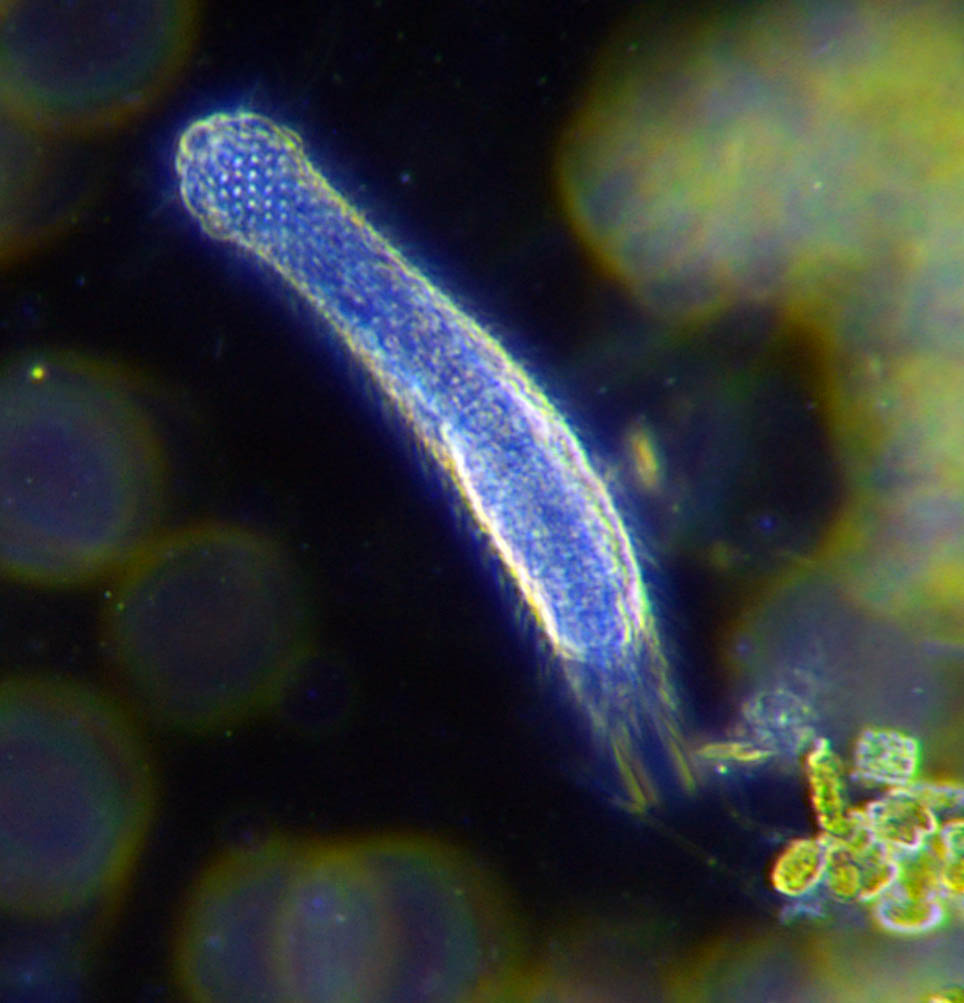
Eutely has been confirmed to certain degrees in various forms of diversity and sections of the tree of life. Examples include rotifers, many species of nematodes (including ascaris and the organism Caenorhabditis elegans whose male individuals have 1,033 cells), tardigrades, larvaceans and dicyemida. Additionally, examples of cell constancy have been seen among arthropods, specifically within sensory and nervous organs. Circumstances of partial cell consistency has been discovered in various insects and larvae. Annelids have been observed to provide evidence demonstrating constancy in the amount and arrangement of cells in larva of various species and in certain nervous cells of leeches. The phyla Rotifera and Gastrotricha are thought to show absolute cell constancy.
Preliminary studies of nematodes led scientists to believe only single organs of nematodes showed eutely. However, later evidence proved complete cell constancy for the tissues of multiple nematode forms. Within the Acanthocephalan phylum, various degrees of constancy have been studied but cell number and arrangement constancy has been seen in at least one family. Within the Platyhelminthes, subphylum Turbellaria display evidence of constancy. Organisms within class Trematoda display constant gland cell number as do epithelial cells in a few Miracidia.
Since eutelic organisms have displayed such wide variety and diversity in lineage and ancestry, there is yet to be an attempt to establish a phylogenetic relationship. Previous researchers have made efforts to determine the relationship between trematodes and rotifers as their complete constancy qualities suggest a close relatedness. In the most primitive Protozoa species, close to where animals differentiated from plants, certain microscopic flagellates might provide clues to how cell constancy in animals developed. These organisms have the ability to establish colonies with distinct amounts of cells. This quality is assumed to have been passed on to all subsequent metazoan groups: the development of constant cell numbers. However, this trait is thought to have been lost when new conditions or more influential genes were introduced to the developmental program.
Until 2001, roundworm species Caenorhabditis elegans was considered to be the model organism for complete cell constancy. However, research has unveiled that in the epidermis of these organisms, as the mean cell number increased, as did the variance in cell number within that species. These studies revealed that variability in most taxa assumed to be eutelic is not abnormally low. A relationship between mean cell number and cell number variation was established following a law possessing an exponent of 2 upon a variety of multicellular eutelic taxa.
Hub AI
Eutely AI simulator
(@Eutely_simulator)
Eutely
Eutelic organisms have a fixed number of somatic cells when they reach maturity, the exact number being relatively constant for any one species. This phenomenon is also referred to as cell constancy. Development proceeds by cell division until maturity; further growth occurs via cell enlargement only. This growth is known as auxetic growth. It is shown by members of the now obsolete phylum Aschelminthes. In some cases, individual organs show eutelic properties while the organism itself does not.
In 1909, Eric Martini coined the term eutely to describe the idea of cell constancy and to introduce a term literature sources would be able to use to identify organisms with a fixed amount and arrangement of cells and tissues. Since the introduction of eutely in the early 1900s, textbooks and theories of cytology and ontogeny have not used the term consistently. Advancements in the field of eutely has been developed by morphologists.
Studying of eutelic organisms has proved challenging, as most eutelic organisms are microscopic. Additionally, there is potential for mistakes in cell counting (often completed via an automated cell counter) and observation when larger organisms have numerous cells. In organisms of small size, errors in the examination and explanation of units may entirely negate reconstructions and deductions. Therefore, investigation of most eutelic organisms is done with intense scrutiny and review.
There are two distinct classes of organisms which display eutely:
Eutely has been confirmed to certain degrees in various forms of diversity and sections of the tree of life. Examples include rotifers, many species of nematodes (including ascaris and the organism Caenorhabditis elegans whose male individuals have 1,033 cells), tardigrades, larvaceans and dicyemida. Additionally, examples of cell constancy have been seen among arthropods, specifically within sensory and nervous organs. Circumstances of partial cell consistency has been discovered in various insects and larvae. Annelids have been observed to provide evidence demonstrating constancy in the amount and arrangement of cells in larva of various species and in certain nervous cells of leeches. The phyla Rotifera and Gastrotricha are thought to show absolute cell constancy.
Preliminary studies of nematodes led scientists to believe only single organs of nematodes showed eutely. However, later evidence proved complete cell constancy for the tissues of multiple nematode forms. Within the Acanthocephalan phylum, various degrees of constancy have been studied but cell number and arrangement constancy has been seen in at least one family. Within the Platyhelminthes, subphylum Turbellaria display evidence of constancy. Organisms within class Trematoda display constant gland cell number as do epithelial cells in a few Miracidia.
Since eutelic organisms have displayed such wide variety and diversity in lineage and ancestry, there is yet to be an attempt to establish a phylogenetic relationship. Previous researchers have made efforts to determine the relationship between trematodes and rotifers as their complete constancy qualities suggest a close relatedness. In the most primitive Protozoa species, close to where animals differentiated from plants, certain microscopic flagellates might provide clues to how cell constancy in animals developed. These organisms have the ability to establish colonies with distinct amounts of cells. This quality is assumed to have been passed on to all subsequent metazoan groups: the development of constant cell numbers. However, this trait is thought to have been lost when new conditions or more influential genes were introduced to the developmental program.
Until 2001, roundworm species Caenorhabditis elegans was considered to be the model organism for complete cell constancy. However, research has unveiled that in the epidermis of these organisms, as the mean cell number increased, as did the variance in cell number within that species. These studies revealed that variability in most taxa assumed to be eutelic is not abnormally low. A relationship between mean cell number and cell number variation was established following a law possessing an exponent of 2 upon a variety of multicellular eutelic taxa.
Recent media