Hubbry Logo
search
logo
1461854

Evan Adams

logo
Community Hub0 Subscribers
Read side by side
from Wikipedia

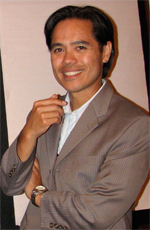
Evan Tlesla Adams (born November 15, 1966) is an Indigenous Canadian actor, playwright, and physician. A Coast Salish from the Sliammon First Nation near Powell River, British Columbia, he is best known internationally for his roles in the films of Sherman Alexie, as Thomas Builds-the-Fire in the 1998 film Smoke Signals and Seymour Polatkin in the 2002 film The Business of Fancydancing.

Key Information

Career

[edit]

Entertainment

[edit]

He won an Independent Spirit Award in 1999 for Best Debut Performance for his role in Smoke Signals, and a Los Angeles Outfest award in 2002 for his role in Fancy dancing.

In Canada, Adams has acted primarily in television, including roles in The Beachcombers, "Lost in the Barrens" Da Vinci's Inquest, Neon Rider, These Arms of Mine, Da Vinci's City Hall, The L Word, and Wolf Canyon, and stage roles in Lear and Dry Lips Oughta Move to Kapuskasing. He appeared in the 1990 made-for-TV movie "Lost in the Barrens". He also appeared in the documentary film Just Watch Me: Trudeau and the '70s Generation, speaking about his own experience as a young gay,[1][2] First Nations man growing up in Canada during the Pierre Trudeau era.

His plays, including Dreams of Sheep, Snapshots, Dirty Dog River and Janice's Christmas, have been produced across Canada and internationally.

He appears in the 2017 films Indian Horse and Kayak to Klemtu, and the 2020 film Indian Road Trip.

In 2023, he made a guest appearance as Larry, the Indian Health Service psychologist, on the series Reservation Dogs.[3] He also played adult Tim Wallach in the television miniseries Bones of Crows.[4]

Medical

[edit]

Adams has also worked extensively with First Nations health programs in Canada, including HIV/AIDS education and alcohol and drug abuse treatment. In 2002, Adams completed a medical degree at the University of Calgary. He completed his residency at St. Paul's Hospital/UBC (as Chief Resident), a Masters of Public Health from Johns Hopkins University, and served as the Deputy Provincial Health Officer with the British Columbia Ministry of health. In April 2007, Adams was appointed the first-ever Aboriginal Health Physician Advisor for the province of British Columbia.[5] In April 2012, Adams was made Deputy Provincial Health Officer for British Columbia by Dr. Perry Kendall.[6] On December 1, 2014, Adams became the Chief Medical Officer of the First Nations Health Authority in British Columbia.[7][8][9]

References

[edit]
[edit]
Revisions and contributorsEdit on WikipediaRead on Wikipedia
from Grokipedia
Evan Adams is a Coast Salish physician and former actor from the Tla'amin First Nation near Powell River, British Columbia, noted for his leadership in Indigenous health administration and his portrayal of Thomas Builds-the-Fire in the 1998 film Smoke Signals.[1][2]
After earning his medical degree from the University of Calgary in 2002 and completing a residency in family medicine with a focus on Aboriginal practice, Adams advanced to key public health roles, including Deputy Provincial Health Officer for British Columbia from 2012 to 2014.[3][4]
He served as Chief Medical Officer of the First Nations Health Authority from 2014 to 2020, where he contributed to initiatives addressing addiction and harm reduction in Indigenous communities, before taking on deputy chief medical officer positions with the First Nations Health Authority and Indigenous Services Canada.[5][6][7]
Adams received a national award in 2014 for his work advancing Indigenous health outcomes, emphasizing systemic factors in public health challenges.[8][9]

Early life and education

Family background and upbringing

Evan Adams was born on November 15, 1966, on the Sliammon Reserve in British Columbia, Canada, and is a member of the Tla'amin (formerly Sliammon) First Nation, part of the Coast Salish peoples.[10] His parents met while attending residential school, an institution central to the historical assimilation policies affecting Indigenous families in Canada.[8] His father, Tlesla Leslie Adams, played a significant role in his early development.[11] Adams' upbringing emphasized resilience and self-reliance, shaped by his father's rigorous teachings on survival skills in the wilderness near Powell River. Tlesla Adams instructed him in gathering food, constructing shelters, and navigating harsh conditions, where errors like improper boat handling or failed fishing could have life-threatening consequences.[12] These experiences, including instances where his father dropped him off at locations like Wildwood and required him to run home to the reserve, instilled a strong work ethic that later made formal schooling comparatively straightforward.[11][12] The family environment prioritized education and service to others, influencing Adams' career path; his siblings pursued professions similarly oriented toward helping people, reinforcing a collective commitment to community welfare.[8] This background, rooted in both traditional Indigenous practices and the intergenerational effects of colonial policies, informed his later advocacy for holistic health approaches.[8]

Academic and professional training

Adams initially enrolled at McGill University but abandoned his studies there to pursue acting training in Vancouver.[13] After establishing an acting career, he completed three years of pre-medical studies at the University of British Columbia.[14] In May 2002, Adams received his Doctor of Medicine degree from the University of Calgary.[15] He subsequently completed a residency in Aboriginal Family Practice at St. Paul's Hospital through the University of British Columbia, during which he served as the first Aboriginal Health Physician Advisor to the British Columbia government.[16][17] In 2009, Adams earned a Master of Public Health degree from Johns Hopkins University, focusing on international public health.[17][18] This advanced training complemented his clinical residency and positioned him for leadership roles in Indigenous health policy and administration.[3]

Entertainment career

Acting achievements

Adams first gained prominence in Canadian television during the late 1980s and early 1990s, appearing in episodic roles on series such as The Beachcombers and Neon Rider, as well as the Emmy-winning TV movie Lost in the Barrens (1990), where he portrayed a key character in a survival drama set in the Canadian wilderness.[19][8] He followed this with the sequel Curse of the Viking Grave (1993), earning a nomination for his continued performance.[19] His breakthrough came with the role of Thomas Builds-the-Fire in the 1998 independent film Smoke Signals, directed by Chris Eyre, where he played a storytelling Native American navigating personal and cultural tensions on a road trip; the film received critical acclaim for its authentic portrayal of contemporary Indigenous life and won the Audience Award and Filmmakers Trophy at the Sundance Film Festival.[20] For this debut feature performance, Adams received the Independent Spirit Award for Best Debut Performance in 1999, along with Best Actor honors from the American Indian Film Festival and First Americans in the Arts.[21][22] Subsequent television work included recurring appearances on Da Vinci's Inquest and These Arms of Mine, showcasing his versatility in dramatic roles often centered on social issues.[19] In later years, he returned to film with supporting parts in Indigenous-themed projects such as Indian Horse (2017), an adaptation of Richard Wagamese's novel about residential school survivors, and Kayak to Klemtu (2017), a youth adventure film promoting environmental stewardship.[23] These roles highlighted his commitment to narratives amplifying First Nations voices, though his acting output diminished as he pursued medical training.[19]

Playwriting and literary contributions

Evan Adams has authored several plays that address themes central to Indigenous life, including family dynamics, health crises, and cultural identity, often drawing from his Coast Salish background and experiences in First Nations communities. His works have been staged across Canada and internationally, contributing to Indigenous theatre by blending personal narratives with broader social issues.[10] Among his notable plays is Snapshots, which examines how two Indigenous families confront illness and death, incorporating elements of humor and resilience amid tragedy. Adams developed Snapshots specifically to raise awareness about HIV/AIDS in Native communities, using it as an educational tool during outreach efforts on reserves and in urban settings. The play reflects his dual perspective as an actor and advocate, emphasizing storytelling as a means to foster dialogue on stigmatized health topics without overt didacticism.[24][25] Adams co-authored Dirty Dog River with Marie Clements, another prominent Indigenous playwright, further extending his literary output into collaborative explorations of contemporary First Nations realities. Other works include Dreams of Sheep and Janice's Christmas, which similarly probe interpersonal relationships and seasonal or dream-like motifs within Indigenous contexts, though specific production details for these remain less documented in available records. His playwriting underscores a commitment to authentic representation, prioritizing lived experiences over abstracted generalizations, and has influenced discussions on health equity in theatre.[26][10]

Medical career

Clinical practice and specialization

Adams earned his Doctor of Medicine degree from the University of Calgary in 2002.[4] He then completed a residency in the Aboriginal Family Practice program at St. Paul's Hospital and the University of British Columbia in Vancouver, serving as chief resident.[27][28] This specialized training focused on family medicine adapted to Indigenous contexts, incorporating cultural safety, community engagement, and addressing disparities in primary care for First Nations patients, including management of chronic conditions, preventive health, and integration of traditional healing practices.[3] As a family physician, Adams has applied this specialization in clinical settings serving Indigenous communities, emphasizing holistic care that accounts for social determinants of health such as intergenerational trauma and access barriers.[17] His practice aligns with the unique needs of Coast Salish and other First Nations populations, informed by his own Tla'amin heritage near Powell River, British Columbia.[4] Early in his career, post-residency, he engaged in direct patient care within British Columbia's health system, including roles that bridged clinical service and advisory work for Aboriginal health initiatives.[29] Adams's clinical approach prioritizes evidence-based family medicine while advocating for culturally congruent delivery, as evidenced by his contributions to educational resources on Indigenous patient care, such as videos produced for Vancouver Coastal Health on cultural competency in clinical encounters.[30] This reflects a practice model that combines standard primary care protocols with tailored interventions for Indigenous-specific health challenges, though detailed records of his patient volume or specific clinics remain limited in public sources due to his concurrent administrative commitments.[7]

Leadership and administrative roles

Adams served as the Aboriginal Health Physician Advisor in the Office of the Provincial Health Officer for the British Columbia Ministry of Health from 2007 to 2012, becoming the first individual in this role to advise on policies affecting First Nations health.[3] In March 2012, he was appointed Deputy Provincial Health Officer with a focus on Aboriginal health, a position he held until 2014, where he contributed to provincial health strategies integrating indigenous perspectives.[31][4] From October 2014 to 2020, Adams held the position of Chief Medical Officer at the First Nations Health Authority (FNHA), the first health authority in Canada operated by and for First Nations, providing strategic leadership on clinical services, public health, and partnerships with provincial governments to address determinants of indigenous health outcomes.[32][4][7] In this capacity, he represented FNHA in negotiations and collaborated on initiatives like culturally safe care models, emphasizing evidence-based improvements in areas such as chronic disease management and mental health.[32] Following his tenure as CMO, Adams transitioned to Deputy Chief Medical Officer of Public Health in the First Nations and Inuit Health Branch of Indigenous Services Canada, overseeing national policy development for indigenous health services.[33] In March 2023, he returned to FNHA on a part-time basis as Deputy Chief Medical Officer, Public Health, co-leading the Office of the Chief Medical Officer alongside colleagues to support ongoing public health responses and health equity efforts.[5] Additionally, he has directed the Division of Aboriginal People's Health, focusing on training and integration of indigenous health expertise into medical education.[18]

Advocacy and public positions

Contributions to indigenous health policy

Evan Adams served as the inaugural Aboriginal Health Physician Advisor in the Office of the Provincial Health Officer for the British Columbia Ministry of Health from 2007 to 2012, where he provided expert guidance on policies aimed at enhancing health outcomes for Indigenous populations.[17] In this role, he focused on integrating Indigenous perspectives into provincial health strategies, addressing disparities through targeted advisory input to government decision-makers.[27] From 2012 to 2014, Adams acted as Deputy Provincial Health Officer for British Columbia, offering independent direction on First Nations and Aboriginal health matters to the Ministry of Health and collaborating with officials such as Dr. Perry Kendall and Dr. Eric Young.[27][17] This position enabled him to influence public health policies, emphasizing improvements in First Nations wellness and system-wide integration of culturally appropriate care.[27] As Chief Medical Officer of the First Nations Health Authority (FNHA) from 2014 to 2020, Adams led efforts to develop a distinct health care model for First Nations communities, driving system transformation initiatives and advancing community-generated wellness directives into policy frameworks.[17][27] He prioritized public health leadership, including expansions in HIV/AIDS education and substance abuse treatment programs tailored to Indigenous needs.[33] In 2023, he returned to the FNHA as part-time Deputy Chief Medical Officer for Public Health, co-leading the Office of the Chief Medical Officer to promote cultural safety, partner with governments on equity-focused reforms, and address systemic issues like racism in health delivery.[5] These roles have contributed to broader policy shifts toward Indigenous-led health governance in British Columbia, including the FNHA's emphasis on trauma-informed and culturally humble practices.[34]

Views on intergenerational trauma and addiction

Adams has described intergenerational trauma as a psychic wound resulting from experiences of historic oppression, such as residential schools and colonization, which is transmitted across generations within families and manifests in delayed health-seeking behaviors and distrust of medical systems among Indigenous patients.[35] He argues that healthcare providers must recognize this trauma to improve treatment adherence, as unaddressed expectations of systemic harm lead to incomplete therapies, such as unfinished antibiotic courses, and overall poorer outcomes.[35] In addressing addiction, Adams promotes trauma-informed practice for substance-use treatment, viewing psychological trauma from intergenerational sources as a primary driver of substance use as a maladaptive coping mechanism.[36] This approach emphasizes creating environments of safety, trust, and cultural inclusion, reframing patient "non-compliance" as trauma responses rather than moral failings, and integrating harm reduction strategies to prioritize holistic healing of mind, body, and spirit.[36] Adams frames addiction itself as a health and social issue rather than a moral one, advocating compassion over stigma to encourage help-seeking and reduce overdose deaths, with harm reduction—such as minimizing risks from drug use—serving as a pragmatic interim step toward eventual cessation.[37][38] In his 2025 docuseries The Conversation, he explores these connections through Indigenous recovery stories, attributing elevated addiction rates—such as First Nations individuals in British Columbia being six times more likely to die from drug toxicity in 2023—to systemic colonialism and unresolved family traumas.[9]

Personal life

Identity and relationships

Evan Adams is a member of the Tla'amin First Nation (formerly known as Sliammon), with Coast Salish ancestry originating near Powell River, British Columbia.[27][6] His Indigenous identity, rooted in traditional practices such as clam digging and resilience taught by his father, shapes his personal values and family life.[11][39] Adams identifies as gay and is married to his husband, Allan.[40] Together, they are parents to six children, emphasizing cultural pride and perseverance in child-rearing.[40][39] Adams has described fatherhood as "holy work" within his community's traditions, modeling the strength he learned from his own upbringing.[39] He maintains a degree of privacy regarding family details, focusing public discussions on broader themes of healing and relationships.[41]

Recent professional developments

In March 2023, Adams returned to the First Nations Health Authority (FNHA) as part-time Deputy Chief Medical Officer for Public Health, effective March 20, to co-lead the Office of the Chief Medical Officer alongside Drs. Nel Wieman and Kelsey Louie, with a focus on strengthening public health functions, representing FNHA at conferences, and advancing health equity for British Columbia First Nations.[5] In October 2023, he was appointed Acting Associate Dean of Indigenous Health at Simon Fraser University's School of Medicine, allocating half his time to this role in parallel with his FNHA duties, emphasizing integration of Indigenous perspectives into medical training.[6][42] Adams holds a 2024–25 Canadian Harkness Fellowship in Health Care Policy and Practice, sponsored by the Commonwealth Fund, during which he has examined Indigenous health policy innovations, including time as a fellow in Honolulu, Hawaii.[4] On June 9, 2025, the National Circle for Indigenous Medical Education (NCIME) announced Adams' appointment to lead its Phase II assessment initiatives in medical education, leveraging his public health expertise and prior service on NCIME's inaugural executive committee.[43]

References

User Avatar
No comments yet.