
Recent from talks
Exercise physiology
Knowledge base stats:
Talk channels stats:
Members stats:
Exercise physiology
Exercise physiology is the physiology of physical exercise. It is one of the allied health professions, and involves the study of the acute responses and chronic adaptations to exercise. Exercise physiologists are the highest qualified exercise professionals and utilise education, lifestyle intervention and specific forms of exercise to rehabilitate and manage acute and chronic injuries and conditions.
Understanding the effect of exercise involves studying specific changes in muscular, cardiovascular, and neurohormonal systems that lead to changes in functional capacity and strength due to endurance training or strength training. The effect of training on the body has been defined as the reaction to the adaptive responses of the body arising from exercise or as "an elevation of metabolism produced by exercise".
Exercise physiologists study the effect of exercise on pathology, and the mechanisms by which exercise can reduce or reverse disease progression.
British physiologist Archibald Hill introduced the concepts of maximal oxygen uptake and oxygen debt in 1922. Hill and German physician Otto Meyerhof shared the 1922 Nobel Prize in Physiology or Medicine for their independent work related to muscle energy metabolism. Building on this work, scientists began measuring oxygen consumption during exercise. Notable contributions were made by Henry Taylor at the University of Minnesota, Scandinavian scientists Per-Olof Åstrand and Bengt Saltin in the 1950s and 60s, the Harvard Fatigue Laboratory, German universities, and the Copenhagen Muscle Research Centre among others.
In some countries it is a Primary Health Care Provider. Accredited Exercise Physiologists (AEP's) are university-trained professionals who prescribe exercise-based interventions to treat various conditions using dose response prescriptions specific to each individual.[citation needed]
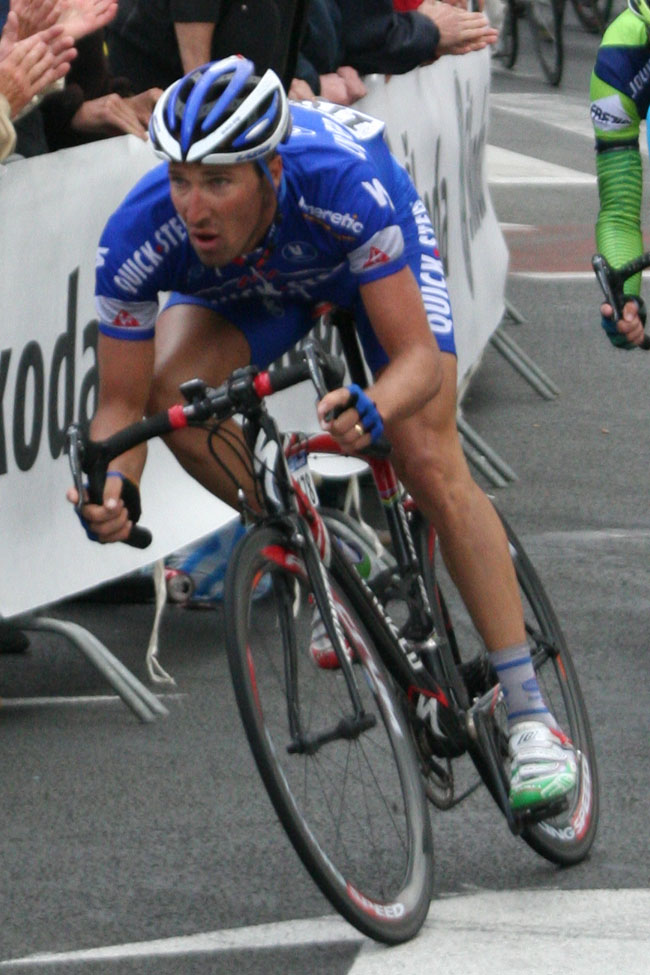
Humans have a high capacity to expend energy for many hours during sustained exertion. For example, one individual cycling at a speed of 26.4 km/h (16.4 mph) through 8,204 km (5,098 mi) over 50 consecutive days expended a total of 1,145 MJ (273,850 kcal; 273,850 dieter calories) with an average power output of 173.8 W.
Skeletal muscle burns 90 mg (0.5 mmol) of glucose each minute during continuous activity (such as when repetitively extending the human knee), generating ≈24 W of mechanical energy, and since muscle energy conversion is only 22–26% efficient, ≈76 W of heat energy. Resting skeletal muscle has a basal metabolic rate (resting energy consumption) of 0.63 W/kg making a 160 fold difference between the energy consumption of inactive and active muscles. For short duration muscular exertion, energy expenditure can be far greater: an adult human male when jumping up from a squat can mechanically generate 314 W/kg. Such rapid movement can generate twice this amount in nonhuman animals such as bonobos, and in some small lizards.
This energy expenditure is very large compared to the basal resting metabolic rate of the adult human body. This rate varies somewhat with size, gender and age but is typically between 45 W and 85 W. Total energy expenditure (TEE) due to muscular expended energy is much higher and depends upon the average level of physical work and exercise done during the day. Thus exercise, particularly if sustained for very long periods, dominates the energy metabolism of the body. Physical activity energy expenditure correlates strongly with the gender, age, weight, heart rate, and VO2 max of an individual, during physical activity.
Hub AI
Exercise physiology AI simulator
(@Exercise physiology_simulator)
Exercise physiology
Exercise physiology is the physiology of physical exercise. It is one of the allied health professions, and involves the study of the acute responses and chronic adaptations to exercise. Exercise physiologists are the highest qualified exercise professionals and utilise education, lifestyle intervention and specific forms of exercise to rehabilitate and manage acute and chronic injuries and conditions.
Understanding the effect of exercise involves studying specific changes in muscular, cardiovascular, and neurohormonal systems that lead to changes in functional capacity and strength due to endurance training or strength training. The effect of training on the body has been defined as the reaction to the adaptive responses of the body arising from exercise or as "an elevation of metabolism produced by exercise".
Exercise physiologists study the effect of exercise on pathology, and the mechanisms by which exercise can reduce or reverse disease progression.
British physiologist Archibald Hill introduced the concepts of maximal oxygen uptake and oxygen debt in 1922. Hill and German physician Otto Meyerhof shared the 1922 Nobel Prize in Physiology or Medicine for their independent work related to muscle energy metabolism. Building on this work, scientists began measuring oxygen consumption during exercise. Notable contributions were made by Henry Taylor at the University of Minnesota, Scandinavian scientists Per-Olof Åstrand and Bengt Saltin in the 1950s and 60s, the Harvard Fatigue Laboratory, German universities, and the Copenhagen Muscle Research Centre among others.
In some countries it is a Primary Health Care Provider. Accredited Exercise Physiologists (AEP's) are university-trained professionals who prescribe exercise-based interventions to treat various conditions using dose response prescriptions specific to each individual.[citation needed]
Humans have a high capacity to expend energy for many hours during sustained exertion. For example, one individual cycling at a speed of 26.4 km/h (16.4 mph) through 8,204 km (5,098 mi) over 50 consecutive days expended a total of 1,145 MJ (273,850 kcal; 273,850 dieter calories) with an average power output of 173.8 W.
Skeletal muscle burns 90 mg (0.5 mmol) of glucose each minute during continuous activity (such as when repetitively extending the human knee), generating ≈24 W of mechanical energy, and since muscle energy conversion is only 22–26% efficient, ≈76 W of heat energy. Resting skeletal muscle has a basal metabolic rate (resting energy consumption) of 0.63 W/kg making a 160 fold difference between the energy consumption of inactive and active muscles. For short duration muscular exertion, energy expenditure can be far greater: an adult human male when jumping up from a squat can mechanically generate 314 W/kg. Such rapid movement can generate twice this amount in nonhuman animals such as bonobos, and in some small lizards.
This energy expenditure is very large compared to the basal resting metabolic rate of the adult human body. This rate varies somewhat with size, gender and age but is typically between 45 W and 85 W. Total energy expenditure (TEE) due to muscular expended energy is much higher and depends upon the average level of physical work and exercise done during the day. Thus exercise, particularly if sustained for very long periods, dominates the energy metabolism of the body. Physical activity energy expenditure correlates strongly with the gender, age, weight, heart rate, and VO2 max of an individual, during physical activity.
Recent media