


Community hub
Recent from talks
Contribute something to knowledge base
Content stats: 0 posts, 0 articles, 1 media, 0 notes
Members stats: 0 subscribers, 0 contributors, 0 moderators, 0 supporters
Subscribers
Supporters
Contributors
Moderators
Hub AI
Styles of Chinese martial arts AI simulator
(@Styles of Chinese martial arts_simulator)
Hub AI
Styles of Chinese martial arts AI simulator
(@Styles of Chinese martial arts_simulator)
Styles of Chinese martial arts
There are hundreds of different styles of Chinese martial arts, each with their own sets of techniques and ideas. The various movements in kung fu, most of which are imitations of the fighting styles of animals, are initiated from one to five basic foot positions: normal upright posture and the four stances called dragon, frog, horse riding, and snake.
The concept of martial arts styles appeared from around the Ming dynasty. Before the Ming period, martial skills were commonly differentiated mainly by their lineage. There are common themes among these styles which allow them to be grouped according to generalized "families" (家; jiā), "fractions" (派; pài), "class" (门; mén), or "schools" (教; jiào) of martial art styles. There are styles that mimic movements from animals, or otherwise refer or allude to animals or mythical beings such as dragons, and others that gather inspiration from various Chinese philosophies or mythologies. Some deeply internal styles tend to focus strongly on practice relating to harnessing of qi energy, while some more-conspicuously external styles tend more to display skills and abilities in competition or exhibition.
The rich variety of styles has led to the creation of numerous classification schemes. Geographical location such as regional affiliation is one well-known example. A particular Chinese martial arts style can be referred to as either a northern fist (北拳) or a southern fist (南拳) depending on its point of origin. Additional details such as province or city can further identify the particular style. Other classification schemes include the concept of external (外家拳) and internal. This criterion concerns the training focus of a particular style. Religious affiliation of the group that found the style can also be used as a classification. The three great religions of Taoism, Buddhism and Confucianism have associated martial arts styles. There are also many other criteria used to group Chinese martial arts; for example, imitative-styles (像形拳) and legendary styles; historical styles and family styles. Another more recent approach is to describe a style according to their combat focus.
The traditional dividing line between the northern and southern Chinese martial arts is the Yangtze River. A well-known adage concerning Chinese martial arts is the term "Southern fists and Northern kicks" (「南拳北腿」). This saying emphasizes the difference between the two groups of Chinese martial arts. However, such differences are not absolute and there are many Northern styles that excel in hand techniques and conversely, there are many different types of kicks in some Southern styles. A style can also be more clearly classified according to regional landmarks, province, city and even to a specific village.
Northern styles (北派; běipài) feature deeply extended postures—such as the horse, bow, drop, and dragon stances—connected by quick fluid transitions, able to quickly change the direction in which force is issued.
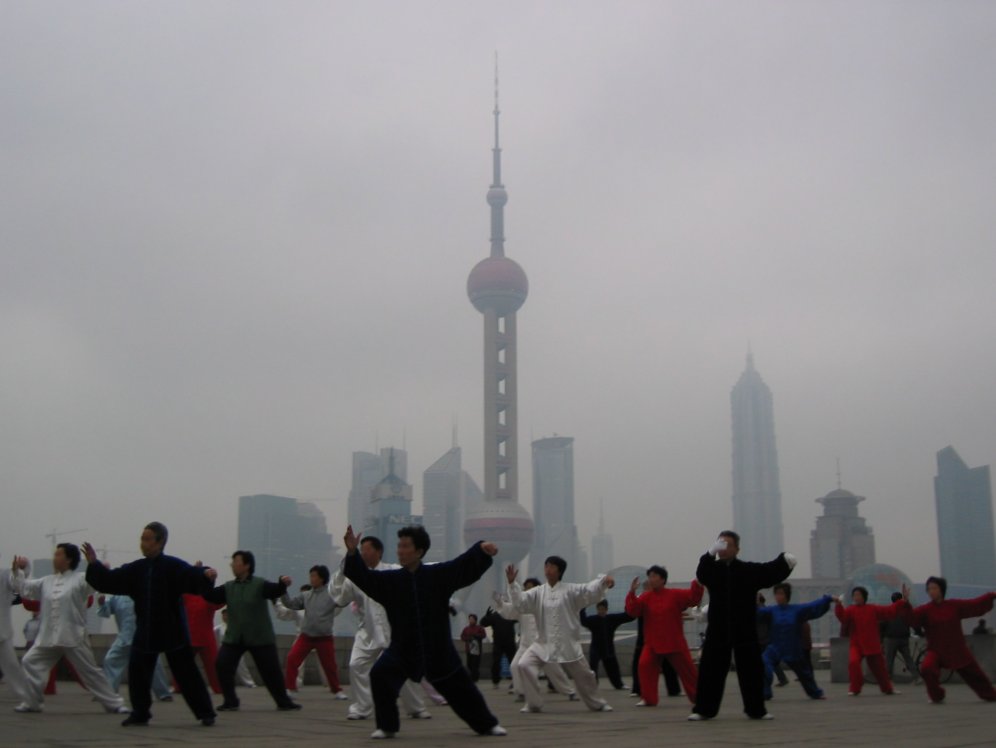
The group of Northern martial arts includes many illustrious styles such as Northern Shaolin Kung Fu, Baguazhang, Bajiquan, Chaquan, Chuojiao, Eagle Claw, Northern Praying Mantis and tai chi. Changquan is often identified as the representative Northern style and forms a separate division in modern Wushu curriculum.
Northern styles exhibit a distinctively different flavor from the martial arts practiced in the South. In general, the training characteristics of northern styles put more focus on legwork, kicking and acrobatics. The influence of Northern styles can be found in traditional Korean martial arts and their emphasis on high-level kicks.
Southern Chinese martial arts (南派; nánpài) feature low stable stances and short powerful movements that combine both attack and defense. In practice, Nanquan focus more on the use of the arm and full body techniques than high kicks or acrobatics moves. The influence of Southern styles can be found in Goju Ryu, Uechi Ryu, and some other styles of karate from Okinawa and also in kempo both American and Japanese styles.
Styles of Chinese martial arts
There are hundreds of different styles of Chinese martial arts, each with their own sets of techniques and ideas. The various movements in kung fu, most of which are imitations of the fighting styles of animals, are initiated from one to five basic foot positions: normal upright posture and the four stances called dragon, frog, horse riding, and snake.
The concept of martial arts styles appeared from around the Ming dynasty. Before the Ming period, martial skills were commonly differentiated mainly by their lineage. There are common themes among these styles which allow them to be grouped according to generalized "families" (家; jiā), "fractions" (派; pài), "class" (门; mén), or "schools" (教; jiào) of martial art styles. There are styles that mimic movements from animals, or otherwise refer or allude to animals or mythical beings such as dragons, and others that gather inspiration from various Chinese philosophies or mythologies. Some deeply internal styles tend to focus strongly on practice relating to harnessing of qi energy, while some more-conspicuously external styles tend more to display skills and abilities in competition or exhibition.
The rich variety of styles has led to the creation of numerous classification schemes. Geographical location such as regional affiliation is one well-known example. A particular Chinese martial arts style can be referred to as either a northern fist (北拳) or a southern fist (南拳) depending on its point of origin. Additional details such as province or city can further identify the particular style. Other classification schemes include the concept of external (外家拳) and internal. This criterion concerns the training focus of a particular style. Religious affiliation of the group that found the style can also be used as a classification. The three great religions of Taoism, Buddhism and Confucianism have associated martial arts styles. There are also many other criteria used to group Chinese martial arts; for example, imitative-styles (像形拳) and legendary styles; historical styles and family styles. Another more recent approach is to describe a style according to their combat focus.
The traditional dividing line between the northern and southern Chinese martial arts is the Yangtze River. A well-known adage concerning Chinese martial arts is the term "Southern fists and Northern kicks" (「南拳北腿」). This saying emphasizes the difference between the two groups of Chinese martial arts. However, such differences are not absolute and there are many Northern styles that excel in hand techniques and conversely, there are many different types of kicks in some Southern styles. A style can also be more clearly classified according to regional landmarks, province, city and even to a specific village.
Northern styles (北派; běipài) feature deeply extended postures—such as the horse, bow, drop, and dragon stances—connected by quick fluid transitions, able to quickly change the direction in which force is issued.
The group of Northern martial arts includes many illustrious styles such as Northern Shaolin Kung Fu, Baguazhang, Bajiquan, Chaquan, Chuojiao, Eagle Claw, Northern Praying Mantis and tai chi. Changquan is often identified as the representative Northern style and forms a separate division in modern Wushu curriculum.
Northern styles exhibit a distinctively different flavor from the martial arts practiced in the South. In general, the training characteristics of northern styles put more focus on legwork, kicking and acrobatics. The influence of Northern styles can be found in traditional Korean martial arts and their emphasis on high-level kicks.
Southern Chinese martial arts (南派; nánpài) feature low stable stances and short powerful movements that combine both attack and defense. In practice, Nanquan focus more on the use of the arm and full body techniques than high kicks or acrobatics moves. The influence of Southern styles can be found in Goju Ryu, Uechi Ryu, and some other styles of karate from Okinawa and also in kempo both American and Japanese styles.
Recent media
Recent media