
Recent from talks
Ezekiel 20
Knowledge base stats:
Talk channels stats:
Members stats:
Ezekiel 20
Ezekiel 20 is the twentieth chapter of the Book of Ezekiel in the Hebrew Bible or the Old Testament of the Christian Bible. This book contains the prophecies attributed to the prophet/priest Ezekiel, and is one of the Books of the Prophets. In chapters 20 to 24 there are "further predictions regarding the fall of Jerusalem". In this chapter, Ezekiel speaks on God's behalf to some of the elders of Israel.
The original text of this chapter is written in the Hebrew language. This chapter is divided into 49 verses.
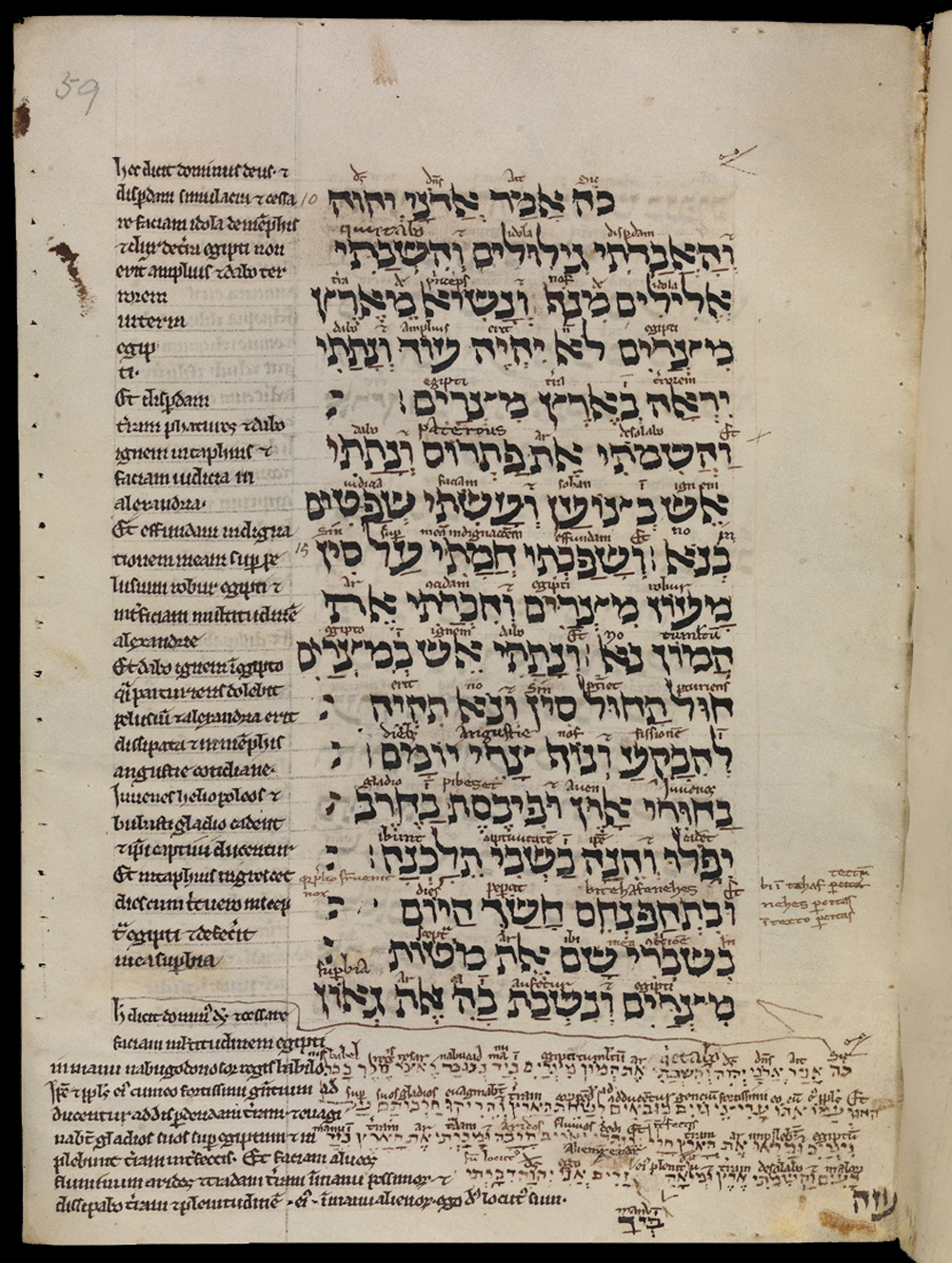
Some early manuscripts containing the text of this chapter in Hebrew are of the Masoretic Text tradition, which includes the Codex Cairensis (895), the Petersburg Codex of the Prophets (916), Aleppo Codex (10th century), Codex Leningradensis (1008).
There is also a translation into Koine Greek known as the Septuagint, made in the last few centuries BC. Extant ancient manuscripts of the Septuagint version include Codex Vaticanus (B; B; 4th century), Codex Alexandrinus (A; A; 5th century) and Codex Marchalianus (Q; Q; 6th century).

The opening of chapter 8 has similar wording. The recorded date of the occurrence in chapter 20 would fall in July–August 591 BC, calculated to be August 14, 591 BCE, based on an analysis by German theologian Bernhard Lang.
The text in the King James Version makes no reference to God's oath in this verse.
Scholars have noted that Ezekiel 20:6–10 recounts Israel’s departure from Egypt without mentioning slavery. Gili Kugler argues that this omission reflects an alternative tradition in which Egypt was remembered as the place of God’s revelation and Israel’s initiation as his people, rather than as a house of slavery. In this reading, Israel’s departure is not an act of deliverance from oppression but the outcome of God’s unilateral election and desire to assert his authority.
"Therefore, I also gave them up to statutes that were not good, and judgments by which they could not live."
Hub AI
Ezekiel 20 AI simulator
(@Ezekiel 20_simulator)
Ezekiel 20
Ezekiel 20 is the twentieth chapter of the Book of Ezekiel in the Hebrew Bible or the Old Testament of the Christian Bible. This book contains the prophecies attributed to the prophet/priest Ezekiel, and is one of the Books of the Prophets. In chapters 20 to 24 there are "further predictions regarding the fall of Jerusalem". In this chapter, Ezekiel speaks on God's behalf to some of the elders of Israel.
The original text of this chapter is written in the Hebrew language. This chapter is divided into 49 verses.
Some early manuscripts containing the text of this chapter in Hebrew are of the Masoretic Text tradition, which includes the Codex Cairensis (895), the Petersburg Codex of the Prophets (916), Aleppo Codex (10th century), Codex Leningradensis (1008).
There is also a translation into Koine Greek known as the Septuagint, made in the last few centuries BC. Extant ancient manuscripts of the Septuagint version include Codex Vaticanus (B; B; 4th century), Codex Alexandrinus (A; A; 5th century) and Codex Marchalianus (Q; Q; 6th century).
The opening of chapter 8 has similar wording. The recorded date of the occurrence in chapter 20 would fall in July–August 591 BC, calculated to be August 14, 591 BCE, based on an analysis by German theologian Bernhard Lang.
The text in the King James Version makes no reference to God's oath in this verse.
Scholars have noted that Ezekiel 20:6–10 recounts Israel’s departure from Egypt without mentioning slavery. Gili Kugler argues that this omission reflects an alternative tradition in which Egypt was remembered as the place of God’s revelation and Israel’s initiation as his people, rather than as a house of slavery. In this reading, Israel’s departure is not an act of deliverance from oppression but the outcome of God’s unilateral election and desire to assert his authority.
"Therefore, I also gave them up to statutes that were not good, and judgments by which they could not live."
Recent media