Hubbry Logo
FICON projectFICON projectMain
Open search
FICON project
Community hub
FICON project
logo
8 pages, 0 posts
0 subscribers
Be the first to start a discussion here.
FICON project
FICON project
from Wikipedia
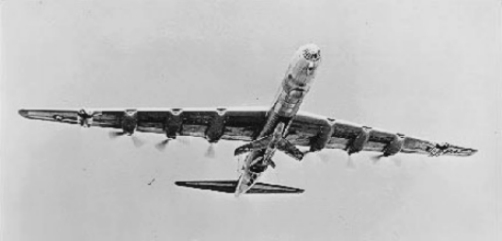
GRB-36 carrying YRF-84F

The FICON (Fighter Conveyor) program was conducted by the United States Air Force in the 1950s to test the feasibility of a Convair B-36 Peacemaker bomber carrying a Republic F-84 Thunderflash parasite fighter in its bomb bay. Earlier wingtip coupling experiments included Tip Tow, which were attempts at carrying fighters connected to the wingtips of bombers. Tom-Tom followed the FICON project afterwards.

Background

[edit]

Wingtip coupling experiments

[edit]

Wingtip coupling experiments were evolved from the concept of adding extra floating panels to extend the effective wingspan of an aircraft, in the hope this would extend the range of the aircraft. This would theoretically act in the same manner as the long narrow wings of a glider. It is reported that the Germans experimented with the idea in 1944 and 1945 by coupling two equal-sized light planes together, then the idea was further developed by Richard Vogt, who came to the US from Germany after World War II. The idea was tested at Wright Field in the late 1940s using a Douglas C-47A Skytrain and Culver Q-14B Cadet. These tests showed the idea had promise, and Republic Aviation was awarded a contract to investigate further. Thus began the Tip Tow project.

Project MX-1016 (Tip Tow)

[edit]
EB-29A docked wingtip-to-wingtip with two EF-84Ds in Project Tip-Tow
Close-up of the B-29 with EF-84D-1-RE 48-641 on wingtip hookup

The MX-1016 program (code named "Tip Tow") sought to extend the range of jets to give fighter protection to piston-engined bombers with the provision for in-flight attachment/detachment of the fighter to the bomber via wingtip connections.[1][2] The Tip Tow aircraft consisted of a specially modified ETB-29A (serial number 44-62093) and two EF-84D (serial numbers 48-641 and 48-661). A number of flights were undertaken, with several successful cycles of attachment and detachment, using at first a single aircraft, then two. The pilots of the F-84s maintained manual control when attached, with roll axis maintained by elevator movement rather than aileron movement. Engines on the F-84s were shut down to save fuel during the "tow" by the mother ship, and in-flight engine restarts were successfully accomplished.

Wing flexibility of the B-29 as well as wing-tip vortices caused concern, and the mechanisms for attachment required modifications. The first hookup of both F-84s with the B-29 occurred on the 10th flight on 15 September 1950. The longest flight with all connected was on 20 October 1950, and lasted for 2h 40min. All of these flights were accomplished with manual control of the F-84 aircraft. Republic received an additional contract to continue the experiments by incorporating an automatic flight control system. Meanwhile, as the modifications proceeded, additional test flights were made, including night flights. The automatic flight control modifications were ready for testing in March 1953, and a number of hookups were made with only one or the other of the F-84s while attempting to sort continuing electrical issues. On 24 April 1953, over Peconic Bay, New York State, the left-hand F-84 hooked up and the automatic system was activated. The F-84 immediately flipped over onto the wing of the B-29 and both crashed with loss of all five crew and the F-84 pilot.[3]

The pilot of the right-hand F-84D, Major Clarence E. "Bud" Anderson wrote of the Tip-Tow experiments in an article entitled Aircraft Wingtip Coupling Experiments published by the Society of Experimental Test Pilots.[4]

Project Tom-Tom

[edit]

In parallel, a similar configuration, called Tom-Tom, was being developed using JRB-36F 49-2707, which was previously used in the early FICON trials and two RF-84F (serial numbers 51-1848 and 51-1849). The aircraft were attached wingtip-to-wingtip using articulated arms and clamps. Although several successful hookups were performed by Convair pilots Doc Witchell, Beryl Erickson, and Raymond Fitzgerald in 1956, turbulence and vortices continued to present a major problem. On 23 September 1956, RF-84F 51-1849, piloted by Beryl Erickson, was actually torn away from the right wing tip of the JRB-36F.[5][page needed] All aircraft landed safely but the concept was deemed too dangerous. Developments in the area of inflight refueling at the time promised a much safer way of extending the range of the fighters and Project Tom-Tom was canceled.

FICON concept

[edit]

Although the experimental McDonnell XF-85 Goblin escort fighter proved to be a failure, USAF believed that the bomber-borne fighter concept was still viable. Instead of escort, the focus had shifted to a strike role with a Convair B-36 Peacemaker carrying a Republic F-84 Thunderjet fighter. The plan was for the heavy bomber with superior range to arrive in the vicinity of the target and deploy a faster, more maneuverable F-84 to deliver the tactical nuclear bomb. The F-84 would then return to the "mothership" and be carried home.

FICON testing

[edit]

A production RB-36F-1-CF Peacemaker (serial number 49-2707) was modified with a special trapeze mechanism in its bomb bay and designated GRB-36F, and a production F-84E Thunderjet (serial number 49-2115) was fitted with a retractable hook in the nose in front of the cockpit. The hook would link the fighter to the trapeze which would hold the aircraft in the bomb bay during flight, lower it for deployment, and raise it back in after the mission. Due to the size of the fighter, only the cockpit, the fuselage spine, and the tailfin actually fit inside the GRB-36, which considerably increased the drag and reduced the big bomber's range by 5–10%. On a positive note, the fighter pilot was able to leave his aircraft while attached to the carrier, making the 10-hour flights to-and-from the target much more bearable.

The initial FICON trials were performed in 1952. First hookup took place on 9 January 1952, with first retrieval into the bomb bay on 23 April, and first flight of the complete system from takeoff to landing on 14 May. In 1953, the GRB-36/F-84E was sent to Eglin Air Force Base where 170 airborne launches and retrievals were subsequently performed. In May 1953, the F-84E was replaced by the faster Republic F-84F Thunderstreak, with the original YRF-84F (briefly called YF-96A) prototype (serial number 49-2430) modified for the role and briefly designated GRF-84F. When the RF-84F Thunderflash tactical reconnaissance fighter began entering service, the FICON role was changed from attack to reconnaissance. As with the F-84, the RF-84 was supposed to utilize its smaller size and superior agility to overfly heavily defended targets and gather intelligence while the bomber loitered outside the range of enemy defenses. The scheme was found to be "tactically sound" and USAF ordered 10 production RB-36D to be converted to GRB-36D carriers with a complement of 25 RF-84K tactical reconnaissance fighters. The RF-84K differed from RF-84F in having retractable hookup equipment and anhedral tailplanes to better fit inside the GRB-36. Since it retained an armament of four 0.50 in. machine guns, it could also act as an escort fighter. The RF-84K could be deployed at altitudes of up to 25,000 ft (7,600 m) and added 1,180 mi (1,900 km) to GRB-36D's 2,800 mi (4,500 km) combat range.

GRB-36 launching YRF-84F from the trapeze
F-84E on FICON trapeze.
RF-84K Thunderflash of the 407th Strategic Fighter Wing, 1955

FICON in service

[edit]

The FICON system saw limited service with Strategic Air Command in 1955–56. The GRB-36D carriers from 99th Strategic Reconnaissance Wing (Fairchild AFB) operated in conjunction with RF-84K from 91st Strategic Reconnaissance Squadron (Larson AFB).

Subsequent test flights demonstrated the FICON concept was indeed "tactically sound", but its operational implementation was difficult. A total of 10 GRB-36Ds and 25 RF-84Ks were built and saw limited service in 1955–56. Hookups with the carrier aircraft were challenging for the experienced test pilots under ideal conditions. In combat or in adverse weather, and by less-experienced pilots, they proved difficult, and several RF-84Ks were damaged attempting it. In addition, the RF-84 dramatically reduced the bomber's ground clearance: with 450 U.S. gallons (1,700 liters) external tanks on the fighter, the FICON combination cleared by a mere six inches (15 cm). These adversities, combined with the advent of the Lockheed U-2 and the passing of the B-36 into obsolescence, resulted in cancellation of the project in 1956, with the last FICON flight taking place on 27 April.

Upon cancellation, some RF-84Ks were scrapped, but others operated as reconnaissance aircraft with retractable hook apparatus still in place. Only three survive; one at the National Museum of the United States Air Force, one at Planes of Fame "static lot" in Chino, California, and one at the Wings Over the Rockies Air and Space Museum in Denver, Colorado.

Republic RF-84K Thunderflash at the National Museum of the United States Air Force

References

[edit]
[edit]
Revisions and contributorsEdit on WikipediaRead on Wikipedia
from Grokipedia
The FICON (Fighter Conveyor) project was a initiative conducted in the early 1950s to evaluate the feasibility of employing modified bombers as carriers for parasite , enabling the launch and retrieval of reconnaissance or attack fighters like the Republic RF-84K Thunderflash to extend their range deep into enemy territory during the . Initiated in 1951 amid concerns over Soviet air defenses, the program aimed to create a "composite" aircraft system where the B-36's , equipped with a trapeze mechanism, would lower, launch, and recover the fighter mid-flight, allowing pilots to transfer between the bomber and fighter for rest or refueling. modified several B-36 variants, including GRB-36D and GRB-36F models, while adapted F-84E, YRF-84F, and RF-84K fighters with shortened wings and reinforced structures for the hookup process. Key milestones included the first successful aerial hookup on January 9, 1952, using an F-84E and RB-36, followed by the initial retrieval on April 23, 1952, and a complete launch-and-recovery cycle on May 14, 1952. Over 170 launches and retrievals were performed at by 1953, with operational trials at achieving the first in-flight crew transfer on December 7, 1955. The project progressed through four phases, from exploratory tests to production modifications of 10 RB-36Ds and 25 RF-84Ks, demonstrating the system's potential for long-range reconnaissance by the 91st Strategic Reconnaissance Wing. However, challenges such as turbulent recoveries, a 5-10% reduction in the B-36's range due to added weight, and mechanical incidents—like the "Black Friday" incidents on January 13, 1956—led to its suspension on January 18, 1956, and full termination on February 15, 1956. Ultimately, FICON was rendered obsolete by rapid advancements in technology, the introduction of the and KC-135 Stratotanker, and high-altitude reconnaissance platforms like the , shifting U.S. strategic aviation priorities away from parasite fighter concepts.

Historical Background

Early Wingtip Coupling Experiments

During , German engineers at the Deutsche Forschungsanstalt für Segelflug (DFS) Glider Research Station conducted preliminary experiments with wingtip coupling in 1944 and 1945. These tests involved two Klemm KL 35 of equal size, connected wingtip-to-wingtip using a rope that was locked at altitude after separate takeoffs. The trials demonstrated the basic feasibility of coupled flight without major difficulties, though the German Air Ministry did not pursue further development due to wartime priorities. Following the war, the wingtip coupling concept was adopted in the United States by aeronautical engineer Dr. Richard Vogt, formerly of , who arrived via . Working alongside Bernard A. Hohmann at Wright Field's Wright Air Development Center, Vogt focused on using the technique for range extension through coupled flight, where a smaller or extension could act as a "free-floating" wingtip to enhance overall efficiency. This approach aimed to allow escort fighters to conserve fuel by riding alongside larger bombers without traditional parasite carrier mechanisms. Initial U.S. flight tests occurred in 1949 using a Douglas C-47A Skytrain (serial 42-23918) as the host and a manned Culver Q-14 Cadet (designated PQ-14B, serial 44-68334) as the coupled aircraft. The connection mechanism featured a with a on the Q-14B's left that engaged a ring on the C-47A's right , allowing in-flight hookup after separate takeoffs. The first successful coupling took place on October 7, 1949, piloted by Major Clarence E. "Bud" Anderson in the Q-14B, with subsequent trials involving 35 flights from August 18, 1949, to May 3, 1950. These tests included daytime and nighttime operations, with pilots achieving sustained coupled flight durations of up to several minutes, though separations sometimes required careful maneuvering to avoid collisions. Seventeen pilots participated, confirming the practicality of hookup and release techniques, such as rear-entry approaches. The experiments highlighted key aerodynamic effects of wingtip , including an effective increase in the host 's wing , which reduced induced drag by mitigating and improved overall lift-to-drag efficiency. For the C-47A-Q-14B pairing, initial data showed a modest range extension potential for the coupled configuration, with the smaller providing additional lift to offset its weight while experiencing neutral stability in straight-and-level flight. However, challenges arose from turbulent airflow near the wingtips, leading to minor roll oscillations that pilots could control manually, though prolonged demanded precise station-keeping to maintain stability. These findings laid the groundwork for subsequent bomber-fighter applications.

Project Tip Tow (MX-1016)

Project Tip Tow (MX-1016) was initiated by the U.S. Air Force in the summer of 1950 as a proof-of-concept effort to test in-flight wingtip attachment of jet fighters to a bomber, serving as a direct precursor to the FICON program. The project utilized a modified Boeing EB-29A (also designated ETB-29A) Superfortress as the mothership, equipped with specialized wingtip pylons, and two Republic EF-84D Thunderjet fighters as parasite aircraft. These modifications allowed the fighters to dock at the bomber's wingtips, with the fighters' engines shut down during attachment to conserve fuel. Building on earlier wingtip coupling experiments with propeller-driven aircraft, Tip Tow specifically addressed the challenges of integrating high-speed jets into such formations. Key milestones included the first single hookup on July 21, 1950, over , followed by the inaugural dual hookup of both EF-84Ds with the EB-29A on September 15, 1950, during the project's tenth flight. The longest sustained dual flight occurred on October 20, 1950, lasting 2 hours and 40 minutes, demonstrating stable formation flight under manual control. Over the course of the program, approximately 40 flights were completed, accumulating about 15 hours of towed time across single and dual configurations, with multiple successful attachment and detachment cycles. The project suffered a tragic setback on April 24, 1953, when an EF-84D, piloted by Major John M. Davis, collided with the EB-29A during a test of an automatic flight control system over Peconic Bay, New York. The impact caused structural failure during decoupling, leading to the crash of both aircraft and the loss of six crew members, including Davis and five from the bomber. This incident effectively ended the Tip Tow tests. Technical evaluations from the flights provided valuable data on hookup reliability, which proved feasible in calm air but required precise pilot coordination to avoid oscillations during engagement. The configuration enabled significant fuel savings for the fighters, with their engines off during towing, resulting in up to 20% range extension for escort missions while imposing only a modest 2.9% to 7.5% penalty on the bomber's range. However, limitations were evident, including sensitivity to turbulence that exacerbated stability issues, reduced pilot visibility in close formation, and the need for constant manual inputs, as ailerons became ineffective and elevators dominated control. These findings highlighted the concept's potential for range enhancement but underscored its operational risks.

Project Tom-Tom

Project Tom-Tom was initiated in 1952 by the as a wingtip coupling experiment to extend the range of reconnaissance fighters using the as a mothership, serving as an interim approach to integration parallel to the FICON program. The project utilized a modified GRB-36F (serial 49-2707) equipped with retractable scissors units on its wingtips to facilitate attachment, paired with two RF-84F Thunderflash fighters (serials 51-1848 and 51-1849) modified with jaw-like capture mechanisms on their wingtips. These setups allowed the fighters to be towed with engines off, drawing power and air from the B-36, building briefly on prior towing data from Project Tip Tow. Flight testing commenced with proximity flights in 1954, with the first flight involving both fighters on April 14, 1956, at , , for pilot familiarization; the first successful two-point wingtip hookup was achieved on June 8, 1956. Subsequent tests in 1956 incorporated refinements such as adjustable rear pitch locks and a skewed hinge on the docking mechanism to enhance stability without requiring intervention, enabling tows lasting up to 45 minutes. However, challenges arose from and aerodynamic instability, particularly at speeds around 219 mph indicated airspeed in single-fighter configurations. A critical incident occurred on September 23, 1956, during a docking attempt when the RF-84F (piloted by Beryl Ericson) hooked onto the B-36 with excessive yaw, resulting in violent flapping that caused the coupling to fail and tore the fighter away, leaving part of the embedded in the RF-84F's jaw. This event, attributed to and , led to minor damage but no injuries, prompting the immediate suspension of flights. The project was formally terminated on March 28, 1957, due to these risks, funding constraints, and emerging alternatives like . Despite its cancellation, Project Tom-Tom demonstrated the technical feasibility of in-flight bomber-fighter recovery and attachment for range extension, though it underscored significant safety hazards from aerodynamic interactions. These findings informed refinements in the broader FICON program's design, emphasizing more controlled parasite deployment methods.

FICON Concept and Design

Strategic Rationale

In the early era, the faced mounting challenges in delivering nuclear weapons over intercontinental distances against an increasingly capable Soviet air defense network, which included thousands of jet interceptors like the MiG-15 and advanced systems. The , with its exceptional range of over 10,000 miles, was central to (SAC) plans for strategic bombing, but its slow speed and limited maneuverability made it vulnerable to interception once Soviet fighters improved during the . The FICON project emerged as a response to these threats, aiming to enhance the B-36's survivability by integrating parasite fighters capable of providing onboard escorts or conducting reconnaissance deep into denied airspace. The core objective of FICON was to extend the operational reach of tactical fighters, such as the Republic RF-84, by more than 1,000 miles—potentially up to 2,800 miles—through carriage aboard the B-36, allowing deployment near target areas without the need for extensive overseas basing or logistical infrastructure. This capability would enable fighters to launch for strike, escort, or intelligence missions from the bomber's vicinity, then return for retrieval, supporting SAC's requirements for flexible, long-range nuclear delivery and reconnaissance without relying on vulnerable forward airfields. Influenced by earlier proof-of-concept efforts like Project Tom-Tom, the concept was formalized in 1951 through a contract between the Air Force and Convair to modify B-36 variants for fighter integration. FICON offered distinct advantages over contemporary alternatives for extending fighter operations. Standalone fighters suffered from short legs, limiting their utility for intercontinental missions without massive forward deployments, while early in-flight refueling systems—using hose-and-drogue methods—were hampered by slow transfer rates (as low as 110 gallons per minute), hose durability issues in turbulent conditions, and incompatibility with high-speed jets due to speed mismatches between tankers like the KC-97 and receivers. In contrast, the parasite approach provided reusable escorts that could be carried internally, reducing logistical burdens and enabling rapid, self-contained operations aligned with SAC's emphasis on bomber protection and mission versatility.

Aircraft Modifications and Integration

The FICON project required significant engineering modifications to the bomber to enable it to serve as a carrier for Republic F-84 fighters, primarily focusing on the reconnaissance-oriented RF-84K variant. Ten RB-36D bombers were converted to the GRB-36D configuration starting in 1953, with the primary alteration involving the installation of an H-shaped cradle, or recover-release trapeze, in the forward to accommodate up to two RF-84K fighters. This trapeze system, which could be lowered through modified ventral doors for launch and recovery operations, replaced standard racks and included mechanisms for secure attachment, electrical power transfer, and fuel umbilical connections to sustain the fighters during transit. A single RB-36F was also modified to GRB-36F for early testing, featuring similar adaptations but without production-scale implementation. The Republic RF-84K Thunderflash, a specialized reconnaissance derivative of the F-84F, underwent targeted adaptations by Republic Aviation to facilitate docking with the GRB-36 carrier, with 25 units produced for the program. Key changes included the addition of a retractable skyhook probe on the fuselage for engaging the B-36's trapeze, reinforced structure to handle docking stresses, and drooping (anhedral) tailplanes to ensure clearance from the bomber's underbelly during recovery. These modifications preserved the RF-84K's core reconnaissance capabilities, including camera installations in the nose and fuselage, while enabling in-flight hookup without compromising the fighter's combat readiness. The wingspan remained at the standard 33 feet 1 inch for the swept-wing F-84F design, optimized for fitting within the B-36's bomb bay dimensions once docked. Integrating the RF-84K with the GRB-36 presented several engineering challenges, particularly in maintaining aerodynamic efficiency and operational balance. The stowed fighter in the bomb bay increased aerodynamic drag on the B-36, reducing its range by an estimated 5 to 10 percent, though overall penalties were considered minimal in program evaluations. Weight distribution was carefully managed to preserve the bomber's center of gravity during mated flight, with the cradle system designed to counterbalance the added mass of up to two fighters, each at approximately 15,000 pounds launch weight. Electrical and fuel umbilical connections allowed the GRB-36 to provide power, pressurization, and fuel to the docked RF-84K, enabling pilot transfer and extended loiter times, but required precise alignment during hookup to avoid structural strain. The recovery sequence involved the fighter approaching from below at speeds limited to 200-250 mph for safe engagement, followed by hook capture on the lowered trapeze and subsequent retraction into the bay via the ventral doors.

Testing and Development

Initial Hookups and Launches

The FICON project initiated its proof-of-concept testing in January 1952 at , , utilizing a modified GRB-36F Peacemaker bomber (serial 49-2707) and an F-84E Thunderjet prototype (serial 49-2115) to validate docking and launch procedures. Early tests, conducted primarily at Convair's facilities near Carswell AFB before relocation to Eglin, focused on strike mission variants using the F-84E's fighter-bomber configuration. The first external hookup occurred on January 9, 1952, when the F-84E successfully connected to the bomber's trapeze mechanism during flight, demonstrating basic alignment feasibility despite initial challenges with stability post-hookup. Key milestones advanced rapidly in spring 1952, with the first bomb bay retrieval achieved on April 23, 1952, marking the successful retraction of the hooked F-84E into the GRB-36F's forward using the trapeze and cradle . This was followed by the first complete launch-retrieval cycle on May 14, 1952, during a four-hour flight where the bomber took off with the fighter secured in the bay, ascended to operational altitude, launched the F-84E, and later recovered it mid-air. Test pilots, including USAF personnel like Colonel Clarence "Bud" , led these efforts, emphasizing pilot coordination between the bomber's crew and the fighter pilot during hookup and separation maneuvers. Early tests revealed persistent issues with hook alignment, such as probe-receiver mismatches that occasionally led to failed connections or structural stress on latches. Training protocols were developed to address pilot coordination challenges, including simulated dual-cockpit exercises to synchronize the bomber's speed and the fighter's approach, ensuring safe retraction without mid-air incidents. The design modifications, including the V-type for improved single-point contact and the cradle for secure storage, enabled these hookups but introduced minor drag penalties during external carriage phases. The project progressed through four phases: Phase I exploratory flights, Phase II development with the F-84E completed by May 1952, Phase III extended , and Phase IV focusing on variants starting in 1953. By 1953, testing shifted emphasis toward applications, paving the way for later RF-84 variants.

Full-Scale Trials and Evaluations

Following the initial demonstrations, full-scale trials of the FICON system expanded significantly in 1953 at , , where a modified GRB-36 carried out 170 airborne launches and retrievals using an F-84E parasite fighter. These tests built on early hookups by assessing operational feasibility under varied conditions, including day and night operations, and confirmed the system's potential for extending mission capabilities. As testing progressed into 1953 through 1956, the program shifted focus to a configuration to meet (SAC) intelligence requirements, incorporating the RF-84K Thunderflash variant for parasite operations. This transition involved seven successful flights with the RF-84K from a modified B-36, with the final flight on , 1956, demonstrating reliable hookup and release sequences despite the more complex reconnaissance modifications. Overall evaluations highlighted a high success rate in controlled conditions, though total cycles across all tests exceeded 170 without reaching comprehensive operational volumes. Key metrics from the trials underscored the FICON's viability, with the system able to carry the parasite fighter up to 2,800 miles from base before release, though the added weight reduced the B-36's overall range by approximately 5-10%. Fuel efficiency gains were notable, as the B-36 could transport the fighter without significant drag penalties during cruise, preserving bomber fuel for extended intercontinental missions. identified as a primary limitation, with recovery operations succeeding reliably only under optimum and turbulence-free conditions; non-ideal contributed to aborted retrievals in a minority of cases, prompting scrutiny of environmental dependencies. Refinements during the 1953-1956 period addressed hookup reliability through upgrades to the ejection trapeze mechanisms, including improved yoke latches and a "V"-type probe-receiver for better alignment during docking. Additional enhancements incorporated radar aids to assist nighttime and low-visibility approaches, reducing pilot workload and improving precision in transfers. These iterations, informed by flight data from Edwards and Eglin, aimed to mitigate mechanical issues observed in early cycles, such as probe contact failures, and supported the transition to reconnaissance payloads.

Operational Deployment

Service Introduction and Units

The FICON system entered operational service with the (SAC) in early 1955, following the completion of developmental testing. The delivered the first modified GRB-36D carrier aircraft in February 1955, with a total of 10 such conversions assigned to the 99th Strategic Reconnaissance Wing (SRW) based at , Washington. Accompanying these were 25 RF-84K Thunderflash reconnaissance fighters, designed for deployment from the bombers' bomb bays via a trapeze mechanism. This rollout marked the transition from experimental trials to limited routine use, aimed at enhancing long-range capabilities during the . The 99th SRW oversaw the program's integration in coordination with the 71st Strategic Reconnaissance Wing (SRW), with the 91st Strategic Reconnaissance Squadron (SRS) of the 71st SRW at Larson Air Force Base, Washington, operating the RF-84K fighters and the 348th Bombardment Squadron (BS) of the 99th SRW handling the GRB-36D carriers. Operational activities ran from January 1955 to February 1956, during which crews conducted training and proficiency flights to master hookup and launch procedures. By late 1955, the system had achieved initial certification for service use, building on prior trial data that demonstrated reliable in-flight retrievals. Initial missions focused on strategic reconnaissance, with the first operational aerial hookups occurring on December 7, 1955, involving crews from the 99th SRW and the 71st SRW. These patrols extended the reach of the RF-84K for photographic and electronic intelligence gathering, launching fighters from the GRB-36D at distances up to 2,800 miles from base. The FICON aircraft were integrated into SAC's broader B-36 fleet, which totaled 384 bombers, representing a small but specialized fraction modified for parasite operations.

Tactical Employment and Missions

The FICON system was primarily employed by the (SAC) for high-altitude missions, utilizing the RF-84K Thunderflash's specialized cameras to extend the GRB-36D Peacemaker's loiter time over remote or denied areas. This configuration allowed the composite aircraft to position the fighter near borders, enabling extended without requiring forward basing for the parasite aircraft. Typical missions lasted up to 12 hours overall, with the RF-84K covering approximately 2,000 miles independently after detachment, thereby enhancing SAC's ability to gather intelligence on potential adversaries. Notable operations from 1955 to 1956 focused on surveillance flights monitoring Soviet activity, particularly near their borders, as part of SAC's alert postures during the . These missions involved GRB-36Ds loitering in international airspace to launch RF-84Ks for rapid penetrations into contested regions, providing timely photographic intelligence without risking the mothership. The 99th Strategic Reconnaissance Wing at conducted these efforts in coordination with the 91st Strategic Reconnaissance Squadron at Larson Air Force Base. Tactical procedures emphasized precision and coordination: the GRB-36D would cruise at altitudes up to 40,000 feet before lowering to around 25,000 feet for launch via the trapeze, allowing the RF-84K to detach for 2-4 hour independent sorties under radio guidance from . Retrieval involved the fighter maneuvering back to the trapeze for midair hookup, often in formation with the flying straight and level. Operational training achieved multiple successful hook-ups, such as 13 during a , 1956, exercise, though occasionally complicated recoveries. While adaptations explored limited strike potential—equipping fighters with nuclear weapons for tactical delivery—reconnaissance remained the dominant role, overshadowed by the superior capabilities of the emerging , which ultimately contributed to FICON's short operational lifespan.

Challenges, Cancellation, and Legacy

Operational Limitations

The FICON system's operational deployment revealed significant technical hurdles that compromised its reliability in service. Docking the RF-84K fighter to the B-36 bomber's trapeze mechanism proved particularly challenging, with hook-ups difficult even under ideal conditions and nearly impossible in turbulent air, leading to structural damage in multiple instances. On January 13, 1956, during what became known as "Black Friday," turbulence caused three RF-84K fighters to collide with the B-36's V-receptacle during recovery attempts, resulting in damage to the fighters and the bomber's docking hardware; this incident was exacerbated by inexperienced pilots struggling with the precise maneuvers required. Additionally, the semi-external carriage of the fighter increased aerodynamic drag, reducing the B-36's range by 5-10%, while the RF-84K's external fuel tanks limited ground clearance to approximately 6 inches, heightening risks during loading and unloading. Pilot error risks were amplified by these demands, as the docking process required exceptional skill, and control deficiencies at high speeds further strained operator performance. Environmental factors severely restricted FICON's practical utility, confining operations primarily to clear conditions. The system's sensitivity to and adverse made recoveries hazardous, with disturbances around the B-36's complicating alignment and increasing the likelihood of near-misses or failures. Incidents like the Black Friday event underscored these vulnerabilities, where unexpected gusts prevented safe reattachment and led to emergency separations. Ice accumulation during high-altitude flights also necessitated specialized de-icing tests, further limiting deployment in non-ideal atmospheric conditions. Logistical burdens compounded these issues, imposing heavy demands on resources and personnel. Maintenance complexity was a major drawback, as the intricate trapeze and latching systems required extensive post-flight inspections and specialized ; for example, the lack of suitable jacks delayed unloading after emergency landings, prolonging turnaround times. Crew training was intensive, including a 50-hour program to familiarize fighter pilots with parasite operations, docking procedures, and in-flight coordination. High costs plagued the program, including approximately $55,000 for constructing a single ground loading pit to facilitate fighter installation, alongside broader expenses for modifications and retrofits that strained budgets. By 1956, the B-36's obsolescence had become evident, as its piston-engine design lagged behind jet-powered alternatives, rendering the entire FICON setup increasingly impractical for sustained operations. In comparison, FICON proved inferior to emerging technologies for its intended roles. For reconnaissance missions, the U-2's high-altitude capabilities, introduced in 1956, offered superior endurance and stealth without the docking complexities, quickly supplanting the RF-84K's contributions. Similarly, the KC-135 Stratotanker's system enabled B-52 bombers to extend strike ranges far more efficiently than parasite fighter carriage, eliminating the need for in-flight fighter deployment and recovery. These advancements highlighted FICON's tactical shortcomings, as real-world missions exposed its inability to adapt to dynamic combat environments.

Cancellation and Post-Program Analysis

The ordered the suspension of FICON operations on January 18, 1956, following the "Black Friday" incident on , during which during a large-scale training exercise involving ten RF-84K fighters resulted in damage to three fighters and the GRB-36D carrier's retrieval mechanism, despite thirteen successful hookups. Operational testing was permanently terminated by the on February 15, 1956, with the program's last flight occurring on April 27, 1956. The modified aircraft were decommissioned by 1957 as the B-36 fleet was phased out in favor of newer strategic assets. An investigation into the Black Friday incident and overall program performance concluded that the parasite fighter concept was impractical for routine operations, particularly in turbulent weather, and had been rendered obsolete by advancements such as the for high-altitude reconnaissance and the KC-135 for , which eliminated the need for onboard fighter carriage. The review recommended against any revival of the system, emphasizing its limited utility in extending bomber range or providing effective tactical support. Following cancellation, most GRB-36 carriers and RF-84Ks were scrapped, though three examples are preserved today at the , the National Museum of the United States , and the Wings Over the Rockies Air & Space Museum. The program's economic viability came under scrutiny, with its development and modification costs—including approximately $55,000 for specialized ground loading facilities—deemed unjustified amid the transition to the B-52 Stratofortress, whose integration with offered superior range and flexibility without the added complexity and weight penalties of parasite fighters. was further eroded by the rapid of the B-36 platform itself. Human factors analysis from the program highlighted significant ergonomic challenges in the parasite hookup process, which required precise pilot coordination under high-stress conditions and was vulnerable to environmental variables like , as demonstrated in the Friday event that damaged but resulted in no fatalities during testing or operational service. These lessons underscored the difficulties of integrating manned parasite systems into strategic bomber operations, influencing subsequent evaluations of crew workload and safety in experimental concepts.

Influence on Aviation and Military Strategy

The FICON project advanced the concept of airborne vehicle-launch platforms (AVLPs) by successfully demonstrating internal carriage and deployment of parasite fighters from the B-36 bomber, paving the way for subsequent air-launched systems such as Project RASCAL, which adapted the B-36 to deploy the standoff missile starting in 1953. This iterative approach emphasized human factors and mechanical reliability in mid-air operations, influencing the design of later parasite systems that prioritized aerodynamic efficiency and in-flight servicing. Although operational challenges limited its scale, FICON's trapeze-based hookup mechanism represented a key evolution from earlier failures like the XF-85 , where docking instability had proven unworkable, thereby refining techniques for manned and unmanned parasite integration. Strategically, FICON underscored the vulnerabilities of relying on parasite escorts for (SAC) bombers during deep-penetration missions, accelerating the doctrinal shift toward as a more versatile solution for extending operational range without compromising bomber speed or payload. This transition, evident in the rapid deployment of KC-135 Stratotankers by the mid-1950s, allowed SAC to prioritize B-52 Stratofortress fleets over cumbersome composites, while paralleling the broader pivot to intercontinental ballistic missiles (ICBMs) for nuclear deterrence that reduced dependence on vulnerable manned overflights. The project's reconnaissance variant, using RF-84K Thunderflashes, briefly informed SAC manuals on integrated bomber-fighter tactics, highlighting the need for self-sufficient strike packages amid escalating threats. Retrospective analyses in the have praised FICON's innovation as a foundational experiment in host-parasite , despite its obsolescence, with a 2020 U.S. Air Force study crediting it for lessons in logistical integration that echo in contemporary AVLP designs. Preservation efforts further cement its legacy; the National Museum of the U.S. Air Force maintains the sole surviving YRF-84F prototype in storage since 2015, serving as a tangible link to early efforts in modular aviation systems. These elements connect FICON to non-aircraft alternatives like cruise missiles, where the emphasis on releasable standoff assets evolved into programs such as the , addressing similar range and survivability challenges without manned parasites.

References

Add your contribution
Related Hubs
User Avatar
No comments yet.