


Community hub
Recent from talks
Contribute something
Nothing was collected or created yet.
Faaiz Anwar
View on Wikipedia | This article has multiple issues. Please help improve it or discuss these issues on the talk page. (Learn how and when to remove these messages)
|

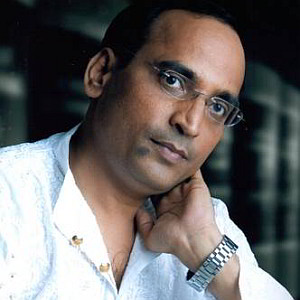
Faaiz Anwar (born 9 March 1965) is an Indian poet and lyricist who has written songs for popular movies including Dil Hai Ke Manta Nahin, Saajan, Tum Bin, Jab We Met, Dabangg, and Rowdy Rathore.
Key Information


Career
[edit] | This section of a biography of a living person does not include any references or sources. (November 2019) |
Anwar entered the Hindi music industry by chance. In 1989, on a sightseeing visit to Bombay, he happened to meet Roop Kumar Rathod. Impressed by his Shayri, Roop Kumar Rathore introduced him to Mahesh Bhatt. And, Mahesh Bhatt was so impressed by his Shayari that he asked to join the Film Industry and even promised to give the break. And Mahesh Bhatt kept his promise. Mahesh Bhatt was working on a subject and had the music ready for a song but wanted Shayri with a touch of sensibility and human feel. He tried many established lyricists but they could not satiate Mahesh Bhatt's demanding soul. He asked Faaiz Anwaar to write lyrics. In 40 min. what Faaiz Anwaar wrote, went to become musical milestone of Music Industry. This was the title song "Dil Hai Ke Manta Nahin" which stayed on the top of the most popular Radio Programme Cibaca Geetmala for almost two years. Soon, followed musical hit film of the year "Imtihaan" and Saajan” which consolidated his place in the Film Industry. He was nominated for Best Lyricist for his debut song "Dil Hai Ke Maanta Nahi" (Film: Dil Hai Ke Maanta Nahin), "Is Tarah Aashiqui Ka Asar... (Film: Imtehan), and "Tere Mast Mast Do Nain" (Film: Dabangg) in Filmfare awards, Zee awards.
Filmography
[edit]- Dil Hai Ke Manta Nahin (1991)
- Saajan
- Jaanam
- Aaja Meri Jaan (1993)
- Kasam Teri Kasam (1993)
- Tum Karo Vaada (1993)
- Do Dilon Ka Sangam (1993)
- Shabnam
- Tehquiqat
- Karan (1994)
- Kanoon (1994)
- Vijaypath
- Naaraaz (1994)
- Imtihaan
- Hum Hain Bemisaal
- The Gambler (1995)
- The Don (1995)
- Haqeeqat (1995)
- Surakshaa (1995)
- Hulchul (1995)
- Ram Aur Shyam (1996) (1996)
- Dil Kitna Nadan Hai (1997)
- Iski Topi Uske Sarr
- Aakrosh (1998)
- Humse Badhkar Kaun
- Bade Dilwala (1999)
- Hello Brother (1999)
- Papa The Great (2000)
- Baaghi (2000)
- Tum Bin (2001)
- Yeh Zindagi Ka Safar (2001)
- Pyaasa (2002)
- Gunaah (2002)
- Maine Dil Tujhko Diya
- Khel – No Ordinary Game
- Khwahish
- Koi Mere Dil Mein
- Chand Bujh Gaya
- Saathi
- Zindagi Tere Naam
- Jab We Met (2007)
- Dabangg (2010)
- Rowdy Rathore (2012)
- Yeh Jo Mohabbat Hai
- Anuradha
- Munde Kamaal De
- Love Ke Funday
- Tum Bin II (2016)
- Ek Haseena Thi Ek Deewana Tha (2017)
- Veerey Ki Wedding (2018)
Albums
[edit]| Album | Singer | Music Director |
| I Love You | Udit Narayan | Sandesh Shandilya |
| Deewana (album) | Sonu Nigam | Sajid–Wajid |
| Jaan (album) | Sonu Nigam | Nikhil Vinay |
| Yaad | Sonu Nigam | Nikhil Vinay |
| Oh My Love | Sadhana Sargam | Sandesh Shandilya |
| Jaanam | Udit Narayan | Nikhil Vinay |
| Aashiqui | Abhijeet Bhattacharya | Nikhil Vinay |
| Ishq Hua | Anuradha Paudwal | Nikhil Vinay |
| Love Is Life | Udit Narayan | Anand–Milind |
| Sochta Hun | Babul Supriyo | |
| Tujhse Pyar Hai | P.Balram and Sadhna Sargam | Sayeed Ali |
| Teri Kuch Yaadein | Shael | Milind Sagar |
| Maah-E-Ru | Jojo | Prakash-Ashish |
| Sitara | Vibhav Krishna | Prakash-Ashish |
Accolades
[edit]| Year | Award Ceremony | Category | Film | Song | Result | Reference(s) |
|---|---|---|---|---|---|---|
| 2010 | Mirchi Music Awards | Album of The Year | Dabangg | - | Won | [1][2] |
| Lyricist of The Year | "Tere Mast Mast Do Nain" | Nominated |
References
[edit]- ^ "Nominees - Mirchi Music Award Hindi 2010". 30 January 2011. Archived from the original on 30 January 2011. Retrieved 30 September 2018.
- ^ "Winners - Mirchi Music Award Hindi 2010".
http://www.starblockbuster.com/i-know-when-my-song-is-a-hit-faaiz-anwar/
| Authority control databases: Artists |
|---|

Faaiz Anwar
View on GrokipediaEarly life and background
Birth and upbringing
Faaiz Anwar was born on 9 March 1965 in Amraudha, a town in Kanpur Dehat district, Uttar Pradesh, India.[1][6] He was raised in Kanpur, where he spent his formative years in a culturally vibrant environment typical of Uttar Pradesh, which played a key role in shaping his affinity for Urdu and Hindi literary traditions.[7] From a young age, Anwar nurtured a deep interest in poetry and literature, composing shayri and ghazals that he successfully published in local newspapers and magazines.[7] Details on his immediate family, including parents or siblings, remain limited in available records, underscoring the focus on his personal development within Kanpur's rich poetic milieu rather than specific familial lineage.[7]Entry into the industry
Faaiz Anwar gained initial recognition as a poet in his hometown of Kanpur, Uttar Pradesh, where his upbringing amid the city's cultural milieu shaped his poetic voice, drawing from Urdu and Hindi traditions.[7] He composed shayari and ghazals from a young age, with some works published in local newspapers and magazines, while others remained unpublished and circulated among literary circles in the region.[7] Anwar's transition from amateur poetry to professional opportunities in the film industry occurred serendipitously in the late 1980s. During a sightseeing visit to Bombay in 1989, he had an accidental encounter with playback singer Roop Kumar Rathod, who was impressed by Anwar's impromptu shayari recitation.[8] This led Rathod to introduce him to filmmaker Mahesh Bhatt, whose appreciation for Anwar's lyrical talent opened doors to Bollywood lyricism.[8] The role of personal networks proved pivotal in this shift, as Anwar's pre-existing reputation in local poetic communities facilitated these key connections, bridging his Urdu-Hindi verse with the demands of film songwriting around 1989.Professional career
Debut and breakthrough
Faaiz Anwar, originally from Kanpur where he had established himself as a young poet through shayari and ghazals published in local newspapers, marked his entry into Bollywood via pivotal industry connections. During a visit to Mumbai in the late 1980s, he encountered playback singer and composer Roop Kumar Rathod, who was struck by Anwar's poetic flair and facilitated an introduction to director Mahesh Bhatt. Impressed by Anwar's shayari during their meeting, Bhatt promptly offered him the chance to pen lyrics for his next project, initiating Anwar's collaboration with the influential Bhatt camp and his evolution from standalone poet to film lyricist.[1][7] Anwar's debut came with the 1991 romantic comedy Dil Hai Ke Manta Nahin, directed by Mahesh Bhatt and produced by Gulshan Kumar under T-Series, featuring Aamir Khan and Pooja Bhatt in lead roles. He contributed the lyrics for the film's iconic title track, "Dil Hai Ke Manta Nahin," composed by the duo Nadeem-Shravan and rendered by singers Kumar Sanu and Anuradha Paudwal. The song's evocative verses, exploring the turmoil of unspoken affection with lines like "Dil hai ki manta nahin, mushkil badi hai rasme mohabbat," resonated deeply, seamlessly integrating Anwar's poetic roots into the film's narrative inspired by Frank Capra's It Happened One Night.[9] The track propelled Anwar to prominence, as the soundtrack sold over 2.5 million units, ranking among the year's top-selling Bollywood albums and dominating music charts through 1991 and into 1992. Its enduring appeal led to Anuradha Paudwal securing the Filmfare Award for Best Female Playback Singer in 1992, highlighting the song's melodic and lyrical synergy. This breakthrough not only boosted the film's commercial success but firmly positioned Anwar as a rising talent in Hindi cinema, opening doors for further assignments within the Bhatt production ecosystem.[10][11]Rise in the 1990s and 2000s
Following his debut, Faaiz Anwar's career gained momentum in the 1990s through contributions to prominent Bollywood films, notably Saajan (1991), where he wrote the lyrics for the romantic duet "Pehli Baar Mile Hain," composed by Nadeem-Shravan and sung by S. P. Balasubrahmanyam and Alka Yagnik.[12] This work, part of a blockbuster soundtrack, highlighted his ability to blend emotional depth with melodic simplicity, earning appreciation in the romantic drama genre.[13] Anwar's association with Bhatt productions, stemming from his earlier involvement, continued to provide a platform, allowing him to refine his poetic style amid the era's emphasis on heartfelt ballads.[14] As the decade progressed, Anwar expanded his portfolio with films like Imtihan (1995), where his lyrics complemented the narrative's themes of youth and relationships, solidifying his reputation for evocative wording.[2] By the early 2000s, his trajectory shifted toward broader Bollywood projects, reflecting increased demand for his introspective lyrics in an industry evolving toward more nuanced romantic storytelling. This period marked a transition from production-house centric work to diverse collaborations, with Anwar's output aligning with the rising popularity of ghazal-infused tracks in mainstream cinema.[15] Key milestones in the 2000s included Tum Bin (2001), for which Anwar penned "Koi Fariyaad," a poignant ghazal sung by Jagjit Singh and set to music by Nikhil-Vinay, capturing themes of longing and separation that resonated widely with audiences.[16] The song's success, from a film that emphasized emotional romance, underscored his growing influence in independent productions.[17] Further elevating his profile was Jab We Met (2007), directed by Imtiaz Ali, where Anwar contributed philosophical love tracks such as "Aaoge Jab Tum," sung by Ustad Rashid Khan with music by Sandesh Shandilya, exploring anticipation and destiny in a modern rom-com context.[18] These collaborations with directors like Imtiaz Ali and composers including Pritam built on his foundational success, establishing Anwar's niche in romantic dramas by infusing lyrics with philosophical undertones that appealed to contemporary viewers.[19] Post-2000, this versatility led to heightened opportunities across varied projects, as filmmakers sought his talent for crafting lyrics that bridged traditional poetry with evolving cinematic narratives.[20]Major works in the 2010s and beyond
In the 2010s, Faaiz Anwar contributed lyrics to several high-profile Bollywood films, beginning with the action-comedy Dabangg (2010), where he wrote the words for the chart-topping romantic track "Tere Mast Mast Do Nain," sung by Rahat Fateh Ali Khan and Shreya Ghoshal, which became a defining element of the film's soundtrack under composers Sajid-Wajid.[21] This song's evocative portrayal of infatuation helped propel Dabangg's music to widespread commercial success, blending Anwar's poetic flair with the era's mass-appeal rhythms. Anwar's involvement extended to the 2012 action-romance Rowdy Rathore, where he crafted lyrics for upbeat numbers like "Dhadhang Dhang," enhancing the film's energetic vibe alongside Sajid-Wajid's compositions and contributing to its role as a box-office entertainer in the action-romance genre. His words captured playful flirtation, aligning with the movie's lighthearted sequences and reinforcing his versatility in high-octane narratives. Moving into the mid-2010s, Anwar's original ghazal "Koi Fariyaad" from Tum Bin (2001) was adapted for the romantic drama Tum Bin 2 (2016) as "Teri Fariyad," with new lyrics by Shakeel Azmi, composed by Ankit Tiwari, and sung by Rekha Bhardwaj and Arijit Singh, incorporating elements from Jagjit Singh's original rendition, evoking themes of longing that resonated deeply with audiences through its emotional depth.[22] In 2018, he wrote for the comedy Veerey Ki Wedding, including the melodic "Na Kasoor" sung by Javed Ali, under Farzan Faaiz's music, infusing wedding-themed romance with introspective poetry that complemented the film's humorous tone.[23] Entering the 2020s, Anwar provided lyrics for the thriller Subway (2022), where his contributions were noted for their appealing quality amid Harsh Raj's score, adding layers of intrigue to the narrative-driven soundtrack.[24] Beyond films, he collaborated with singer Shaan on the non-film single "Mujh Pe Hua Hai Jo Karam Tera" in 2025, composed by Gianysh Toolsee, delivering a retro-inspired romantic ballad that highlighted enduring themes of gratitude in love.[25] As of November 2025, Anwar continues to engage in new lyrical projects, maintaining his influence in Bollywood and independent music. Throughout this period, Anwar adapted to evolving Bollywood trends by partnering with emerging composers like Ankit Tiwari and Gianysh Toolsee, while preserving his signature poetic depth in lyrics that balanced contemporary beats with timeless emotional resonance.[26][5]Writing style and themes
Poetic influences
Faaiz Anwar's poetic roots are deeply embedded in the traditions of Urdu poetry, where he drew significant inspiration from classical Urdu masters, imparting a profound philosophical depth to his lyrical sensibility.[7] These influences are evident in Anwar's early personal writings, which echoed the philosophical undertones of Urdu literary heritage.[7] Growing up in Uttar Pradesh, Anwar's literary formation was further enriched by the impact of Hindi literature and Sufi elements prevalent in the region's cultural milieu, allowing him to fuse classical ghazal forms with contemporary expressions. This upbringing in Amraudha, Kanpur Dehat district, provided a fertile ground for absorbing Sufi mysticism, which infused his poetry with spiritual introspection and emotional nuance.[7][1] The syncretic environment of Uttar Pradesh, blending Hindu and Muslim poetic traditions, encouraged Anwar to explore themes of love and longing through a lens that transcended rigid boundaries.[7] Anwar's early exposure to Bollywood music legends played a pivotal role in inspiring a fusion of romance and introspection in his style. These poignant, socially aware lyrics in films motivated Anwar to adapt poetic depth for cinematic narratives, bridging personal expression with popular appeal.[7] Anwar has described his evolution from maintaining personal poetry notebooks in his youth to adapting verses for films beginning in the late 1980s, marking a deliberate shift toward professional lyricism while retaining his foundational influences. This transition, initiated after moving to Mumbai in 1988, allowed him to channel his notebook compositions into broader audiences without diluting their poetic essence.[7]Signature lyrical elements
Faaiz Anwar's lyrics often emphasize romanticism intertwined with philosophical undertones, employing metaphors of longing and destiny to evoke a sense of inevitable emotional journeys.[27] This approach creates layers of meaning, where personal desire merges with broader existential questions, as seen in his use of imagery depicting life as an extended wakeful dream interrupted by suppressed yearnings.[27] A hallmark of his style is the seamless blend of simple, accessible Hindi with poetic Urdu phrases, which enhances emotional resonance without alienating audiences.[1] This linguistic fusion allows for conversational intimacy while infusing verses with rhythmic depth and vivid metaphors, such as those comparing unspoken emotions to stifled cries within the heart.[27] Anwar has noted the importance of such heart-touching quality in his work, prioritizing emotional impact over superficial trends.[28] Recurring themes include unrequited love, self-reflection, and the ironies of life, which appear consistently across his decades-long oeuvre, reflecting a contemplative gaze on human vulnerability.[1] These elements underscore a philosophy of endurance amid isolation and fleeting connections, often portrayed through motifs of time's passage and unfulfilled anticipation.[27] Over time, Anwar's style has evolved from the more introspective tones suited to 1990s romances to upbeat, contemporary expressions in 2010s action films and beyond, including recent works like those in Subway (2022), adapting to industry shifts while maintaining core emotional authenticity.[28][5] This progression reflects his critique of modern lyrics lacking poetic and philosophical depth, as he balances artistic integrity with commercial demands.[7]Works
Film contributions
Faaiz Anwar has contributed lyrics to over 50 Bollywood films, penning more than 100 songs as of 2025.[15] His selective filmography includes the following notable contributions: Dil Hai Ke Manta Nahin (1991)- "Dil Hai Ke Manta Nahin", sung by Kumar Sanu and Anuradha Paudwal, composed by Nadeem-Shravan.[15][2]
- "Pehli Baar Mile Hain", sung by S. P. Balasubrahmanyam, composed by Nadeem-Shravan.[29]
- "Chhoti Chhoti Raatein", sung by Sonu Nigam and Anuradha Paudwal, composed by Nikhil-Vinay.[15][30]
- "Tum Bin Jiya Jaye Kaise", sung by K. S. Chithra, composed by Nikhil-Vinay.[31]
- "Aaoge Jab Tum", sung by Ustad Rashid Khan, composed by Sandesh Shandilya.[32][33]
- "Tere Mast Mast Do Nain", sung by Rahat Fateh Ali Khan and Shreya Ghoshal, composed by Sajid-Wajid.[34]
- "Dhadhang Dhang", sung by Wajid and Shreya Ghoshal, composed by Sajid-Wajid.[35]
- "Chamak Challo Chel Chabeli", sung by Kumar Sanu and Shreya Ghoshal, composed by Sajid-Wajid.[36]
- "Teri Fariyaad", sung by Rekha Bhardwaj (recreated from original with contributions), composed by Ankit Tiwari.[37][38]
- "Na Kasoor", sung by Javed Ali and Akanksha Bhandari, composed by Farzan Faaiz.[39][40]
- "Piya Re Piya", sung by Javed Ali and Palak Muchhal, composed by Harsh Raj Harsh.[41][42]
- "Mast Maula", sung by Nakash Aziz, composed by Harsh Raj Harsh.[43]
- "Rubaru", composed by Harsh Raj Harsh (specific singers not detailed in sources).[44]