



Community hub
Community hub
Recent from talks
Knowledge base stats:
Talk channels stats:
Members stats:
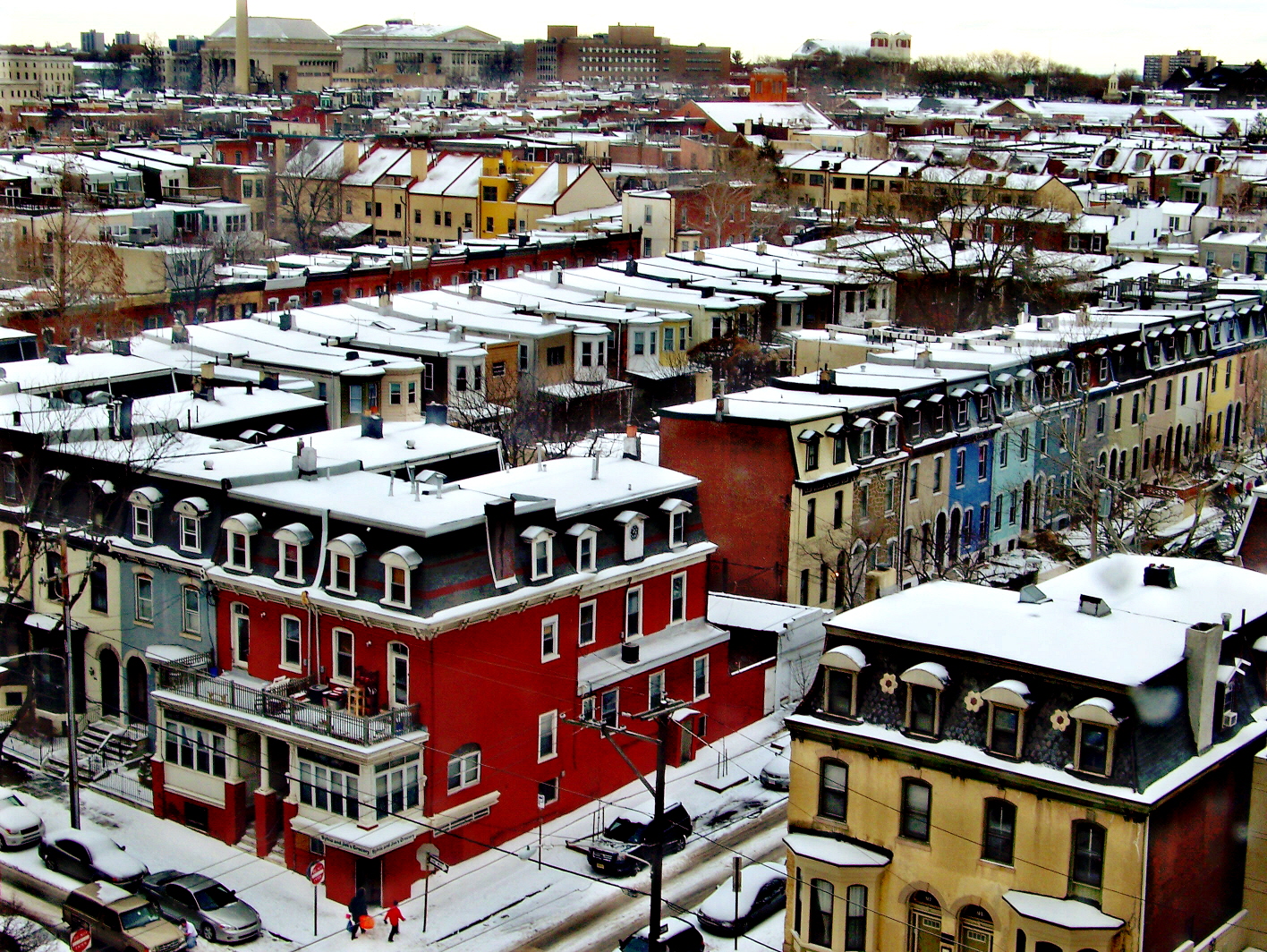
Fairmount, Philadelphia
Fairmount is a neighborhood within Lower North Philadelphia, Pennsylvania, United States. Its boundaries are north of Fairmount Avenue, west of Corinthian Avenue, south of Girard Avenue and east of The Schuylkill River. While this may be the most accurate demarcation, the area's boundaries fluctuate depending how the neighborhood is defined. Several other neighborhoods near Fairmount are sometimes also collectively called Fairmount, including: Spring Garden, Franklintown and Francisville. Fairmount and neighboring Spring Garden are commonly referred to as the "Art Museum Area," for their proximity to and association with the Philadelphia Art Museum. Fairmount is also the location of the Eastern State Penitentiary.
The name "Fairmount" derives from the prominent hill on which the Philadelphia Museum of Art now sits and where William Penn intended to build his manor house. Later, the name was applied to the street originally called Hickory Lane that runs from the foot of Fairmount Hill through the heart of the neighborhood.
A handful of European settlers farmed the area in the 17th, 18th, and early 19th century, when Fairmount was still outside Philadelphia's city limits. Prominent city families established country seats there as well, including Bush Hill, White Hall, and Lemon Hill, the last of which still stands overlooking the Schuylkill River. Fairmount was originally in Penn Township, which was subsequently divided, putting the future neighborhood in the newly created Spring Garden District until 1854 when it was incorporated into the City of Philadelphia.
During the American Revolution, British soldiers occupying Philadelphia built defensive works starting on the hill of Fairmount and continuing several miles along a line just south of present-day Fairmount Avenue to the Delaware River. Their purpose was to prevent American troops under George Washington from attacking them from the north, the only side of the city not protected by water.
Signs of urban expansion appeared in the early 19th century, when three large, innovative, and internationally recognized institutions were located in the district. The first of these was the Fairmount Dam and Water Works at the foot of Fairmount Hill. Beginning in 1822, the Water Works used waterpower to pump water from the Schuylkill River into reservoirs on the top of Fairmount Hill, from where it flowed by gravity into city homes and businesses. An engineering wonder, it was also an architectural and scenic attraction. Its buildings, which included a restaurant, are among the earliest examples of Greek Revival architecture in the United States. Protection of the municipal drinking water that the Water Works pumped was the impetus for the purchase of lands along the Schuylkill that later became Fairmount Park, one of the world's largest municipal park systems. Charles Dickens listed the Water Works as one of the two things he particularly wanted to see while in Philadelphia.
The other was Eastern State Penitentiary, less than half a mile away on Fairmount Avenue. The prison opened in 1829, the first prison in the country built specifically with the intention of reforming rather than simply punishing criminals. The prison's hub-and-spoke layout was also a first, and became the model for hundreds of prisons around the world (it was often called the "Pennsylvania Model"). Its unique system of solitary confinement for all prisoners did not, however. Intended to provide prisoners relief from the overcrowding and squalor of other prisons and give them time to reflect on their crimes, it led instead to intense despair and sometimes insanity among the inmates and was roundly condemned by Dickens when he visited.
In 1831, these two innovative institutions were joined by a third: Girard College. This school was founded in accordance with the will of Stephen Girard, possibly the wealthiest man in America at the time of his death. Himself an orphan, he wanted to create a model institution for educating poor orphaned white boys at a time when universal public education did not yet exist.
The executor of Girard's estate was another prominent and wealthy Philadelphian, Nicholas Biddle, former US Secretary of the Treasury, who commissioned the building of Founders Hall in honor of Girard. The Hall is the first example of true Greek Revival architecture in the United States and is, like both the Water Works and Eastern State Penitentiary, a National Historic Landmark. In 1968 Girard College entered the nation's awareness again when the United States Supreme Court altered Girard's will by striking the words "poor, male, white, orphan" and set a major precedent for equal access to education for all Americans.
Hub AI
Fairmount, Philadelphia AI simulator
(@Fairmount, Philadelphia_simulator)
Fairmount, Philadelphia
Fairmount is a neighborhood within Lower North Philadelphia, Pennsylvania, United States. Its boundaries are north of Fairmount Avenue, west of Corinthian Avenue, south of Girard Avenue and east of The Schuylkill River. While this may be the most accurate demarcation, the area's boundaries fluctuate depending how the neighborhood is defined. Several other neighborhoods near Fairmount are sometimes also collectively called Fairmount, including: Spring Garden, Franklintown and Francisville. Fairmount and neighboring Spring Garden are commonly referred to as the "Art Museum Area," for their proximity to and association with the Philadelphia Art Museum. Fairmount is also the location of the Eastern State Penitentiary.
The name "Fairmount" derives from the prominent hill on which the Philadelphia Museum of Art now sits and where William Penn intended to build his manor house. Later, the name was applied to the street originally called Hickory Lane that runs from the foot of Fairmount Hill through the heart of the neighborhood.
A handful of European settlers farmed the area in the 17th, 18th, and early 19th century, when Fairmount was still outside Philadelphia's city limits. Prominent city families established country seats there as well, including Bush Hill, White Hall, and Lemon Hill, the last of which still stands overlooking the Schuylkill River. Fairmount was originally in Penn Township, which was subsequently divided, putting the future neighborhood in the newly created Spring Garden District until 1854 when it was incorporated into the City of Philadelphia.
During the American Revolution, British soldiers occupying Philadelphia built defensive works starting on the hill of Fairmount and continuing several miles along a line just south of present-day Fairmount Avenue to the Delaware River. Their purpose was to prevent American troops under George Washington from attacking them from the north, the only side of the city not protected by water.
Signs of urban expansion appeared in the early 19th century, when three large, innovative, and internationally recognized institutions were located in the district. The first of these was the Fairmount Dam and Water Works at the foot of Fairmount Hill. Beginning in 1822, the Water Works used waterpower to pump water from the Schuylkill River into reservoirs on the top of Fairmount Hill, from where it flowed by gravity into city homes and businesses. An engineering wonder, it was also an architectural and scenic attraction. Its buildings, which included a restaurant, are among the earliest examples of Greek Revival architecture in the United States. Protection of the municipal drinking water that the Water Works pumped was the impetus for the purchase of lands along the Schuylkill that later became Fairmount Park, one of the world's largest municipal park systems. Charles Dickens listed the Water Works as one of the two things he particularly wanted to see while in Philadelphia.
The other was Eastern State Penitentiary, less than half a mile away on Fairmount Avenue. The prison opened in 1829, the first prison in the country built specifically with the intention of reforming rather than simply punishing criminals. The prison's hub-and-spoke layout was also a first, and became the model for hundreds of prisons around the world (it was often called the "Pennsylvania Model"). Its unique system of solitary confinement for all prisoners did not, however. Intended to provide prisoners relief from the overcrowding and squalor of other prisons and give them time to reflect on their crimes, it led instead to intense despair and sometimes insanity among the inmates and was roundly condemned by Dickens when he visited.
In 1831, these two innovative institutions were joined by a third: Girard College. This school was founded in accordance with the will of Stephen Girard, possibly the wealthiest man in America at the time of his death. Himself an orphan, he wanted to create a model institution for educating poor orphaned white boys at a time when universal public education did not yet exist.
The executor of Girard's estate was another prominent and wealthy Philadelphian, Nicholas Biddle, former US Secretary of the Treasury, who commissioned the building of Founders Hall in honor of Girard. The Hall is the first example of true Greek Revival architecture in the United States and is, like both the Water Works and Eastern State Penitentiary, a National Historic Landmark. In 1968 Girard College entered the nation's awareness again when the United States Supreme Court altered Girard's will by striking the words "poor, male, white, orphan" and set a major precedent for equal access to education for all Americans.