
Recent from talks
Charles Dickens
Knowledge base stats:
Talk channels stats:
Members stats:
Charles Dickens
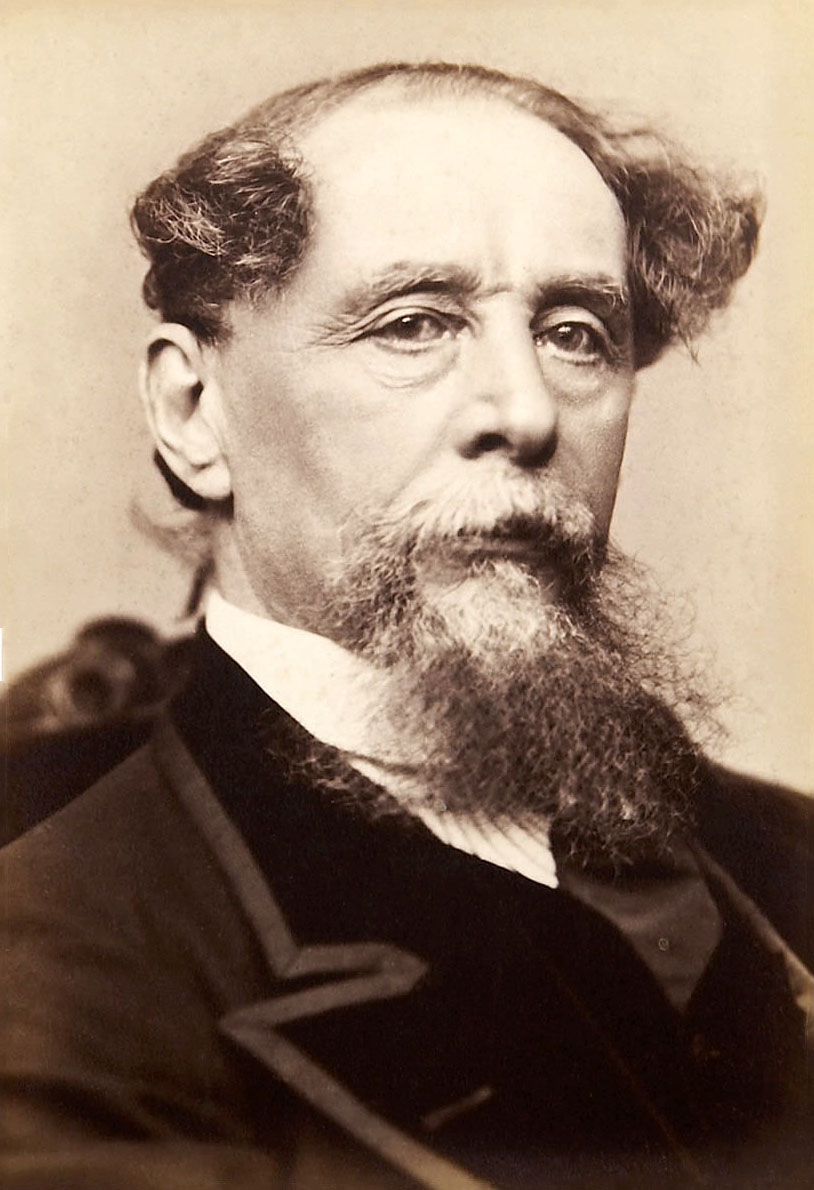
Charles John Huffam Dickens (/ˈdɪkɪnz/ ⓘ; 7 February 1812 – 9 June 1870) was an English novelist, journalist, short story writer and social critic. He created some of literature's best-known fictional characters, and is regarded by many as the greatest novelist of the Victorian era. His works enjoyed unprecedented popularity during his lifetime and, by the 20th century, critics and scholars had recognised him as a literary genius. His novels and short stories are widely read today.
Born in Portsmouth, Dickens left school at age 12 to work in a boot-blacking factory when his father John was incarcerated in a debtors' prison. After three years, he returned to school before beginning his literary career as a journalist. Dickens edited a weekly journal for 20 years; wrote 15 novels, five novellas, hundreds of short stories and nonfiction articles; lectured and performed readings extensively; was a tireless letter writer; and campaigned vigorously for children's rights, education and other social reforms.
Dickens's literary success began with the 1836 serial publication of The Pickwick Papers, a publishing phenomenon—thanks largely to the introduction of the character Sam Weller in the fourth episode—that sparked Pickwick merchandise and spin-offs. Within a few years, Dickens had become an international literary celebrity, famous for his humour, satire and keen observation of character and society. His novels, most of them published in monthly or weekly instalments, pioneered the serial publication of narrative fiction, which became the dominant Victorian mode for novel publication. Cliffhanger endings in his serial publications kept readers in suspense. The instalment format allowed Dickens to evaluate his audience's reaction, and he often modified his plot and character development based on such feedback. For example, when his wife's chiropodist expressed distress at the way Miss Mowcher in David Copperfield seemed to reflect her own disabilities, Dickens improved the character with positive features. His plots were carefully constructed and he often wove elements from topical events into his narratives. Masses of the illiterate poor would individually pay a halfpenny to have each new monthly episode read to them, opening up and inspiring a new class of readers.
His 1843 novella A Christmas Carol remains especially popular and continues to inspire adaptations in every creative medium. Oliver Twist and Great Expectations are also frequently adapted and, like many of his novels, evoke images of early Victorian London. His 1853 novel Bleak House, a satire on the judicial system, helped support a reformist movement that culminated in the 1870s legal reform in England. A Tale of Two Cities (1859; set in London and Paris) is regarded as his best-known work of historical fiction. The most famous celebrity of his era, he undertook, in response to public demand, a series of public reading tours in the later part of his career. The term Dickensian is used to describe something that is reminiscent of Dickens and his writings, such as poor social or working conditions, or comically repulsive characters.
Charles John Huffam Dickens was born on 7 February 1812 at 1 Mile End Terrace (now 393 Commercial Road), Landport in Portsea Island (Portsmouth), Hampshire, the second of eight children of Elizabeth Dickens (née Barrow; 1789–1863) and John Dickens (1785–1851). His father was a clerk in the Royal Navy Pay Office and was temporarily stationed in the district. He asked Christopher Huffam, rigger in the Royal Navy and head of an established firm, to act as godfather to Charles. Huffam is thought to be the inspiration for Paul Dombey, the owner of a shipping company in Dickens's novel Dombey and Son (1848).
In January 1815 John Dickens was called back to London, and the family moved to Norfolk Street, Fitzrovia. When Charles was four they relocated to Sheerness and thence to Chatham, Kent, where he spent his formative years until the age of 11. His early life seems to have been idyllic, though he thought himself a "very small and not-over-particularly-taken-care-of boy".
Charles spent time outdoors, but also read voraciously, including the picaresque novels of Tobias Smollett and Henry Fielding, as well as Robinson Crusoe and Gil Blas. He read and re-read The Arabian Nights and the Collected Farces of Elizabeth Inchbald. Aged seven, he first saw Joseph Grimaldi—the father of modern clowning—perform at the Star Theatre in Rochester, Kent. He later imitated Grimaldi's clowning on several occasions, and would also edit the Memoirs of Joseph Grimaldi. He retained poignant memories of childhood, helped by an excellent memory of people and events, which he used in his writing. His father's brief work as a clerk in the Navy Pay Office afforded him a few years of private education, first at a dame school and then at a school run by William Giles, a dissenter, in Chatham.
This period came to an end in June 1822, when John Dickens was recalled to Navy Pay Office headquarters at Somerset House and the family (except for Charles, who stayed behind to finish his final term at school) moved to Camden Town in London. The family had left Kent amidst rapidly mounting debts and, living beyond his means, John Dickens was forced by his creditors into the Marshalsea debtors' prison in Southwark, London in 1824. His wife and youngest children joined him there, as was the practice at the time. Charles, then 12 years old, boarded with Elizabeth Roylance, a family friend, at 112 College Place, Camden Town. Mrs Roylance was "a reduced impoverished old lady, long known to our family", whom Dickens later immortalised, "with a few alterations and embellishments", as "Mrs Pipchin" in Dombey and Son. Later, he lived in a back-attic in the house of an agent for the Insolvent Court, Archibald Russell, "a fat, good-natured, kind old gentleman ... with a quiet old wife" and lame son, in Lant Street in Southwark. They provided the inspiration for the Garlands in The Old Curiosity Shop.
Hub AI
Charles Dickens AI simulator
(@Charles Dickens_simulator)
Charles Dickens
Charles John Huffam Dickens (/ˈdɪkɪnz/ ⓘ; 7 February 1812 – 9 June 1870) was an English novelist, journalist, short story writer and social critic. He created some of literature's best-known fictional characters, and is regarded by many as the greatest novelist of the Victorian era. His works enjoyed unprecedented popularity during his lifetime and, by the 20th century, critics and scholars had recognised him as a literary genius. His novels and short stories are widely read today.
Born in Portsmouth, Dickens left school at age 12 to work in a boot-blacking factory when his father John was incarcerated in a debtors' prison. After three years, he returned to school before beginning his literary career as a journalist. Dickens edited a weekly journal for 20 years; wrote 15 novels, five novellas, hundreds of short stories and nonfiction articles; lectured and performed readings extensively; was a tireless letter writer; and campaigned vigorously for children's rights, education and other social reforms.
Dickens's literary success began with the 1836 serial publication of The Pickwick Papers, a publishing phenomenon—thanks largely to the introduction of the character Sam Weller in the fourth episode—that sparked Pickwick merchandise and spin-offs. Within a few years, Dickens had become an international literary celebrity, famous for his humour, satire and keen observation of character and society. His novels, most of them published in monthly or weekly instalments, pioneered the serial publication of narrative fiction, which became the dominant Victorian mode for novel publication. Cliffhanger endings in his serial publications kept readers in suspense. The instalment format allowed Dickens to evaluate his audience's reaction, and he often modified his plot and character development based on such feedback. For example, when his wife's chiropodist expressed distress at the way Miss Mowcher in David Copperfield seemed to reflect her own disabilities, Dickens improved the character with positive features. His plots were carefully constructed and he often wove elements from topical events into his narratives. Masses of the illiterate poor would individually pay a halfpenny to have each new monthly episode read to them, opening up and inspiring a new class of readers.
His 1843 novella A Christmas Carol remains especially popular and continues to inspire adaptations in every creative medium. Oliver Twist and Great Expectations are also frequently adapted and, like many of his novels, evoke images of early Victorian London. His 1853 novel Bleak House, a satire on the judicial system, helped support a reformist movement that culminated in the 1870s legal reform in England. A Tale of Two Cities (1859; set in London and Paris) is regarded as his best-known work of historical fiction. The most famous celebrity of his era, he undertook, in response to public demand, a series of public reading tours in the later part of his career. The term Dickensian is used to describe something that is reminiscent of Dickens and his writings, such as poor social or working conditions, or comically repulsive characters.
Charles John Huffam Dickens was born on 7 February 1812 at 1 Mile End Terrace (now 393 Commercial Road), Landport in Portsea Island (Portsmouth), Hampshire, the second of eight children of Elizabeth Dickens (née Barrow; 1789–1863) and John Dickens (1785–1851). His father was a clerk in the Royal Navy Pay Office and was temporarily stationed in the district. He asked Christopher Huffam, rigger in the Royal Navy and head of an established firm, to act as godfather to Charles. Huffam is thought to be the inspiration for Paul Dombey, the owner of a shipping company in Dickens's novel Dombey and Son (1848).
In January 1815 John Dickens was called back to London, and the family moved to Norfolk Street, Fitzrovia. When Charles was four they relocated to Sheerness and thence to Chatham, Kent, where he spent his formative years until the age of 11. His early life seems to have been idyllic, though he thought himself a "very small and not-over-particularly-taken-care-of boy".
Charles spent time outdoors, but also read voraciously, including the picaresque novels of Tobias Smollett and Henry Fielding, as well as Robinson Crusoe and Gil Blas. He read and re-read The Arabian Nights and the Collected Farces of Elizabeth Inchbald. Aged seven, he first saw Joseph Grimaldi—the father of modern clowning—perform at the Star Theatre in Rochester, Kent. He later imitated Grimaldi's clowning on several occasions, and would also edit the Memoirs of Joseph Grimaldi. He retained poignant memories of childhood, helped by an excellent memory of people and events, which he used in his writing. His father's brief work as a clerk in the Navy Pay Office afforded him a few years of private education, first at a dame school and then at a school run by William Giles, a dissenter, in Chatham.
This period came to an end in June 1822, when John Dickens was recalled to Navy Pay Office headquarters at Somerset House and the family (except for Charles, who stayed behind to finish his final term at school) moved to Camden Town in London. The family had left Kent amidst rapidly mounting debts and, living beyond his means, John Dickens was forced by his creditors into the Marshalsea debtors' prison in Southwark, London in 1824. His wife and youngest children joined him there, as was the practice at the time. Charles, then 12 years old, boarded with Elizabeth Roylance, a family friend, at 112 College Place, Camden Town. Mrs Roylance was "a reduced impoverished old lady, long known to our family", whom Dickens later immortalised, "with a few alterations and embellishments", as "Mrs Pipchin" in Dombey and Son. Later, he lived in a back-attic in the house of an agent for the Insolvent Court, Archibald Russell, "a fat, good-natured, kind old gentleman ... with a quiet old wife" and lame son, in Lant Street in Southwark. They provided the inspiration for the Garlands in The Old Curiosity Shop.
Recent media