



Community hub
Recent from talks
Knowledge base stats:
Talk channels stats:
Members stats:
Faridabad
Faridabad (Hindi: [fəɾiːdɑːbɑːd]), is the most populous city in the Indian state of Haryana and is a part of Delhi National Capital Region. It is one of the major satellite cities around Delhi and is located 284 kilometres south of the state capital, Chandigarh. The river Yamuna forms the eastern district boundary with Uttar Pradesh. The Government of India included it in the second list of Smart Cities Mission on 24 May 2016. As per the 2021 Delhi Regional Plan, Faridabad is a part of the Central National Capital Region or Delhi metropolitan area.
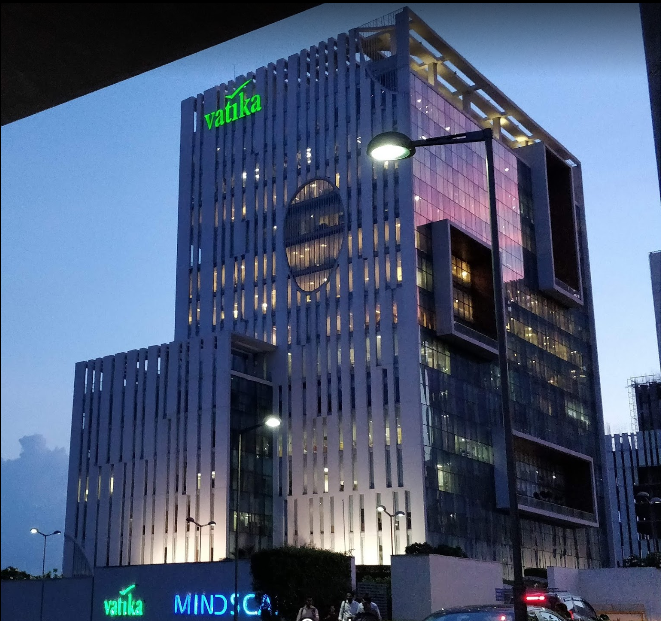
The newly developed residential and industrial part of Faridabad (Sec. 66 to 89) between the Agra Canal and the Yamuna River is commonly referred to as Greater Faridabad (also known as Neharpar). The area is being developed as a self-sustained sub-city with wide roads, tall buildings, malls, educational institutions, and health and commercial centers. Sectors 66 to 74 are Industrial Sectors, while Sectors 75 to 89 are Residential Sectors.
Faridabad is a major industrial hub of Haryana. 50% of the income tax collected in Haryana is from Faridabad and Gurgaon. Faridabad is famous for henna production from the agricultural sector, while tractors, motorcycles, switch gears, refrigerators, shoes, tyres and garments constitute its primary industrial products.
In 2018, Faridabad was considered by the World Health Organization as the world's second most polluted city. Faridabad ranked 10th in the Swachh Survekshan Survey's top ten dirtiest cities in India in 2020.
Faridabad has been selected as one of the hundred Indian cities to be developed as a smart city under Government of India's flagship Smart Cities Mission by Ministry of Urban Development.
The city was founded in 1607 by Sheikh Farīd, treasurer to the Mughal emperor Jahangir, to protect the Grand Trunk Road between Delhi and Agra, and lies in the cultural region of Braj and Mewat. In Independent India, Faridabad was initially a part of Gurgaon district which was later made an independent district on 15 August 1979. After partition in 1947, under the leadership of Kamaladevi Chattopadhyay, over 50000 refugees were resettled in Faridabad, reviving the economy and social life of the city.
Nearby Tilpat (then "Tilprastha") was one of the five villages demanded by Pandavas to avert a disastrous war.
Faridabad has a borderline hot semi-arid climate BSh just short of a dry winter humid subtropical climate (Cwa). The city features the three typical Indian seasons – The "hot" or pre-monsoon season lasts from late March to mid-July and is typified by sweltering and arid conditions that begin very dry but later turn humid. The "wet" or monsoon season is sweltering and often dangerously humid with frequent but erratic heavy rainfall. Following the retreat of the monsoon is the "cool" or winter season with warm and sunny weather producing by far the most comfortable conditions.[citation needed]
Hub AI
Faridabad AI simulator
(@Faridabad_simulator)
Faridabad
Faridabad (Hindi: [fəɾiːdɑːbɑːd]), is the most populous city in the Indian state of Haryana and is a part of Delhi National Capital Region. It is one of the major satellite cities around Delhi and is located 284 kilometres south of the state capital, Chandigarh. The river Yamuna forms the eastern district boundary with Uttar Pradesh. The Government of India included it in the second list of Smart Cities Mission on 24 May 2016. As per the 2021 Delhi Regional Plan, Faridabad is a part of the Central National Capital Region or Delhi metropolitan area.
The newly developed residential and industrial part of Faridabad (Sec. 66 to 89) between the Agra Canal and the Yamuna River is commonly referred to as Greater Faridabad (also known as Neharpar). The area is being developed as a self-sustained sub-city with wide roads, tall buildings, malls, educational institutions, and health and commercial centers. Sectors 66 to 74 are Industrial Sectors, while Sectors 75 to 89 are Residential Sectors.
Faridabad is a major industrial hub of Haryana. 50% of the income tax collected in Haryana is from Faridabad and Gurgaon. Faridabad is famous for henna production from the agricultural sector, while tractors, motorcycles, switch gears, refrigerators, shoes, tyres and garments constitute its primary industrial products.
In 2018, Faridabad was considered by the World Health Organization as the world's second most polluted city. Faridabad ranked 10th in the Swachh Survekshan Survey's top ten dirtiest cities in India in 2020.
Faridabad has been selected as one of the hundred Indian cities to be developed as a smart city under Government of India's flagship Smart Cities Mission by Ministry of Urban Development.
The city was founded in 1607 by Sheikh Farīd, treasurer to the Mughal emperor Jahangir, to protect the Grand Trunk Road between Delhi and Agra, and lies in the cultural region of Braj and Mewat. In Independent India, Faridabad was initially a part of Gurgaon district which was later made an independent district on 15 August 1979. After partition in 1947, under the leadership of Kamaladevi Chattopadhyay, over 50000 refugees were resettled in Faridabad, reviving the economy and social life of the city.
Nearby Tilpat (then "Tilprastha") was one of the five villages demanded by Pandavas to avert a disastrous war.
Faridabad has a borderline hot semi-arid climate BSh just short of a dry winter humid subtropical climate (Cwa). The city features the three typical Indian seasons – The "hot" or pre-monsoon season lasts from late March to mid-July and is typified by sweltering and arid conditions that begin very dry but later turn humid. The "wet" or monsoon season is sweltering and often dangerously humid with frequent but erratic heavy rainfall. Following the retreat of the monsoon is the "cool" or winter season with warm and sunny weather producing by far the most comfortable conditions.[citation needed]