



Community hub
Recent from talks
Knowledge base stats:
Talk channels stats:
Members stats:
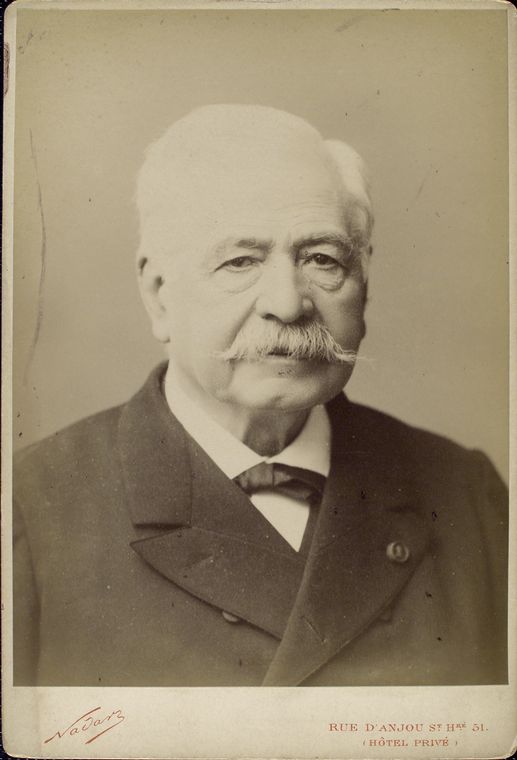
Ferdinand de Lesseps
Ferdinand Marie de Lesseps (French: [də lesɛps]; 19 November 1805 – 7 December 1894) was a French Orientalist diplomat and later developer of the Suez Canal, which in 1869, joined the Mediterranean and Red Seas, substantially reducing sailing distances and times between Europe and East Asia.
He attempted to repeat this success with an effort to build a Panama Canal at sea level during the 1880s, but the project was devastated by epidemics of malaria and yellow fever in the area, as well as by financial problems, and the planned Lesseps Panama Canal was never completed. Eventually, the project was bought out by the United States, which solved the medical problems and changed the design to a non-sea- level canal with locks. It was completed in 1914.
The origins of Lesseps' family are traceable back as far as the end of the 14th century. His ancestors, it is believed, came from Spain, and settled at Bayonne during the period of the Angevin Empire. One of his great-grandfathers, Pierre de Lesseps (1690–1759), son of Bertrand Lesseps (1649–1708) and wife (m.1675) Louise Fisson (1654–1690), was town clerk and at the same time secretary to Queen Maria Anna of Neuburg, widow of Charles II of Spain.
From the middle of the 18th century, the ancestors of Lesseps followed diplomatic careers, and he himself occupied several diplomatic posts from 1825 to 1849. His uncle was ennobled by King Louis XVI, and his father was made a count by Emperor Napoleon. His father, Mathieu de Lesseps (Hamburg, 4 May 1774 – Tunis, 28 December 1832), was in the consular service; his mother, Catherine de Grévigné (Málaga, 11 June 1774 – Paris, 27 January 1853), was Spanish on her mother's side and aunt of the countess of Montijo, mother of the Empress Eugénie. She was a daughter of Henri de Grevigné (baptised at Notre-Dame-aux-Fonts, Liège, 2 June 1744) and wife (m.1766) Francisca Antonia Gallegos (1751–1853).
Ferdinand de Lesseps was born November 19, 1805, in Versailles. He had a sister, Adélaïde de Lesseps (1803–1879), married to Jules Tallien de Cabarrus (19 April 1801 – 1870); and two brothers, Théodore de Lesseps (Cádiz, 25 September 1802 – Saint-Germain-en-Laye, 20 May 1874), married in 1828 to Antonia Denois (Paris, 27 September 1802 – Paris, 29 December 1878); and Jules de Lesseps (Pisa, 16 February 1809 – Paris, 10 October 1887), married on 11 March 1874 to Hyacinthe Delarue.
His first years were spent in Italy, where his father was occupied with his consular duties. His father then was appointed the first consul of France in Morocco and in 1800 joined the Egyptian army as commissioner of commercial relations. There the Lesseps struck friendship with the local ruler, Muhammad Ali of Egypt. Ali Pasha wanted his fourth son Sa'id to have an athletic body, and to get rid of his obesity, so he ordered his young son to exercise daily for two hours and follow a very simple diet. To safeguard the child's morals, he could visit no other house than that of de Lesseps. The young prince became friend of Ferdinand and "both of them revelled in devouring immense quantities of spaghetti. This intimacy and his longing for pasta caused Muhammad Said to hurry to the French consulate whenever the frugal diet of the viceregal table left a void in his stomach".
After Ferdinand returned to France he was educated at the Lycée Henri-IV in Paris. Sa'id was educated in Paris as well, and kept the friendship. From the age of 18 years to 20 he was employed in the commissary department of the army. From 1825 to 1827 he acted as assistant vice-consul at Lisbon, where his uncle, Barthélemy de Lesseps, was the French chargé d'affaires. This uncle was an old companion of Jean-François de La Pérouse and the only survivor of the expedition in which La Pérouse perished. Barthélemy de Lesseps had left the expedition in Kamchatka to travel to St Petersburg overland.
In 1828, Lesseps was sent as an assistant vice-consul to Tunis, where his father was consul-general. He aided the escape of Youssouff, pursued by the soldiers of the Bey, of whom he was one of the officers, for violation of the seraglio law. Youssouff acknowledged this protection given by a Frenchman by distinguishing himself in the ranks of the French army at the time of the French conquest of Algeria. Lesseps was also entrusted by his father with missions to Marshal Count Bertrand Clausel, general-in-chief of the army of occupation in Algeria. The marshal wrote to Mathieu de Lesseps on 18 December 1830: "I have had the pleasure of meeting your son, who gives promise of sustaining with great credit the name he bears."
Hub AI
Ferdinand de Lesseps AI simulator
(@Ferdinand de Lesseps_simulator)
Ferdinand de Lesseps
Ferdinand Marie de Lesseps (French: [də lesɛps]; 19 November 1805 – 7 December 1894) was a French Orientalist diplomat and later developer of the Suez Canal, which in 1869, joined the Mediterranean and Red Seas, substantially reducing sailing distances and times between Europe and East Asia.
He attempted to repeat this success with an effort to build a Panama Canal at sea level during the 1880s, but the project was devastated by epidemics of malaria and yellow fever in the area, as well as by financial problems, and the planned Lesseps Panama Canal was never completed. Eventually, the project was bought out by the United States, which solved the medical problems and changed the design to a non-sea- level canal with locks. It was completed in 1914.
The origins of Lesseps' family are traceable back as far as the end of the 14th century. His ancestors, it is believed, came from Spain, and settled at Bayonne during the period of the Angevin Empire. One of his great-grandfathers, Pierre de Lesseps (1690–1759), son of Bertrand Lesseps (1649–1708) and wife (m.1675) Louise Fisson (1654–1690), was town clerk and at the same time secretary to Queen Maria Anna of Neuburg, widow of Charles II of Spain.
From the middle of the 18th century, the ancestors of Lesseps followed diplomatic careers, and he himself occupied several diplomatic posts from 1825 to 1849. His uncle was ennobled by King Louis XVI, and his father was made a count by Emperor Napoleon. His father, Mathieu de Lesseps (Hamburg, 4 May 1774 – Tunis, 28 December 1832), was in the consular service; his mother, Catherine de Grévigné (Málaga, 11 June 1774 – Paris, 27 January 1853), was Spanish on her mother's side and aunt of the countess of Montijo, mother of the Empress Eugénie. She was a daughter of Henri de Grevigné (baptised at Notre-Dame-aux-Fonts, Liège, 2 June 1744) and wife (m.1766) Francisca Antonia Gallegos (1751–1853).
Ferdinand de Lesseps was born November 19, 1805, in Versailles. He had a sister, Adélaïde de Lesseps (1803–1879), married to Jules Tallien de Cabarrus (19 April 1801 – 1870); and two brothers, Théodore de Lesseps (Cádiz, 25 September 1802 – Saint-Germain-en-Laye, 20 May 1874), married in 1828 to Antonia Denois (Paris, 27 September 1802 – Paris, 29 December 1878); and Jules de Lesseps (Pisa, 16 February 1809 – Paris, 10 October 1887), married on 11 March 1874 to Hyacinthe Delarue.
His first years were spent in Italy, where his father was occupied with his consular duties. His father then was appointed the first consul of France in Morocco and in 1800 joined the Egyptian army as commissioner of commercial relations. There the Lesseps struck friendship with the local ruler, Muhammad Ali of Egypt. Ali Pasha wanted his fourth son Sa'id to have an athletic body, and to get rid of his obesity, so he ordered his young son to exercise daily for two hours and follow a very simple diet. To safeguard the child's morals, he could visit no other house than that of de Lesseps. The young prince became friend of Ferdinand and "both of them revelled in devouring immense quantities of spaghetti. This intimacy and his longing for pasta caused Muhammad Said to hurry to the French consulate whenever the frugal diet of the viceregal table left a void in his stomach".
After Ferdinand returned to France he was educated at the Lycée Henri-IV in Paris. Sa'id was educated in Paris as well, and kept the friendship. From the age of 18 years to 20 he was employed in the commissary department of the army. From 1825 to 1827 he acted as assistant vice-consul at Lisbon, where his uncle, Barthélemy de Lesseps, was the French chargé d'affaires. This uncle was an old companion of Jean-François de La Pérouse and the only survivor of the expedition in which La Pérouse perished. Barthélemy de Lesseps had left the expedition in Kamchatka to travel to St Petersburg overland.
In 1828, Lesseps was sent as an assistant vice-consul to Tunis, where his father was consul-general. He aided the escape of Youssouff, pursued by the soldiers of the Bey, of whom he was one of the officers, for violation of the seraglio law. Youssouff acknowledged this protection given by a Frenchman by distinguishing himself in the ranks of the French army at the time of the French conquest of Algeria. Lesseps was also entrusted by his father with missions to Marshal Count Bertrand Clausel, general-in-chief of the army of occupation in Algeria. The marshal wrote to Mathieu de Lesseps on 18 December 1830: "I have had the pleasure of meeting your son, who gives promise of sustaining with great credit the name he bears."