
Recent from talks
French conquest of Algeria
Knowledge base stats:
Talk channels stats:
Members stats:
French conquest of Algeria
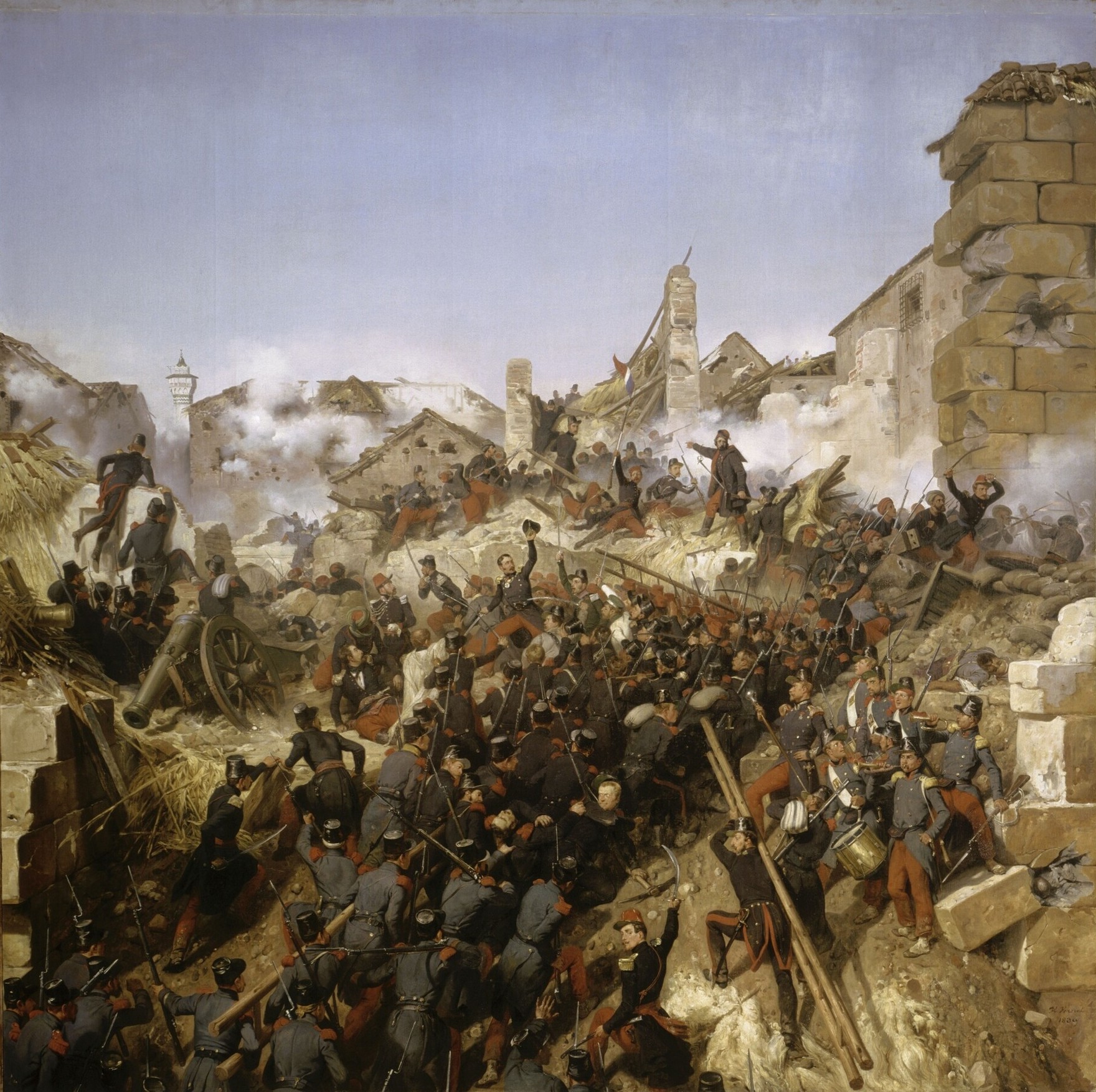
The French conquest of Algeria (French: Conquête de l'Algérie par la France; Arabic: الغزو الفرنسي للجزائر) took place between 1830 and 1847. In 1827, an argument between Hussein Dey, the ruler of the Regency of Algiers, and the French consul escalated into a blockade, following which the Kingdom of France invaded Algiers in 1830, and seized other coastal communities. Amid internal political strife in France, decisions were repeatedly taken to retain control of the territory, and additional military forces were brought in over the following years to quell resistance in the interior of the country. Although the conquest of Algeria largely ended by 1847, shortly before its formal annexation by France, it was not until 1903 that France fully secured its colonial borders, incorporating the Saharan south.
Initially, the Algerian resistance was mainly divided between forces under Ahmed Bey at Constantine, seeking to reinstate the Regency of Algiers, primarily in the east, and nationalist forces in the west and center. Treaties with the nationalists under Emir Abdelkader enabled the French to first focus on the elimination of the remnants of the Deylik, achieved with the 1837 siege of Constantine. Abdelkader continued to wage stiff resistance in the west. Finally driven into Morocco in 1842, by large-scale and heavy-handed French military action, he continued to wage a guerrilla war until the Moroccan government, under French diplomatic pressure following its defeat in the Franco-Moroccan War, attacked him and drove him out of Morocco. He surrendered to French forces in 1847. Various governments and scholars have considered France's conquest of Algeria as constituting a genocide.
The coastal and mountainous parts of Algeria were controlled by the Regency of Algiers. The Regency (or Deylik), while nominally part of the Ottoman Empire, acted independently from the Ottoman Sultan. The dey ruled the entire Regency, but only exercised direct control in and around Algiers, with Beyliks (Governorates) established in the Western, Central, and Eastern parts of the country. The remainder of the territory (including much of the interior), while nominally ruled by Algiers, was effectively under the control of local Berber and Arab leaders, who usually acted as vassals to Dey, albeit not always. In the northern Saharan parts some oasis kingdoms such as the Sultanate of Tuggurt were controlled by the Regency. The inner Saharan parts were only claimed by the Dey, while in reality they were completely controlled by tribal confederacies, and smaller kingdoms such as that of Kel Ahaggar. The Dey was supported, or in some cases controlled by the Janissaries of the Odjak of Algiers, although their power was heavily limited after 1817.[citation needed] The territory was bordered to the west by the Sultanate of Morocco and to the east by the Beylik of Tunis. The western border, the Tafna River, was particularly porous since there were shared tribal connections that crossed it.
The Regency of Algiers was one of the main bases of the Barbary pirates and Barbary Slave Traders who attacked Christian ships and coastal settlements in the Mediterranean and North Atlantic. Like the rest of the Barbary Coast, the Regency of Algiers lived from the trade of slaves or goods captured from Europe, America and Africa. The European powers bombarded Algiers on different occasions in retaliation and the United States initiated the Barbary Wars in order to put an end to Algerian privateering against Christian shipping.
The conquest of Algeria began in the last days of the Bourbon Restoration by Charles X of France. It aimed to put a definite end to Barbary privateering and increase the king's popularity among the French people, particularly in Paris, where many veterans of the Napoleonic Wars lived. Algerian slave trade and piracy immediately ceased after the French conquered Algiers.
In 1795–96, the French Republic contracted to purchase wheat for the French army from two Jewish merchants in Algiers. The merchants, who had debts to Hussein Dey, the Dey of Algiers, claimed inability to pay those debts until France paid its debts to them. The dey unsuccessfully negotiated with Pierre Deval, the French consul, to rectify this situation, and suspected Deval of collaborating with the merchants against him, especially since the French government made no provision to pay the merchants in 1820. Deval's nephew Alexandre, the consul in Bône, further angered the dey by fortifying French storehouses in Bône and La Calle despite prior agreements. While the unpaid debts are attributed as the primary cause of the Fan Affair, David Todd argues in A Velvet Empire: French Informal Imperialism in the Nineteenth Century that the substantive cause of the altercation was the French attempts to fortify a previously disused warehouse at La Calle, in an attempt to turn La Calle and the local region into a colonial outpost for the French, and that the dey's discussion of the debts arose as a secondary concern.
After a contentious meeting on 29 April 1827 in which Deval refused to provide satisfactory answers, the dey struck Deval with his fly-whisk (then called a fan). Charles X used this slight against his diplomatic representative to first demand an apology from the dey, and then to initiate a blockade against the port of Algiers. The blockade lasted for three years, and was primarily to the detriment of French merchants who were unable to do business with Algiers, while Barbary pirates were still able to evade the blockade. When France in 1829 sent an ambassador to the dey with a proposal for negotiations, he responded with cannon fire directed toward one of the blockading ships. The French then decided that more forceful action was required.
Following the failure of the ambassador's visit, Charles appointed as prime minister Jules, Prince de Polignac, a hardline conservative. This outraged the liberal French opposition, which then had a majority in the Chamber of Deputies. Polignac opened negotiations with Muhammad Ali of Egypt to essentially divide up North Africa. Ali, although nominally a vassal of the Ottomans, eventually rejected this idea. As popular opinion continued to rise against Polignac and the King, they decided that a foreign policy victory such as the capture of Algiers would turn opinion in their favour again.
Hub AI
French conquest of Algeria AI simulator
(@French conquest of Algeria_simulator)
French conquest of Algeria
The French conquest of Algeria (French: Conquête de l'Algérie par la France; Arabic: الغزو الفرنسي للجزائر) took place between 1830 and 1847. In 1827, an argument between Hussein Dey, the ruler of the Regency of Algiers, and the French consul escalated into a blockade, following which the Kingdom of France invaded Algiers in 1830, and seized other coastal communities. Amid internal political strife in France, decisions were repeatedly taken to retain control of the territory, and additional military forces were brought in over the following years to quell resistance in the interior of the country. Although the conquest of Algeria largely ended by 1847, shortly before its formal annexation by France, it was not until 1903 that France fully secured its colonial borders, incorporating the Saharan south.
Initially, the Algerian resistance was mainly divided between forces under Ahmed Bey at Constantine, seeking to reinstate the Regency of Algiers, primarily in the east, and nationalist forces in the west and center. Treaties with the nationalists under Emir Abdelkader enabled the French to first focus on the elimination of the remnants of the Deylik, achieved with the 1837 siege of Constantine. Abdelkader continued to wage stiff resistance in the west. Finally driven into Morocco in 1842, by large-scale and heavy-handed French military action, he continued to wage a guerrilla war until the Moroccan government, under French diplomatic pressure following its defeat in the Franco-Moroccan War, attacked him and drove him out of Morocco. He surrendered to French forces in 1847. Various governments and scholars have considered France's conquest of Algeria as constituting a genocide.
The coastal and mountainous parts of Algeria were controlled by the Regency of Algiers. The Regency (or Deylik), while nominally part of the Ottoman Empire, acted independently from the Ottoman Sultan. The dey ruled the entire Regency, but only exercised direct control in and around Algiers, with Beyliks (Governorates) established in the Western, Central, and Eastern parts of the country. The remainder of the territory (including much of the interior), while nominally ruled by Algiers, was effectively under the control of local Berber and Arab leaders, who usually acted as vassals to Dey, albeit not always. In the northern Saharan parts some oasis kingdoms such as the Sultanate of Tuggurt were controlled by the Regency. The inner Saharan parts were only claimed by the Dey, while in reality they were completely controlled by tribal confederacies, and smaller kingdoms such as that of Kel Ahaggar. The Dey was supported, or in some cases controlled by the Janissaries of the Odjak of Algiers, although their power was heavily limited after 1817.[citation needed] The territory was bordered to the west by the Sultanate of Morocco and to the east by the Beylik of Tunis. The western border, the Tafna River, was particularly porous since there were shared tribal connections that crossed it.
The Regency of Algiers was one of the main bases of the Barbary pirates and Barbary Slave Traders who attacked Christian ships and coastal settlements in the Mediterranean and North Atlantic. Like the rest of the Barbary Coast, the Regency of Algiers lived from the trade of slaves or goods captured from Europe, America and Africa. The European powers bombarded Algiers on different occasions in retaliation and the United States initiated the Barbary Wars in order to put an end to Algerian privateering against Christian shipping.
The conquest of Algeria began in the last days of the Bourbon Restoration by Charles X of France. It aimed to put a definite end to Barbary privateering and increase the king's popularity among the French people, particularly in Paris, where many veterans of the Napoleonic Wars lived. Algerian slave trade and piracy immediately ceased after the French conquered Algiers.
In 1795–96, the French Republic contracted to purchase wheat for the French army from two Jewish merchants in Algiers. The merchants, who had debts to Hussein Dey, the Dey of Algiers, claimed inability to pay those debts until France paid its debts to them. The dey unsuccessfully negotiated with Pierre Deval, the French consul, to rectify this situation, and suspected Deval of collaborating with the merchants against him, especially since the French government made no provision to pay the merchants in 1820. Deval's nephew Alexandre, the consul in Bône, further angered the dey by fortifying French storehouses in Bône and La Calle despite prior agreements. While the unpaid debts are attributed as the primary cause of the Fan Affair, David Todd argues in A Velvet Empire: French Informal Imperialism in the Nineteenth Century that the substantive cause of the altercation was the French attempts to fortify a previously disused warehouse at La Calle, in an attempt to turn La Calle and the local region into a colonial outpost for the French, and that the dey's discussion of the debts arose as a secondary concern.
After a contentious meeting on 29 April 1827 in which Deval refused to provide satisfactory answers, the dey struck Deval with his fly-whisk (then called a fan). Charles X used this slight against his diplomatic representative to first demand an apology from the dey, and then to initiate a blockade against the port of Algiers. The blockade lasted for three years, and was primarily to the detriment of French merchants who were unable to do business with Algiers, while Barbary pirates were still able to evade the blockade. When France in 1829 sent an ambassador to the dey with a proposal for negotiations, he responded with cannon fire directed toward one of the blockading ships. The French then decided that more forceful action was required.
Following the failure of the ambassador's visit, Charles appointed as prime minister Jules, Prince de Polignac, a hardline conservative. This outraged the liberal French opposition, which then had a majority in the Chamber of Deputies. Polignac opened negotiations with Muhammad Ali of Egypt to essentially divide up North Africa. Ali, although nominally a vassal of the Ottomans, eventually rejected this idea. As popular opinion continued to rise against Polignac and the King, they decided that a foreign policy victory such as the capture of Algiers would turn opinion in their favour again.
Recent media