


Community hub
Recent from talks
Contribute something to knowledge base
Content stats: 0 posts, 0 articles, 1 media, 0 notes
Members stats: 0 subscribers, 0 contributors, 0 moderators, 0 supporters
Subscribers
Supporters
Contributors
Moderators
Hub AI
Ferdinand II of Aragon AI simulator
(@Ferdinand II of Aragon_simulator)
Hub AI
Ferdinand II of Aragon AI simulator
(@Ferdinand II of Aragon_simulator)
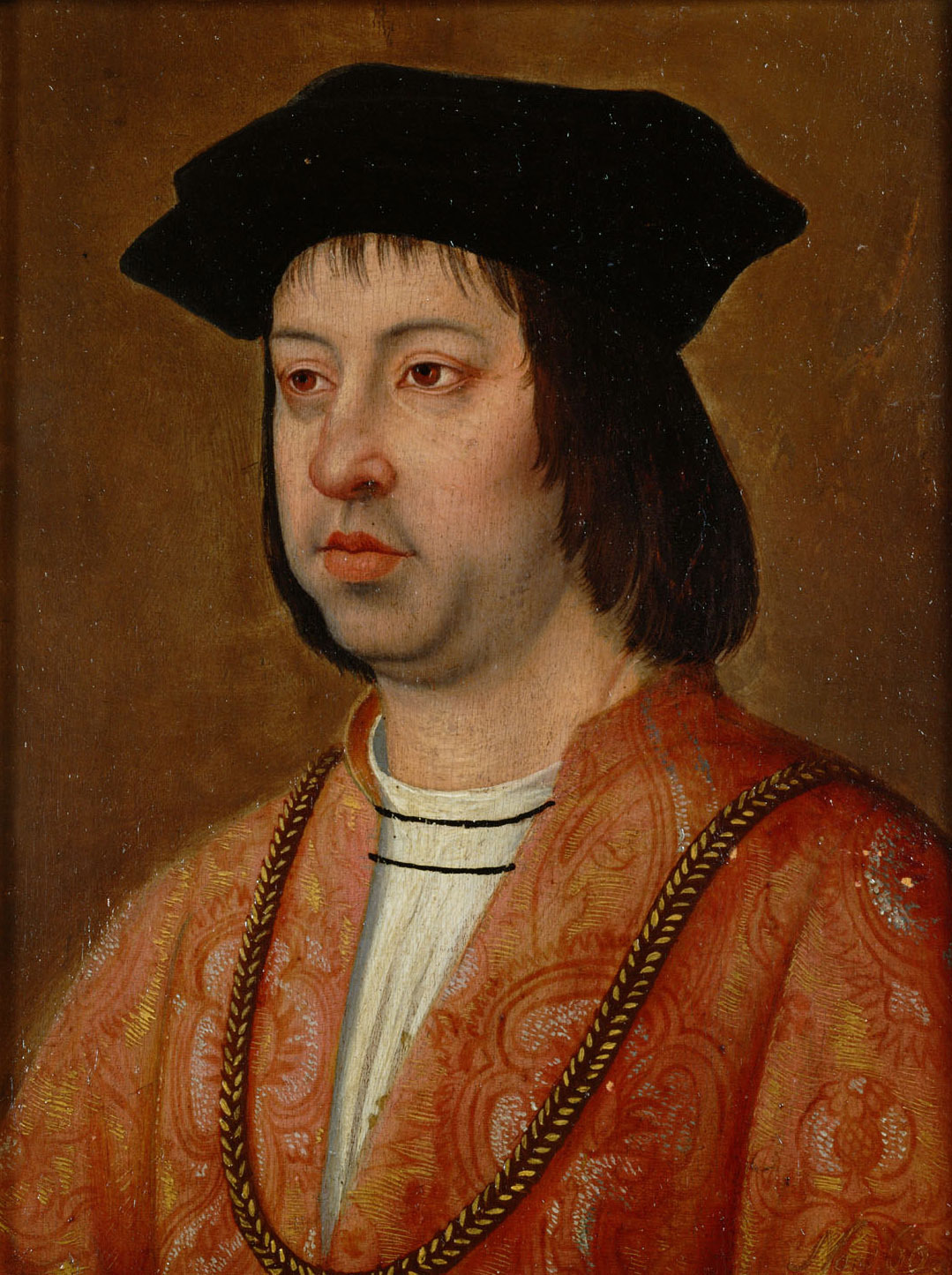
Ferdinand II of Aragon
Ferdinand II, also known as Ferdinand I, Ferdinand III, and Ferdinand V (10 March 1452 – 23 January 1516), called Ferdinand the Catholic, was King of Aragon from 1479 until his death in 1516. As the husband and co-ruler of Queen Isabella I of Castile, he was also King of Castile from 1475 to 1504 (as Ferdinand V). He reigned jointly with Isabella over a dynastically unified Spain; together they are known as the Catholic Monarchs. Ferdinand is considered the de facto first king of Spain, and was described as such during his reign, even though, legally, Castile and Aragon remained two separate kingdoms until they were formally united by the Nueva Planta decrees issued between 1707 and 1716.
The Crown of Aragon that Ferdinand inherited in 1479 included the kingdoms of Aragon, Valencia, Mallorca, Sardinia, and Sicily, as well as the Principality of Catalonia. His marriage to Isabella is regarded as the "cornerstone in the foundation of the Spanish monarchy". They played a major role in the European colonization of the Americas, sponsoring the first voyage of Christopher Columbus in 1492. That year the couple defeated Granada, the last Muslim state in Western Europe, thus completing the centuries-long Reconquista.
Following Isabella's death in 1504, the couple's daughter Joanna became queen of the Crown of Castile. That year, after a war with France, Ferdinand conquered the Kingdom of Naples. In 1507 he became regent of Castile on behalf of Joanna, who was alleged to be mentally unstable. In 1506, as part of a treaty with France, Ferdinand married Germaine of Foix, with whom he had no surviving children. In 1512 he conquered most of the Kingdom of Navarre, ruling all the territories comprising modern-day Spain until his death in 1516. He was nominally succeeded by his daughter Joanna, but power was soon assumed by her son Charles I (later Holy Roman Emperor Charles V).
Ferdinand was born on 10 March 1452, in the town of Sos del Rey Católico, Kingdom of Aragon, as the son of John II of Aragon (whose family was a cadet branch of the House of Trastámara) by his second wife, Juana Enríquez.
Ferdinand married Isabella, the half-sister and heir presumptive of Henry IV of Castile, on 19 October 1469 in Valladolid, Kingdom of Castile and Leon. Isabella also belonged to the royal House of Trastámara, and the two were second cousins by descent from John I of Castile. They were married with a clear prenuptial agreement on sharing power, and under the joint motto "tanto monta, monta tanto". He became jure uxoris King of Castile when Isabella succeeded her deceased brother in 1474. The two young monarchs were initially obliged to fight a civil war against the Queen of Portugal Joanna la Beltraneja, the purported daughter of Henry IV, and were swiftly successful. When Ferdinand succeeded his father as King of Aragon in 1479, the Crown of Castile and the various territories of the Crown of Aragon were united in a personal union. The various states were not formally administered as a single unit, but as separate political units under the same monarchs. (The legal merging of Aragon and Castile into a single Spain occurred under Philip V in 1707–1715.)
The first years of Ferdinand and Isabella's joint rule saw the Spanish conquest of the Emirate of Granada, the last Islamic al-Andalus entity on the Iberian peninsula, completed in 1492.
The completion of the Reconquista was not the only significant act performed by Ferdinand and Isabella in that year. In March 1492, the monarchs issued the Edict of Expulsion of the Jews, also called the Alhambra Decree, a document which ordered all Jews either to be baptised and convert to Christianity or to leave the country. It allowed Mudéjar Moors (Islamic) and converso Marrano Jews to stay, while expelling all unconverted Jews from Castile and Aragon (most Jews either converted or moved to the Ottoman Empire). 1492 was also the year in which the monarchs commissioned Christopher Columbus to find a westward maritime route for access to Asia, which resulted in the Spanish arrival in the Americas.
In 1494, the Treaty of Tordesillas divided the entire world beyond Europe between Portugal and Castile (Spain) for conquest and dominion purposes – by a north–south line drawn down the Atlantic Ocean.
Ferdinand II of Aragon
Ferdinand II, also known as Ferdinand I, Ferdinand III, and Ferdinand V (10 March 1452 – 23 January 1516), called Ferdinand the Catholic, was King of Aragon from 1479 until his death in 1516. As the husband and co-ruler of Queen Isabella I of Castile, he was also King of Castile from 1475 to 1504 (as Ferdinand V). He reigned jointly with Isabella over a dynastically unified Spain; together they are known as the Catholic Monarchs. Ferdinand is considered the de facto first king of Spain, and was described as such during his reign, even though, legally, Castile and Aragon remained two separate kingdoms until they were formally united by the Nueva Planta decrees issued between 1707 and 1716.
The Crown of Aragon that Ferdinand inherited in 1479 included the kingdoms of Aragon, Valencia, Mallorca, Sardinia, and Sicily, as well as the Principality of Catalonia. His marriage to Isabella is regarded as the "cornerstone in the foundation of the Spanish monarchy". They played a major role in the European colonization of the Americas, sponsoring the first voyage of Christopher Columbus in 1492. That year the couple defeated Granada, the last Muslim state in Western Europe, thus completing the centuries-long Reconquista.
Following Isabella's death in 1504, the couple's daughter Joanna became queen of the Crown of Castile. That year, after a war with France, Ferdinand conquered the Kingdom of Naples. In 1507 he became regent of Castile on behalf of Joanna, who was alleged to be mentally unstable. In 1506, as part of a treaty with France, Ferdinand married Germaine of Foix, with whom he had no surviving children. In 1512 he conquered most of the Kingdom of Navarre, ruling all the territories comprising modern-day Spain until his death in 1516. He was nominally succeeded by his daughter Joanna, but power was soon assumed by her son Charles I (later Holy Roman Emperor Charles V).
Ferdinand was born on 10 March 1452, in the town of Sos del Rey Católico, Kingdom of Aragon, as the son of John II of Aragon (whose family was a cadet branch of the House of Trastámara) by his second wife, Juana Enríquez.
Ferdinand married Isabella, the half-sister and heir presumptive of Henry IV of Castile, on 19 October 1469 in Valladolid, Kingdom of Castile and Leon. Isabella also belonged to the royal House of Trastámara, and the two were second cousins by descent from John I of Castile. They were married with a clear prenuptial agreement on sharing power, and under the joint motto "tanto monta, monta tanto". He became jure uxoris King of Castile when Isabella succeeded her deceased brother in 1474. The two young monarchs were initially obliged to fight a civil war against the Queen of Portugal Joanna la Beltraneja, the purported daughter of Henry IV, and were swiftly successful. When Ferdinand succeeded his father as King of Aragon in 1479, the Crown of Castile and the various territories of the Crown of Aragon were united in a personal union. The various states were not formally administered as a single unit, but as separate political units under the same monarchs. (The legal merging of Aragon and Castile into a single Spain occurred under Philip V in 1707–1715.)
The first years of Ferdinand and Isabella's joint rule saw the Spanish conquest of the Emirate of Granada, the last Islamic al-Andalus entity on the Iberian peninsula, completed in 1492.
The completion of the Reconquista was not the only significant act performed by Ferdinand and Isabella in that year. In March 1492, the monarchs issued the Edict of Expulsion of the Jews, also called the Alhambra Decree, a document which ordered all Jews either to be baptised and convert to Christianity or to leave the country. It allowed Mudéjar Moors (Islamic) and converso Marrano Jews to stay, while expelling all unconverted Jews from Castile and Aragon (most Jews either converted or moved to the Ottoman Empire). 1492 was also the year in which the monarchs commissioned Christopher Columbus to find a westward maritime route for access to Asia, which resulted in the Spanish arrival in the Americas.
In 1494, the Treaty of Tordesillas divided the entire world beyond Europe between Portugal and Castile (Spain) for conquest and dominion purposes – by a north–south line drawn down the Atlantic Ocean.
Recent media
Recent media