



Recent from talks
Knowledge base stats:
Talk channels stats:
Members stats:
Final offensive of the Spanish Civil War
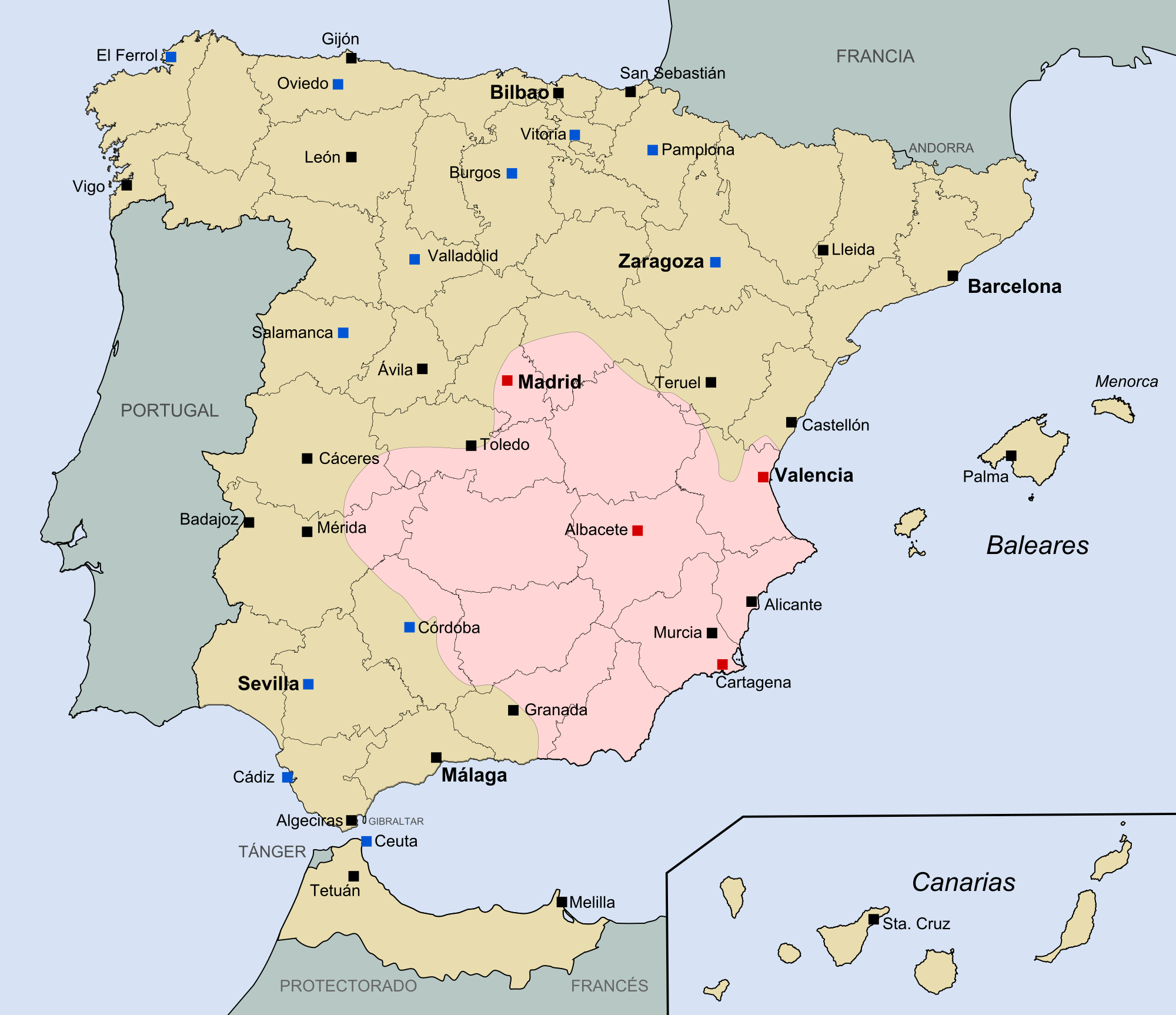
The final offensive of the Spanish Civil War took place between 26 March and 1 April 1939, towards the end of the Spanish Civil War. On 5 March 1939, the Republican Army, led by Colonel Segismundo Casado and the politician Julián Besteiro, rose against the socialist prime minister Juan Negrín, and formed a military junta, the National Defence Council (Consejo Nacional de Defensa or CND) to negotiate a peace deal. Negrín fled to France but the communist troops around Madrid rose against the junta, starting a civil war within the civil war. Casado defeated them and started peace negotiations with the Nationalists. Francisco Franco, however, was willing to accept only an unconditional surrender. On 26 March, the Nationalists started a general offensive and by 31 March, they controlled all of Spanish territory. Hundreds of thousands of Republicans were arrested and interned in concentration camps.
After the fall of Catalonia in February 1939, the military situation of the Republic was hopeless. Despite still having the capital city and approximately 30% of Spanish territory, it had lost 220,000 soldiers, the second most populated city in the country and the industrial resources of Catalonia. Furthermore, on 27 February, President Manuel Azaña resigned. The United Kingdom and France then recognised the Nationalist government.
The Republican army still had between 250,000 and 500,000 men but only 40 aircraft (three Natasha and two Katiuska bomber squadrons, and 25 Chatos and Moscas fighters), little artillery and few automatic weapons. Many soldiers were unarmed (in December 1938, the Republican army had only 225,000 rifles), and lacked shoes and overcoats. In Madrid, there was food for only two months and no water, heating, medicine or surgical dressings. On the other hand, the Nationalist army had more than a million men at the end of 1938, with 35,000 Moroccans, 32,000 Italians and 5,000 Germans, as well as 600 aircraft.
On 16 February, the high command of the Republican Army told Prime Minister Juan Negrín that further military resistance was impossible. Most of the members of the Republican Army, the PSOE, the UGT and the CNT believed that it was necessary to initiate peace negotiations. Nevertheless, Negrín, backed by the communist PCE, wanted to continue fighting because Franco rejected giving any guarantee against reprisals and a continental war against fascism was believed to be imminent. Furthermore, Negrín wanted to organise the evacuation of those who were most at risk.
From the end of February 1939, Colonel Segismundo Casado had been preparing a coup against the Negrín government to start peace negotiations with the Nationalists, believing that the government was too subordinate to the communists. Colonel José Cendaño, a fifth column agent in the Republican army, promised him that Franco would guarantee the lives of the Republican officers who had committed no crimes. Most noncommunist elements of the Popular Front in Madrid supported the plot, including one of the leaders of the PSOE, Julián Besteiro, because they believed that continuing the war was useless. Furthermore, after the surrender of Menorca, many Republican officers in the central zone believed that they could negotiate a deal with the Nationalists.
On 2 March, Negrín announced a number of new appointments in the Central Zone. Colonel Casado and the communists Juan Modesto and Antonio Cordón García became generals, General Manuel Matallana was appointed as head of the central general staff and communist officers were appointed to command the ports of Murcia (Manuel Tagüeña), Alicante (Etelvino Vega) and Cartagena (Francisco Galán). (according to Beevor, Francisco Galán was appointed military governor of Cartagena, Etelvino Vega governor of Alicante, Leocadio Mendiola commander of Murcia and Inocencio Curto commander of Albacete). The noncommunist elements believed that the communists wanted to control the evacuation harbours and joined the plot against Negrín.
On 5 March 1939, Colonel Segismundo Casado, supported by General Matallana, the CNT (Cipriano Mera), the secret service of the Republic (the Military Investigation Service, Servicio de Investigación Militar, or SIM), a section of the PSOE (Julián Besteiro) and a section of the UGT (Wenceslao Carrillo), deposed Negrín and formed a military junta, the National Council of Defence (Consejo Nacional de Defensa) in order to negotiate a peace deal with Franco. On 6 March, Miaja joined the rebellion and was appointed president of the junta. The other members of the junta were Casado, Julian Besteiro, Wenceslao Carrillo, Gonzalez Marín and Eduardo Val (CNT), Antonio Perez (UGT), and the Republicans Miguel San Andrés and Jose del Río.
Colonel Adolfo Prada was appointed commander of the Army of the Centre, the communist commanders of the I, II and III Army Corps of the Army of the Centre were relieved, the PCE's newspaper Mundo Obrero was closed and Casado ordered massive arrests of communist commissars and militants. Ironically, Casado's justification for the coup was that Negrín and the PCE wanted to carry out a communist takeover, an identical justification to that of the Nationalist uprising, which began the Civil War, but in fact, he rose against the government because he wanted to negotiate peace and believed that removing Negrín and the communists was a precondition to negotiations with Franco. In addition to other assurances, the British government said that Franco would guarantee the lives of the Republicans. Casado had said to the commander of the Republican Air Force, Hidalgo de Cisneros: "I give you my word ... that I can obtain better terms from Franco than Negrín ever can. I can even assure you that they will respect our ranks".
Hub AI
Final offensive of the Spanish Civil War AI simulator
(@Final offensive of the Spanish Civil War_simulator)
Final offensive of the Spanish Civil War
The final offensive of the Spanish Civil War took place between 26 March and 1 April 1939, towards the end of the Spanish Civil War. On 5 March 1939, the Republican Army, led by Colonel Segismundo Casado and the politician Julián Besteiro, rose against the socialist prime minister Juan Negrín, and formed a military junta, the National Defence Council (Consejo Nacional de Defensa or CND) to negotiate a peace deal. Negrín fled to France but the communist troops around Madrid rose against the junta, starting a civil war within the civil war. Casado defeated them and started peace negotiations with the Nationalists. Francisco Franco, however, was willing to accept only an unconditional surrender. On 26 March, the Nationalists started a general offensive and by 31 March, they controlled all of Spanish territory. Hundreds of thousands of Republicans were arrested and interned in concentration camps.
After the fall of Catalonia in February 1939, the military situation of the Republic was hopeless. Despite still having the capital city and approximately 30% of Spanish territory, it had lost 220,000 soldiers, the second most populated city in the country and the industrial resources of Catalonia. Furthermore, on 27 February, President Manuel Azaña resigned. The United Kingdom and France then recognised the Nationalist government.
The Republican army still had between 250,000 and 500,000 men but only 40 aircraft (three Natasha and two Katiuska bomber squadrons, and 25 Chatos and Moscas fighters), little artillery and few automatic weapons. Many soldiers were unarmed (in December 1938, the Republican army had only 225,000 rifles), and lacked shoes and overcoats. In Madrid, there was food for only two months and no water, heating, medicine or surgical dressings. On the other hand, the Nationalist army had more than a million men at the end of 1938, with 35,000 Moroccans, 32,000 Italians and 5,000 Germans, as well as 600 aircraft.
On 16 February, the high command of the Republican Army told Prime Minister Juan Negrín that further military resistance was impossible. Most of the members of the Republican Army, the PSOE, the UGT and the CNT believed that it was necessary to initiate peace negotiations. Nevertheless, Negrín, backed by the communist PCE, wanted to continue fighting because Franco rejected giving any guarantee against reprisals and a continental war against fascism was believed to be imminent. Furthermore, Negrín wanted to organise the evacuation of those who were most at risk.
From the end of February 1939, Colonel Segismundo Casado had been preparing a coup against the Negrín government to start peace negotiations with the Nationalists, believing that the government was too subordinate to the communists. Colonel José Cendaño, a fifth column agent in the Republican army, promised him that Franco would guarantee the lives of the Republican officers who had committed no crimes. Most noncommunist elements of the Popular Front in Madrid supported the plot, including one of the leaders of the PSOE, Julián Besteiro, because they believed that continuing the war was useless. Furthermore, after the surrender of Menorca, many Republican officers in the central zone believed that they could negotiate a deal with the Nationalists.
On 2 March, Negrín announced a number of new appointments in the Central Zone. Colonel Casado and the communists Juan Modesto and Antonio Cordón García became generals, General Manuel Matallana was appointed as head of the central general staff and communist officers were appointed to command the ports of Murcia (Manuel Tagüeña), Alicante (Etelvino Vega) and Cartagena (Francisco Galán). (according to Beevor, Francisco Galán was appointed military governor of Cartagena, Etelvino Vega governor of Alicante, Leocadio Mendiola commander of Murcia and Inocencio Curto commander of Albacete). The noncommunist elements believed that the communists wanted to control the evacuation harbours and joined the plot against Negrín.
On 5 March 1939, Colonel Segismundo Casado, supported by General Matallana, the CNT (Cipriano Mera), the secret service of the Republic (the Military Investigation Service, Servicio de Investigación Militar, or SIM), a section of the PSOE (Julián Besteiro) and a section of the UGT (Wenceslao Carrillo), deposed Negrín and formed a military junta, the National Council of Defence (Consejo Nacional de Defensa) in order to negotiate a peace deal with Franco. On 6 March, Miaja joined the rebellion and was appointed president of the junta. The other members of the junta were Casado, Julian Besteiro, Wenceslao Carrillo, Gonzalez Marín and Eduardo Val (CNT), Antonio Perez (UGT), and the Republicans Miguel San Andrés and Jose del Río.
Colonel Adolfo Prada was appointed commander of the Army of the Centre, the communist commanders of the I, II and III Army Corps of the Army of the Centre were relieved, the PCE's newspaper Mundo Obrero was closed and Casado ordered massive arrests of communist commissars and militants. Ironically, Casado's justification for the coup was that Negrín and the PCE wanted to carry out a communist takeover, an identical justification to that of the Nationalist uprising, which began the Civil War, but in fact, he rose against the government because he wanted to negotiate peace and believed that removing Negrín and the communists was a precondition to negotiations with Franco. In addition to other assurances, the British government said that Franco would guarantee the lives of the Republicans. Casado had said to the commander of the Republican Air Force, Hidalgo de Cisneros: "I give you my word ... that I can obtain better terms from Franco than Negrín ever can. I can even assure you that they will respect our ranks".