Hubbry Logo
Fireball MinistryFireball MinistryMain
Open search
Fireball Ministry
Community hub
Fireball Ministry
logo
8 pages, 0 posts
0 subscribers
Be the first to start a discussion here.
Fireball Ministry
Fireball Ministry
from Wikipedia

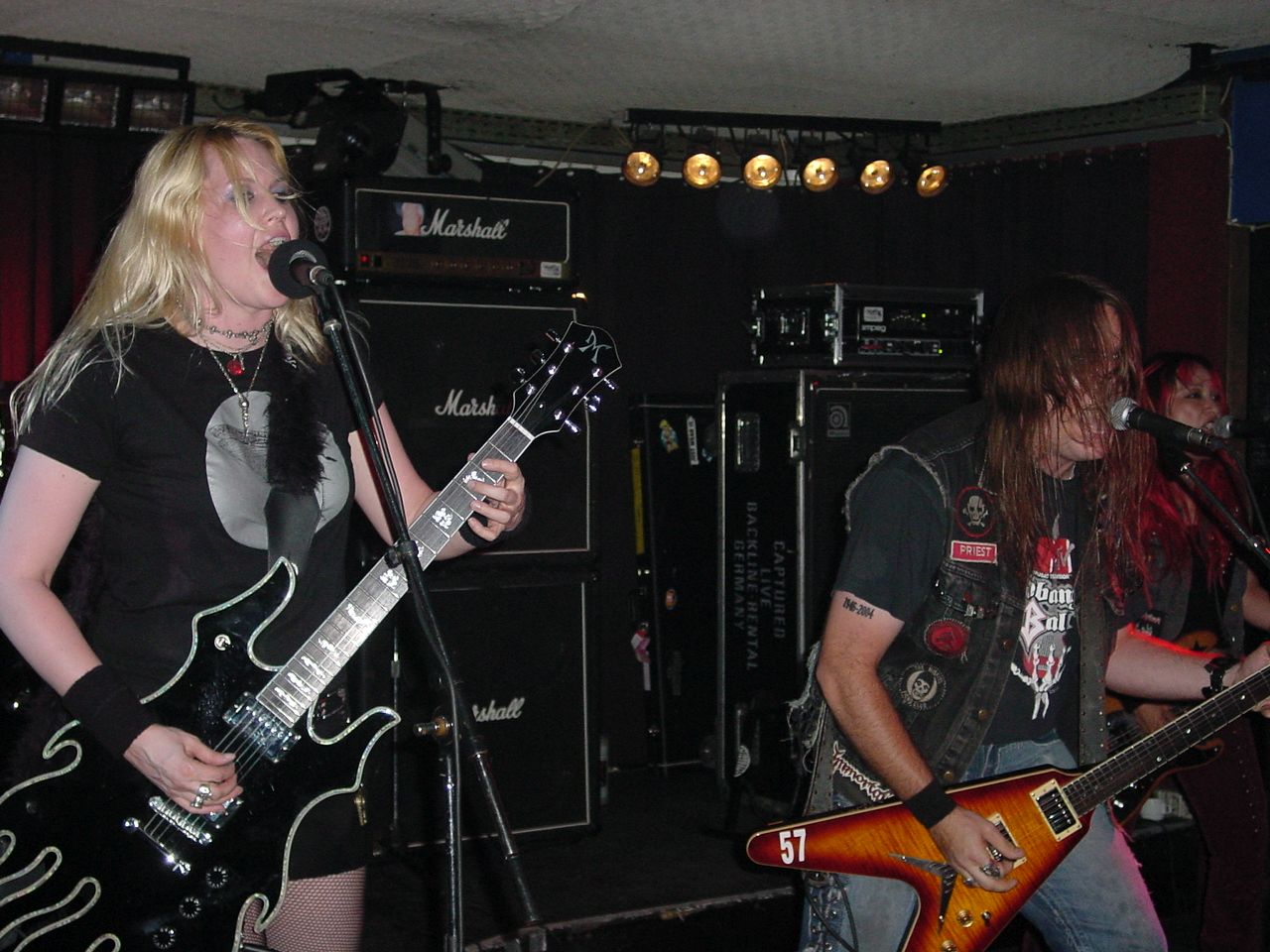
Fireball Ministry is an American stoner metal band from Los Angeles, California, formed in 1999.[1]

Key Information

History

[edit]

Formed in Cincinnati in the late 1990s by James A. Rota II and Emily Burton, Fireball Ministry relocated to New York City before eventually settling in Los Angeles. In 2000, the band performed at the two-day "November Dismember" metal music festival in San Bernardino, California, playing on the second day. The festival took place at the National Orange Show fairgrounds in two hangars.

After spending several years performing alongside prominent bands in the genre, such as Danzig, Anthrax, Motörhead, and Slayer, but without achieving significant album sales, the band refined their sound to broaden their audience. The tracks "King" and "Flatline" were featured in the big wave surfing documentary Billabong Odyssey (2003). Additionally, the track "King" was selected by Bam Margera for inclusion on his Viva La Bands compilation. The band collaborated with Margera's brother, Jess, when they toured Europe with CKY in 2004.[2] The track "The Broken" was included in the wrestling video game WWE SmackDown! vs. Raw 2006 for the PlayStation 2.

The band experienced several changes in bass players, starting with Helen Storer, who played on Où est la Rock? (1999). She was replaced by Fu Manchu bassist Brad Davis for FMEP (2001), who was subsequently succeeded by former L7 bassist Janis Tanaka on The Second Great Awakening (2003). Former Systematic bassist Johny Chow then replaced Tanaka for the Their Rock Is Not Our Rock album (2005). This album was recorded at Dave Grohl's 606 West studio and, like the band's previous releases, was produced by Nick Raskulinecz.

With a connection facilitated by Bam Margera, the band supported CKY on their 2005 Adio Footwear-sponsored tour, following their role as the opening act during CKY's UK tour in 2004. In the fall of 2006, original drummer John Oreshnick took a leave of absence due to family matters and was replaced by Yael for the band's subsequent tour. Yael and Johny Chow were former bandmates in My Ruin. Yael departed in the winter of 2006, and Oreshnick returned to the band.

James A. Rota II considered becoming an ordained minister but was initially dissuaded due to potential legal and tax complications. Nevertheless, he eventually became ordained and officiated the wedding ceremonies of Matt Deis of CKY and Erica Beckmann in November 2005, as well as Bam Margera and Missy Rothstein in February 2007.

In an interview with Blabbermouth.net in May 2007, James Rota stated, "we [Fireball Ministry] are in the stages of writing a new album." In the same interview, Rota also referenced what would later become The Company Band EP, Sign Here, Here and Here. On June 14, 2008, Rota announced that three tracks had been recorded for the yet-unnamed fifth Fireball Ministry album. He was also working on a full-length album with The Company Band and a third, unspecified project. During this time, Johny Chow was touring as a bassist with Cavalera Conspiracy and Stone Sour.

Several tracks from the album Fireball Ministry, including "Kick Back," "End of Story," and "Fallen Believers," were featured on the soundtrack of the television series Sons of Anarchy.

The band also picked up bassist Scott Reeder of Kyuss fame in 2014, and he now serves as their current bassist as of writing

The band released their fifth album, Remember the Story, on October 6, 2017, through Cleopatra Records.

Inspiration

[edit]

The band's imagery is heavily influenced by Christianity, reflected in their name, "ministry," as well as album titles such as The Second Great Awakening and Their Rock Is Not Our Rock, the latter referencing Deuteronomy 32:31. MTV.com described the band's music as possessing "a musical chemistry between the members... that makes their songs buzz with warmth."[3]

The name "Fireball Ministry" was derived from a public-access TV show in Cincinnati that used the same name.[4]

Discography

[edit]

Studio albums

[edit]

EPs

[edit]
  • FMEP (2001)

Members

[edit]

Current

[edit]
  • James A. Rota II – guitars, vocals (1999–present)
  • Emily Burton – guitars (1999–present)
  • John Oreshnick – drums (1999–present)
  • Scott Reeder – bass (2014–present)

Former

[edit]
  • Helen Storer – bass (1999–2001), touring (2018)
  • Brad Davis – bass (2001–2002)
  • Janis Tanaka – bass (2002–2004)
  • Johny Chow – bass (2004–2014)
  • Yael – drums (2006)
  • Brad Prescott – mandolin (2016)

References

[edit]
[edit]
Revisions and contributorsEdit on WikipediaRead on Wikipedia
from Grokipedia
Fireball Ministry is an American heavy formed in 1999 in Hollywood, , blending stoner metal influences with rooted in classic sounds from , , and . The band's core lineup consists of vocalist and James A. Rota II, and backing vocalist Emily J. Burton, bassist Scott Reeder (formerly of Kyuss and ), and drummer John Oreshnick. This configuration has been stable for much of their career, emphasizing analog production and riff-driven songwriting that draws from East Coast and Midwestern rock traditions adapted to a vibe. Fireball Ministry's discography includes key studio albums such as their self-titled debut Fireball Ministry (2001), The Second Great Awakening (2003), Their Rock Is Not Our Rock (2005), and their most recent full-length Remember the Story (2017), released via . They have also issued EPs like FMEP (2001) and maintained activity through reissues, such as the vinyl edition of Their Rock Is Not Our Rock in 2024 via Ripple Music. Throughout their career, the band has toured extensively, sharing stages with acts including , , , and , and performing at festivals like Psycho . Their music has appeared in media such as programming and the TV series , solidifying their place in the stoner and heavy rock scenes. As of 2025, Fireball Ministry remains active, headlining events like the Ripple Music Showcase at Planet Desert Rock Weekend in .

Background

Formation and early development

Fireball Ministry was formed in the late 1990s in Cincinnati, Ohio, by guitarist and vocalist James A. Rota II and guitarist Emily J. Burton as a creative duo. The band's initial efforts included self-recorded demo material, culminating in a 1998 cassette demo featuring tracks such as "Two Tears," "The Man," "VIM," "Death Dealer," and a cover of Blue Cheer's "Fortunes." In 1999, Rota and Burton relocated from Cincinnati to New York City in pursuit of broader opportunities, before moving again later that year to Los Angeles to immerse themselves in the Hollywood music scene. Upon arriving in Los Angeles, the duo expanded their lineup by recruiting bassist Helen Storer, formerly of Fluffy, and drummer John Oreshnick to solidify the rhythm section. This configuration enabled their first live outing in 2000 at the two-day "November Dismember" metal festival in , where they performed on the event's second day.

Name origin and initial inspirations

The name "Fireball Ministry" was derived from a Cincinnati public-access television show of the same name, hosted by an exuberant preacher who delivered fiery sermons to rile up her audience. Founding members Rev. James A. Rota II and Emily J. Burton, who conceived the band while living in in the late , drew inspiration from the show's over-the-top, fire-and-brimstone style, finding its dramatic flair amusing and fitting for their rock persona. From the outset, the band incorporated Christian imagery into their visuals and titles as a satirical nod to religious pageantry, without any personal adherence to the faith. This approach is evident in early album titles like The Second Great Awakening (2003), referencing historical Christian revivals, and Their Rock Is Not Our Rock (2005), drawn from Deuteronomy 32:31 to critique rock music as a false idol. Rota and Burton have explained that they appreciated the theatrical elements of Christianity, using it to craft an "evil church" aesthetic that contrasted with their heavy rock sound. Initial songwriting for the band revolved around themes of personal struggles and occult-tinged rock aesthetics, often channeling endurance against hardship and hedonistic rebellion. Tracks drew from Rota's affinity for Robert E. Howard's stories, symbolizing triumph over adversity, while lyrics frequently invoked the , intoxication, and carnal pursuits in a manner reminiscent of . These elements formed the core of their pre-debut demos, blending introspection with supernatural motifs to establish a rebellious identity. The band's formative sound was shaped by the late 1990s revival in the scene, where they relocated shortly after forming and immersed themselves in the burgeoning movement. This environment, emphasizing raw, fuzz-driven riffs and 1970s influences, aligned with their admiration for bands like , , and , whose theatricality and heavy grooves informed Fireball Ministry's early compositions. Burton recalled a pivotal moment hearing 's greatest hits as a teenager, igniting her lifelong passion for the genre, while Rota cited childhood experiences seeing live as a blueprint for rock's god-like potential.

Career

Debut releases and touring

Fireball Ministry's debut album, Où est la Rock?, was released on August 16, 1999, via Bong Load Custom Records, marking their entry into the scene with a raw, heavy sound blending metal riffs and psychedelic elements. The eight-track effort featured standout songs like "Man," "Two Tears," and "Guts," which showcased the band's aggressive guitar work and Rev. James A. Rota II's commanding vocals, earning praise for its underground appeal. Recorded in , the album captured the group's early chemistry and set the stage for their growing reputation in heavy music circles. In 2001, the band followed up with the FMEP EP on Small Stone Records, a five-track release (plus bonus) that mixed originals such as "King" and "Choker" with covers of classics like KISS's "Maidens of Venus," Alice Cooper's "Muscle of Love," and Judas Priest's "Victim of Changes." This EP gained notable underground traction, with critics highlighting its energetic execution and the band's ability to honor influences while asserting their own style, solidifying their presence in the stoner and doom communities. During this formative period, the lineup stabilized around drummer John Oreshnick, whose powerful playing anchored the rhythm section, and early bassist Helen Storer, contributing to a more consistent live and recording dynamic. Fireball Ministry also contributed to key compilation tributes, covering "Cough/Cool" for the 1999 Misfits homage Graven Images on Freebird Records, which helped expose them to punk-metal crossover audiences. The following year, they tackled Aerosmith's "Movin' Out" for Small Stone's Right in the Nuts, further demonstrating their versatility in reinterpreting staples. These appearances built early buzz and connected them with like-minded acts. The band's initial tours, supporting heavyweights like Danzig and in the late and early , were pivotal in honing their high-energy live performances, characterized by thunderous riffs and crowd-engaging intensity that refined their stage presence and fanbase. These outings, often in packed clubs and festivals, allowed them to test material from Où est la Rock? and FMEP in front of receptive metal crowds, establishing Fireball Ministry as a formidable live act in the burgeoning movement.

Major albums and label shifts

Fireball Ministry's second studio album, The Second Great Awakening, released in 2003 on Nuclear Blast Records, marked the band's shift from the independent Small Stone label to a major European metal imprint, enabling broader international distribution and exposure beyond the underground scene. Produced and mixed by , recorded at Grandmaster Recorders, Ltd. in Hollywood, CA, and Mad Dog Studios in Burbank, CA, with engineering by Andrew Alekel, the album explored themes of inner struggles and personal conflict, drawing on the band's recurring Christian-inspired imagery while delivering heavy, riff-driven tracks like "In the Mourning," which highlighted Rev. James A. Rota II's raw vocal delivery. This lineup featured , formerly of L7, who joined in 2002 following a brief stint by Brad Davis of from 2001 to 2002, bringing a more aggressive low-end to the sound after the departure of original Helen Storer. The band's third album, Their Rock Is Not Our Rock, arrived in 2005 via Century Media in partnership with the band's own Liquor & Poker imprint, reflecting another pivot to a prominent metal label that further expanded their reach in North America and Europe compared to their earlier indie roots. Recorded at Dave Grohl's 606 West studio in Los Angeles and co-produced, mixed, and engineered by Nick Raskulinecz alongside Mike Terry, the record maintained the gritty production values of its predecessor while incorporating subtle nods to classic hard rock influences. By this time, bassist Johny Chow had replaced Tanaka in 2004, stabilizing the rhythm section through the mid-2000s and contributing to the album's cohesive, mid-tempo grooves that solidified the band's stoner metal identity. These label transitions from Small Stone's niche focus to Nuclear Blast and Century Media's global networks were pivotal, boosting touring opportunities and fanbase growth, though they also introduced pressures that led to a creative hiatus after the release. Following a five-year break, Fireball Ministry returned in 2010 with their self-titled fourth on the Restricted Release , a move back to self-managed distribution that allowed greater artistic control amid the band's evolving lineup and reduced label support. Produced by Andrew Alekel at Grandmaster Studios in , the effort captured a return to form with introspective lyrics and heavy riffs, emphasizing the band's resilience after the major-label era. remained on bass, providing continuity from the previous , while the release underscored a strategic retreat from commercial demands, prioritizing direct fan engagement over widespread promotion.

Media appearances and later projects

Fireball Ministry's track "The Broken" from their 2005 album Their Rock Is Not Our Rock was featured in the video game WWE SmackDown! vs. Raw 2006, contributing to the game's soundtrack alongside other rock acts. Earlier, tracks "King" and "Flatline" appeared in the 2003 surfing documentary Billabong Odyssey, marking one of the band's initial forays into film soundtracks. The band gained further visibility through their inclusion on Bam Margera's 2005 compilation album Viva La Bands, which featured their song "King" among contributions from acts like HIM and Turbonegro; this led to participation in the associated Viva La Bands tour that year. On television, Fireball Ministry contributed to the soundtrack of the FX series Sons of Anarchy, with "Kick Back" playing in season 1, episode 4, and "End of Story" featured in the season 1 finale. In the mid-2010s, the band diversified with contributions to tribute and compilation releases. They covered Led Zeppelin's "The Rover" for the 2016 album Dazed & Confused: A Stoned-Out Salute to Led Zeppelin, a project featuring stoner rock interpretations by various artists including and . That same year, Fireball Ministry provided the original track "The Trouble With..." for the multi-disc compilation Stoner Box, a set highlighting stoner rock pioneers like and . Fireball Ministry's sixth studio album, Remember the Story, was released on October 6, 2017, via , serving as their first full-length effort in seven years and exploring themes of loss and reflection through Sabbath-influenced riffs and heavy grooves; it was produced, engineered, and mixed by Paul Fig, known for his work with and . The album received as their strongest to date, reclaiming their place in the stoner/ scene. During the 2010s, the band maintained activity through tours supporting icons like in 2006 and among others, sharing stages with acts such as and . As of 2025, Fireball Ministry has not issued major new releases since Remember the Story, focusing instead on live performances including anniversary celebrations, such as headlining Ripple Music's 15th anniversary show at Bottom of the Hill on December 6, 2025, and the Ripple Music Showcase at Planet Desert Rock Weekend on January 31, 2025.

Musical style

Genre characteristics

Fireball Ministry's music is primarily classified as stoner metal and , characterized by analog production techniques that emphasize warm, fuzzy tones and a bottom-heavy sound rooted in heavy riffs and Sabbath-like rhythms. The band's core sonic identity revolves around mid-tempo grooves and a signature stomp, creating an organic, retro aesthetic that evokes the raw energy of heavy rock without incorporating modern metal elements like extreme speed or digital effects. This approach results in thick, layered instrumentation that prioritizes emotional depth and authenticity over technical flash. A key element of their sound is the dual guitar attack led by James A. Rota II on vocals and guitar alongside Emily J. Burton on guitar and backing vocals, which delivers thick, harmonized tones and Priest-inspired melodic lines woven into the structures. Rota and Burton's interplay produces a dense , with fuzzy swing and catchy hooks that drive the songs forward, often building on simple, repetitive motifs for maximum impact. Complementing this, John Oreshnick's drum work provides groovy, mid-tempo backbeats with a huge, resonant quality reminiscent of percussion, maintaining a steady that underscores the band's visceral drive. The rhythm section further enhances the doom-tinged undercurrents, with bass lines—particularly from contributors like Scott Reeder—adding rumbling depth and low-end weight that amplify the overall heaviness. Over time, the band's production has evolved from the raw, demo-like quality of their 1999 debut album Où est la Rock? and 2001 FMEP EP, which featured straightforward bass-driven riffs, to more polished yet analog-focused recordings in the 2000s, such as the 2005 album Their Rock Is Not Our Rock produced by , and continuing with the self-titled 2010 album maintaining riff-driven analog aesthetics. Despite this refinement, Fireball Ministry consistently retains a non-pretentious, 1970s-inspired vibe, avoiding contemporary metal tropes in favor of dirty, loud rock that feels timeless and unpolished, as highlighted in their 2024 vinyl reissues via Ripple Music.

Influences and lyrical themes

Fireball Ministry's primary musical influences draw from classic and heavy metal acts, with providing the foundational riffing style, inspiring melodic structures, contributing dual guitar harmonies, infusing raw, proto-metal energy, and adding theatrical elements to their performances. These inspirations are evident in the band's analog-soaked sound, which reveres the Sabbath-Priest axis while incorporating the chaotic vitality of and the showmanship of . Lyrically, Fireball Ministry explores themes of inner struggles, personal loss, and emotional pain, often framed with ironic Christian undertones and a critique of rock idolatry. Their 2005 album Their Rock Is Not Our Rock references Deuteronomy 32:31 to subvert mainstream rock trends, positioning the band's music as a defiant alternative to commercial excess. This approach extends to motifs of awakening and redemption, as seen in the 2003 release The Second , which uses religious terminology to symbolize personal and artistic rebirth, and evolves into themes of mourning and renewal on the 2017 album Remember the Story, reflecting grief over losses like the death of Motörhead's Kilmister. The band's homage to influences is highlighted through cover songs on their 2001 EP FMEP, including Alice Cooper's "Muscle of Love" for its dramatic flair, Judas Priest's "Victim of Changes" to echo melodic intensity, and Blue Cheer's "" to capture unpolished aggression. Visually, Fireball Ministry incorporates and religious —such as crosses and ministerial robes—in artwork and stage aesthetics, drawing from Christian pageantry for ironic effect without endorsing preachiness or literal belief.

Discography

Studio albums

Fireball Ministry's debut studio album, Où est la Rock?, was released on August 16, 1999, through Bong Load Custom Records. The album comprises 12 tracks, including "The Man," "Two Tears," and "VIM," and captures the band's raw sound with gritty riffs and high-energy performances recorded at The Shop in . The follow-up, The Second Great Awakening, arrived on October 7, 2003, via Nuclear Blast Records. Featuring 11 tracks such as "King," "The Sinner," and "Legions of Bastards," the record showcases expanded production handled by , with recording at Grandmaster Recorders in Hollywood for a fuller, more polished edge. In 2005, the band issued Their Rock Is Not Our Rock on Liquor and Poker Music. The 12-track effort, including "It Flies Again," "Sundown," and "The Broken," was recorded at Studio 606 West in and co-produced by and Mike Terry, emphasizing heavy grooves and dynamic arrangements. A vinyl reissue was released on August 9, 2024, via Ripple Music. The self-titled Fireball Ministry marked the group's fourth studio release on March 16, 2010, through Restricted Release, with a vinyl edition following in 2010. It includes 10 tracks like "," "Lost Cause," and "The Future Is Bright," produced by Andrew Alekel and recorded at Grandmaster Recorders for a tight, riff-driven sound. After a seven-year hiatus, Remember the Story was released on October 6, 2017, by . The 11-track album, featuring songs such as "The Answer," "Dying to Win," and "Queen of the Deep," explores themes of loss, , and renewal, produced and mixed by Paul Fig at Underbrow Studios in Burbank.

EPs and compilations

Fireball Ministry's early extended plays and singles provided platforms for showcasing original material alongside covers of tracks, helping to cultivate a dedicated following within the and heavy metal communities. These releases often featured raw, high-energy performances that highlighted the band's affinity for influences, while also serving as creative outlets for reinterpretations of songs by artists like and . The band's debut single, a split 7-inch vinyl titled VIM, was released in 1999 on Cattleprod Recordings in collaboration with . Fireball Ministry contributed the track "Vim," a gritty original that exemplified their emerging sound with driving riffs and Rev Jones's distinctive vocals, paired with Fatso Jetson's "King Faduke" on the flip side. This limited-edition pressing marked an early milestone in building underground buzz through shared bills and split releases typical of the desert rock scene. Their sole EP, F.M.E.P., arrived in via Small Stone Records as a CD featuring six core tracks plus two bonuses in some pressings. Produced by and the band, it opened with originals "King," "Choker," and "Maidens of Venus," blending heavy grooves and psychedelic edges. The EP notably included covers such as "Muscle of Love" (), "Victim of Changes" (), and "Fortunes" (), with bonus tracks "Cough/Cool" (Misfits) and "Movin' Out" () emphasizing the band's reverence for pioneers. These selections not only demonstrated versatility but also attracted fans of tribute-style recordings, solidifying Fireball Ministry's reputation for energetic, faithful yet amplified renditions. Beyond standalone releases, Fireball Ministry contributed tracks to various compilations, often covers that aligned with thematic tributes and helped expand their visibility across niche labels. In 1999, they appeared on Graven Images: A Tribute to the Misfits (Freebird Records) with a punk-infused take on "Cough/Cool," capturing the original's chaotic energy in a heavier context. That same year, on (Black Widow Records), their version of "Fortunes" delivered a concise, fuzz-laden homage to the proto-metal icons. The year 2000 saw them on Right in the Nuts: A Tribute to (Small Stone Records) performing "Movin' Out," a bluesy rocker that showcased their rhythm section's tightness and contributed to the tribute's celebration of 's raw edge. Later, in 2006, Sucking the 70's – (Small Stone Records) featured their cover of Joe Walsh's "Turn to Stone," infusing the moody ballad with sludgy riffs to appeal to enthusiasts. In 2016, amid renewed activity, Fireball Ministry provided "The Rover" (Led Zeppelin cover) for Dazed & Confused: A Stoned-Out Salute to Led Zeppelin (), delivering a stomping, riff-heavy rendition that fit the compilation's psychedelic tribute vibe. Also in 2016, on the expansive box set Stoner Box (), they contributed the original "The Trouble With...," a brooding track with thematic ties to inner conflict, rounding out a collection of staples and rarities. These later appearances reinforced the band's enduring appeal through selective, high-impact contributions that bridged their early sound with contemporary scenes.

Personnel

Current members

Fireball Ministry's current lineup, as of 2025, features a stable core that has driven the band's output for over a decade, blending original founders with seasoned contributors. James A. Rota II serves as vocals and guitar since the band's formation in 1999, acting as the primary songwriter and frontman who shapes the group's heavy rock direction. Emily J. Burton has been on guitar and backing vocals since 1999, contributing lead riffs and harmonies that define the band's dual-guitar attack. John Oreshnick joined on drums in the early 2000s, providing the rhythmic foundation that has underpinned all eras of the band's discography. Scott Reeder has handled bass since 2014, bringing his experience from to add a seasoned low-end groove to the band's post-2010 material.

Former members

Fireball Ministry's lineup has evolved over the years, with several bassists contributing during key periods of the band's early development and touring phases. Helen Storer served as the band's bassist from 1999 to 2001, providing the low-end foundation for their live performances and contributing to the recording of their debut album Où Est la Rock? (1999), which captured the group's initial raw sound. Following Storer's departure, Brad Davis, known from , joined on bass for a short tenure from 2001 to 2002, supporting the band's early promotional tours and appearing on the FMEP EP (2001), where his driving bass lines complemented the high-energy covers and originals. Janis Tanaka, formerly of L7, took over bass duties from 2002 to 2004, bringing her punk-infused groove to the band's sound and performing on select tracks of The Second Great Awakening (2003), including "" and "Choker," which highlighted the album's heavy, riff-driven aesthetic. Johny Chow, ex-Systematic, handled bass responsibilities starting in 2004 and extending into the early 2010s until 2014, with notable contributions to Their Rock Is Not Our Rock (2005) and the self-titled Fireball Ministry (2010), where his solid playing anchored the band's shift toward more polished productions recorded at high-profile studios. In 2006, Yael stepped in as a temporary drummer during fall tour dates, replacing John Oreshnick amid scheduling conflicts and ensuring continuity for live shows that promoted the band's growing catalog.

References

Add your contribution
Related Hubs
User Avatar
No comments yet.