



Community hub
Recent from talks
Knowledge base stats:
Talk channels stats:
Members stats:
First Battle of Bar-sur-Aube
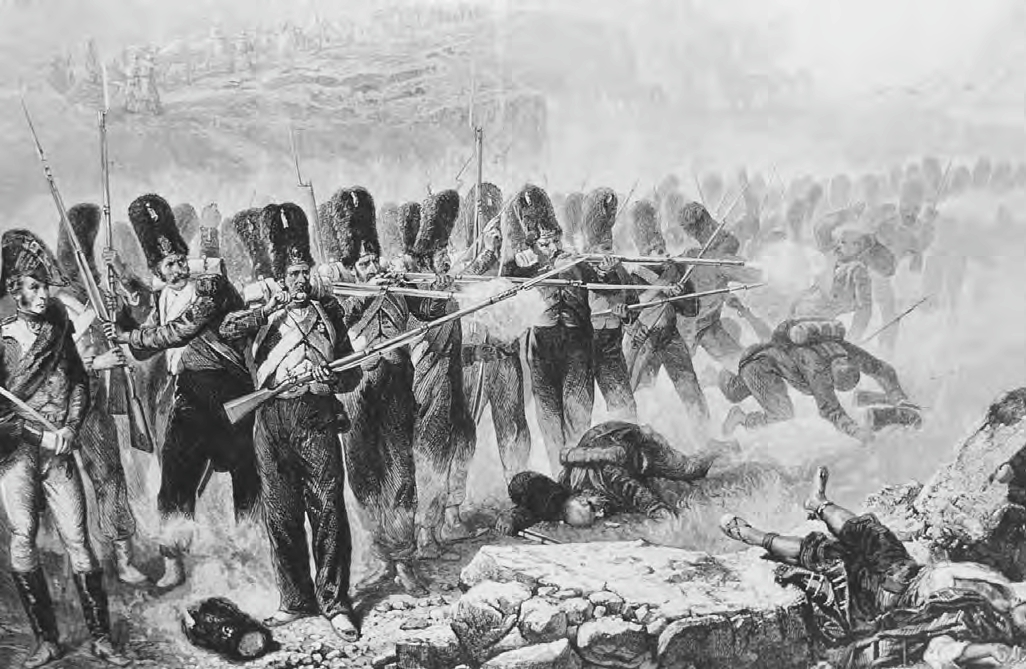
The First Battle of Bar-sur-Aube (24 January 1814) was fought during the War of the Sixth Coalition when Marshal Édouard Mortier, duc de Trévise's corps of French Imperial Guards defended against an Austrians corps under Ignaz Gyulai and a Württemberger corps led by Crown Prince Frederick William of Württemberg. After holding his main defensive positions in stiff fighting, Mortier withdrew his elite troops during the night and retreated to Troyes. Bar-sur-Aube is located 53 kilometres (33 mi) east of Troyes.
The 1814 Campaign opened with an invasion of eastern France by the main Coalition army led by Austrian Field Marshal Karl Philipp, Prince of Schwarzenberg and a second army led by Prussian Field Marshal Gebhard Leberecht von Blücher. The weak French defending forces were pushed back without too much trouble, except for Mortier's guardsmen near Langres. These crack troops made a fighting withdrawal to Bar-sur-Aube where they offered battle in a strong position. Two days after the clash, Emperor Napoleon joined his reeling forces and the major fighting began.
For Emperor Napoleon the Battle of Leipzig was a catastrophe. Of his army, only 60,000–70,000 survivors retreated to the west bank of the Rhine River in November 1813. Almost 100,000 of Napoleon's soldiers were left behind in German fortresses and all his German allies abandoned him and joined the Coalition. In the 1814 campaign, Napoleon could act with singleness of purpose since he was both the political and military leader of France. The Coalition's major powers had divergent interests. Czar Alexander I of Russia wished to seize Paris and overthrow Napoleon. King Frederick William III of Prussia was ready to go along with the czar and his countrymen were eager to avenge years of French occupation and humiliation. Emperor Francis I of Austria was less keen on the overthrow of Napoleon, who was married to his daughter Marie Louise and Austria already stood to regain all the territories lost to France. Francis and his minister Klemens von Metternich feared Russia and Prussia might gain too much power if France were crushed.
The Coalition planned to send the main Army of Bohemia under Prince Karl Philipp of Schwarzenberg to invade France via Switzerland and march to Langres. The Army of Silesia under Gebhard Leberecht von Blücher was ordered to cross the middle Rhine and advance on Schwarzenberg's right while the Army of the North invaded the Netherlands. The Coalition armies counted 278,000 Russians, 230,000 Austrians, 162,000 Prussians, 197,000 other Germans and 20,000 Swedes. To oppose this gigantic force, Napoleon had Marshal Claude Perrin Victor with 10,000 men on the upper Rhine, Marshal Auguste de Marmont with 13,000 troops, Horace François Sébastiani with 4,500 more on the middle Rhine, Marshal Jacques MacDonald with 11,500 on the lower Rhine and Nicolas Joseph Maison with 15,000 in the Netherlands. Charles Antoine Morand and another 15,000 troops were besieged in Mainz.
At first Napoleon hoped that the invading Allied armies numbered only 80,000 men but they fielded 200,000 troops, to which the French emperor could only oppose 70,000 soldiers. Among Schwarzenberg's formations were the Austrian III Corps under Ignaz Gyulai with 14,732 soldiers and 56 artillery pieces and the Württemberg IV Corps under Crown Prince Frederick William of Württemberg with 14,000 men and 24 guns. To defend his regime, Napoleon planned to conscript 936,000 Frenchmen but only a third were actually called up. Of these, only about one-eighth fought because muskets were not available; large numbers resisted the draft. The emperor eventually drew from his southern armies 11,015 foot soldiers, 3,420 horsemen and 40 guns from Marshal Jean-de-Dieu Soult and 8,051 infantry, 2,132 cavalry and 18 guns from Marshal Louis-Gabriel Suchet. Because of the French generals' weak forces, the Coalition armies' advance from the frontiers to the Marne River was hardly opposed at all.
Langres was held by Marshal Édouard Mortier, duc de Trévise with units of the Imperial Guard. There were 2,900 troopers of the 1st Guard Cavalry Division under Louis-Marie Leferrière-Levêque and 4,800 men of the 1st Old Guard Division under Louis Friant. On the evening of 12 January 1814, at Chatenay-Vaudin, 300 guardsmen surprised a strong Austrian patrol from Gyulai's III Corps, capturing 27 soldiers and killing the rest. The next day, French probes captured 60 Austrians at Chaudenay and killed 44 Bavarians at Longeau-Percey while losing only 3 killed and 20 wounded. Intimidated by Mortier's aggressive patrolling, Gyulai stopped for several days and waited for reinforcements. On the night of 16/17 January, Mortier evacuated Langres and retreated north to Chaumont. Urged by the townspeople, the small Langres garrison surrendered to Gyulai's troops at 6:00 pm on 17 January.
Schwarzenberg sent the Russian 3rd Cuirassier Division under Ilya Mikhailovich Duka down the west bank of the Marne toward Chaumont and the Crown Prince of Württemberg's IV Corps down the east bank. On 18 January, Duka's horsemen charged straight into an ambush at Marnay-sur-Marne. After a number of losses, the cavalry fell back and called on Gyulai for infantry support. That day near Chaumont, the Württemberg 9th Jäger Battalion tried to capture the bridge at Choignes in a downpour. The Germans rushed across and nearly captured the village but were routed by a Guard Foot Grenadier bayonet attack that inflicted numerous casualties and took 60 prisoners. The action ended in an inconclusive artillery duel. Mortier was in a strong position but anxious that the continual retreats of his fellow marshals would cause his forces to become trapped. He decided to withdraw north-west to Colombey-les-Deux-Églises on 19 January.
Schwarzenberg had an opportunity to drive forward and crush the French forces before him. Instead he called a halt at Langres while diverting Hieronymus Karl Colloredo-Mansfeld's I Corps and Prince Frederick of Hesse-Homburg's Reserve Corps to seize Dijon to the south. Militarily this move made little sense but he was carrying out the instructions of Metternich to avoid major fighting. By nature a cautious general, Schwarzenberg was jittery about his lengthening supply lines stretching back to the Rhine, partly explaining the Army of Bohemia's slow 5 mi (8.0 km) per day advance.
Hub AI
First Battle of Bar-sur-Aube AI simulator
(@First Battle of Bar-sur-Aube_simulator)
First Battle of Bar-sur-Aube
The First Battle of Bar-sur-Aube (24 January 1814) was fought during the War of the Sixth Coalition when Marshal Édouard Mortier, duc de Trévise's corps of French Imperial Guards defended against an Austrians corps under Ignaz Gyulai and a Württemberger corps led by Crown Prince Frederick William of Württemberg. After holding his main defensive positions in stiff fighting, Mortier withdrew his elite troops during the night and retreated to Troyes. Bar-sur-Aube is located 53 kilometres (33 mi) east of Troyes.
The 1814 Campaign opened with an invasion of eastern France by the main Coalition army led by Austrian Field Marshal Karl Philipp, Prince of Schwarzenberg and a second army led by Prussian Field Marshal Gebhard Leberecht von Blücher. The weak French defending forces were pushed back without too much trouble, except for Mortier's guardsmen near Langres. These crack troops made a fighting withdrawal to Bar-sur-Aube where they offered battle in a strong position. Two days after the clash, Emperor Napoleon joined his reeling forces and the major fighting began.
For Emperor Napoleon the Battle of Leipzig was a catastrophe. Of his army, only 60,000–70,000 survivors retreated to the west bank of the Rhine River in November 1813. Almost 100,000 of Napoleon's soldiers were left behind in German fortresses and all his German allies abandoned him and joined the Coalition. In the 1814 campaign, Napoleon could act with singleness of purpose since he was both the political and military leader of France. The Coalition's major powers had divergent interests. Czar Alexander I of Russia wished to seize Paris and overthrow Napoleon. King Frederick William III of Prussia was ready to go along with the czar and his countrymen were eager to avenge years of French occupation and humiliation. Emperor Francis I of Austria was less keen on the overthrow of Napoleon, who was married to his daughter Marie Louise and Austria already stood to regain all the territories lost to France. Francis and his minister Klemens von Metternich feared Russia and Prussia might gain too much power if France were crushed.
The Coalition planned to send the main Army of Bohemia under Prince Karl Philipp of Schwarzenberg to invade France via Switzerland and march to Langres. The Army of Silesia under Gebhard Leberecht von Blücher was ordered to cross the middle Rhine and advance on Schwarzenberg's right while the Army of the North invaded the Netherlands. The Coalition armies counted 278,000 Russians, 230,000 Austrians, 162,000 Prussians, 197,000 other Germans and 20,000 Swedes. To oppose this gigantic force, Napoleon had Marshal Claude Perrin Victor with 10,000 men on the upper Rhine, Marshal Auguste de Marmont with 13,000 troops, Horace François Sébastiani with 4,500 more on the middle Rhine, Marshal Jacques MacDonald with 11,500 on the lower Rhine and Nicolas Joseph Maison with 15,000 in the Netherlands. Charles Antoine Morand and another 15,000 troops were besieged in Mainz.
At first Napoleon hoped that the invading Allied armies numbered only 80,000 men but they fielded 200,000 troops, to which the French emperor could only oppose 70,000 soldiers. Among Schwarzenberg's formations were the Austrian III Corps under Ignaz Gyulai with 14,732 soldiers and 56 artillery pieces and the Württemberg IV Corps under Crown Prince Frederick William of Württemberg with 14,000 men and 24 guns. To defend his regime, Napoleon planned to conscript 936,000 Frenchmen but only a third were actually called up. Of these, only about one-eighth fought because muskets were not available; large numbers resisted the draft. The emperor eventually drew from his southern armies 11,015 foot soldiers, 3,420 horsemen and 40 guns from Marshal Jean-de-Dieu Soult and 8,051 infantry, 2,132 cavalry and 18 guns from Marshal Louis-Gabriel Suchet. Because of the French generals' weak forces, the Coalition armies' advance from the frontiers to the Marne River was hardly opposed at all.
Langres was held by Marshal Édouard Mortier, duc de Trévise with units of the Imperial Guard. There were 2,900 troopers of the 1st Guard Cavalry Division under Louis-Marie Leferrière-Levêque and 4,800 men of the 1st Old Guard Division under Louis Friant. On the evening of 12 January 1814, at Chatenay-Vaudin, 300 guardsmen surprised a strong Austrian patrol from Gyulai's III Corps, capturing 27 soldiers and killing the rest. The next day, French probes captured 60 Austrians at Chaudenay and killed 44 Bavarians at Longeau-Percey while losing only 3 killed and 20 wounded. Intimidated by Mortier's aggressive patrolling, Gyulai stopped for several days and waited for reinforcements. On the night of 16/17 January, Mortier evacuated Langres and retreated north to Chaumont. Urged by the townspeople, the small Langres garrison surrendered to Gyulai's troops at 6:00 pm on 17 January.
Schwarzenberg sent the Russian 3rd Cuirassier Division under Ilya Mikhailovich Duka down the west bank of the Marne toward Chaumont and the Crown Prince of Württemberg's IV Corps down the east bank. On 18 January, Duka's horsemen charged straight into an ambush at Marnay-sur-Marne. After a number of losses, the cavalry fell back and called on Gyulai for infantry support. That day near Chaumont, the Württemberg 9th Jäger Battalion tried to capture the bridge at Choignes in a downpour. The Germans rushed across and nearly captured the village but were routed by a Guard Foot Grenadier bayonet attack that inflicted numerous casualties and took 60 prisoners. The action ended in an inconclusive artillery duel. Mortier was in a strong position but anxious that the continual retreats of his fellow marshals would cause his forces to become trapped. He decided to withdraw north-west to Colombey-les-Deux-Églises on 19 January.
Schwarzenberg had an opportunity to drive forward and crush the French forces before him. Instead he called a halt at Langres while diverting Hieronymus Karl Colloredo-Mansfeld's I Corps and Prince Frederick of Hesse-Homburg's Reserve Corps to seize Dijon to the south. Militarily this move made little sense but he was carrying out the instructions of Metternich to avoid major fighting. By nature a cautious general, Schwarzenberg was jittery about his lengthening supply lines stretching back to the Rhine, partly explaining the Army of Bohemia's slow 5 mi (8.0 km) per day advance.