
Recent from talks
First Battle of Kharkov
Knowledge base stats:
Talk channels stats:
Members stats:
First Battle of Kharkov
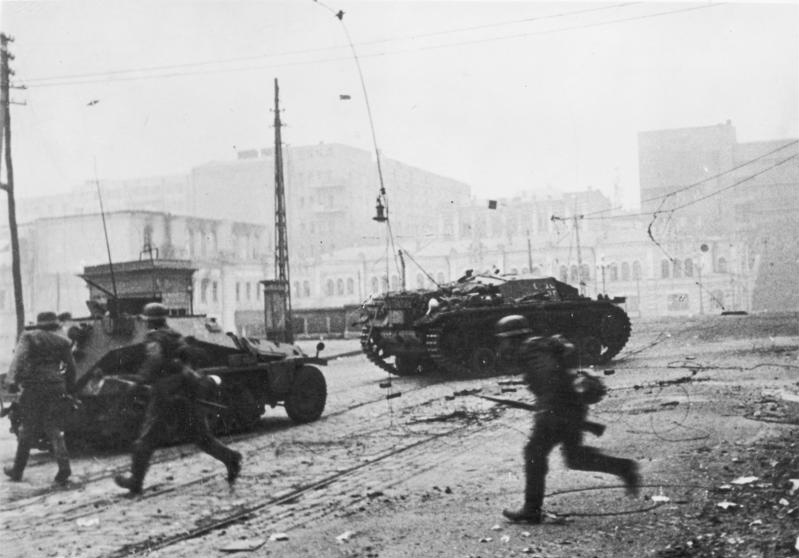
The First Battle of Kharkov was a battle that took place from 20 to 24 October 1941 for control of the city of Kharkov, located in the Ukrainian SSR, during the final stage of Operation Barbarossa. The battle was fought between the German 6th Army, part of Army Group South, and the Soviet Southwestern Front. The Soviet 38th Army was tasked with defending the city while its factories were dismantled and moved to a more easterly location.
The main objective for the German 6th Army was to capture Kharkov, which would help them close the growing gap between themselves and the German 17th Army. By 20 October, the Germans had advanced to the western edge of the city, and by 24 October, the 57th Infantry Division was able to take control of Kharkov. By this time, however, most of the city's industrial facilities had been evacuated or rendered useless by Soviet authorities.
In the fall of 1941, Kharkov was of great strategic importance to the Soviets due to its vital rail and air connections. The city served as a crucial north–south and east–west link between many regions of Ukraine, as well as various areas of the USSR such as the Crimea, the Caucasus, the Dnieper region, and the Donbass.[citation needed]
As one of the largest industrial centers in the Soviet Union, Kharkov played a significant role in contributing to the country's military capabilities. In particular, the Kharkov Tractor Plant was instrumental in the design and development of the Soviet T-34 tank, and the highly productive facility was a symbol of the city's industrial prowess. In addition to the Tractor Plant, Kharkov was home to other important industrial facilities such as the Kharkov Aircraft Plant, the Kharkov Plant of the NKVD (FED), and the Kharkov Turbine Plant.[citation needed]
The city's military industries were responsible for the production of several critical military assets, including Su-2 aircraft, artillery tractors, 82mm mortars, submachine guns, ammunition, and other equipment. Given the strategic importance of Kharkov's industrial production, German forces set their sights on seizing control of the city's railroads and military factories during the First Battle of Kharkov.
Adolf Hitler himself emphasized the importance of capturing these military installations, recognizing that the region, especially the Donets Basin extending from the Kharkov area, was the foundation of the Russian economy. The Germans believed that control of this vital economic center would inevitably lead to the collapse of the entire Russian economy. As a result, they fought fiercely to retain control of the Kharkov industrial area.[citation needed]
Kharkov, a major Soviet city, had a population of 901,000 on 1 May 1941. By September of that year, however, the population had swelled to 1.5 million due to an influx of evacuees from other cities seeking refuge from the ongoing war. After enduring years of deadly conflict, Kharkov's population dwindled significantly to between 180,000 and 190,000 by the time the city was retaken in August 1943.
After the Battle of Kiev, the German Army High Command (OKH) ordered the Army Group Center to redeploy its forces for the attack on Moscow. As a result, the 2nd Panzer Group turned north toward Bryansk and Kursk. In its place, Army Group South, led by Walther von Reichenau's 6th Army and Carl-Heinrich von Stülpnagel's 17th Army, took command of the Panzer divisions. Meanwhile, the main offensive formation of Army Group South, Paul Ludwig Ewald von Kleist's 1st Panzer Group, received orders to move south toward Rostov-on-Don and the Caucasian oil fields in accordance with Führer Directive No. 35. While the 1st Panzer Group secured the German victory at the Battle of Melitopol, the burden of processing the 600,000 Soviet prisoners of war from Kiev fell to the 6th and 17th Armies, resulting in a three-week regrouping period for those two armies.[citation needed]
Hub AI
First Battle of Kharkov AI simulator
(@First Battle of Kharkov_simulator)
First Battle of Kharkov
The First Battle of Kharkov was a battle that took place from 20 to 24 October 1941 for control of the city of Kharkov, located in the Ukrainian SSR, during the final stage of Operation Barbarossa. The battle was fought between the German 6th Army, part of Army Group South, and the Soviet Southwestern Front. The Soviet 38th Army was tasked with defending the city while its factories were dismantled and moved to a more easterly location.
The main objective for the German 6th Army was to capture Kharkov, which would help them close the growing gap between themselves and the German 17th Army. By 20 October, the Germans had advanced to the western edge of the city, and by 24 October, the 57th Infantry Division was able to take control of Kharkov. By this time, however, most of the city's industrial facilities had been evacuated or rendered useless by Soviet authorities.
In the fall of 1941, Kharkov was of great strategic importance to the Soviets due to its vital rail and air connections. The city served as a crucial north–south and east–west link between many regions of Ukraine, as well as various areas of the USSR such as the Crimea, the Caucasus, the Dnieper region, and the Donbass.[citation needed]
As one of the largest industrial centers in the Soviet Union, Kharkov played a significant role in contributing to the country's military capabilities. In particular, the Kharkov Tractor Plant was instrumental in the design and development of the Soviet T-34 tank, and the highly productive facility was a symbol of the city's industrial prowess. In addition to the Tractor Plant, Kharkov was home to other important industrial facilities such as the Kharkov Aircraft Plant, the Kharkov Plant of the NKVD (FED), and the Kharkov Turbine Plant.[citation needed]
The city's military industries were responsible for the production of several critical military assets, including Su-2 aircraft, artillery tractors, 82mm mortars, submachine guns, ammunition, and other equipment. Given the strategic importance of Kharkov's industrial production, German forces set their sights on seizing control of the city's railroads and military factories during the First Battle of Kharkov.
Adolf Hitler himself emphasized the importance of capturing these military installations, recognizing that the region, especially the Donets Basin extending from the Kharkov area, was the foundation of the Russian economy. The Germans believed that control of this vital economic center would inevitably lead to the collapse of the entire Russian economy. As a result, they fought fiercely to retain control of the Kharkov industrial area.[citation needed]
Kharkov, a major Soviet city, had a population of 901,000 on 1 May 1941. By September of that year, however, the population had swelled to 1.5 million due to an influx of evacuees from other cities seeking refuge from the ongoing war. After enduring years of deadly conflict, Kharkov's population dwindled significantly to between 180,000 and 190,000 by the time the city was retaken in August 1943.
After the Battle of Kiev, the German Army High Command (OKH) ordered the Army Group Center to redeploy its forces for the attack on Moscow. As a result, the 2nd Panzer Group turned north toward Bryansk and Kursk. In its place, Army Group South, led by Walther von Reichenau's 6th Army and Carl-Heinrich von Stülpnagel's 17th Army, took command of the Panzer divisions. Meanwhile, the main offensive formation of Army Group South, Paul Ludwig Ewald von Kleist's 1st Panzer Group, received orders to move south toward Rostov-on-Don and the Caucasian oil fields in accordance with Führer Directive No. 35. While the 1st Panzer Group secured the German victory at the Battle of Melitopol, the burden of processing the 600,000 Soviet prisoners of war from Kiev fell to the 6th and 17th Armies, resulting in a three-week regrouping period for those two armies.[citation needed]
Recent media