
Recent from talks
First Council of Nicaea
Knowledge base stats:
Talk channels stats:
Members stats:
First Council of Nicaea
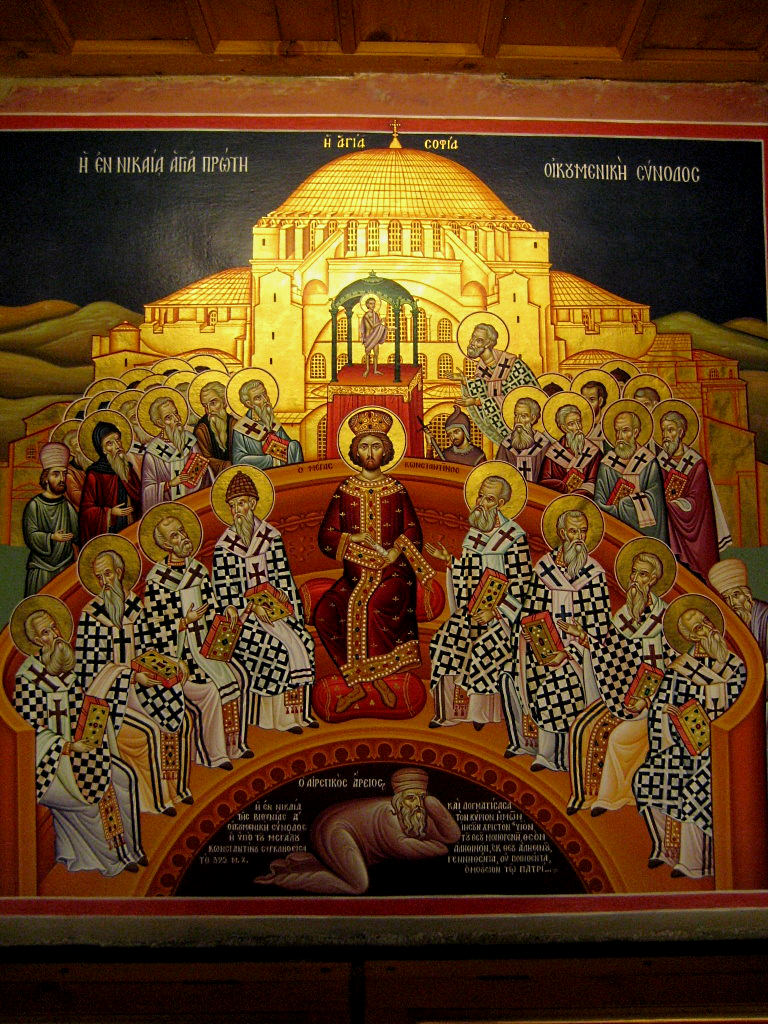
The First Council of Nicaea (/naɪˈsiːə/ ny-SEE-ə; Ancient Greek: Σύνοδος τῆς Νίκαιας, romanized: Sýnodos tês Níkaias) was a council of Christian bishops convened in the Bithynian city of Nicaea (now İznik, Turkey) by the Roman Emperor Constantine I. The Council of Nicaea met from May until the end of July 325.
This ecumenical council was the first of many efforts to attain consensus in the church through an assembly representing all Christendom. Hosius of Corduba may have presided over its deliberations. Attended by at least 200 bishops, its main accomplishments were the settlement of the Christological issue of the divine nature of God the Son and his relationship to God the Father, the construction of the first part of the Nicene Creed, the mandating of uniform observance of the date of Easter, and the promulgation of early canon law.
The major impetus for the calling of the Council of Nicaea arose in a theological dispute among the Christian clergy of Alexandria concerning the nature of Jesus, his origin, and relation to God the Father. Scholars propose dates between 318 and 322 for the beginning of the dispute. The precise origins of the controversy are unclear, but the principal actors were Archbishop Alexander of Alexandria and the presbyter Arius. Arius' teachings are known partially from a few pieces of his writings which survive, but principally from his opponents, primarily Alexander and Athanasius of Alexandria. Arius criticized Alexander's teachings on Christology; Alexander taught that Jesus as God the Son was eternally generated from the Father, while Arius and his followers asserted that the Father alone was eternal, and that the Son was created or begotten by the Father, and thus had a defined point of origin and was subordinate to the Father. Arius accused Alexander of following the teachings of Sabellius, who taught that the Father, Son, and Holy Spirit were one person, rather than the view held throughout the east that they were distinct. Alexander called a local council of bishops from Egypt and Libya, which sided with Alexander's view. Arius refused to subscribe to the council's decision, and he and several followers were excommunicated and exiled from Alexandria by Alexander. Arius then traveled to churches around the Roman east and wrote to bishops to gain support of his view. Among Arius' supporters were Eusebius of Nicomedia and Eusebius of Caesarea, and they advocated for his view and his restoration to the church in Alexandria. Alexander also circulated letters defending his own position.
Parallel to the theological controversy between Alexander and Arius was the Melitian schism in the Alexandrian church. Melitius, bishop of Lycopolis, had acted in the stead of the imprisoned bishop Peter I of Alexandria during the Diocletianic Persecution, but after Peter's death in 311 refused to give up his right to ordain clergy or recognize the authority of Peter's successors Achillas or Alexander.
In 324, the western Roman emperor Constantine defeated the eastern emperor Licinius and became the sole ruler of the Roman Empire. It was at this time that—likely from Eusebius of Nicomedia—he became aware of the controversy between Alexander and Arius. Constantine wrote a letter to the two, urging them to end their dispute and reconcile. This was not Constantine's first direct involvement in ecclesiastical controversy; he had previously attempted to resolve a schism over Donatism in North Africa, first appointing Miltiades, Bishop of Rome, to hear the dispute (with the instruction "I do not wish you to leave schism or division of any kind anywhere.") and then calling the Council of Arles.
Constantine's letter was carried to Alexandria by Bishop Hosius of Corduba as his representative. Hosius apparently then presided over a synod at Alexandria concerning the date of Easter, before calling a council of Eastern bishops in Antioch. This council endorsed Alexander's position and issuing a statement of faith that held that the Son was "begotten not from non-existence, but from the Father, not as made, but as genuine product" and contained anathemas against Arius. Eusebius of Caesaria was also temporarily excommunicated because of his contention that the Father and the Son were of two different natures.
Hosius prompted Constantine to call for a council. The bishops were then to assemble in Ancyra in Asia Minor for a "great and hierarchic council", either at their own impetus or Constantine's command. Constantine moved the council to Nicaea in Bithynia, a venue that would allow him to attend personally (due to its proximity to his capital at Nicomedia) and would allow easier access for bishops from throughout the empire. The emperor had also planned a commemoration of the twentieth year of his reign in Nicaea.
The expenses of the council, including the travel of the bishops, were paid by the imperial treasury. Contemporary reports of attendance range from 250 to 300, with the figure of 318 given by Athanasius of Antioch becoming traditionally accepted. 318 is also the number of members of Abraham's household given in the Book of Genesis. Lists of signatories to the final decisions of the council contain 200–220 names. With presbyters and deacons attending each bishop, the total attendance may have been between 1200 and 1900. Most of the bishops were eastern, with about twenty from Egypt and Libya, another fifty from Palestine and Syria, and more than one hundred from Asia Minor. One bishop each from Persia and Scythia were present. The few western attendees were Hosius, Caecilianus of Carthage, Nicasius of Die, Marcus of Calabria, Domnus of Pannonia, and Victor and Vicentius, two presbyters representing Bishop Sylvester of Rome. Of the eastern bishops, the principal supporters of Arius were Eusebius of Nicomedia, Eusebius of Caesarea, Menophantus of Ephesus, Patrophilus of Scythopolis, Narcissus of Neronias, Theonas of Marmarike, Secundus of Ptolemais, and Theognis of Nicaea. The principal anti-Arians included Alexander of Alexandria, Eustathius of Antioch, Marcellus of Ancyra and Macarius of Jerusalem.
Hub AI
First Council of Nicaea AI simulator
(@First Council of Nicaea_simulator)
First Council of Nicaea
The First Council of Nicaea (/naɪˈsiːə/ ny-SEE-ə; Ancient Greek: Σύνοδος τῆς Νίκαιας, romanized: Sýnodos tês Níkaias) was a council of Christian bishops convened in the Bithynian city of Nicaea (now İznik, Turkey) by the Roman Emperor Constantine I. The Council of Nicaea met from May until the end of July 325.
This ecumenical council was the first of many efforts to attain consensus in the church through an assembly representing all Christendom. Hosius of Corduba may have presided over its deliberations. Attended by at least 200 bishops, its main accomplishments were the settlement of the Christological issue of the divine nature of God the Son and his relationship to God the Father, the construction of the first part of the Nicene Creed, the mandating of uniform observance of the date of Easter, and the promulgation of early canon law.
The major impetus for the calling of the Council of Nicaea arose in a theological dispute among the Christian clergy of Alexandria concerning the nature of Jesus, his origin, and relation to God the Father. Scholars propose dates between 318 and 322 for the beginning of the dispute. The precise origins of the controversy are unclear, but the principal actors were Archbishop Alexander of Alexandria and the presbyter Arius. Arius' teachings are known partially from a few pieces of his writings which survive, but principally from his opponents, primarily Alexander and Athanasius of Alexandria. Arius criticized Alexander's teachings on Christology; Alexander taught that Jesus as God the Son was eternally generated from the Father, while Arius and his followers asserted that the Father alone was eternal, and that the Son was created or begotten by the Father, and thus had a defined point of origin and was subordinate to the Father. Arius accused Alexander of following the teachings of Sabellius, who taught that the Father, Son, and Holy Spirit were one person, rather than the view held throughout the east that they were distinct. Alexander called a local council of bishops from Egypt and Libya, which sided with Alexander's view. Arius refused to subscribe to the council's decision, and he and several followers were excommunicated and exiled from Alexandria by Alexander. Arius then traveled to churches around the Roman east and wrote to bishops to gain support of his view. Among Arius' supporters were Eusebius of Nicomedia and Eusebius of Caesarea, and they advocated for his view and his restoration to the church in Alexandria. Alexander also circulated letters defending his own position.
Parallel to the theological controversy between Alexander and Arius was the Melitian schism in the Alexandrian church. Melitius, bishop of Lycopolis, had acted in the stead of the imprisoned bishop Peter I of Alexandria during the Diocletianic Persecution, but after Peter's death in 311 refused to give up his right to ordain clergy or recognize the authority of Peter's successors Achillas or Alexander.
In 324, the western Roman emperor Constantine defeated the eastern emperor Licinius and became the sole ruler of the Roman Empire. It was at this time that—likely from Eusebius of Nicomedia—he became aware of the controversy between Alexander and Arius. Constantine wrote a letter to the two, urging them to end their dispute and reconcile. This was not Constantine's first direct involvement in ecclesiastical controversy; he had previously attempted to resolve a schism over Donatism in North Africa, first appointing Miltiades, Bishop of Rome, to hear the dispute (with the instruction "I do not wish you to leave schism or division of any kind anywhere.") and then calling the Council of Arles.
Constantine's letter was carried to Alexandria by Bishop Hosius of Corduba as his representative. Hosius apparently then presided over a synod at Alexandria concerning the date of Easter, before calling a council of Eastern bishops in Antioch. This council endorsed Alexander's position and issuing a statement of faith that held that the Son was "begotten not from non-existence, but from the Father, not as made, but as genuine product" and contained anathemas against Arius. Eusebius of Caesaria was also temporarily excommunicated because of his contention that the Father and the Son were of two different natures.
Hosius prompted Constantine to call for a council. The bishops were then to assemble in Ancyra in Asia Minor for a "great and hierarchic council", either at their own impetus or Constantine's command. Constantine moved the council to Nicaea in Bithynia, a venue that would allow him to attend personally (due to its proximity to his capital at Nicomedia) and would allow easier access for bishops from throughout the empire. The emperor had also planned a commemoration of the twentieth year of his reign in Nicaea.
The expenses of the council, including the travel of the bishops, were paid by the imperial treasury. Contemporary reports of attendance range from 250 to 300, with the figure of 318 given by Athanasius of Antioch becoming traditionally accepted. 318 is also the number of members of Abraham's household given in the Book of Genesis. Lists of signatories to the final decisions of the council contain 200–220 names. With presbyters and deacons attending each bishop, the total attendance may have been between 1200 and 1900. Most of the bishops were eastern, with about twenty from Egypt and Libya, another fifty from Palestine and Syria, and more than one hundred from Asia Minor. One bishop each from Persia and Scythia were present. The few western attendees were Hosius, Caecilianus of Carthage, Nicasius of Die, Marcus of Calabria, Domnus of Pannonia, and Victor and Vicentius, two presbyters representing Bishop Sylvester of Rome. Of the eastern bishops, the principal supporters of Arius were Eusebius of Nicomedia, Eusebius of Caesarea, Menophantus of Ephesus, Patrophilus of Scythopolis, Narcissus of Neronias, Theonas of Marmarike, Secundus of Ptolemais, and Theognis of Nicaea. The principal anti-Arians included Alexander of Alexandria, Eustathius of Antioch, Marcellus of Ancyra and Macarius of Jerusalem.
Recent media