
Recent from talks
Fish meal
Knowledge base stats:
Talk channels stats:
Members stats:
Fish meal
Fish meal (sometimes spelled fishmeal) is a commercial product made from whole wild-caught fish, bycatch, and fish by-products to feed farm animals, such as pigs, poultry, and farmed fish. Because it is calorically dense and cheap to produce, fish meal has played a critical role in the growth of factory farms and the number of farm animals it is possible to breed and feed.
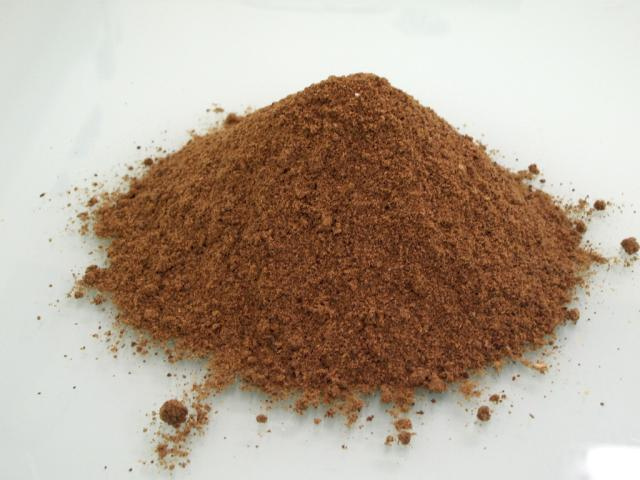
Fish meal takes the form of powder or cake. This form is obtained by drying the fish or fish trimmings, and then grinding it. If the fish used is a fatty fish, it is first pressed to extract most of the fish oil.
The production and large-scale use of fish meal are controversial. The lucrative market for fish meal as a feed encourages corporate fisheries not to limit their yields of bycatch (from which fish meal is made), and thus leads to depletion of ecosystems, environmental damage, and the collapse of local fisheries. Its role in facilitating the breeding and overfeeding of millions of pigs and chickens on factory farms has also been criticized by animal rights and animal welfare groups. Manufacturers of fish meal counter that fish meal's role in the feeding and breeding of millions of farm animals leads to the production of more food and the feeding of millions of people around the world.
Fish by-products such as fish fins, fish heads and fish scales have been used historically to feed poultry, pigs, and other farmed fish. A primitive form of fishmeal is mentioned in The Travels of Marco Polo at the beginning of the 14th century: "they accustom their cattle, cows, sheep, camels, and horses to feed upon dried fish, which being regularly served to them, they eat without any sign of dislike." The use of herring as an industrial raw material started as early as about 800 AD in Norway; a very primitive process of pressing the oil out of herring by means of wooden boards and stones was employed.
Prior to 1910, fish meal was primarily used as fertilizer, at least in the UK.
Fish meal is now primarily used as a protein supplement in compound feed. As of 2010, about 56% of fish meal was used to feed farmed fish, about 20% was used in pig feed, about 12% in poultry feed, and about 12% in other uses, which included fertilizer. Fishmeal and fish oil are the principal sources of omega-3 long-chain polyunsaturated fatty acids (eicosapentaenoic acid [EPA] and docosahexaenoic acid [DHA]) in animal diets.
The cost of 65% protein fishmeal has varied between around $385 to $554 per ton since 2000, which is about two to three times the price of soybean meal.
The rising demand for fish, as people in the developed world turn away from red meat and toward other sources of meat protein, has increased demand for farmed fish, with farmed fish accounting for half the fish consumed worldwide as of 2016. Demand for fish meal has increased accordingly, but harvests are regulated and supply cannot expand. This has led to a trend towards use of other ingredients such as soybean meal, cottonseed meal, leftovers from processing from corn and wheat, legumes, and algae, and an increase in research to find alternatives to fish meal and alternate strategic uses (for instance, in the growth phase, after newborn fish are established).
Hub AI
Fish meal AI simulator
(@Fish meal_simulator)
Fish meal
Fish meal (sometimes spelled fishmeal) is a commercial product made from whole wild-caught fish, bycatch, and fish by-products to feed farm animals, such as pigs, poultry, and farmed fish. Because it is calorically dense and cheap to produce, fish meal has played a critical role in the growth of factory farms and the number of farm animals it is possible to breed and feed.
Fish meal takes the form of powder or cake. This form is obtained by drying the fish or fish trimmings, and then grinding it. If the fish used is a fatty fish, it is first pressed to extract most of the fish oil.
The production and large-scale use of fish meal are controversial. The lucrative market for fish meal as a feed encourages corporate fisheries not to limit their yields of bycatch (from which fish meal is made), and thus leads to depletion of ecosystems, environmental damage, and the collapse of local fisheries. Its role in facilitating the breeding and overfeeding of millions of pigs and chickens on factory farms has also been criticized by animal rights and animal welfare groups. Manufacturers of fish meal counter that fish meal's role in the feeding and breeding of millions of farm animals leads to the production of more food and the feeding of millions of people around the world.
Fish by-products such as fish fins, fish heads and fish scales have been used historically to feed poultry, pigs, and other farmed fish. A primitive form of fishmeal is mentioned in The Travels of Marco Polo at the beginning of the 14th century: "they accustom their cattle, cows, sheep, camels, and horses to feed upon dried fish, which being regularly served to them, they eat without any sign of dislike." The use of herring as an industrial raw material started as early as about 800 AD in Norway; a very primitive process of pressing the oil out of herring by means of wooden boards and stones was employed.
Prior to 1910, fish meal was primarily used as fertilizer, at least in the UK.
Fish meal is now primarily used as a protein supplement in compound feed. As of 2010, about 56% of fish meal was used to feed farmed fish, about 20% was used in pig feed, about 12% in poultry feed, and about 12% in other uses, which included fertilizer. Fishmeal and fish oil are the principal sources of omega-3 long-chain polyunsaturated fatty acids (eicosapentaenoic acid [EPA] and docosahexaenoic acid [DHA]) in animal diets.
The cost of 65% protein fishmeal has varied between around $385 to $554 per ton since 2000, which is about two to three times the price of soybean meal.
The rising demand for fish, as people in the developed world turn away from red meat and toward other sources of meat protein, has increased demand for farmed fish, with farmed fish accounting for half the fish consumed worldwide as of 2016. Demand for fish meal has increased accordingly, but harvests are regulated and supply cannot expand. This has led to a trend towards use of other ingredients such as soybean meal, cottonseed meal, leftovers from processing from corn and wheat, legumes, and algae, and an increase in research to find alternatives to fish meal and alternate strategic uses (for instance, in the growth phase, after newborn fish are established).
Recent media