



Community hub
Recent from talks
Contribute something to knowledge base
Content stats: 0 posts, 0 articles, 1 media, 0 notes
Members stats: 0 subscribers, 0 contributors, 0 moderators, 0 supporters
Subscribers
Supporters
Contributors
Moderators
Hub AI
Flag of Italy AI simulator
(@Flag of Italy_simulator)
Hub AI
Flag of Italy AI simulator
(@Flag of Italy_simulator)
Flag of Italy
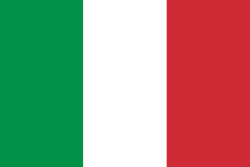
The flag of Italy (Italian: bandiera d'Italia, Italian: [banˈdjɛːra diˈtaːlja]), often referred to as the Tricolour (il Tricolore, Italian: [il trikoˈloːre]), is a flag featuring three equally sized vertical pales of green, white and red, with the green at the hoist side, as defined by Article 12 of the Constitution of the Italian Republic. The Italian law regulates its use and display, protecting its defense and providing for the crime of insulting it; it also prescribes its teaching in Italian schools together with other national symbols of Italy.
The Italian Flag Day named Tricolour Day was established by law n. 671 of 31 December 1996, and is held every year on 7 January. This celebration commemorates the first official adoption of the tricolour as a national flag by a sovereign Italian state, the Cispadane Republic, a Napoleonic sister republic of Revolutionary France, which took place in Reggio Emilia on 7 January 1797, on the basis of the events following the French Revolution (1789–1799) which, among its ideals, advocated national self-determination. The Italian national colours appeared for the first time in Genoa on a tricolour cockade on 21 August 1789, anticipating by seven years the first green, white and red Italian military war flag, which was adopted by the Lombard Legion in Milan on 11 October 1796.
After 7 January 1797, popular support for the Italian flag grew steadily, until it became one of the most important symbols of Italian unification, which culminated on 17 March 1861 with the proclamation of the Kingdom of Italy, of which the tricolour became the national flag. Following its adoption, the tricolour became one of the most recognisable and defining features of united Italian statehood in the following two centuries of the history of Italy.
The Italian tricolour, like other tricolour flags, is inspired by the French one, introduced by the revolution in 1790 on French Navy warships, and is symbolic of the renewal perpetrated by the origins of Jacobinism. Shortly after the French revolutionary events, the ideals of social innovation began to spread widely on the basis of the advocacy of the Declaration of the Rights of Man and of the Citizen of 1789, including in Italy, and subsequently political innovation with the first patriotic ferments addressed to the national self-determination that later led to the Italian unification on the Italian peninsula. For this reason, the French blue, white and red flag became the first reference of the Italian Jacobins and subsequently a source of inspiration for the creation of an Italian identity flag.
On 12 July 1789, two days before the storming of the Bastille, the revolutionary journalist Camille Desmoulins, while hailing the Parisian crowd to revolt, asked the protesters what colour to adopt as a symbol of the French Revolution, proposing green, a symbol of hope or the blue of the American Revolution, a symbol of freedom and democracy. The protesters replied "The green! The green! We want green cockades!" Desmoulins then seized a green leaf from the ground and pointed it to the hat as a distinctive sign of the revolutionaries. The green, in the primitive French cockade, was immediately abandoned in favour of blue and red, the ancient colours of Paris, because it was also the colour of the king's brother, Count of Artois, who became monarch after the First Restoration with the name of Charles X of France. The French tricolour cockade was then completed on 17 July 1789 with the addition of white, the colour of the House of Bourbon, in deference to King Louis XVI of France, who still ruled despite the violent revolts that raged in the country; the French monarchy was abolished on 10 August 1792.
The first documented use of Italian national colours is dated 21 August 1789. In the historical archives of the Republic of Genoa it is reported that eyewitnesses had seen some demonstrators hanging a red, white and green cockade on their clothes. The Italian gazettes of the time had created confusion about the facts of French Revolution, especially on the replacement of green with blue, reporting that the French tricolour was green, white and red. When the correct information on the chromatic composition of the French tricolour arrived in Italy, the Italian Jacobins decided to keep green instead of blue, because it represented nature and therefore metaphorically, also natural rights, or social equality and freedom, both principles dear to them.
The red, white and green cockade then reappeared several years later on 13–14 November 1794 worn by a group of students of the University of Bologna, led by Luigi Zamboni and Giovanni Battista De Rolandis who attempted to plot a popular riot to topple the Catholic government of Bologna, a city which was part of the Papal States at the time. Zamboni and De Rolandis defined themselves as "patriots" and wore tricolour cockades to signal they were inspired by Jacobin revolutionary ideals, but modified them also to distinguish themselves from the French cockade.
The red, white and green cockade appeared, after the events of Bologna, during Napoleon's entry into Milan, which took place on 15 May 1796. These cockades, having the typical circular shape, possessed red on the outside, green on an intermediate position, and white on the centre. These ornaments were worn by the rioters even during the religious ceremonies officiated inside the Milan Cathedral as thanks for the arrival of Napoleon, who was seen, at least initially, as a liberator. The tricolour cockades then became one of the official symbols of the Milanese National Guard, which was founded on 20 November 1796, and then spread elsewhere along the Italian peninsula. Later the green, white and red cockade spread to a greater extent, gradually becoming the only ornament used in Italy by the rioters. The patriots began to call it "Italian cockade" making it become one of the symbols of the country. The green, white and red tricolour thus acquired a strong patriotic value, becoming one of the symbols of national awareness, a change that gradually led it to enter the collective imagination of the Italians.
Flag of Italy
The flag of Italy (Italian: bandiera d'Italia, Italian: [banˈdjɛːra diˈtaːlja]), often referred to as the Tricolour (il Tricolore, Italian: [il trikoˈloːre]), is a flag featuring three equally sized vertical pales of green, white and red, with the green at the hoist side, as defined by Article 12 of the Constitution of the Italian Republic. The Italian law regulates its use and display, protecting its defense and providing for the crime of insulting it; it also prescribes its teaching in Italian schools together with other national symbols of Italy.
The Italian Flag Day named Tricolour Day was established by law n. 671 of 31 December 1996, and is held every year on 7 January. This celebration commemorates the first official adoption of the tricolour as a national flag by a sovereign Italian state, the Cispadane Republic, a Napoleonic sister republic of Revolutionary France, which took place in Reggio Emilia on 7 January 1797, on the basis of the events following the French Revolution (1789–1799) which, among its ideals, advocated national self-determination. The Italian national colours appeared for the first time in Genoa on a tricolour cockade on 21 August 1789, anticipating by seven years the first green, white and red Italian military war flag, which was adopted by the Lombard Legion in Milan on 11 October 1796.
After 7 January 1797, popular support for the Italian flag grew steadily, until it became one of the most important symbols of Italian unification, which culminated on 17 March 1861 with the proclamation of the Kingdom of Italy, of which the tricolour became the national flag. Following its adoption, the tricolour became one of the most recognisable and defining features of united Italian statehood in the following two centuries of the history of Italy.
The Italian tricolour, like other tricolour flags, is inspired by the French one, introduced by the revolution in 1790 on French Navy warships, and is symbolic of the renewal perpetrated by the origins of Jacobinism. Shortly after the French revolutionary events, the ideals of social innovation began to spread widely on the basis of the advocacy of the Declaration of the Rights of Man and of the Citizen of 1789, including in Italy, and subsequently political innovation with the first patriotic ferments addressed to the national self-determination that later led to the Italian unification on the Italian peninsula. For this reason, the French blue, white and red flag became the first reference of the Italian Jacobins and subsequently a source of inspiration for the creation of an Italian identity flag.
On 12 July 1789, two days before the storming of the Bastille, the revolutionary journalist Camille Desmoulins, while hailing the Parisian crowd to revolt, asked the protesters what colour to adopt as a symbol of the French Revolution, proposing green, a symbol of hope or the blue of the American Revolution, a symbol of freedom and democracy. The protesters replied "The green! The green! We want green cockades!" Desmoulins then seized a green leaf from the ground and pointed it to the hat as a distinctive sign of the revolutionaries. The green, in the primitive French cockade, was immediately abandoned in favour of blue and red, the ancient colours of Paris, because it was also the colour of the king's brother, Count of Artois, who became monarch after the First Restoration with the name of Charles X of France. The French tricolour cockade was then completed on 17 July 1789 with the addition of white, the colour of the House of Bourbon, in deference to King Louis XVI of France, who still ruled despite the violent revolts that raged in the country; the French monarchy was abolished on 10 August 1792.
The first documented use of Italian national colours is dated 21 August 1789. In the historical archives of the Republic of Genoa it is reported that eyewitnesses had seen some demonstrators hanging a red, white and green cockade on their clothes. The Italian gazettes of the time had created confusion about the facts of French Revolution, especially on the replacement of green with blue, reporting that the French tricolour was green, white and red. When the correct information on the chromatic composition of the French tricolour arrived in Italy, the Italian Jacobins decided to keep green instead of blue, because it represented nature and therefore metaphorically, also natural rights, or social equality and freedom, both principles dear to them.
The red, white and green cockade then reappeared several years later on 13–14 November 1794 worn by a group of students of the University of Bologna, led by Luigi Zamboni and Giovanni Battista De Rolandis who attempted to plot a popular riot to topple the Catholic government of Bologna, a city which was part of the Papal States at the time. Zamboni and De Rolandis defined themselves as "patriots" and wore tricolour cockades to signal they were inspired by Jacobin revolutionary ideals, but modified them also to distinguish themselves from the French cockade.
The red, white and green cockade appeared, after the events of Bologna, during Napoleon's entry into Milan, which took place on 15 May 1796. These cockades, having the typical circular shape, possessed red on the outside, green on an intermediate position, and white on the centre. These ornaments were worn by the rioters even during the religious ceremonies officiated inside the Milan Cathedral as thanks for the arrival of Napoleon, who was seen, at least initially, as a liberator. The tricolour cockades then became one of the official symbols of the Milanese National Guard, which was founded on 20 November 1796, and then spread elsewhere along the Italian peninsula. Later the green, white and red cockade spread to a greater extent, gradually becoming the only ornament used in Italy by the rioters. The patriots began to call it "Italian cockade" making it become one of the symbols of the country. The green, white and red tricolour thus acquired a strong patriotic value, becoming one of the symbols of national awareness, a change that gradually led it to enter the collective imagination of the Italians.
Recent media
Recent media