
Recent from talks
Fort Hall
Knowledge base stats:
Talk channels stats:
Members stats:
Fort Hall
Fort Hall was a fort in the Western United States that was built in 1834 as a fur trading post by Nathaniel Jarvis Wyeth. It was located on the Snake River in the eastern Oregon Country, now part of present-day Bannock County in southeastern Idaho. Wyeth was an inventor and businessman from Boston, Massachusetts, who also founded a post at Fort William, in present-day Portland, Oregon, as part of a plan for a new trading and fisheries company. In 1837, unable to compete with the powerful British Hudson's Bay Company, based at Fort Vancouver, Wyeth sold both posts to it. Great Britain and the United States both operated in the Oregon Country in these years.
After being included in United States territory in 1846 upon settlement of the northern boundary with Canada, Fort Hall developed as an important station for emigrants through the 1850s on the Oregon Trail; it was located at the end of the common 500-mile (800 km) stretch from the East shared by the three far west emigrant trails. Soon after Fort Hall, the Oregon and California Trails diverged in northwesterly and southwesterly directions. An estimated 270,000 emigrants reached Fort Hall on their way west. The town of Fort Hall later developed eleven miles (18 km) to the east, and Pocatello developed about thirty miles (50 km) south on the Portneuf River.
In the 1860s, Fort Hall was the key post for the overland stage, mail and freight lines to the towns and camps of the mining frontier in the Pacific Northwest. In 1870, a New Fort Hall was constructed to carry out that function; it was located about 25 miles to the northeast. It protected stagecoach, mail and travelers to the Northwest.
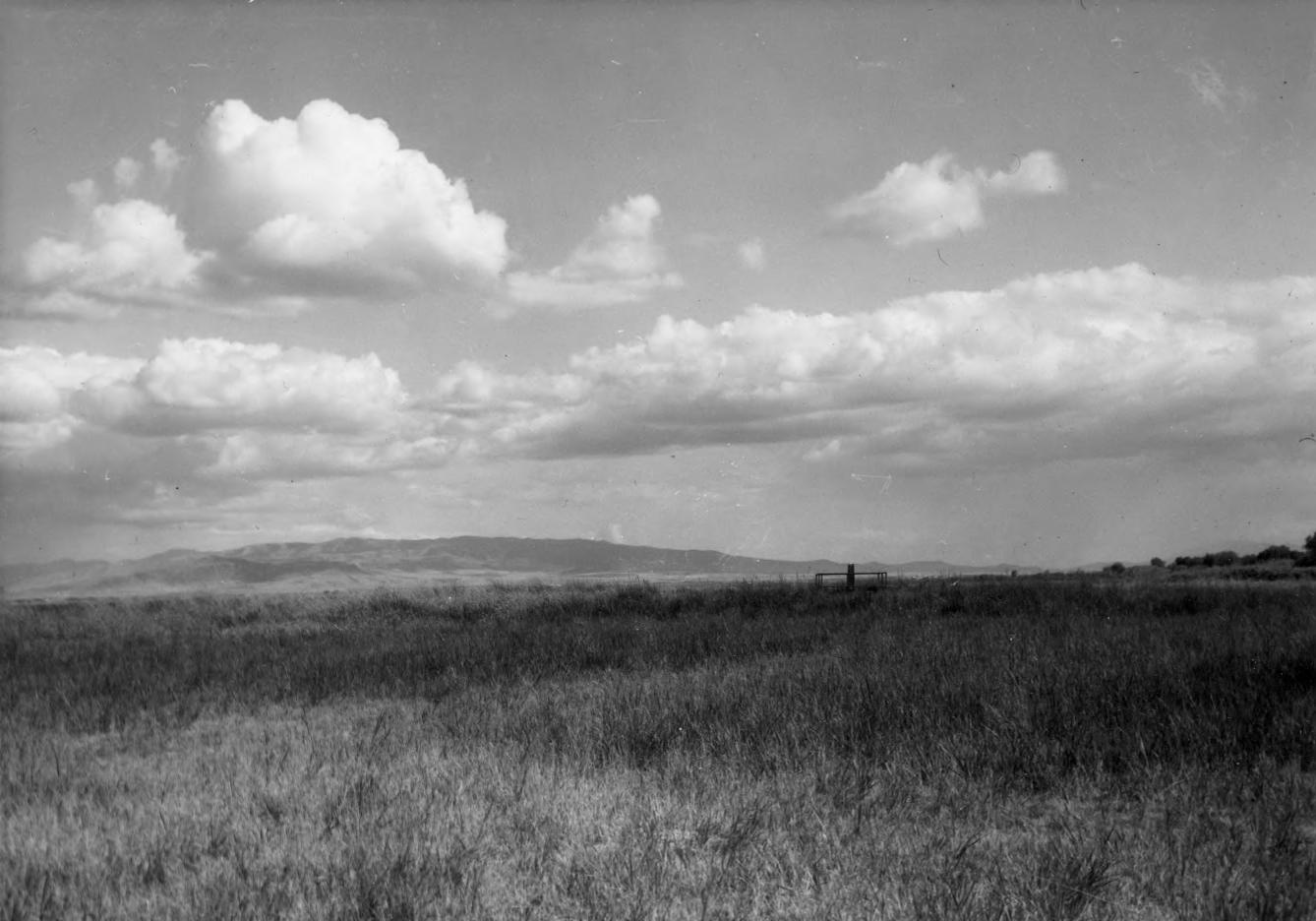
Fort Hall is considered the most important trading post in the Snake River Valley. It was included within the Fort Hall Indian Reservation under the treaty of 1867. No building remains at either of its sites. The Old Fort Hall site was designated a National Historic Landmark in 1961, and the New Fort Hall site is listed on the National Register of Historic Places.
This area was long inhabited by varying cultures of indigenous peoples. By the time of European encounter, the historic Shoshone and Bannock peoples had been occupying the area for centuries. It was called Botoode in Shoshoni. They were among the Plains peoples who had adopted horses to use as part of their nomadic and seasonal movement associated with hunting game, particularly bison. French trappers and British traders from Canada had traded with them long before American explorers arrived.
In the late 1820s, Hall J. Kelley of Boston was among men who became interested in commercial possibilities in the Oregon Country, described by a later historian as offering a "field of exploitation for adventurous capital". He recruited Nathaniel Jarvis Wyeth, an inventor and businessman who had made the ice industry successful in Boston, to his plan to invest in an expedition to the Northwest where they would make their fortunes. They planned a joint expedition in 1831, with intentions to establish a company for fur trading and developing a salmon fishery to rival New England's cod fishery. Organizing the expedition suffered delays and it never took place.
In 1832 Wyeth decided to proceed on his own with an independent expedition. With a company of 70-100 men, he intended to establish a fishery and trading post on the Columbia River near its confluence with the Willamette River (part of present-day Portland, Oregon). Related plans were to supply trade goods to trappers in the Rocky Mountains and possibly slaughter and dry bison for export to Cuba. A major investor in the fishery/trading post enterprise was Henry Hall, a partner of the Boston firm Tucker & Williams & Henry Hall. In addition to fur trading, they planned to export salmon to New England and Hawaii.
In 1832, Benjamin Louis Eulalie de Bonneville and his party had first taken wagons over the South Pass of the Rocky Mountains. This route had been rediscovered by trappers in 1824. It led back to the North Platte River valley, which was being developed as a key route in connecting the East by a wagon road to the Oregon Country. The Platte Rivers were chief transportation corridors, and the river valleys provided level land for wagons. This was the route for 500 miles (800 km) from the Missouri River fur ports at Independence and St. Joseph, Missouri. Other emigrants went overland starting from St. Louis, Missouri, where the fur companies and emigrant suppliers were based.
Hub AI
Fort Hall AI simulator
(@Fort Hall_simulator)
Fort Hall
Fort Hall was a fort in the Western United States that was built in 1834 as a fur trading post by Nathaniel Jarvis Wyeth. It was located on the Snake River in the eastern Oregon Country, now part of present-day Bannock County in southeastern Idaho. Wyeth was an inventor and businessman from Boston, Massachusetts, who also founded a post at Fort William, in present-day Portland, Oregon, as part of a plan for a new trading and fisheries company. In 1837, unable to compete with the powerful British Hudson's Bay Company, based at Fort Vancouver, Wyeth sold both posts to it. Great Britain and the United States both operated in the Oregon Country in these years.
After being included in United States territory in 1846 upon settlement of the northern boundary with Canada, Fort Hall developed as an important station for emigrants through the 1850s on the Oregon Trail; it was located at the end of the common 500-mile (800 km) stretch from the East shared by the three far west emigrant trails. Soon after Fort Hall, the Oregon and California Trails diverged in northwesterly and southwesterly directions. An estimated 270,000 emigrants reached Fort Hall on their way west. The town of Fort Hall later developed eleven miles (18 km) to the east, and Pocatello developed about thirty miles (50 km) south on the Portneuf River.
In the 1860s, Fort Hall was the key post for the overland stage, mail and freight lines to the towns and camps of the mining frontier in the Pacific Northwest. In 1870, a New Fort Hall was constructed to carry out that function; it was located about 25 miles to the northeast. It protected stagecoach, mail and travelers to the Northwest.
Fort Hall is considered the most important trading post in the Snake River Valley. It was included within the Fort Hall Indian Reservation under the treaty of 1867. No building remains at either of its sites. The Old Fort Hall site was designated a National Historic Landmark in 1961, and the New Fort Hall site is listed on the National Register of Historic Places.
This area was long inhabited by varying cultures of indigenous peoples. By the time of European encounter, the historic Shoshone and Bannock peoples had been occupying the area for centuries. It was called Botoode in Shoshoni. They were among the Plains peoples who had adopted horses to use as part of their nomadic and seasonal movement associated with hunting game, particularly bison. French trappers and British traders from Canada had traded with them long before American explorers arrived.
In the late 1820s, Hall J. Kelley of Boston was among men who became interested in commercial possibilities in the Oregon Country, described by a later historian as offering a "field of exploitation for adventurous capital". He recruited Nathaniel Jarvis Wyeth, an inventor and businessman who had made the ice industry successful in Boston, to his plan to invest in an expedition to the Northwest where they would make their fortunes. They planned a joint expedition in 1831, with intentions to establish a company for fur trading and developing a salmon fishery to rival New England's cod fishery. Organizing the expedition suffered delays and it never took place.
In 1832 Wyeth decided to proceed on his own with an independent expedition. With a company of 70-100 men, he intended to establish a fishery and trading post on the Columbia River near its confluence with the Willamette River (part of present-day Portland, Oregon). Related plans were to supply trade goods to trappers in the Rocky Mountains and possibly slaughter and dry bison for export to Cuba. A major investor in the fishery/trading post enterprise was Henry Hall, a partner of the Boston firm Tucker & Williams & Henry Hall. In addition to fur trading, they planned to export salmon to New England and Hawaii.
In 1832, Benjamin Louis Eulalie de Bonneville and his party had first taken wagons over the South Pass of the Rocky Mountains. This route had been rediscovered by trappers in 1824. It led back to the North Platte River valley, which was being developed as a key route in connecting the East by a wagon road to the Oregon Country. The Platte Rivers were chief transportation corridors, and the river valleys provided level land for wagons. This was the route for 500 miles (800 km) from the Missouri River fur ports at Independence and St. Joseph, Missouri. Other emigrants went overland starting from St. Louis, Missouri, where the fur companies and emigrant suppliers were based.
Recent media