
Recent from talks
Francis Tallents
Knowledge base stats:
Talk channels stats:
Members stats:
Francis Tallents
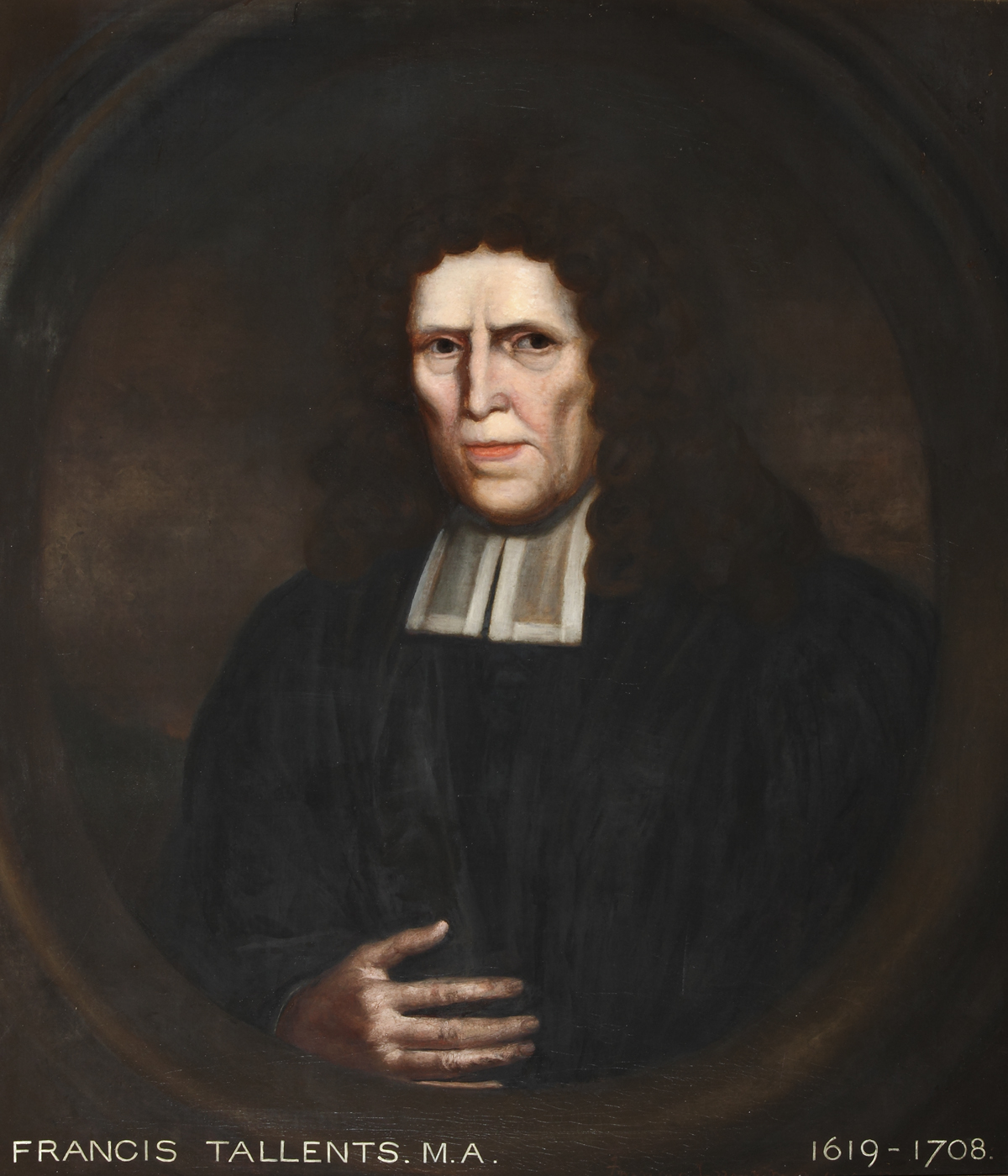
Francis Tallents (1619–1708) was a non-conforming English Presbyterian clergyman.
Francis Tallents was of partly Huguenot ancestry. He was the eldest son of Philip Tallents, whose own father, a Frenchman, accompanied Francis Leke (MP), a Derbyshire Protestant politician and soldier, to England after saving his life.
Francis Tallents was born at Pilsley in the parish of North Wingfield, Derbyshire, in November 1619. His father dying when he was fourteen, Tallents was sent by an uncle, Francis Tallents, to the free schools at Mansfield and Newark.
Tallents studied at Peterhouse, Cambridge from 1635, and then moved to Magdalene College, Cambridge, to become sub-tutor to the sons of Theophilus Howard, 2nd Earl of Suffolk. He graduated B.A in 1641. In 1642 he travelled abroad with his pupils, and stayed for a time at Saumur, then an important centre of Huguenot teaching, where the Academy taught a moderate and inclusive Calvinism, known as Amyraldism. He later said that the encounter with Roman Catholicism at this point in his life reinforced his Protestant beliefs. This was the time of the English Civil War, in which such a commitment could dictate allegiance. He returned to Cambridge, a Parliamentarian stronghold and graduated M.A. in 1645, after which he was chosen Fellow and tutor of Magdalene.
For some years he continued in academic life, taking a strong interest in Science and History, as well as Theology. He knew at least some of the works of Jonas Moore, Pierre Gassendi and Johannes Kepler. Through Robert Boyle he knew about the activities and ideas of the Invisible College, a circle of natural philosophers who had a universalist and utopian outlook. He was also a talented teacher. Among his students was Robert Sawyer, a future Attorney General for England and Wales.
Tallents received ordination at St Mary's Woolnoth, London, on 29 November 1648 by the third London Presbyterian classis. In October 1649 he was appointed unus e predicatoribus ab Academia emittendis - one of the twelve graduates, chosen annually from the University, who, under an ordinance of Elizabeth I had power to preach without episcopal licence.
In the summer of 1652 Tallents was invited by the mayor and aldermen, and urged by Richard Baxter, to become lecturer and curate at St Mary's, Shrewsbury. St Mary's had been a Collegiate church and Chapel Royal in the Middle Ages and remained a Royal Peculiar as before, although the council of Shrewsbury had assumed effective control. The precise reasons for the vacancy are slightly mysterious. The incumbent had been Samuel Fisher (died 1681), a Puritan preacher and controversialist of some note, but apparently not to the taste of some in the parish. In 1650 the Rump Parliament prescribed an Oath of Engagement, which was distasteful to many Presbyterians as they felt it contradicted the Solemn League and Covenant, to which they had subscribed at Parliament's behest in September 1643. Subsequently, Humphrey Mackworth, the governor of Shrewsbury, was instructed to expel from the town preachers who stirred up "sedition and uproar" among the people. Fisher and his mentor, Thomas Blake were among those who left, presumably refusing to take the Engagement. Both remained in Shropshire and continued to preach, leaving the situation unresolved. The next year brought the culmination of the Third English Civil War, when the Scottish army camped at Tong, Shropshire, held at bay by Mackworth, on its way to defeat at the Battle of Worcester. Consequently, it was not until 1652 that the situation stabilised sufficiently for the town council to be confident of making a replacement.
The initial choice was John Bryan, who was the most distinguished preacher in Coventry, but his churchwardens prevailed on him to stay, supported by Richard Baxter. The council then sought advice from Baxter, who recommended Tallents. Baxter greatly valued Tallents as a moderate Calvinist. In 1670 he described his friend as
Hub AI
Francis Tallents AI simulator
(@Francis Tallents_simulator)
Francis Tallents
Francis Tallents (1619–1708) was a non-conforming English Presbyterian clergyman.
Francis Tallents was of partly Huguenot ancestry. He was the eldest son of Philip Tallents, whose own father, a Frenchman, accompanied Francis Leke (MP), a Derbyshire Protestant politician and soldier, to England after saving his life.
Francis Tallents was born at Pilsley in the parish of North Wingfield, Derbyshire, in November 1619. His father dying when he was fourteen, Tallents was sent by an uncle, Francis Tallents, to the free schools at Mansfield and Newark.
Tallents studied at Peterhouse, Cambridge from 1635, and then moved to Magdalene College, Cambridge, to become sub-tutor to the sons of Theophilus Howard, 2nd Earl of Suffolk. He graduated B.A in 1641. In 1642 he travelled abroad with his pupils, and stayed for a time at Saumur, then an important centre of Huguenot teaching, where the Academy taught a moderate and inclusive Calvinism, known as Amyraldism. He later said that the encounter with Roman Catholicism at this point in his life reinforced his Protestant beliefs. This was the time of the English Civil War, in which such a commitment could dictate allegiance. He returned to Cambridge, a Parliamentarian stronghold and graduated M.A. in 1645, after which he was chosen Fellow and tutor of Magdalene.
For some years he continued in academic life, taking a strong interest in Science and History, as well as Theology. He knew at least some of the works of Jonas Moore, Pierre Gassendi and Johannes Kepler. Through Robert Boyle he knew about the activities and ideas of the Invisible College, a circle of natural philosophers who had a universalist and utopian outlook. He was also a talented teacher. Among his students was Robert Sawyer, a future Attorney General for England and Wales.
Tallents received ordination at St Mary's Woolnoth, London, on 29 November 1648 by the third London Presbyterian classis. In October 1649 he was appointed unus e predicatoribus ab Academia emittendis - one of the twelve graduates, chosen annually from the University, who, under an ordinance of Elizabeth I had power to preach without episcopal licence.
In the summer of 1652 Tallents was invited by the mayor and aldermen, and urged by Richard Baxter, to become lecturer and curate at St Mary's, Shrewsbury. St Mary's had been a Collegiate church and Chapel Royal in the Middle Ages and remained a Royal Peculiar as before, although the council of Shrewsbury had assumed effective control. The precise reasons for the vacancy are slightly mysterious. The incumbent had been Samuel Fisher (died 1681), a Puritan preacher and controversialist of some note, but apparently not to the taste of some in the parish. In 1650 the Rump Parliament prescribed an Oath of Engagement, which was distasteful to many Presbyterians as they felt it contradicted the Solemn League and Covenant, to which they had subscribed at Parliament's behest in September 1643. Subsequently, Humphrey Mackworth, the governor of Shrewsbury, was instructed to expel from the town preachers who stirred up "sedition and uproar" among the people. Fisher and his mentor, Thomas Blake were among those who left, presumably refusing to take the Engagement. Both remained in Shropshire and continued to preach, leaving the situation unresolved. The next year brought the culmination of the Third English Civil War, when the Scottish army camped at Tong, Shropshire, held at bay by Mackworth, on its way to defeat at the Battle of Worcester. Consequently, it was not until 1652 that the situation stabilised sufficiently for the town council to be confident of making a replacement.
The initial choice was John Bryan, who was the most distinguished preacher in Coventry, but his churchwardens prevailed on him to stay, supported by Richard Baxter. The council then sought advice from Baxter, who recommended Tallents. Baxter greatly valued Tallents as a moderate Calvinist. In 1670 he described his friend as
Recent media