
Recent from talks
Francisco Dagohoy
Knowledge base stats:
Talk channels stats:
Members stats:
Francisco Dagohoy
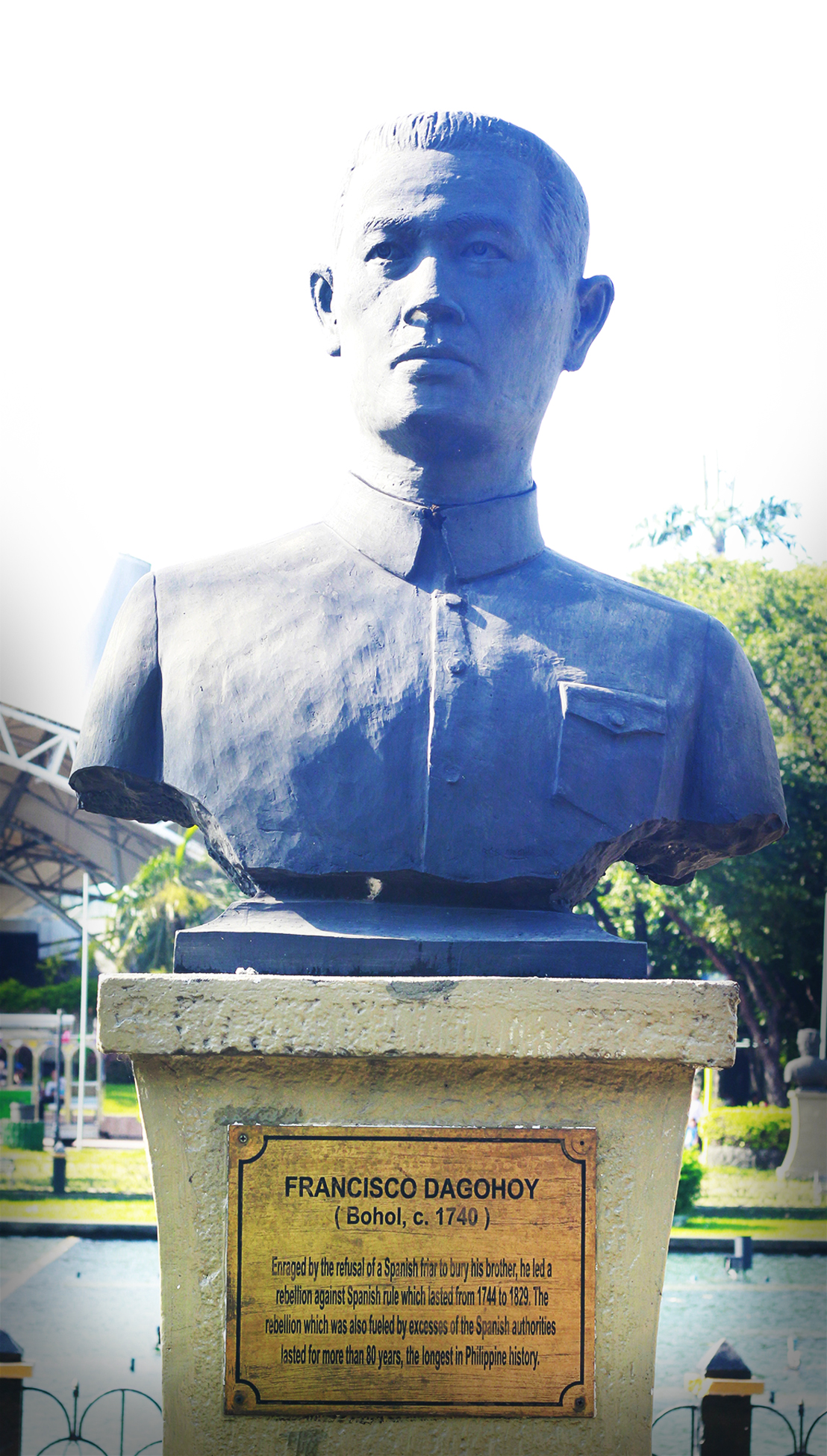
Francisco Dagohoy (born Francisco Sendrijas; c. 1724) was a Filipino revolutionary who holds the distinction of having initiated the longest revolt in Philippine history, the Dagohoy rebellion. This rebellion against the Spanish colonial government took place on the island of Bohol from 1744 to 1829, roughly 85 years.
Dagohoy, was born in 1724, and that he was a native of Barangay Cambitoon, Inabanga, Bohol. He was also cabeza de barangay, or one of the barangay captains of the town.
His name derives from an amulet ("dagon" in Cebuano) he wore, which people believed gave him the charm of a gentle wind or "hoyohoy" (or huyuhoy) and the power to jump or fly-over from hill to hill or across rivers like a gentle flowing wind. He was believed to have clear vision inside dark caves and be invisible whenever and wherever he wanted. The name Dagohoy is a concatenation of the Visayan phrase dagon sa huyuhoy or "talisman of the breeze" in English. His brother is named Sagarino Dagohoy. Sagarino was refused a proper burial by a Jesuit priest, who was then killed by Francisco.
The Dagohoy rebellion was one of two significant revolts that occurred in Bohol during the Spanish Era. The other was the Tamblot uprising in 1621 led by Tamblot, a babaylan or native priest from Bohol which was basically a religious conflict.
Unlike the Tamblot revolt, the Dagohoy rebellion was not a religious conflict. Rather, it was like most of the early revolts which were ignited by forced labor (polo y servicios), bandala, excessive tax collection and payment of tributes. On top of these injustices of the Jesuit priests, what triggered Dagohoy most was the refusal of the Jesuit priest to give a Christian burial to his brother who died in a duel. This caused Dagohoy to call upon his fellow Boholanos to raise arms against the colonial government. The rebellion outlasted several Spanish governors-general and several missions.
In 1744, Gaspar Morales, the Jesuit curate of Inabanga, ordered Francisco's brother, Sagarino, who was a constable, to capture an apostate fugitive. Sagarino pursued the fugitive, but the latter resisted and killed him. Morales refused to give Sagarino a Christian burial because he had died in a duel, a practice banned by the Church.
Infuriated, Francisco instigated the people to rise in arms. The signal of the uprising was the killing of Giuseppe Lamberti, Italian Jesuit curate of Jagna, on January 24, 1744. The rebellion rolled over the whole island like a typhoon; Morales was killed by Dagohoy afterward. Bishop of Cebu, Miguel Lino de Espeleta, who exercised ecclesiastical authority over Bohol, tried in vain to mollify the rebellious Boholanos.
Dagohoy defeated the Spanish forces sent against him. He established an independent government in the mountains of Bohol on December 20, 1745, and had 3,000 followers, which subsequently increased to 20,000. His followers remained unsubdued in their mountains stronghold and, even after Dagohoy's death, continued to defy Spanish power.
Hub AI
Francisco Dagohoy AI simulator
(@Francisco Dagohoy_simulator)
Francisco Dagohoy
Francisco Dagohoy (born Francisco Sendrijas; c. 1724) was a Filipino revolutionary who holds the distinction of having initiated the longest revolt in Philippine history, the Dagohoy rebellion. This rebellion against the Spanish colonial government took place on the island of Bohol from 1744 to 1829, roughly 85 years.
Dagohoy, was born in 1724, and that he was a native of Barangay Cambitoon, Inabanga, Bohol. He was also cabeza de barangay, or one of the barangay captains of the town.
His name derives from an amulet ("dagon" in Cebuano) he wore, which people believed gave him the charm of a gentle wind or "hoyohoy" (or huyuhoy) and the power to jump or fly-over from hill to hill or across rivers like a gentle flowing wind. He was believed to have clear vision inside dark caves and be invisible whenever and wherever he wanted. The name Dagohoy is a concatenation of the Visayan phrase dagon sa huyuhoy or "talisman of the breeze" in English. His brother is named Sagarino Dagohoy. Sagarino was refused a proper burial by a Jesuit priest, who was then killed by Francisco.
The Dagohoy rebellion was one of two significant revolts that occurred in Bohol during the Spanish Era. The other was the Tamblot uprising in 1621 led by Tamblot, a babaylan or native priest from Bohol which was basically a religious conflict.
Unlike the Tamblot revolt, the Dagohoy rebellion was not a religious conflict. Rather, it was like most of the early revolts which were ignited by forced labor (polo y servicios), bandala, excessive tax collection and payment of tributes. On top of these injustices of the Jesuit priests, what triggered Dagohoy most was the refusal of the Jesuit priest to give a Christian burial to his brother who died in a duel. This caused Dagohoy to call upon his fellow Boholanos to raise arms against the colonial government. The rebellion outlasted several Spanish governors-general and several missions.
In 1744, Gaspar Morales, the Jesuit curate of Inabanga, ordered Francisco's brother, Sagarino, who was a constable, to capture an apostate fugitive. Sagarino pursued the fugitive, but the latter resisted and killed him. Morales refused to give Sagarino a Christian burial because he had died in a duel, a practice banned by the Church.
Infuriated, Francisco instigated the people to rise in arms. The signal of the uprising was the killing of Giuseppe Lamberti, Italian Jesuit curate of Jagna, on January 24, 1744. The rebellion rolled over the whole island like a typhoon; Morales was killed by Dagohoy afterward. Bishop of Cebu, Miguel Lino de Espeleta, who exercised ecclesiastical authority over Bohol, tried in vain to mollify the rebellious Boholanos.
Dagohoy defeated the Spanish forces sent against him. He established an independent government in the mountains of Bohol on December 20, 1745, and had 3,000 followers, which subsequently increased to 20,000. His followers remained unsubdued in their mountains stronghold and, even after Dagohoy's death, continued to defy Spanish power.
Recent media