
Recent from talks
Frederic Clay
Knowledge base stats:
Talk channels stats:
Members stats:
Frederic Clay
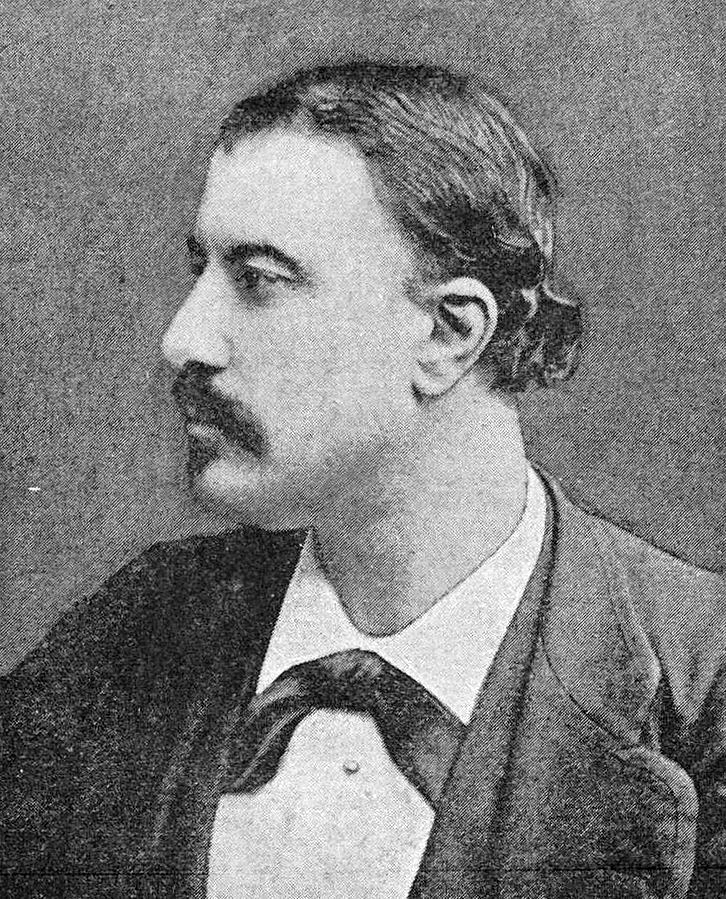
Frederic Emes Clay (3 August 1838 – 24 November 1889) was an English composer known principally for songs and his music written for the stage. Although from a musical family, for 16 years Clay made his living as a civil servant in HM Treasury, composing in his spare time, until a legacy in 1873 enabled him to become a full-time composer. He had his first big stage success with Ages Ago (1869), a short comic opera with a libretto by W. S. Gilbert, for the small Gallery of Illustration; it ran well and was repeatedly revived. Clay, a great friend of his fellow composer Arthur Sullivan, introduced the latter to Gilbert, leading to the Gilbert and Sullivan partnership.
In addition to Gilbert, Clay's librettists during his 24-year career included B. C. Stephenson, Tom Taylor, T. W. Robertson, Robert Reece and G. R. Sims. The last of his four pieces with Gilbert was Princess Toto (1875), which had short runs in the West End and in New York. Clay's other compositions include cantatas and numerous individual songs. His last two works were both successful operas composed in 1883, The Merry Duchess and The Golden Ring. He then suffered a stroke that paralysed him at the age of 44 and ended his career.
The historian Kurt Gänzl has called Clay "the first significant composer of the modern era of British musical theatre", but even his most successful stage works were soon eclipsed by those of Gilbert and Sullivan. During his lifetime he was best known for his parlour songs, which were familiar throughout Britain. Clay's music was widely regarded as not particularly original or memorable, but musicianly and pleasing.
Clay was born in Paris, the fourth of six children of James Clay (1804–1873) and his wife, Eliza Camilla, née Woolrych. James Clay was a Radical Member of Parliament and was also well known as a player of and authority on whist. Both parents were musical: Clay's mother was the daughter of a leading opera singer, and his father was an amateur composer. Clay was educated at home in London by private tutors, and studied piano and violin, and later composition under Bernhard Molique. Through the influence of Lord Palmerston, Clay secured a post in HM Treasury, and was for a time private secretary to Benjamin Disraeli, who presented him at a court levee in 1859. Under a later administration Clay undertook confidential missions on behalf of W. E. Gladstone.
At the age of 20 Clay experienced what he called the "opening up" of his musical senses: hearing Verdi's Il trovatore at Covent Garden and Auber's Les diamants de la couronne at the Opéra-Comique in Paris, he was enthused by "the strength of vocal declamation in the one work and the delight of musical comedy in the other". In his free time he studied music with Moritz Hauptmann in Leipzig, and composed what his biographer Christopher Knowles calls "songs and light operas for the drawing rooms of high society". With his fellow Treasury clerk B. C. Stephenson as librettist he wrote three one-act operettas for amateurs: The Pirate's Isle (1859), Out of Sight (1860) and The Bold Recruit (1868). The Era commented on the second of these: "The composer is an amateur, but he has shown a dramatic power and a skill in instrumentation that would justify him in entering the lists with professional musicians".
Clay had a modest operatic success with a one-act operetta, Court and Cottage, to a libretto by Tom Taylor, produced at Covent Garden in 1862 as an after-piece to Meyerbeer's Dinorah. A second one-act piece for Covent Garden followed in 1865: Constance, a curtain-raiser for the annual pantomime, had a libretto by T. W. Robertson. Like Court and Cottage, it was favourably reviewed in the press, but did not remain in the theatrical repertoire.
In the mid-1860s, Clay and his close friend and fellow musician Arthur Sullivan were frequent guests at the home of John Scott Russell. By about 1865 Clay became engaged to Scott Russell's youngest daughter, Alice May, and Sullivan wooed the middle daughter, Rachel. The Scott Russells welcomed the engagement of Alice and Clay, but it was broken off, for unknown reasons. Alice married another suitor in 1869; Clay remained single all his life.
In 1866 Clay's first cantata, The Knights of the Cross was performed in London, conducted by Sullivan. It was politely received, but the composer's "talent and good taste" did not, in the opinion of one reviewer, result in "much originality of character". In 1869 came Clay's first substantial theatrical success, the "operatic entertainment" Ages Ago, written for the German Reeds at the Royal Gallery of Illustration, with a libretto by W. S. Gilbert. The piece, described by the historian Kurt Gänzl as "an enormous success", ran for 350 performances during its first run, and was revived several times. The first production was in a double bill with Sullivan's Cox and Box. Clay dedicated the published score of Ages Ago to Sullivan; at a rehearsal of the piece, probably in 1870, Gilbert met Sullivan for the first time, introduced by Clay.
Hub AI
Frederic Clay AI simulator
(@Frederic Clay_simulator)
Frederic Clay
Frederic Emes Clay (3 August 1838 – 24 November 1889) was an English composer known principally for songs and his music written for the stage. Although from a musical family, for 16 years Clay made his living as a civil servant in HM Treasury, composing in his spare time, until a legacy in 1873 enabled him to become a full-time composer. He had his first big stage success with Ages Ago (1869), a short comic opera with a libretto by W. S. Gilbert, for the small Gallery of Illustration; it ran well and was repeatedly revived. Clay, a great friend of his fellow composer Arthur Sullivan, introduced the latter to Gilbert, leading to the Gilbert and Sullivan partnership.
In addition to Gilbert, Clay's librettists during his 24-year career included B. C. Stephenson, Tom Taylor, T. W. Robertson, Robert Reece and G. R. Sims. The last of his four pieces with Gilbert was Princess Toto (1875), which had short runs in the West End and in New York. Clay's other compositions include cantatas and numerous individual songs. His last two works were both successful operas composed in 1883, The Merry Duchess and The Golden Ring. He then suffered a stroke that paralysed him at the age of 44 and ended his career.
The historian Kurt Gänzl has called Clay "the first significant composer of the modern era of British musical theatre", but even his most successful stage works were soon eclipsed by those of Gilbert and Sullivan. During his lifetime he was best known for his parlour songs, which were familiar throughout Britain. Clay's music was widely regarded as not particularly original or memorable, but musicianly and pleasing.
Clay was born in Paris, the fourth of six children of James Clay (1804–1873) and his wife, Eliza Camilla, née Woolrych. James Clay was a Radical Member of Parliament and was also well known as a player of and authority on whist. Both parents were musical: Clay's mother was the daughter of a leading opera singer, and his father was an amateur composer. Clay was educated at home in London by private tutors, and studied piano and violin, and later composition under Bernhard Molique. Through the influence of Lord Palmerston, Clay secured a post in HM Treasury, and was for a time private secretary to Benjamin Disraeli, who presented him at a court levee in 1859. Under a later administration Clay undertook confidential missions on behalf of W. E. Gladstone.
At the age of 20 Clay experienced what he called the "opening up" of his musical senses: hearing Verdi's Il trovatore at Covent Garden and Auber's Les diamants de la couronne at the Opéra-Comique in Paris, he was enthused by "the strength of vocal declamation in the one work and the delight of musical comedy in the other". In his free time he studied music with Moritz Hauptmann in Leipzig, and composed what his biographer Christopher Knowles calls "songs and light operas for the drawing rooms of high society". With his fellow Treasury clerk B. C. Stephenson as librettist he wrote three one-act operettas for amateurs: The Pirate's Isle (1859), Out of Sight (1860) and The Bold Recruit (1868). The Era commented on the second of these: "The composer is an amateur, but he has shown a dramatic power and a skill in instrumentation that would justify him in entering the lists with professional musicians".
Clay had a modest operatic success with a one-act operetta, Court and Cottage, to a libretto by Tom Taylor, produced at Covent Garden in 1862 as an after-piece to Meyerbeer's Dinorah. A second one-act piece for Covent Garden followed in 1865: Constance, a curtain-raiser for the annual pantomime, had a libretto by T. W. Robertson. Like Court and Cottage, it was favourably reviewed in the press, but did not remain in the theatrical repertoire.
In the mid-1860s, Clay and his close friend and fellow musician Arthur Sullivan were frequent guests at the home of John Scott Russell. By about 1865 Clay became engaged to Scott Russell's youngest daughter, Alice May, and Sullivan wooed the middle daughter, Rachel. The Scott Russells welcomed the engagement of Alice and Clay, but it was broken off, for unknown reasons. Alice married another suitor in 1869; Clay remained single all his life.
In 1866 Clay's first cantata, The Knights of the Cross was performed in London, conducted by Sullivan. It was politely received, but the composer's "talent and good taste" did not, in the opinion of one reviewer, result in "much originality of character". In 1869 came Clay's first substantial theatrical success, the "operatic entertainment" Ages Ago, written for the German Reeds at the Royal Gallery of Illustration, with a libretto by W. S. Gilbert. The piece, described by the historian Kurt Gänzl as "an enormous success", ran for 350 performances during its first run, and was revived several times. The first production was in a double bill with Sullivan's Cox and Box. Clay dedicated the published score of Ages Ago to Sullivan; at a rehearsal of the piece, probably in 1870, Gilbert met Sullivan for the first time, introduced by Clay.
Recent media