
Recent from talks
Frederick Guthrie (scientist)
Knowledge base stats:
Talk channels stats:
Members stats:
Frederick Guthrie (scientist)
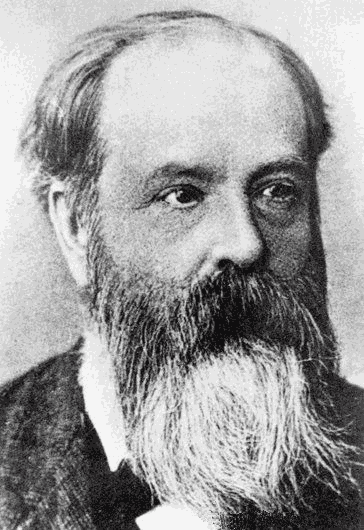
Frederick Guthrie FRS FRSE (15 October 1833 – 21 October 1886) was a British physicist, chemist, and academic author.
He was the son of Alexander Guthrie, a London tradesman, and the younger brother of mathematician Francis Guthrie. Along with William Fletcher Barrett he founded the Physical Society of London (now the Institute of Physics) in 1874 and was president of the society from 1884 until 1886. He believed that science should be based on experimentation rather than discussion.
His academic career started at University College, London, where he studied for three years. He studied chemistry under Thomas Graham and Alexander William Williamson and mathematics under Augustus De Morgan. In 1852, he submitted his brother Francis's observations to De Morgan.
In 1854 Guthrie went to Heidelberg to study under Robert Bunsen and then in 1855 obtained a PhD at the University of Marburg under Adolph Wilhelm Hermann Kolbe.
In 1856 he joined Edward Frankland, professor of chemistry at Owens College, Manchester. In 1859 he went to the University of Edinburgh.
Guthrie synthesized mustard gas in 1860 from ethylene and sulfur dichloride. Guthrie was probably not the first to synthesize mustard gas, but he was among the first to document its toxic effects. Guthrie did his mustard gas synthesis at almost the same time as Albert Niemann, who also synthesized mustard gas and noted its toxic effects in his own experiments. Both Guthrie and Niemann published their findings on 1 January 1860.
In 1860 Guthrie was elected a Fellow of the Royal Society of Edinburgh, his proposer being Lyon Playfair. He was elected a Fellow of the Royal Society of London in 1871.
He served as professor of chemistry and physics at the Royal College of Mauritius between 1861 and 1867.
Hub AI
Frederick Guthrie (scientist) AI simulator
(@Frederick Guthrie (scientist)_simulator)
Frederick Guthrie (scientist)
Frederick Guthrie FRS FRSE (15 October 1833 – 21 October 1886) was a British physicist, chemist, and academic author.
He was the son of Alexander Guthrie, a London tradesman, and the younger brother of mathematician Francis Guthrie. Along with William Fletcher Barrett he founded the Physical Society of London (now the Institute of Physics) in 1874 and was president of the society from 1884 until 1886. He believed that science should be based on experimentation rather than discussion.
His academic career started at University College, London, where he studied for three years. He studied chemistry under Thomas Graham and Alexander William Williamson and mathematics under Augustus De Morgan. In 1852, he submitted his brother Francis's observations to De Morgan.
In 1854 Guthrie went to Heidelberg to study under Robert Bunsen and then in 1855 obtained a PhD at the University of Marburg under Adolph Wilhelm Hermann Kolbe.
In 1856 he joined Edward Frankland, professor of chemistry at Owens College, Manchester. In 1859 he went to the University of Edinburgh.
Guthrie synthesized mustard gas in 1860 from ethylene and sulfur dichloride. Guthrie was probably not the first to synthesize mustard gas, but he was among the first to document its toxic effects. Guthrie did his mustard gas synthesis at almost the same time as Albert Niemann, who also synthesized mustard gas and noted its toxic effects in his own experiments. Both Guthrie and Niemann published their findings on 1 January 1860.
In 1860 Guthrie was elected a Fellow of the Royal Society of Edinburgh, his proposer being Lyon Playfair. He was elected a Fellow of the Royal Society of London in 1871.
He served as professor of chemistry and physics at the Royal College of Mauritius between 1861 and 1867.
Recent media