
Recent from talks
Free State of Galveston
Knowledge base stats:
Talk channels stats:
Members stats:
Free State of Galveston
The Free State of Galveston (sometimes referred to as the Republic of Galveston Island) was a satirical name given to the coastal city of Galveston in the U.S. state of Texas during the early-to-mid-20th century. Today, the term is sometimes used to describe the culture and history of that era.
During the Roaring Twenties, Galveston Island emerged as a popular resort town, attracting celebrities from around the country. Gambling, illegal liquor, and other vice-oriented businesses were a major part of tourism. The "Free State" moniker embodied a belief held by many locals that Galveston was beyond what they perceived were repressive mores and laws of Texas and the United States. Two major figures of the era were the businessmen, power brokers and crime bosses Sam and Rosario Maceo, who ran the chief casinos and clubs on the island and were heavily involved in local politics and the tourism industry. The success of vice on the island, despite being illegal, was enabled by lax attitudes in society and in government, both on the island and in the county. In one of the more famous examples of this, a state committee, investigating gambling at the fabled Balinese Room, was told by the local sheriff that he had not raided the establishment because it was a "private club" and because he was not a "member".
Much of this period represented a high point in Galveston's economy. It is sometimes referred to as the "open era" or the "wide-open era" because the business owners and the community made little effort to hide the illegal activities. The tourist industry spawned by the illegal businesses helped to offset Galveston's decline as a commercial and shipping center following a devastating hurricane in 1900, but crackdowns against gambling and prostitution in Texas during the mid-20th century made these businesses increasingly difficult to sustain. By the end of the 1950s, this era of Galveston's history had ended. As a result, its economy became stagnant for many years afterward.
The island of Galveston, which lies on the Gulf of Mexico, held one of the first major settlements in the eastern part of what is now Texas. During the mid- to late 19th century, it became the largest city in the state. Galveston was also an important national commercial center and one of the busiest seaports in the United States, as the Port of Galveston was able to capitalize on Texas' rapid rise in the cotton trade. Its downtown was known as the "Wall Street of the Southwest", and by 1900, the city had one of the highest per capita incomes in the U.S. Though nearby Houston was emerging as an important city in its own right, Galveston was the state's cultural and economic center at the time. Vices such as prostitution and gambling, which were common throughout Texas during the 19th century, continued to be tolerated to various degrees on the island in the early 20th century.
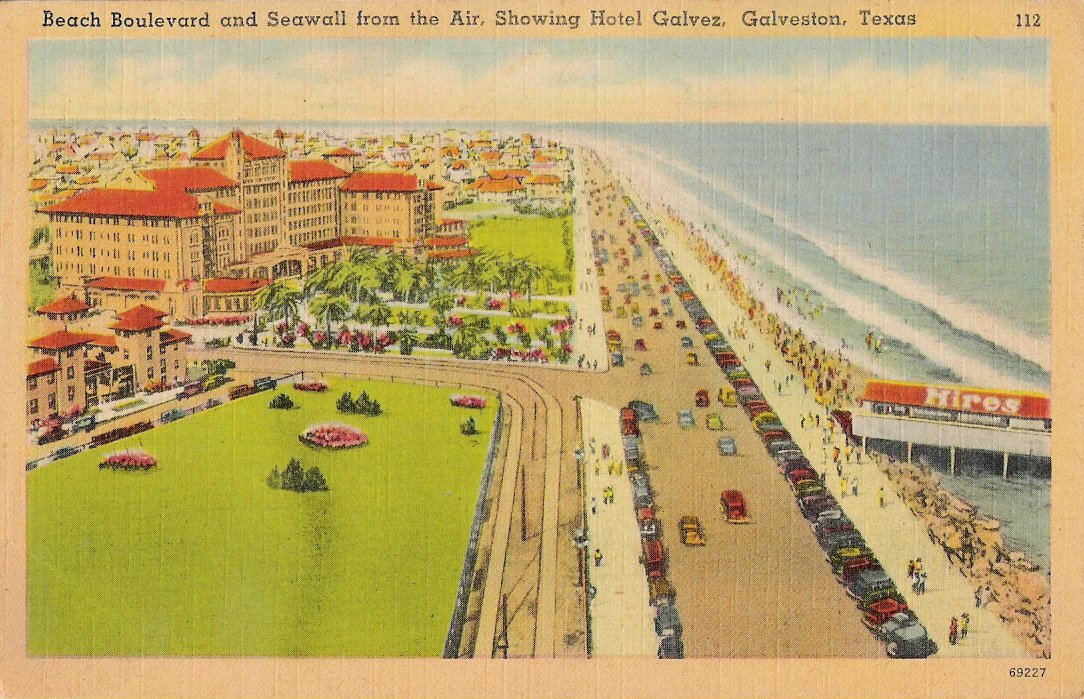
The 1900 Galveston hurricane was an unparalleled disaster. Estimates of the death toll range from 6,000 to 12,000 people, in addition to many more on the Gulf Coast and along the shores of the bay. Immediately after the hurricane, Galveston worked to revive itself as a port and an entertainment center, including the construction of tourist destinations such as the Hotel Galvez, which opened in 1911. In the same year, the Galveston–Houston Electric Railway opened and became recognized as the fastest interurban rail system in the country. Galveston's port was also rebuilt quickly, and by 1912, had become the second-leading exporter in the nation, behind New York. Nevertheless, after the 1900 storm and another in 1915, many avoided investing in the island.
Galveston had been a major port of entry for Texas and the West during the 19th century, and a new wave of immigration came through the port in the early 20th century. For a time, it was known as "Little Ellis Island". In contrast to the heavily German immigration of the 19th century, the new arrivals in Galveston were Greeks, Italians, Russian Jews (part of the Galveston Movement), and others who came to settle in many parts of the country, including some who remained on the island itself. Of particular note are the Sicilian immigrants who formed a significant community in Galveston County, as well as the nearby city of Brazoria.
The opening of the Houston Ship Channel in 1915 further challenged the port city. Houston and Texas City, as well as other ports, rapidly overtook Galveston as leading ports and commercial centers; by 1930, map makers were showing Houston as the major city on the Texas coast, instead of Galveston. Cotton shipping, which Galveston had thoroughly dominated on a worldwide level, began migrating to other ports in Texas and on the West Coast.
As Galveston's traditional economy declined, Texas' oil boom began in 1901, with oil wells and refineries constructed throughout the state. Galveston's direct role in this boom was minimal, as investors avoided building pipelines and refineries on the island itself (though for a time oil was shipped through the island). Nevertheless, wealth brought on by the boom transformed nearby Houston, Texas City, Goose Creek (modern Baytown), and other communities. Houston in particular became home to a large community of wealthy businessmen and investors. Galveston became even more tourism-focused as the city sought to attract these nearby nouveau riche. Though, the city had some success in re-establishing tourism and shipping, its economy struggled to rise to the level it had been before the 1900 storm.
Hub AI
Free State of Galveston AI simulator
(@Free State of Galveston_simulator)
Free State of Galveston
The Free State of Galveston (sometimes referred to as the Republic of Galveston Island) was a satirical name given to the coastal city of Galveston in the U.S. state of Texas during the early-to-mid-20th century. Today, the term is sometimes used to describe the culture and history of that era.
During the Roaring Twenties, Galveston Island emerged as a popular resort town, attracting celebrities from around the country. Gambling, illegal liquor, and other vice-oriented businesses were a major part of tourism. The "Free State" moniker embodied a belief held by many locals that Galveston was beyond what they perceived were repressive mores and laws of Texas and the United States. Two major figures of the era were the businessmen, power brokers and crime bosses Sam and Rosario Maceo, who ran the chief casinos and clubs on the island and were heavily involved in local politics and the tourism industry. The success of vice on the island, despite being illegal, was enabled by lax attitudes in society and in government, both on the island and in the county. In one of the more famous examples of this, a state committee, investigating gambling at the fabled Balinese Room, was told by the local sheriff that he had not raided the establishment because it was a "private club" and because he was not a "member".
Much of this period represented a high point in Galveston's economy. It is sometimes referred to as the "open era" or the "wide-open era" because the business owners and the community made little effort to hide the illegal activities. The tourist industry spawned by the illegal businesses helped to offset Galveston's decline as a commercial and shipping center following a devastating hurricane in 1900, but crackdowns against gambling and prostitution in Texas during the mid-20th century made these businesses increasingly difficult to sustain. By the end of the 1950s, this era of Galveston's history had ended. As a result, its economy became stagnant for many years afterward.
The island of Galveston, which lies on the Gulf of Mexico, held one of the first major settlements in the eastern part of what is now Texas. During the mid- to late 19th century, it became the largest city in the state. Galveston was also an important national commercial center and one of the busiest seaports in the United States, as the Port of Galveston was able to capitalize on Texas' rapid rise in the cotton trade. Its downtown was known as the "Wall Street of the Southwest", and by 1900, the city had one of the highest per capita incomes in the U.S. Though nearby Houston was emerging as an important city in its own right, Galveston was the state's cultural and economic center at the time. Vices such as prostitution and gambling, which were common throughout Texas during the 19th century, continued to be tolerated to various degrees on the island in the early 20th century.
The 1900 Galveston hurricane was an unparalleled disaster. Estimates of the death toll range from 6,000 to 12,000 people, in addition to many more on the Gulf Coast and along the shores of the bay. Immediately after the hurricane, Galveston worked to revive itself as a port and an entertainment center, including the construction of tourist destinations such as the Hotel Galvez, which opened in 1911. In the same year, the Galveston–Houston Electric Railway opened and became recognized as the fastest interurban rail system in the country. Galveston's port was also rebuilt quickly, and by 1912, had become the second-leading exporter in the nation, behind New York. Nevertheless, after the 1900 storm and another in 1915, many avoided investing in the island.
Galveston had been a major port of entry for Texas and the West during the 19th century, and a new wave of immigration came through the port in the early 20th century. For a time, it was known as "Little Ellis Island". In contrast to the heavily German immigration of the 19th century, the new arrivals in Galveston were Greeks, Italians, Russian Jews (part of the Galveston Movement), and others who came to settle in many parts of the country, including some who remained on the island itself. Of particular note are the Sicilian immigrants who formed a significant community in Galveston County, as well as the nearby city of Brazoria.
The opening of the Houston Ship Channel in 1915 further challenged the port city. Houston and Texas City, as well as other ports, rapidly overtook Galveston as leading ports and commercial centers; by 1930, map makers were showing Houston as the major city on the Texas coast, instead of Galveston. Cotton shipping, which Galveston had thoroughly dominated on a worldwide level, began migrating to other ports in Texas and on the West Coast.
As Galveston's traditional economy declined, Texas' oil boom began in 1901, with oil wells and refineries constructed throughout the state. Galveston's direct role in this boom was minimal, as investors avoided building pipelines and refineries on the island itself (though for a time oil was shipped through the island). Nevertheless, wealth brought on by the boom transformed nearby Houston, Texas City, Goose Creek (modern Baytown), and other communities. Houston in particular became home to a large community of wealthy businessmen and investors. Galveston became even more tourism-focused as the city sought to attract these nearby nouveau riche. Though, the city had some success in re-establishing tourism and shipping, its economy struggled to rise to the level it had been before the 1900 storm.
Recent media