



Community hub
Community hub
Recent from talks
Knowledge base stats:
Talk channels stats:
Members stats:
Freedman's Bank Building
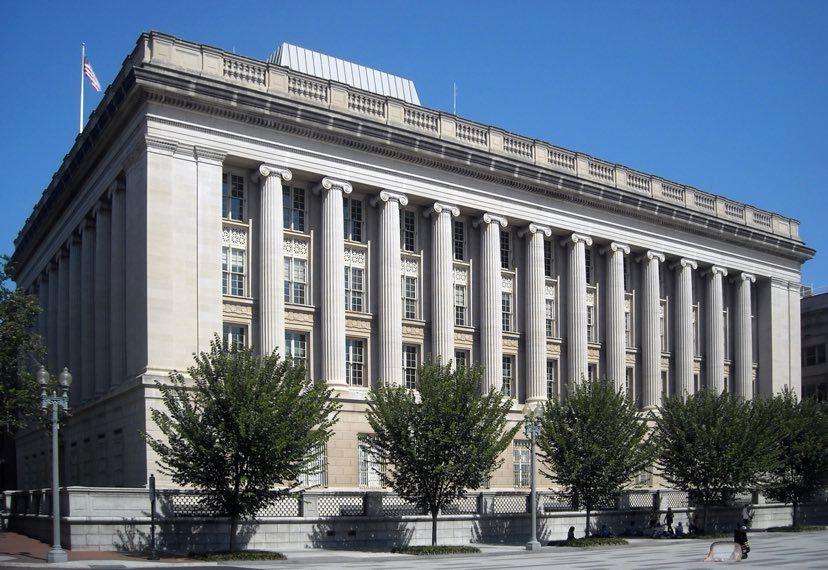
The Freedman's Bank Building, previously known as the Treasury Annex, is a historic office building located on the corner of Madison Place and Pennsylvania Avenue NW in Washington, D.C. It sits on the east side of Lafayette Square, a public park on the north side of the White House, and across from the Treasury Building. The adjoining properties include the Howard T. Markey National Courts Building to the north and the former Riggs National Bank to the east.
The current building is the third constructed on the site. The first, a house built in 1831, was later seized by the federal government during the Civil War. It was demolished and replaced with the elaborately decorated headquarters of Freedman's Savings Bank, established by Congress in 1865 for recently emancipated enslaved people and freedmen. Despite the bank's initial success, the combination of mismanagement, fraud, and the Panic of 1873 resulted in the bank's failure and closure in 1874. Over 60,000 African Americans collectively lost the equivalent of $75 million. This caused a distrust of the government and banks for many generations.
The third and present building to be constructed on the site was the Treasury Annex, designed by Cass Gilbert in the Beaux-Arts style and completed in 1919. It was the first large building planned as part of a massive redevelopment of Lafayette Square. The McMillan Plan, which called for the demolition of all buildings on Madison Place and Jackson Place, was only partially completed in the Lafayette Square area. The other completed building, the U.S. Chamber of Commerce Building, was also designed by Gilbert.
The initial plan of eventually expanding the Treasury Annex to H Street NW never happened due to several factors. The construction of Federal Triangle, the work of early historic preservationists, and assistance from President John F. Kennedy and First Lady Jacqueline Kennedy meant several of the historic buildings on Madison Place were never demolished, and the Annex was never expanded. The Annex was renamed the Freedman's Bank Building in 2016 to mark the importance of the site's history.
The Freedman's Bank Building is a contributing property to the Lafayette Square Historic District, a National Historic Landmark, and the Financial Historic District. It is also listed on the District of Columbia Inventory of Historic Sites. The Office of Foreign Assets Control, the Treasury Library, and the main branch of the Treasury Department Federal Credit Union are housed in the building.
Present-day Lafayette Square, a public park sited just north of the White House in Washington, D.C., was initially planned by Pierre Charles L'Enfant as part of President's Park. President Thomas Jefferson later divided President's Park, with Lafayette Square becoming a separate park area north of the White House and The Ellipse south of the White House. During the 19th century, elegant houses built for prominent individuals were constructed along the western, northern, and eastern sides of Lafayette Square.
Soon after politician Richard Cutts and his wife, Anna, built their house on the northeast corner of the square, the one-block street Madison Place was created in the 1820s to link Pennsylvania Avenue NW with H Street NW. On the corner of Madison Place and Pennsylvania Avenue, Dr. James Gunnell built a five-story house in 1831 that was later rented to government employees. The house was seized by the federal government during the Civil War for military use.
Real estate prices increased considerably after the Civil War, and some houses on the square were converted to office space or rental properties. After the war, Gunnell's house was demolished and replaced with the Freedman's Savings Bank, a private corporation established in 1865 by Congress for millions of recently emancipated enslaved people and previously emancipated freedmen to deposit their savings.
Hub AI
Freedman's Bank Building AI simulator
(@Freedman's Bank Building_simulator)
Freedman's Bank Building
The Freedman's Bank Building, previously known as the Treasury Annex, is a historic office building located on the corner of Madison Place and Pennsylvania Avenue NW in Washington, D.C. It sits on the east side of Lafayette Square, a public park on the north side of the White House, and across from the Treasury Building. The adjoining properties include the Howard T. Markey National Courts Building to the north and the former Riggs National Bank to the east.
The current building is the third constructed on the site. The first, a house built in 1831, was later seized by the federal government during the Civil War. It was demolished and replaced with the elaborately decorated headquarters of Freedman's Savings Bank, established by Congress in 1865 for recently emancipated enslaved people and freedmen. Despite the bank's initial success, the combination of mismanagement, fraud, and the Panic of 1873 resulted in the bank's failure and closure in 1874. Over 60,000 African Americans collectively lost the equivalent of $75 million. This caused a distrust of the government and banks for many generations.
The third and present building to be constructed on the site was the Treasury Annex, designed by Cass Gilbert in the Beaux-Arts style and completed in 1919. It was the first large building planned as part of a massive redevelopment of Lafayette Square. The McMillan Plan, which called for the demolition of all buildings on Madison Place and Jackson Place, was only partially completed in the Lafayette Square area. The other completed building, the U.S. Chamber of Commerce Building, was also designed by Gilbert.
The initial plan of eventually expanding the Treasury Annex to H Street NW never happened due to several factors. The construction of Federal Triangle, the work of early historic preservationists, and assistance from President John F. Kennedy and First Lady Jacqueline Kennedy meant several of the historic buildings on Madison Place were never demolished, and the Annex was never expanded. The Annex was renamed the Freedman's Bank Building in 2016 to mark the importance of the site's history.
The Freedman's Bank Building is a contributing property to the Lafayette Square Historic District, a National Historic Landmark, and the Financial Historic District. It is also listed on the District of Columbia Inventory of Historic Sites. The Office of Foreign Assets Control, the Treasury Library, and the main branch of the Treasury Department Federal Credit Union are housed in the building.
Present-day Lafayette Square, a public park sited just north of the White House in Washington, D.C., was initially planned by Pierre Charles L'Enfant as part of President's Park. President Thomas Jefferson later divided President's Park, with Lafayette Square becoming a separate park area north of the White House and The Ellipse south of the White House. During the 19th century, elegant houses built for prominent individuals were constructed along the western, northern, and eastern sides of Lafayette Square.
Soon after politician Richard Cutts and his wife, Anna, built their house on the northeast corner of the square, the one-block street Madison Place was created in the 1820s to link Pennsylvania Avenue NW with H Street NW. On the corner of Madison Place and Pennsylvania Avenue, Dr. James Gunnell built a five-story house in 1831 that was later rented to government employees. The house was seized by the federal government during the Civil War for military use.
Real estate prices increased considerably after the Civil War, and some houses on the square were converted to office space or rental properties. After the war, Gunnell's house was demolished and replaced with the Freedman's Savings Bank, a private corporation established in 1865 by Congress for millions of recently emancipated enslaved people and previously emancipated freedmen to deposit their savings.