Hubbry Logo
GM2900 platformGM2900 platformMain
Open search
GM2900 platform
Community hub
GM2900 platform
logo
8 pages, 0 posts
0 subscribers
Be the first to start a discussion here.
GM2900 platform
GM2900 platform
from Wikipedia
GM2900 platform
Overview
ManufacturerGeneral Motors
Production1988–2010
Body and chassis
ClassMid-size (C/D) platform
Chronology
PredecessorGM J platform (Europe)
SuccessorGM Epsilon platform

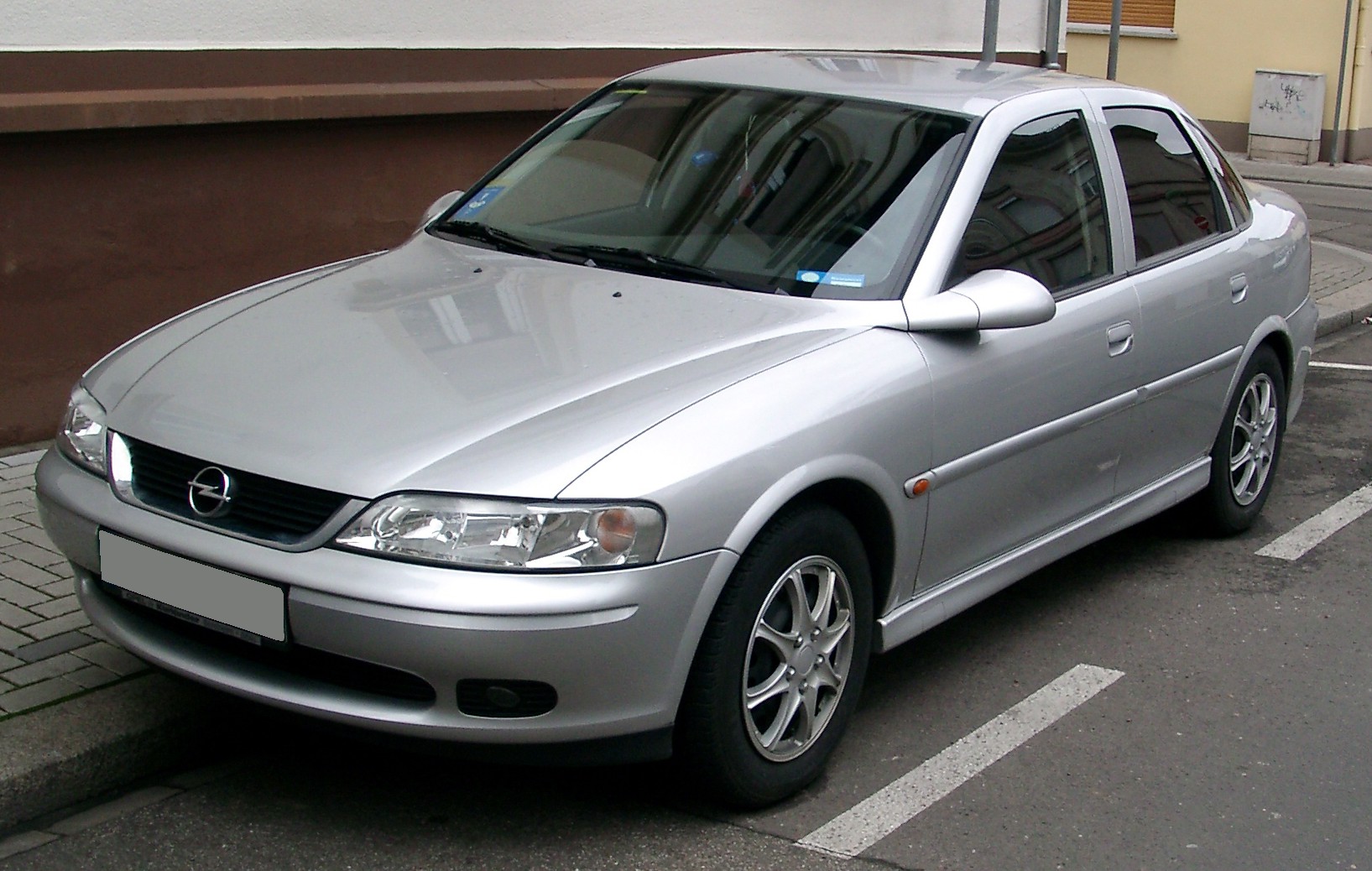
General Motors introduced the mid-size transverse engine front-wheel drive GM2900 platform in 1988 with the introductions of the Opel Vectra A and the Vauxhall Cavalier Mk.3 for the 1989 model year. The platform was intended to replace both division's J-cars, the Opel Ascona C and the Vauxhall Cavalier Mk.2, although the platform eventually branched out to Holden, Chevrolet's Latin American branch, and even Saab and Saturn. The GM2900 platform was replaced by the Epsilon platform in 2003, although Saab continued to use the lengthened GM2902 platform for its 9-5 model until 2010, when it was switched to the Epsilon 2 platform. The tooling for the first generation Saab 9-5 was sold to BAIC and with help from Saab engineers they will develop new models for production under the Senova brand.

Models

[edit]

References

[edit]
Revisions and contributorsEdit on WikipediaRead on Wikipedia
from Grokipedia
The GM2900 platform is a mid-size front-wheel-drive automotive architecture developed by , featuring a layout, and first introduced in 1988 with the launch of the A as a replacement for the earlier J platform. This platform underpinned a diverse array of compact executive and family cars produced primarily in and , supporting sedan, , , , and body styles with wheelbases typically around 2,600 mm. Notable vehicles built on the GM2900 include the Mk3 (1988–1995), (1989–1997), first-generation B (1995–2002), first-generation (1998–2003, derived from the NG introduced in 1994), Saturn L-Series (1999–2005), and Vectra (1997–2006). A stretched variant, sometimes referred to as GM2902 with a longer 2,703 mm , supported the larger sedan and wagon (1997–2009), adapting the core structure for premium positioning while retaining shared components like suspension and mounting points. Following ' partial acquisition of Saab in 1989 and full ownership by 2000, the platform became central to Saab's product lineup, though its aging design by the mid-1990s drew criticism for limiting the Swedish brand's engineering independence and innovation. Production on the GM2900 waned in the early 2000s as GM transitioned to the more advanced platform for subsequent generations of these models, marking the end of an era for this versatile but increasingly dated chassis.

Development and history

Origins

The development of the GM2900 platform began in the mid-1980s, specifically in 1984, as a successor to the aging GM J platform that underpinned compact cars such as the and Mk2. These earlier models had become outdated in styling and build quality amid intensifying competition from rivals like the , prompting to initiate Project J88 under Opel's leadership to create a more . The platform was designed for mid-size front-wheel-drive vehicles with transverse engines, targeting the European market. Key design goals emphasized enhanced space efficiency, superior handling, and greater modularity to allow for varied body styles while improving overall ride refinement, dynamic performance, and aerodynamic qualities comparable to leading competitors. The project involved close collaboration among GM's European divisions, with primary engineering and design work centered at Opel's facility in Rüsselsheim, , and significant input from engineers in the UK to ensure adaptability for local markets. This joint effort built on the mechanical foundations of prior platforms but shifted toward greater traction and quality improvements suited to front-wheel-drive configurations. The GM2900 platform was internally designated with this code to reflect its mid-size classification and was introduced in 1988, coinciding with the debut of the A at the Frankfurt Motor Show. It later served as the basis for the Mk3, launched shortly after in the UK. The platform was eventually succeeded by the GM Epsilon architecture starting in 2002 for most applications.

Production timeline

Production of the GM2900 platform commenced in 1988 at Opel's Rüsselsheim plant in , initially targeting European markets with the introduction of the A sedan and hatchback models. This marked the platform's debut as a mid-size front-wheel-drive architecture, succeeding the earlier J platform for Opel's lineup. In late 1988, the platform expanded within through the launch of the Mk3 in the , available as a sedan and starting in October for the 1989 . Key milestones followed in 1993 with Saab's adaptation of the platform for the New Generation 900 (NG900), which entered production shortly after the classic ended assembly on March 26. The platform received a significant update with the introduction of the second-generation (Vectra B) in 1995, which featured redesigned styling and improved features to prolong its market relevance across . Global rollout continued in 1997 with the introduction of the Vectra in , imported initially before local assembly began to meet regional . North American expansion occurred in 1999 through the Saturn L-Series, with initial vehicles built in May at GM's plant for the 2000 model year. The platform began phasing out in 2002 for most derivatives, including the Opel Vectra B and first-generation , as GM transitioned to the architecture. However, production persisted for the , a lengthened variant assembled at the plant in until its conclusion on February 2, 2010. This event served as a poignant farewell for the last GM2900-based vehicle, coinciding with Saab's escalating financial difficulties and eventual proceedings.

Design and specifications

Chassis and suspension

The GM2900 platform utilizes a unibody construction designed for mid-size vehicles, incorporating a front-wheel drive layout with transverse engine mounting to optimize space and weight distribution. This architecture supports efficient packaging for various body styles while providing a rigid structure for everyday driving dynamics. The front suspension is independent, featuring MacPherson struts paired with lower control arms and an anti-roll bar, all mounted on a U-shaped subframe that also supports the engine and transmission for improved stability during braking and cornering. Rear suspension configurations emphasize cost efficiency and versatility: base models employ a semi-independent twist-beam axle with trailing arms, coil springs, and telescopic shock absorbers, while higher trims upgrade to an independent setup with diagonal control arms, coil springs, and an anti-roll bar for enhanced handling. The transverse engine mounting in this chassis is compatible with both inline-four and V6 powerplants. Key platform dimensions vary by application, with a wheelbase of 2,600 mm (102.4 in) for the Vectra A and , and 2,637 mm (103.8 in) for the Vectra B; typical track widths for the Vectra B are 1,481 mm (58.3 in) front and 1,471 mm (57.9 in) rear to balance stability and maneuverability. Safety engineering integrates in the front and rear structures to absorb impact energy. The platform's modularity facilitates adaptations for and body styles, such as the Calibra and Vectra Caravan, requiring minimal retooling of the core components.

Powertrain options

The GM2900 platform was designed for transverse front-engine mounting, accommodating a range of inline-four engines from GM's Family II series, with displacements from 1.6 liters to 2.0 liters and power outputs spanning 75 to 150 horsepower. These engines, such as the 1.6-liter variant producing 75 hp and the 2.0-liter 16-valve unit delivering 150 hp, provided a balance of efficiency and performance for mid-size vehicles like the . Later iterations introduced optional 2.0-liter inline-four engines, rated at 136 to 150 hp, enhancing refinement and power delivery in models including the . V6 powertrain options were available for higher-performance applications, notably the 2.5-liter 54° V6 engine producing 170 hp, which was fitted to the Opel Calibra and certain Saab models for improved torque and smoothness. Diesel variants emphasized European fuel efficiency, starting with the 1.7-liter Isuzu-sourced turbodiesel rated at 82 hp in early models like the Vectra A, and evolving to the 2.0-liter X20DTL inline-four diesel offering 82 hp, with a 100 hp 2.0-liter Y20DTH DTI also available in configurations such as the Vectra B. Transmissions on the platform centered around a standard five-speed manual gearbox for most variants, providing direct and responsive shifting. Optional automatics included a four-speed unit in early models from 1990, such as the AF20, which progressed to a five-speed adaptive automatic by 1999 for smoother operation and better fuel economy in vehicles like the Saab 9-3. Saab-specific turbocharged engines, including 2.0-liter and 2.3-liter units generating 185 to 230 hp, were integrated using custom engine mounts while retaining the platform's core , often paired with a five-speed manual or the innovative automated manual transmission. All GM2900 variants employed exclusively, with no production all-wheel-drive configurations on the standard platform, ensuring compatibility with the transverse powertrains across , , and Saab applications.

Applications

Opel and Vauxhall models

The A, introduced in 1988 and produced until 1995, served as the initial showcase for the GM2900 platform in , available in sedan and body styles with a base 1.8-liter inline-four engine. This model emphasized improved safety features and compared to its predecessor, the , positioning it as a competitive mid-size . The successor, B from 1995 to 2002, represented a facelifted evolution of the platform with enhanced aerodynamics achieving a of approximately 0.28 to 0.30 and an optional 2.5-liter for higher performance variants. It built on the Vectra A's success by offering refined suspension tuning and expanded engine options, including diesel variants, to appeal to diverse European markets. The , a sporty produced from 1989 to 1997, utilized the GM2900 platform to emphasize superior handling through a lowered and sport-tuned suspension, powered by 16-valve inline-four engines and a turbocharged option delivering up to 204 horsepower. Its aerodynamic design and performance focus made it a standout in the segment, often praised for balancing everyday usability with dynamic driving. In the UK, the Mk3 (1988–1995) functioned as the right-hand-drive equivalent to the Vectra A, offered initially in saloon and forms to target fleet and family buyers. Although no dedicated wagon was added for this generation—unlike earlier models—the lineup included practical variants suited to British roads and driving preferences. The Calibra (1989–1997) mirrored the coupe with adaptations for right-hand drive, maintaining the same engine lineup and handling characteristics while complying with regulations. Combined production of the Vectra A and B reached approximately 2.5 million units in , underscoring the platform's commercial viability. These models dominated fleet sales throughout the 1990s, often outselling rivals like the and capturing significant market share in the mid-size segment.

Saab models

The Saab NG900, introduced in 1994 and produced until 1998, replaced the classic first-generation Saab 900 and marked the Swedish automaker's adoption of ' GM2900 platform, originally developed for the . This new-generation 900 (NG900) utilized turbocharged 2.0-liter inline-four engines delivering between 150 and 185 horsepower, emphasizing Saab's performance-oriented engineering while integrating the platform's front-wheel-drive architecture. Building directly on the NG900, the first-generation debuted in 1998 and continued through 2003, available in , sedan, and body styles, all retaining the GM2900 platform with enhancements for improved handling and refinement. Saab incorporated its proprietary Trionic engine management system to optimize the turbocharged engines, which ranged from 185 to 205 horsepower in the 2.0-liter and 2.3-liter variants, ensuring responsive performance and efficiency tailored to the model's sporty character. The first-generation , launched in 1997 and produced until 2010, employed a lengthened variant known as the GM2902 platform with a 2,703 mm to provide greater interior space for its sedan and configurations. This model featured prominent 2.3-liter turbocharged engines producing 220 to 260 horsepower, alongside an optional V6 for non-turbo applications, contributing to its status as Saab's longest-running vehicle on the platform and achieving the highest production volume among Saab's GM2900-based offerings. Saab's adaptations to the GM2900 platform across these models included unique reinforcements to the , such as double-layered in critical areas, enhancing crash safety beyond standard expectations and earning strong ratings in period evaluations. These modifications reflected Saab's heritage, incorporating aircraft-inspired aerodynamic elements to improve stability and without compromising the platform's core structure. By 2010, with the conclusion of 9-5 Aero production, Saab had manufactured approximately 1.1 million vehicles on the GM2900 derivatives, underscoring the platform's enduring role in the brand's lineup.

Other GM brands

The GM2900 platform found applications in several GM brands beyond its primary European lineup, particularly in North American, Australian, and emerging international markets, where adaptations emphasized affordability, local tuning, and fuel flexibility. In the United States, the Saturn L-Series utilized the platform from 1999 to 2005, with the L200 serving as a mid-size sedan and the L300 as a corresponding wagon variant targeted at family buyers. The base was a 2.2-liter inline-four engine delivering 137 horsepower, paired with a five-speed manual or four-speed , while higher trims offered a 3.0-liter V6 producing 182 horsepower for improved performance. Saturn's marketing highlighted its "no-haggle" pricing model, which aimed to simplify purchases and appeal to value-conscious consumers in a competitive mid-size segment. In , Holden marketed the Vectra from 1997 to 2006 as a rebadged version of the B, available in sedan, , and body styles to suit local preferences for versatile family vehicles. The lineup included a base 2.2-liter inline-four, but Holden introduced a locally tuned 3.2-liter option in higher trims like the CDX and CDXi, generating 207 horsepower and 221 lb-ft of torque for enhanced and performance suited to Australian conditions. This V6 adaptation drew from GM's global family but incorporated Holden-specific calibrations for better responsiveness. GM extended the platform to Chevrolet in various international markets, notably and , where production of the Vectra spanned 1993 to 2005, focusing on the sedan body style for cost-effective mid-size transport. In , the Chevrolet Vectra emphasized a 2.0-liter inline-four , adapted for flex-fuel capability to run on or blends, supporting Brazil's infrastructure and reducing operational costs in emerging economies. These versions prioritized affordability through simplified features and local assembly, making the platform accessible for budget-oriented buyers in developing regions. Following GM's divestitures, the platform's tooling and were sold, enabling continued use in by BAIC under the Senova brand. The Senova D50, introduced in 2014, and the related D60 sedan drew from the GM2900 architecture—specifically derived from the and 9-5 underpinnings acquired by BAIC—allowing production of modernized mid-size vehicles with updated styling and 1.5-liter engines for the domestic market. This post-2005 adaptation extended the platform's lifecycle in , focusing on economical sedans for urban commuters.

Legacy and successors

Derivatives

The GM2902 variant represented a key extension of the GM2900 platform, featuring a stretched measuring 2,703 mm to accommodate greater rear passenger space in the while preserving the fundamental chassis structure and suspension geometry of the base design. This modification enhanced interior comfort without requiring a complete redesign, allowing Saab to tailor the platform for executive sedan requirements. Coupe and convertible adaptations highlighted the platform's versatility for sportier configurations. The employed the standard GM2900 chassis but with tailored rear overhang adjustments to achieve a more dynamic, low-slung profile suited to its performance-oriented role. Similarly, the convertible incorporated structural reinforcements to the floorpan, bolstering torsional rigidity and mitigating body flex inherent to open-top designs. Wagon derivatives integrated seamless lift-over extensions to the rear structure, enabling practical cargo capacity while retaining much of the sedan's engineering. Models such as the Caravelle and Combi utilized these designs, achieving high parts commonality with their sedan siblings to streamline production and reduce costs across GM's lineup. Special editions further demonstrated the platform's adaptability for performance variants. The Calibra Turbo 4x4 stood out as a limited-production all-wheel-drive iteration, though rarer prototypes explored advanced turbocharging without entering full series output. In the North American market, Saturn's L-Series included high-performance Red Line trims that leveraged the stretched GM2902 foundation for enhanced sportiness. Overall, the GM2900 platform's modular architecture supported over 10 distinct body styles across GM brands, spanning 3-door hatches, coupes, sedans, convertibles, and estates, underscoring its role in efficient global vehicle development. Most derivatives were eventually supplanted by the platform for subsequent generations.

Replacement platforms

The primary successor to the GM2900 platform was the GM architecture, which debuted in 2002 with the C and offered enhanced structural rigidity along with optional all-wheel-drive systems in select variants. This transition marked a shift toward more adaptable midsize front-wheel-drive designs, with the providing improved handling and safety integration compared to the aging GM2900. For Saab models, the switch to the Epsilon II variant was planned but delayed, with the first-generation 9-5 remaining on the lengthened GM2902 derivative of the GM2900 until production ended in early 2010. The second-generation 9-5, built on Epsilon II, entered limited production later that year under new ownership following GM's divestment of Saab, but operations ceased in 2011 due to the company's bankruptcy. The replacement was driven by the GM2900's outdated design, which by the early 2000s lacked standard (ESP) and fuel efficiency features increasingly mandated in modern vehicles, while the delivered greater stiffness for superior crash performance and ride quality. After Saab's , the GM2900 tooling was acquired by China's in 2009, enabling the development of the Senova sub-brand's midsize sedans, including the D70, which drew directly from the platform's architecture and influenced models produced until 2017. The GM2900's emphasis on modularity and shared components across brands laid foundational principles for the Epsilon's flexible engineering approach, facilitating broader global applications in GM's lineup.

References

Add your contribution
Related Hubs
User Avatar
No comments yet.