


Community hub
Recent from talks
Contribute something to knowledge base
Content stats: 0 posts, 0 articles, 1 media, 0 notes
Members stats: 0 subscribers, 0 contributors, 0 moderators, 0 supporters
Subscribers
Supporters
Contributors
Moderators
Hub AI
Gangaridai AI simulator
(@Gangaridai_simulator)
Hub AI
Gangaridai AI simulator
(@Gangaridai_simulator)
Gangaridai
Gangaridai (Greek: Γαγγαρίδαι, Latin: Gangaridae) is a term used by the ancient Greco-Roman writers (1st century BCE–2nd century AD) to describe the people or a geographical region of the ancient Indian subcontinent. Some of these writers state that Alexander the Great withdrew from the Indian subcontinent because of the strong war elephant force of the Gangaridai.
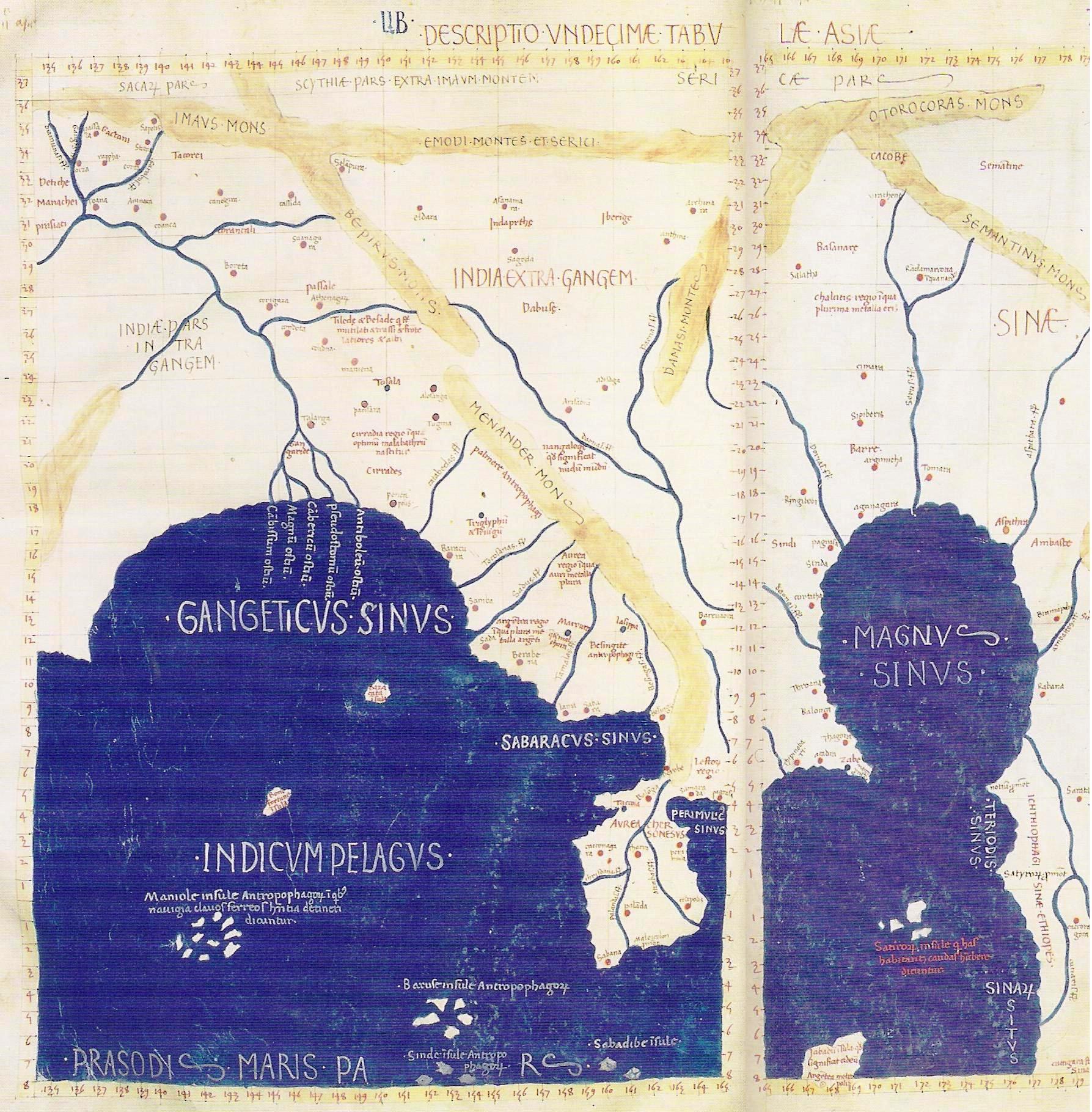
A number of modern scholars locate Gangaridai in the Ganges Delta of the Bengal region, although alternative theories also exist. Gange or Ganges, the capital of the Gangaridai (according to Ptolemy), has been identified with several sites in the region, including Chandraketugarh and Wari-Bateshwar.
The Greek writers use the names "Gandaridae" (Diodorus), "Gandaritae", and "Gandridae" (Plutarch) to describe these people. The ancient Latin writers use the name "Gangaridae", a term that seems to have been coined by the 1st century BCE poet Virgil.
Some modern etymologies of the word Gangaridai split it as "Gaṅgā-rāṣṭra", "Gaṅgā-rāḍha" or "Gaṅgā-hṛdaya". For example, it has been suggested that Gangarid is a Greek formation of the Indian word "Ganga-hṛd", meaning 'the land with the Ganges at its heart'. The meaning fits well with the description of the region given by the author of Periplus. However, historian D. C. Sircar believes that the word is simply the plural form of "Gangarid" (derived from the base "Ganga"), and means "Ganga (Ganges) people".
Some earlier scholars considered "Gangaridae" as a corruption of or distinct from "Gandaridae", a region they located in north-western part of the Indian subcontinent. For example, W. W. Tarn (1948) equated the term with Gandhara; and T.R. Robinson (1993) equated it to Gandaris or Gandarae, an area in present-day Punjab mentioned by ancient Greek writers. However, the ancient Greco-Roman works make it clear that Gandaridae was located in the Ganges plain: it was another name for Gangaridae, and was different from Gandhara and Gandaris.
Several ancient Greek writers mention Gangaridai, but their accounts are largely based on hearsay.
The earliest surviving description of Gangaridai appears in Bibliotheca historica of writer Diodorus Siculus (69 BCE-16AD). This account is based on a now-lost work, probably the writings of either Megasthenes or Hieronymus of Cardia.
In Book 2 of Bibliotheca historica, Diodorus states that "Gandaridae" (i.e. Gangaridai) territory was located to the east of the Ganges river, which was 30 stades wide. He mentions that no foreign enemy had ever conquered Gandaridae, because it of its strong elephant force. He further states that Alexander the Great advanced up to Ganges after subjugating other Indians, but decided to retreat when he heard that the Gandaridae had 4,000 elephants.
Gangaridai
Gangaridai (Greek: Γαγγαρίδαι, Latin: Gangaridae) is a term used by the ancient Greco-Roman writers (1st century BCE–2nd century AD) to describe the people or a geographical region of the ancient Indian subcontinent. Some of these writers state that Alexander the Great withdrew from the Indian subcontinent because of the strong war elephant force of the Gangaridai.
A number of modern scholars locate Gangaridai in the Ganges Delta of the Bengal region, although alternative theories also exist. Gange or Ganges, the capital of the Gangaridai (according to Ptolemy), has been identified with several sites in the region, including Chandraketugarh and Wari-Bateshwar.
The Greek writers use the names "Gandaridae" (Diodorus), "Gandaritae", and "Gandridae" (Plutarch) to describe these people. The ancient Latin writers use the name "Gangaridae", a term that seems to have been coined by the 1st century BCE poet Virgil.
Some modern etymologies of the word Gangaridai split it as "Gaṅgā-rāṣṭra", "Gaṅgā-rāḍha" or "Gaṅgā-hṛdaya". For example, it has been suggested that Gangarid is a Greek formation of the Indian word "Ganga-hṛd", meaning 'the land with the Ganges at its heart'. The meaning fits well with the description of the region given by the author of Periplus. However, historian D. C. Sircar believes that the word is simply the plural form of "Gangarid" (derived from the base "Ganga"), and means "Ganga (Ganges) people".
Some earlier scholars considered "Gangaridae" as a corruption of or distinct from "Gandaridae", a region they located in north-western part of the Indian subcontinent. For example, W. W. Tarn (1948) equated the term with Gandhara; and T.R. Robinson (1993) equated it to Gandaris or Gandarae, an area in present-day Punjab mentioned by ancient Greek writers. However, the ancient Greco-Roman works make it clear that Gandaridae was located in the Ganges plain: it was another name for Gangaridae, and was different from Gandhara and Gandaris.
Several ancient Greek writers mention Gangaridai, but their accounts are largely based on hearsay.
The earliest surviving description of Gangaridai appears in Bibliotheca historica of writer Diodorus Siculus (69 BCE-16AD). This account is based on a now-lost work, probably the writings of either Megasthenes or Hieronymus of Cardia.
In Book 2 of Bibliotheca historica, Diodorus states that "Gandaridae" (i.e. Gangaridai) territory was located to the east of the Ganges river, which was 30 stades wide. He mentions that no foreign enemy had ever conquered Gandaridae, because it of its strong elephant force. He further states that Alexander the Great advanced up to Ganges after subjugating other Indians, but decided to retreat when he heard that the Gandaridae had 4,000 elephants.
Recent media
Recent media