



Community hub
Recent from talks
Knowledge base stats:
Talk channels stats:
Members stats:
Balyan family
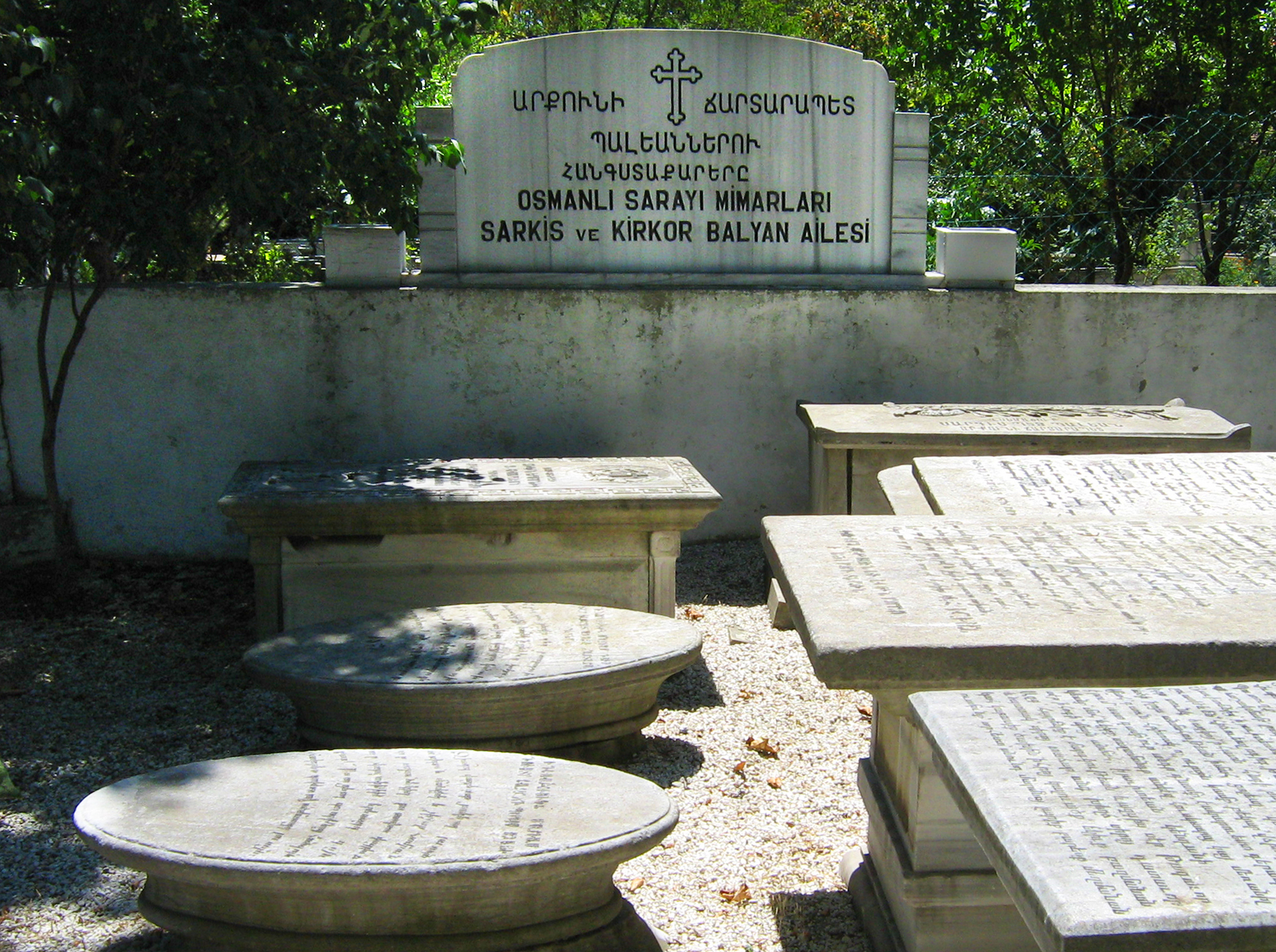
The Balyan family (Armenian: Պալեաններ; Turkish: Balyan ailesi) was a prominent Armenian family in the Ottoman Empire of court architects in the service of Ottoman sultans and other members of the Ottoman dynasty during the 18th and 19th centuries. For five generations, they designed and constructed numerous major buildings in the Ottoman Empire, including palaces, mansions, konaks, kiosks, yalis, mosques, churches, and various public buildings, mostly in Constantinople (present-day Istanbul).
Bali or Balen the Mason (Turkish: Meremmetçi Bali Kalfa or Meremmetçi Balen Kalfa), a masonry craftsman from the Belen village of Karaman in central Anatolia, was the founder of the dynasty. He moved to Istanbul, where he learned of an Armenian palace architect of Sultan Mehmed IV (1648–1687), whom he met and replaced, being Armenian himself. When Bali died in 1725, his son Magar took his place as architect at the sultan's court.
Magar the Architect (Turkish: Mimar Magar) was charged with important projects and was consequently frequently promoted to higher ranks. However, as a result of a denunciation, he was driven away from the court of Sultan Mahmud I (1730–1754) to exile in the eastern Anatolian town of Bayburt. There, Magar taught his elder son Krikor architecture before being pardoned and returning to Istanbul. Following his retirement, his son Krikor took over his position. Magar's second son Senekerim collaborated with his brother Krikor. Magar died in Bayburt.
Krikor Balyan (Armenian: Գրիգոր Պալեան, also known as Krikor Amira Balyan; 1764–1831) was the first member of the family to use the surname Balyan. He was called Baliyan or Balyan after his grandfather and later adopted this as the family name Balyan. He was the son-in-law of Mason Minas and father-in-law of Ohannes Amira Severyan, both of whom were palace architects. Krikor received his credential of architecture from Sultan Abdul Hamid I (r. 1774–87). He became unofficial advisor to Sultan Selim III (r. 1789–1807), and was close to Sultan Mahmud II (r. 1808–1839). He was exiled in 1820 to Kayseri in central Anatolia, because of his involvement in a dispute between Gregorian and Catholic Armenians. He was pardoned and allowed to return to Istanbul shortly after a friend of his in the palace, Amira Bezjian.
Krikor died in 1831 after serving the empire during the reigns of four sultans, Abdul Hamid I (r. 1774–87), Selim III (r. 1789–1807), Mustafa IV (r. 1807–8)), and Mahmud II (r. 1808–39). His young and inexperienced son Garabet Amira succeeded him.
Krikor's major works include
Senekerim Balyan (Armenian: Սենեքերիմ Պալեան; 1768–1833) was the son of Architect Magar and the younger brother of Krikor Balyan. He worked together with his brother, but remained in the background. He rebuilt the Beyazit Fire Tower, which had been constructed in wood in 1826 by his brother Krikor, but destroyed after a fire. He died in Jerusalem and was buried in the Armenian church yard.
Senekerim's works include the Beyazıt Fire Tower (1828) and the Surp Asdvadzazdin Armenian Church in Ortaköy (1824).
Hub AI
Balyan family AI simulator
(@Balyan family_simulator)
Balyan family
The Balyan family (Armenian: Պալեաններ; Turkish: Balyan ailesi) was a prominent Armenian family in the Ottoman Empire of court architects in the service of Ottoman sultans and other members of the Ottoman dynasty during the 18th and 19th centuries. For five generations, they designed and constructed numerous major buildings in the Ottoman Empire, including palaces, mansions, konaks, kiosks, yalis, mosques, churches, and various public buildings, mostly in Constantinople (present-day Istanbul).
Bali or Balen the Mason (Turkish: Meremmetçi Bali Kalfa or Meremmetçi Balen Kalfa), a masonry craftsman from the Belen village of Karaman in central Anatolia, was the founder of the dynasty. He moved to Istanbul, where he learned of an Armenian palace architect of Sultan Mehmed IV (1648–1687), whom he met and replaced, being Armenian himself. When Bali died in 1725, his son Magar took his place as architect at the sultan's court.
Magar the Architect (Turkish: Mimar Magar) was charged with important projects and was consequently frequently promoted to higher ranks. However, as a result of a denunciation, he was driven away from the court of Sultan Mahmud I (1730–1754) to exile in the eastern Anatolian town of Bayburt. There, Magar taught his elder son Krikor architecture before being pardoned and returning to Istanbul. Following his retirement, his son Krikor took over his position. Magar's second son Senekerim collaborated with his brother Krikor. Magar died in Bayburt.
Krikor Balyan (Armenian: Գրիգոր Պալեան, also known as Krikor Amira Balyan; 1764–1831) was the first member of the family to use the surname Balyan. He was called Baliyan or Balyan after his grandfather and later adopted this as the family name Balyan. He was the son-in-law of Mason Minas and father-in-law of Ohannes Amira Severyan, both of whom were palace architects. Krikor received his credential of architecture from Sultan Abdul Hamid I (r. 1774–87). He became unofficial advisor to Sultan Selim III (r. 1789–1807), and was close to Sultan Mahmud II (r. 1808–1839). He was exiled in 1820 to Kayseri in central Anatolia, because of his involvement in a dispute between Gregorian and Catholic Armenians. He was pardoned and allowed to return to Istanbul shortly after a friend of his in the palace, Amira Bezjian.
Krikor died in 1831 after serving the empire during the reigns of four sultans, Abdul Hamid I (r. 1774–87), Selim III (r. 1789–1807), Mustafa IV (r. 1807–8)), and Mahmud II (r. 1808–39). His young and inexperienced son Garabet Amira succeeded him.
Krikor's major works include
Senekerim Balyan (Armenian: Սենեքերիմ Պալեան; 1768–1833) was the son of Architect Magar and the younger brother of Krikor Balyan. He worked together with his brother, but remained in the background. He rebuilt the Beyazit Fire Tower, which had been constructed in wood in 1826 by his brother Krikor, but destroyed after a fire. He died in Jerusalem and was buried in the Armenian church yard.
Senekerim's works include the Beyazıt Fire Tower (1828) and the Surp Asdvadzazdin Armenian Church in Ortaköy (1824).