



Community hub
Recent from talks
Contribute something to knowledge base
Content stats: 0 posts, 0 articles, 1 media, 0 notes
Members stats: 0 subscribers, 0 contributors, 0 moderators, 0 supporters
Subscribers
Supporters
Contributors
Moderators
Hub AI
Gaston Maspero AI simulator
(@Gaston Maspero_simulator)
Hub AI
Gaston Maspero AI simulator
(@Gaston Maspero_simulator)
Gaston Maspero
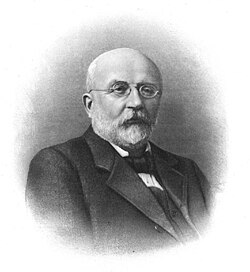
Sir Gaston Camille Charles Maspero KCMG (23 June 1846 – 30 June 1916) was a French Egyptologist and director general of excavations and antiquities for the Egyptian government. Widely regarded as the foremost Egyptologist of his generation, he began his career teaching Egyptian language in Paris becoming a professor at the Collège de France. In 1880, he led an archaeological mission to Egypt, which later became the Institut Français d'Archéologie Orientale.
In 1881, Maspero's investigation led to the discovery of a hidden tomb near Dayr al-Baḥrī, containing 40 mummies, including pharaohs Seti I, Amenhotep I, Thutmose III, and Ramses II. His study of these findings was published in Les Momies royales de Deir-el-Bahari (1889). After a brief period in Paris, he returned to Egypt to organize a vast collection of antiquities at a museum in Cairo's Būlāq district, which later became the foundation of the Egyptian Museum established in 1902. During his second tenure as director general (1899–1914), Maspero regulated excavations, combated illicit trade, preserved monuments, and oversaw the archaeological survey of Nubia.
Maspero was highly regarded for his versatility and contributions to Egyptology. He authored the comprehensive Histoire ancienne des peuples de l’Orient classique (1895–1897) and was the first editor and translator of the Pyramid Texts, known as the Book of the Dead. His work extended to art, mythology, and religion, influencing many through his role as editor of the Recueil de travaux and Director of the Egyptian Service des Antiquités. Maspero's son, Henri Maspero, became a notable sinologist and scholar of East Asia.
Gaston Maspero was born in Paris in 1846 to Adela Evelina Maspero, who had been born in Milan in 1822, daughter of a Milanese printer, and of an unnamed father, but identified by family tradition with Camillo Marsuzi de Aguirre, Italian revolutionary on the run. Maspero was educated at the Lycée Louis-le-Grand and at a Jesuit boarding school, followed by university studies at the École Normale Supérieure.
While at school he showed a special taste for history and became interested in Egypt following a visit to the Egyptian galleries of the Louvre at the age of fourteen. At university he excelled in Sanskrit as well as hieroglyphics. It was while Maspero was in final year at the École normale in 1867 that friends mentioned his skills at reading hieroglyphics to Egyptologist Auguste Mariette, who was in Paris as commissioner for the Egyptian section of the Exposition universelle. Mariette gave him two newly discovered hieroglyphic texts of considerable difficulty to study, and the young self-taught scholar produced translations of them in less than a fortnight, a great feat in those days when Egyptology was still almost in its infancy. The publication of these texts in the same year established his academic reputation.
In 1869 Maspero became a teacher (répétiteur) of Egyptian language and archeology at the École pratique des hautes études.
Maspero fought in the defence of France in the Franco-Prussian war of 1870-71 and was granted French citizenship in recognition of his service. In January 1873 he presented the first doctoral thesis on Egyptology in France. In 1874 he was appointed to the chair of Champollion at the Collège de France, succeeding Emmanuel de Rougé.
By the end of the 1870s he was regarded as the leading French Egyptologist of his generation. In November 1880 Maspero went to Egypt as head of an archeological mission sent there by the French government, which ultimately developed into the well-equipped Institut français d'archéologie orientale. This occurred a few months before the death of Mariette, whom Maspero then succeeded as director-general of excavations and of the antiquities of Egypt. Maspero later claimed he only took the position to prevent it falling out of French hands by being given to Emile Brugsch, who was German. After a brief vacation back in France to organise his affairs Maspero returned to Egypt in September 1881 to take up his position.
Gaston Maspero
Sir Gaston Camille Charles Maspero KCMG (23 June 1846 – 30 June 1916) was a French Egyptologist and director general of excavations and antiquities for the Egyptian government. Widely regarded as the foremost Egyptologist of his generation, he began his career teaching Egyptian language in Paris becoming a professor at the Collège de France. In 1880, he led an archaeological mission to Egypt, which later became the Institut Français d'Archéologie Orientale.
In 1881, Maspero's investigation led to the discovery of a hidden tomb near Dayr al-Baḥrī, containing 40 mummies, including pharaohs Seti I, Amenhotep I, Thutmose III, and Ramses II. His study of these findings was published in Les Momies royales de Deir-el-Bahari (1889). After a brief period in Paris, he returned to Egypt to organize a vast collection of antiquities at a museum in Cairo's Būlāq district, which later became the foundation of the Egyptian Museum established in 1902. During his second tenure as director general (1899–1914), Maspero regulated excavations, combated illicit trade, preserved monuments, and oversaw the archaeological survey of Nubia.
Maspero was highly regarded for his versatility and contributions to Egyptology. He authored the comprehensive Histoire ancienne des peuples de l’Orient classique (1895–1897) and was the first editor and translator of the Pyramid Texts, known as the Book of the Dead. His work extended to art, mythology, and religion, influencing many through his role as editor of the Recueil de travaux and Director of the Egyptian Service des Antiquités. Maspero's son, Henri Maspero, became a notable sinologist and scholar of East Asia.
Gaston Maspero was born in Paris in 1846 to Adela Evelina Maspero, who had been born in Milan in 1822, daughter of a Milanese printer, and of an unnamed father, but identified by family tradition with Camillo Marsuzi de Aguirre, Italian revolutionary on the run. Maspero was educated at the Lycée Louis-le-Grand and at a Jesuit boarding school, followed by university studies at the École Normale Supérieure.
While at school he showed a special taste for history and became interested in Egypt following a visit to the Egyptian galleries of the Louvre at the age of fourteen. At university he excelled in Sanskrit as well as hieroglyphics. It was while Maspero was in final year at the École normale in 1867 that friends mentioned his skills at reading hieroglyphics to Egyptologist Auguste Mariette, who was in Paris as commissioner for the Egyptian section of the Exposition universelle. Mariette gave him two newly discovered hieroglyphic texts of considerable difficulty to study, and the young self-taught scholar produced translations of them in less than a fortnight, a great feat in those days when Egyptology was still almost in its infancy. The publication of these texts in the same year established his academic reputation.
In 1869 Maspero became a teacher (répétiteur) of Egyptian language and archeology at the École pratique des hautes études.
Maspero fought in the defence of France in the Franco-Prussian war of 1870-71 and was granted French citizenship in recognition of his service. In January 1873 he presented the first doctoral thesis on Egyptology in France. In 1874 he was appointed to the chair of Champollion at the Collège de France, succeeding Emmanuel de Rougé.
By the end of the 1870s he was regarded as the leading French Egyptologist of his generation. In November 1880 Maspero went to Egypt as head of an archeological mission sent there by the French government, which ultimately developed into the well-equipped Institut français d'archéologie orientale. This occurred a few months before the death of Mariette, whom Maspero then succeeded as director-general of excavations and of the antiquities of Egypt. Maspero later claimed he only took the position to prevent it falling out of French hands by being given to Emile Brugsch, who was German. After a brief vacation back in France to organise his affairs Maspero returned to Egypt in September 1881 to take up his position.
Recent media
Recent media