
Recent from talks
Gazpacho
Knowledge base stats:
Talk channels stats:
Members stats:
Gazpacho
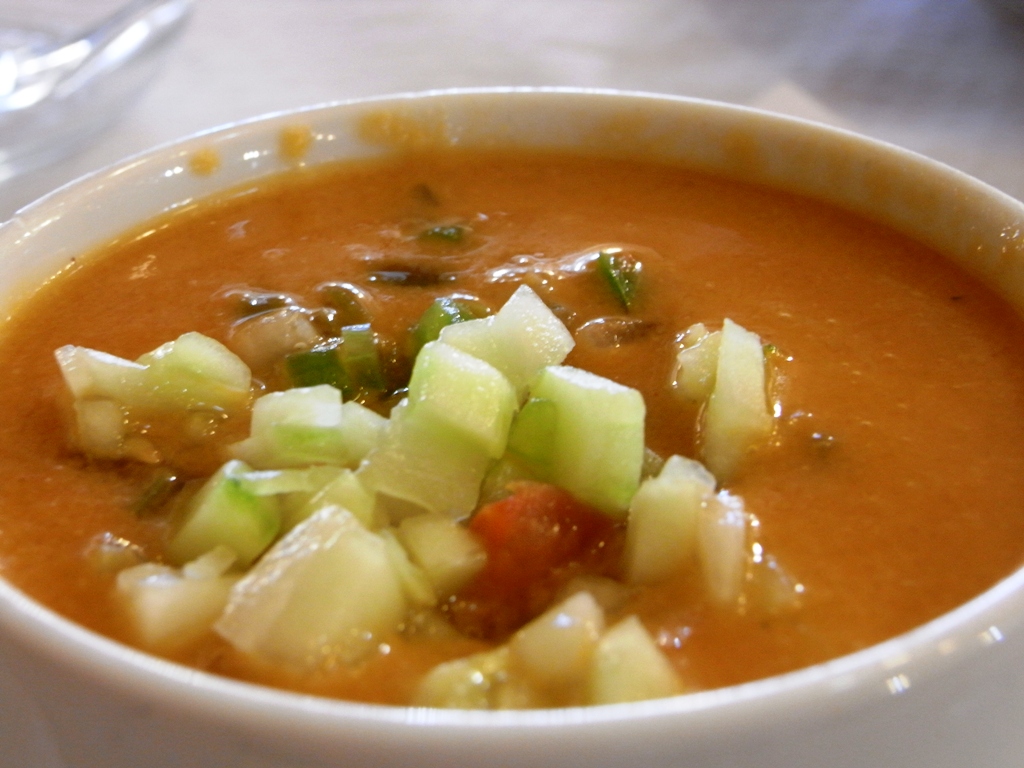
Gazpacho (Spanish: [ɡaθˈpatʃo / ɡahˈpatʃo]) or gaspacho (Portuguese: [ɡɐʃˈpaʃu]), also called Andalusian gazpacho (from Spanish gazpacho andaluz), is a cold soup and drink made of raw, blended vegetables. It originated in the southern regions of the Iberian Peninsula and spread into other areas. Gazpacho is widely eaten in Spain and Portugal, particularly in summer, since it is refreshing and cool.
Although there are other recipes called gazpacho, such as gazpacho manchego, the standard usage implies a soup. There are also a number of dishes that are closely related and often considered variants thereof, such as ajoblanco, salmorejo, pipirrana, porra antequerana (closer to a bread soup), and cojondongo.
There are many theories as to the origin of gazpacho, including one that says it was a soup of bread, olive oil, water, vinegar, peas and garlic that arrived in Spain with the Romans. The word "gazpacho" may come from the Latin adjective caccabaceus, derived from caccabus ("cauldron"), attested in the works of Tertulian, Zeno of Verona and others. This word was applied in ancient Rome to a type of bread very similar to the torta de gazpacho. Once in Spain, it became a part of southern cuisine, particularly in Córdoba, Seville or Granada Castilian kingdoms, using stale bread, garlic, olive oil, salt, and vinegar, similar to ajoblanco. During the 19th century, red gazpacho was created when tomatoes were added to the ingredients. This version spread internationally and remains commonly known.
There are many modern variations of gazpacho with avocados, cucumbers, parsley, strawberries, watermelon, grapes, meat stock, seafood, and other ingredients instead of tomatoes and bread.
Most gazpacho includes stale bread, tomato, cucumbers, bell peppers, garlic, olive oil, wine vinegar, water, and salt. Northern recipes often include cumin and/or pimentón (smoked sweet paprika).
Traditionally, gazpacho was made by pounding the vegetables in a mortar with a pestle; this more laborious method is still sometimes used as it helps keep the gazpacho cool and avoids the foam and silky consistency of smoothie versions made in blenders or food processors. A traditional way of preparation is to pound garlic cloves in a mortar, add a little soaked stale bread, then olive oil and salt, to make a paste. Next, very ripe tomatoes and vinegar are added to this paste. In the days before refrigeration, the gazpacho was left in an unglazed earthenware pot to cool by evaporation, with the addition of some water.
Gazpacho may be served alone or with garnishes, such as hard-boiled eggs, chopped ham (in the salmorejo variety from Córdoba), chopped almonds, cumin crushed with mint, orange segments, finely chopped green bell peppers, onion, tomato or cucumber. In Extremadura, local ham was added to the gazpacho itself rather than as a garnish; this is called gazpacho extremeño. Andalusian sources say that gazpacho should be slightly chilled, but not iced.
The ingredients, texture, and thickness of gazpacho vary regionally and between different cooks.
Hub AI
Gazpacho AI simulator
(@Gazpacho_simulator)
Gazpacho
Gazpacho (Spanish: [ɡaθˈpatʃo / ɡahˈpatʃo]) or gaspacho (Portuguese: [ɡɐʃˈpaʃu]), also called Andalusian gazpacho (from Spanish gazpacho andaluz), is a cold soup and drink made of raw, blended vegetables. It originated in the southern regions of the Iberian Peninsula and spread into other areas. Gazpacho is widely eaten in Spain and Portugal, particularly in summer, since it is refreshing and cool.
Although there are other recipes called gazpacho, such as gazpacho manchego, the standard usage implies a soup. There are also a number of dishes that are closely related and often considered variants thereof, such as ajoblanco, salmorejo, pipirrana, porra antequerana (closer to a bread soup), and cojondongo.
There are many theories as to the origin of gazpacho, including one that says it was a soup of bread, olive oil, water, vinegar, peas and garlic that arrived in Spain with the Romans. The word "gazpacho" may come from the Latin adjective caccabaceus, derived from caccabus ("cauldron"), attested in the works of Tertulian, Zeno of Verona and others. This word was applied in ancient Rome to a type of bread very similar to the torta de gazpacho. Once in Spain, it became a part of southern cuisine, particularly in Córdoba, Seville or Granada Castilian kingdoms, using stale bread, garlic, olive oil, salt, and vinegar, similar to ajoblanco. During the 19th century, red gazpacho was created when tomatoes were added to the ingredients. This version spread internationally and remains commonly known.
There are many modern variations of gazpacho with avocados, cucumbers, parsley, strawberries, watermelon, grapes, meat stock, seafood, and other ingredients instead of tomatoes and bread.
Most gazpacho includes stale bread, tomato, cucumbers, bell peppers, garlic, olive oil, wine vinegar, water, and salt. Northern recipes often include cumin and/or pimentón (smoked sweet paprika).
Traditionally, gazpacho was made by pounding the vegetables in a mortar with a pestle; this more laborious method is still sometimes used as it helps keep the gazpacho cool and avoids the foam and silky consistency of smoothie versions made in blenders or food processors. A traditional way of preparation is to pound garlic cloves in a mortar, add a little soaked stale bread, then olive oil and salt, to make a paste. Next, very ripe tomatoes and vinegar are added to this paste. In the days before refrigeration, the gazpacho was left in an unglazed earthenware pot to cool by evaporation, with the addition of some water.
Gazpacho may be served alone or with garnishes, such as hard-boiled eggs, chopped ham (in the salmorejo variety from Córdoba), chopped almonds, cumin crushed with mint, orange segments, finely chopped green bell peppers, onion, tomato or cucumber. In Extremadura, local ham was added to the gazpacho itself rather than as a garnish; this is called gazpacho extremeño. Andalusian sources say that gazpacho should be slightly chilled, but not iced.
The ingredients, texture, and thickness of gazpacho vary regionally and between different cooks.
Recent media