



Community hub
Recent from talks
Knowledge base stats:
Talk channels stats:
Members stats:
General Electric YF120
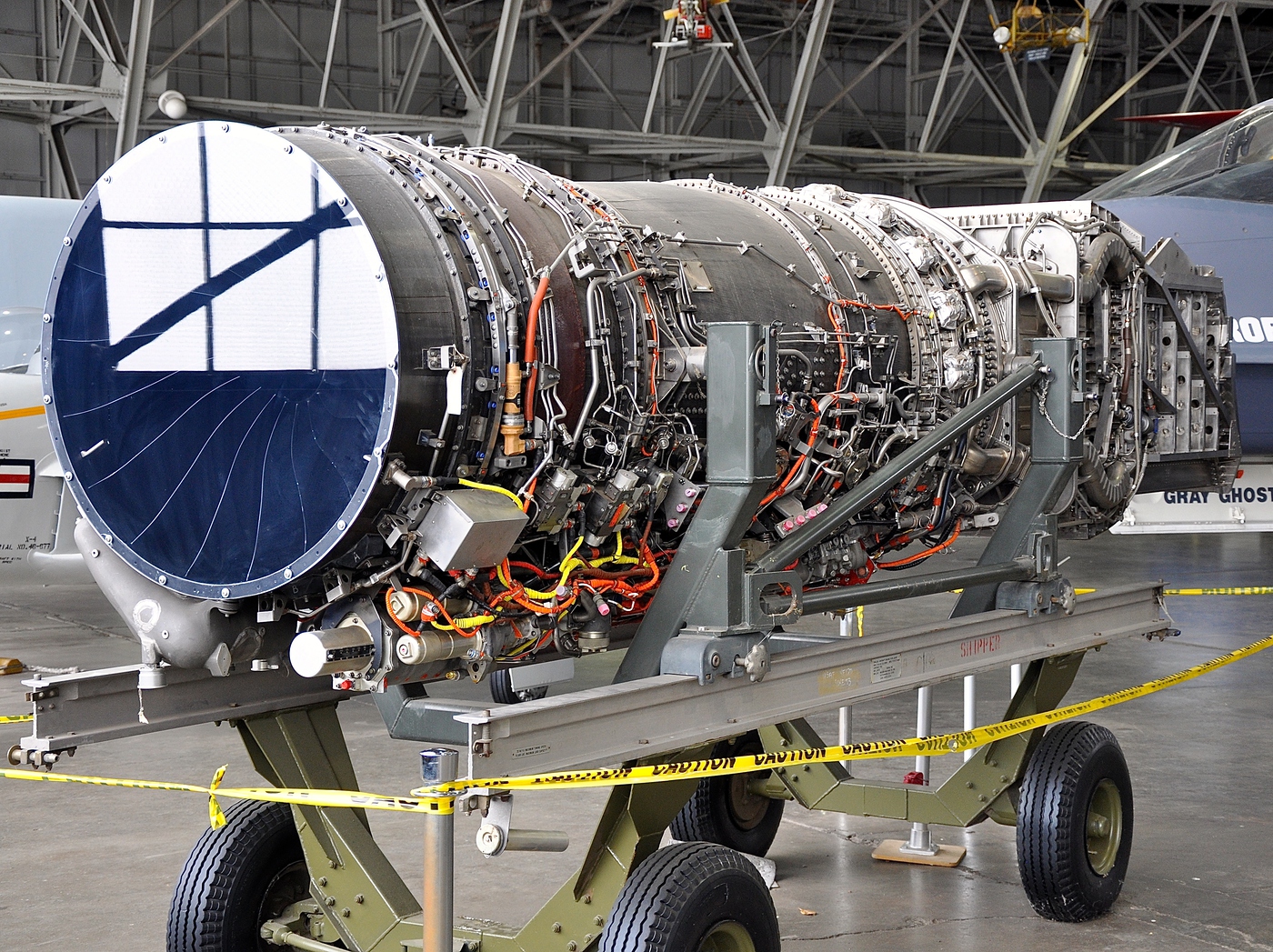
The General Electric YF120, internally designated as GE37, was a variable cycle afterburning turbofan engine designed by General Electric Aircraft Engines in the late 1980s and early 1990s for the United States Air Force's Advanced Tactical Fighter (ATF) program. It was designed to produce maximum thrust in the 35,000 lbf (156 kN) class. Prototype engines were installed in the two competing technology demonstrator aircraft, the Lockheed YF-22 and Northrop YF-23.
Pratt & Whitney's competing F119 was selected over the F120 to power the ATF, the competition for which the Lockheed team won, and became F-22 Raptor.
General Electric (GE) began developing the GE37, which would become basis of the XF120 and YF120, for the Joint Advanced Fighter Engine (JAFE) program in the early 1980s aimed at supplying the powerplant for the Air Force's Advanced Tactical Fighter (ATF) and the Navy's Advanced Carrier-Based Multirole Fighter (VFMX); JAFE was later renamed the ATF Engine (ATFE) following VFMX's cancellation. The core technology used in the F120 design was developed during two industry-government programs, the Advanced Technology Engine Gas Generator (ATEGG) and Joint Technology Demonstration Engine (JTDE) programs. The design was meant to address the challenging supercruise requirement of the ATF. This meant the engine had to produce a large amount of dry thrust (without afterburner) and therefore have high off-design efficiency ("design" being standard cruise conditions). Unlike competitor Pratt & Whitney, GE elected against developing a conventional fixed bypass turbofan and instead chose to design a variable cycle engine. Additional innovations include the use of one-piece disk and rotor blade assemblies, or "blisks", in the fan and compressor stages to increase performance and durability as well as reduce weight and parts count. The original RFP called for maximum thrust in the 30,000 lbf (133 kN) class.
The ATF Demonstration and Validation (Dem/Val) phase would require flying technology demonstrator prototypes with prototype engines installed for demonstrating concept viability and risk reduction. Due to the ATF's increasing weight during development from 50,000 lb (22,700 kg) to 60,000 lb (27,200 kg), thrust requirement was increased by 20% to over 23,500 lbf (105 kN) in military/intermediate power and 35,000 lbf (156 kN) class in full afterburner in order to meet performance requirements. GE's design changed to incorporate a 12% larger fan to increase airflow as well as cooling air, particularly for the nozzles. For flight demonstration, YF120s were fitted with the larger fan, unlike the YF119 which used its original small fan. As a result, both demonstrator aircraft had higher performance with the YF120s than with the YF119s. The YF120-powered the YF-22 and YF-23 to supercruise speeds of Mach 1.58 and Mach 1.72 respectively.
The Engineering & Manufacturing Development (EMD) configuration of the F120 was tested in December 1990. Component improvements enabled it to achieve YF120 thrust levels at lower temperatures. The USAF ultimately chose the Pratt & Whitney's F119 proposal for full-scale development and production. The more ambitious F120 design was judged to be riskier, and General Electric also accrued fewer testing hours than Pratt & Whitney.
The YF120 was also proposed as the basis for a more exotic engine, the Turbine-Based Combined Cycle (TBCC) engine that was to be used in demonstrator aircraft like the X-43B and future hypersonic aircraft. Specifically, the YF120 was to be the basis for the Revolutionary Turbine Accelerator (RTA-1). The variable cycle technology used in the YF120 would be extended to not only turn the engine into a turbojet but also into a ramjet. In that mode all airflow would bypass the core and be diverted into the afterburner-like "hyperburner" where it would be combusted like a ramjet. This proposed engine was to accelerate from 0 to Mach 4.1 (at 56,000 ft) in eight minutes.
Technology from the YF120 has been applied to subsequent GE designs; in the 1990s, GE, Allison Engine Company, and Rolls-Royce (Allison was acquired by Rolls-Royce in 1995) began jointly developing the F136 engine, initially called the "YF120-FX", for the Joint Strike Fighter program, which resulted in Lockheed Martin being selected to develop and produce the F-35 Lightning II. While drawing from lessons learned from the YF120, the F136 is a conventional fixed-bypass design; it also leveraged advances in turbine engine technology from the Integrated High Performance Turbine Engine Technology (IHPTET) program, which continued developments from ATEGG and JTDE. Despite better performance potential than the incumbent Pratt & Whitney F135 due to a larger core sized for the F-35's revised inlet, the F136 was eventually cancelled due to a lack of funding.
Despite not selecting the YF120 for the ATF, the USAF would further the development of variable cycle engine technology through the Versatile Affordable Advanced Turbine Engines (VAATE), a joint government and industry effort that aims to address future turbine engine needs. Under the VAATE, the Adaptive Versatile Engine Technology (ADVENT) program would continue the development of variable cycle turbine engine technology into an adaptive three-stream architecture. The follow-on Adaptive Engine Technology Demonstrator (AETD) and Adaptive Engine Transition Program (AETP) resulted in the development of the GE XA100 and the P&W XA101 for potential reengining of the F-35; the related Next Generational Adaptive Propulsion (NGAP) was launched to develop the GE XA102 and P&W XA103 for the Next Generation Air Dominance and F/A-XX programs, successors to the ATF.
Hub AI
General Electric YF120 AI simulator
(@General Electric YF120_simulator)
General Electric YF120
The General Electric YF120, internally designated as GE37, was a variable cycle afterburning turbofan engine designed by General Electric Aircraft Engines in the late 1980s and early 1990s for the United States Air Force's Advanced Tactical Fighter (ATF) program. It was designed to produce maximum thrust in the 35,000 lbf (156 kN) class. Prototype engines were installed in the two competing technology demonstrator aircraft, the Lockheed YF-22 and Northrop YF-23.
Pratt & Whitney's competing F119 was selected over the F120 to power the ATF, the competition for which the Lockheed team won, and became F-22 Raptor.
General Electric (GE) began developing the GE37, which would become basis of the XF120 and YF120, for the Joint Advanced Fighter Engine (JAFE) program in the early 1980s aimed at supplying the powerplant for the Air Force's Advanced Tactical Fighter (ATF) and the Navy's Advanced Carrier-Based Multirole Fighter (VFMX); JAFE was later renamed the ATF Engine (ATFE) following VFMX's cancellation. The core technology used in the F120 design was developed during two industry-government programs, the Advanced Technology Engine Gas Generator (ATEGG) and Joint Technology Demonstration Engine (JTDE) programs. The design was meant to address the challenging supercruise requirement of the ATF. This meant the engine had to produce a large amount of dry thrust (without afterburner) and therefore have high off-design efficiency ("design" being standard cruise conditions). Unlike competitor Pratt & Whitney, GE elected against developing a conventional fixed bypass turbofan and instead chose to design a variable cycle engine. Additional innovations include the use of one-piece disk and rotor blade assemblies, or "blisks", in the fan and compressor stages to increase performance and durability as well as reduce weight and parts count. The original RFP called for maximum thrust in the 30,000 lbf (133 kN) class.
The ATF Demonstration and Validation (Dem/Val) phase would require flying technology demonstrator prototypes with prototype engines installed for demonstrating concept viability and risk reduction. Due to the ATF's increasing weight during development from 50,000 lb (22,700 kg) to 60,000 lb (27,200 kg), thrust requirement was increased by 20% to over 23,500 lbf (105 kN) in military/intermediate power and 35,000 lbf (156 kN) class in full afterburner in order to meet performance requirements. GE's design changed to incorporate a 12% larger fan to increase airflow as well as cooling air, particularly for the nozzles. For flight demonstration, YF120s were fitted with the larger fan, unlike the YF119 which used its original small fan. As a result, both demonstrator aircraft had higher performance with the YF120s than with the YF119s. The YF120-powered the YF-22 and YF-23 to supercruise speeds of Mach 1.58 and Mach 1.72 respectively.
The Engineering & Manufacturing Development (EMD) configuration of the F120 was tested in December 1990. Component improvements enabled it to achieve YF120 thrust levels at lower temperatures. The USAF ultimately chose the Pratt & Whitney's F119 proposal for full-scale development and production. The more ambitious F120 design was judged to be riskier, and General Electric also accrued fewer testing hours than Pratt & Whitney.
The YF120 was also proposed as the basis for a more exotic engine, the Turbine-Based Combined Cycle (TBCC) engine that was to be used in demonstrator aircraft like the X-43B and future hypersonic aircraft. Specifically, the YF120 was to be the basis for the Revolutionary Turbine Accelerator (RTA-1). The variable cycle technology used in the YF120 would be extended to not only turn the engine into a turbojet but also into a ramjet. In that mode all airflow would bypass the core and be diverted into the afterburner-like "hyperburner" where it would be combusted like a ramjet. This proposed engine was to accelerate from 0 to Mach 4.1 (at 56,000 ft) in eight minutes.
Technology from the YF120 has been applied to subsequent GE designs; in the 1990s, GE, Allison Engine Company, and Rolls-Royce (Allison was acquired by Rolls-Royce in 1995) began jointly developing the F136 engine, initially called the "YF120-FX", for the Joint Strike Fighter program, which resulted in Lockheed Martin being selected to develop and produce the F-35 Lightning II. While drawing from lessons learned from the YF120, the F136 is a conventional fixed-bypass design; it also leveraged advances in turbine engine technology from the Integrated High Performance Turbine Engine Technology (IHPTET) program, which continued developments from ATEGG and JTDE. Despite better performance potential than the incumbent Pratt & Whitney F135 due to a larger core sized for the F-35's revised inlet, the F136 was eventually cancelled due to a lack of funding.
Despite not selecting the YF120 for the ATF, the USAF would further the development of variable cycle engine technology through the Versatile Affordable Advanced Turbine Engines (VAATE), a joint government and industry effort that aims to address future turbine engine needs. Under the VAATE, the Adaptive Versatile Engine Technology (ADVENT) program would continue the development of variable cycle turbine engine technology into an adaptive three-stream architecture. The follow-on Adaptive Engine Technology Demonstrator (AETD) and Adaptive Engine Transition Program (AETP) resulted in the development of the GE XA100 and the P&W XA101 for potential reengining of the F-35; the related Next Generational Adaptive Propulsion (NGAP) was launched to develop the GE XA102 and P&W XA103 for the Next Generation Air Dominance and F/A-XX programs, successors to the ATF.