



Community hub
Recent from talks
Knowledge base stats:
Talk channels stats:
Members stats:
Genoa low
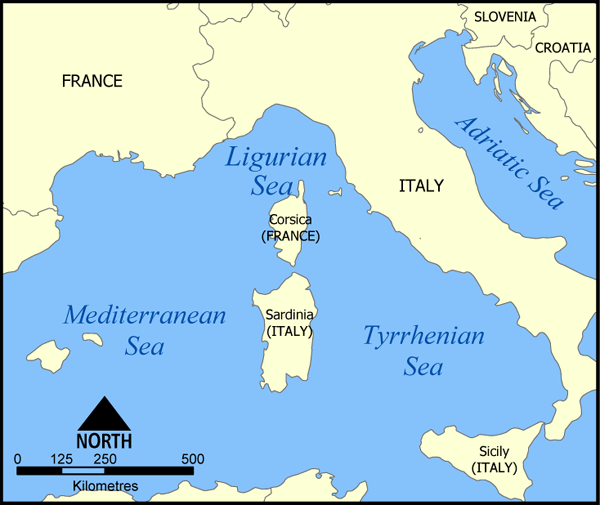
A Genoa low (also known as Genoa cyclogenesis, Ligurian depression, or V(5)-track cyclone) is a cyclone that forms or intensifies from a pre-existing cyclone to the south of the Alps over the Gulf of Genoa, Ligurian Sea, Po Valley and northern Adriatic. Vb[further explanation needed] cyclones are rare events which occur on average only 2.3 times per year.
The northwestern Mediterranean and the Gulf of Genoa in particular, are not only a transition area for passing cyclones, but are frequently areas of cyclogenesis. Low pressure areas move into or are formed as a result of North Atlantic air entering the Mediterranean Sea between the Alps and the Massif Central, via the Rhone Valley, or via the Carcassonne gap between the Pyrenees and Massif Central. This cold and moist air enters the Mediterranean basin, and is deflected by the high mountains of northwest Corsica, which divert the air mass to the northeast, triggering cool and wet Libeccio winds in response into the Ligurian Sea, which in turn hit the western Apennines located in the immediate vicinity of the sea.
Several factors that have special relevance in the development of depressions south of the Alps are:
A complex interaction is established between the orography of Liguria and the contrast between the cold and humid air mass and the warmer water of the Ligurian Sea, the process ends with the formation of a low pressure area over the Ligurian Sea, just near the city of Genoa. Genoa low cyclogenesis can occur at any time of year, though usually situated further south during the summer. Cyclogenesis is shifted to the east depending on the amount of cold air entering the Po Valley, and generally shifts to the Gulf of Venice when little enters the valley.
The depressions bear rain, often intense, on the Ligurian coast and hills of Tuscany, due to orographic lift which affects the southern side of the Apennines. The area of low pressure is slow moving, and may follow a trajectory from west to east, then going on to affect the regions of the Adriatic, or move from the north-west to south-east down along the Tyrrhenian Sea: in this last case, the structure will reach the same cyclonic area of formation of Tyrrhenian depressions, although not related to the latter.
Most Genoa lows remain stationary or leave a residual trough to the south of the Alps. Three principal tracks which they typically follow were identified by Wilhelm Jakob van Bebber who classified European windstorm tracks ("Zyklonenbahnen" in German) in 1891. To this date, track V of the latter group has remained in common use, unlike the large majority of van Bebber's tracks. The V track is linked to flooding events in central and eastern Europe, low pressure areas (south of the Alps) can track across France into the Mediterranean Sea where they pick up additional moisture, or form, and then move into central and eastern or southern Europe. the tracks diverge from the Genoa low formation area along the following pathways.
A strong southwesterly flow in the upper atmosphere leads the lows to the northeast and north-northeast, ("Zugstrasse Vb" Van Bebber) towards the Vienna Basin. The lows then glide over colder and denser air from the northwest and are lifted orographically by the Bohemian Massif, Ore Mountains, Sudetes, Beskids and Tatra Mountains. The warm and moist air masses cause prolonged and abundant precipitation during slow Meridional flow over the upper catchments of both the southern and northern European Watershed. Flooding then progresses down their major rivers of central Europe. This 'Vb-track' displays a high potential for large summer floods in Europe. Although the link between large summer floods and the Vb track have also been described as having a significant but weak correlation.
Examples of flooding events which follow this pattern are:
Hub AI
Genoa low AI simulator
(@Genoa low_simulator)
Genoa low
A Genoa low (also known as Genoa cyclogenesis, Ligurian depression, or V(5)-track cyclone) is a cyclone that forms or intensifies from a pre-existing cyclone to the south of the Alps over the Gulf of Genoa, Ligurian Sea, Po Valley and northern Adriatic. Vb[further explanation needed] cyclones are rare events which occur on average only 2.3 times per year.
The northwestern Mediterranean and the Gulf of Genoa in particular, are not only a transition area for passing cyclones, but are frequently areas of cyclogenesis. Low pressure areas move into or are formed as a result of North Atlantic air entering the Mediterranean Sea between the Alps and the Massif Central, via the Rhone Valley, or via the Carcassonne gap between the Pyrenees and Massif Central. This cold and moist air enters the Mediterranean basin, and is deflected by the high mountains of northwest Corsica, which divert the air mass to the northeast, triggering cool and wet Libeccio winds in response into the Ligurian Sea, which in turn hit the western Apennines located in the immediate vicinity of the sea.
Several factors that have special relevance in the development of depressions south of the Alps are:
A complex interaction is established between the orography of Liguria and the contrast between the cold and humid air mass and the warmer water of the Ligurian Sea, the process ends with the formation of a low pressure area over the Ligurian Sea, just near the city of Genoa. Genoa low cyclogenesis can occur at any time of year, though usually situated further south during the summer. Cyclogenesis is shifted to the east depending on the amount of cold air entering the Po Valley, and generally shifts to the Gulf of Venice when little enters the valley.
The depressions bear rain, often intense, on the Ligurian coast and hills of Tuscany, due to orographic lift which affects the southern side of the Apennines. The area of low pressure is slow moving, and may follow a trajectory from west to east, then going on to affect the regions of the Adriatic, or move from the north-west to south-east down along the Tyrrhenian Sea: in this last case, the structure will reach the same cyclonic area of formation of Tyrrhenian depressions, although not related to the latter.
Most Genoa lows remain stationary or leave a residual trough to the south of the Alps. Three principal tracks which they typically follow were identified by Wilhelm Jakob van Bebber who classified European windstorm tracks ("Zyklonenbahnen" in German) in 1891. To this date, track V of the latter group has remained in common use, unlike the large majority of van Bebber's tracks. The V track is linked to flooding events in central and eastern Europe, low pressure areas (south of the Alps) can track across France into the Mediterranean Sea where they pick up additional moisture, or form, and then move into central and eastern or southern Europe. the tracks diverge from the Genoa low formation area along the following pathways.
A strong southwesterly flow in the upper atmosphere leads the lows to the northeast and north-northeast, ("Zugstrasse Vb" Van Bebber) towards the Vienna Basin. The lows then glide over colder and denser air from the northwest and are lifted orographically by the Bohemian Massif, Ore Mountains, Sudetes, Beskids and Tatra Mountains. The warm and moist air masses cause prolonged and abundant precipitation during slow Meridional flow over the upper catchments of both the southern and northern European Watershed. Flooding then progresses down their major rivers of central Europe. This 'Vb-track' displays a high potential for large summer floods in Europe. Although the link between large summer floods and the Vb track have also been described as having a significant but weak correlation.
Examples of flooding events which follow this pattern are: