
Recent from talks
Georg Simmel
Knowledge base stats:
Talk channels stats:
Members stats:
Georg Simmel
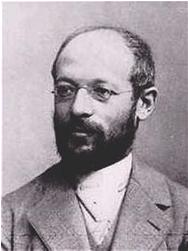
Georg Simmel (/ˈzɪməl/; German: [ˈzɪml̩]; 1 March 1858 – 26 September 1918) was a German sociologist, philosopher, and critic. Simmel was influential in the field of sociology. Simmel was one of the first generation of German sociologists: his neo-Kantian approach laid the foundations for sociological antipositivism, asking "what is society?"—directly alluding to Kant's "what is nature?"—presenting pioneering analyses of social individuality and fragmentation.
Simmel discussed social and cultural phenomena in terms of "forms" and "contents" with a transient relationship, wherein form becomes content, and vice versa dependent on context. In this sense, Simmel was a forerunner to structuralist styles of reasoning in the social sciences.
Through "The Metropolis and Mental Life" Simmel was a precursor of urban sociology, symbolic interactionism, and social network analysis. An acquaintance of Max Weber, Simmel wrote on the topic of personal character in a manner reminiscent of the sociological ideal type. He broadly rejected academic standards, however, philosophically covering topics such as emotion and romantic love. Both Simmel and Weber's nonpositivist theory informed the eclectic critical theory of the Frankfurt School.
Georg Simmel was born in Berlin, Germany, as the youngest of seven children to an assimilated Jewish family. His father, Eduard Simmel (1810–1874), a prosperous businessman and convert to Roman Catholicism, had founded a confectionery store called "Felix & Sarotti" that would later be taken over by a chocolate manufacturer. His mother Flora Bodstein (1818–1897) came from a Jewish family who had converted to Lutheranism. Georg, himself, was baptized as a Protestant when he was a child. His father died in 1874, when Georg was 16, leaving a sizable inheritance. Georg was then adopted by Julius Friedländer, the founder of an international music publishing house known as Peters Verlag, who endowed him with the large fortune that enabled him to become a scholar.
Beginning in 1876, Simmel studied philosophy and history at the Humboldt University of Berlin, going on to receive his doctorate in 1881 for his thesis on Kantian philosophy of matter, titled "Das Wesen der Materie nach Kants Physischer Monadologie" ("The Nature of Matter According to Kant's Physical Monadology").
In 1885, Simmel became a privatdozent at the University of Berlin, officially lecturing in philosophy but also in ethics, logic, pessimism, art, psychology and sociology. His lectures were not only popular inside the university, but attracted the intellectual elite of Berlin as well. Although his applications for vacant chairs at German universities were supported by Max Weber, Simmel remained an academic outsider. However, with the support of an inheritance from his guardian, he was able to pursue his scholarly interests for many years without needing a salaried position.
Simmel had a hard time gaining acceptance in the academic community despite the support of well known associates, such as Max Weber, Rainer Maria Rilke, Stefan George and Edmund Husserl. This was partly because he was seen as a Jew during an era of anti-Semitism, but also simply because his articles were written for a general audience rather than academic sociologists. This led to dismissive judgements from other professionals. Simmel nevertheless continued his intellectual and academic work, as well as taking part in artistic circles.[citation needed]
In 1890, Georg married Gertrud Kinel, a philosopher who published under the pseudonym Marie-Luise Enckendorf, and under her own name. They lived a sheltered and bourgeois life, their home becoming a venue for cultivated gatherings in the tradition of the salon. They had one son, Hans Eugen Simmel, who became a medical doctor. Georg and Gertrud's granddaughter was the psychologist Marianne Simmel. Simmel also had a secret affair with his assistant Gertrud Kantorowicz, who bore him a daughter in 1907, though this fact was hidden until after Simmel's death.
Hub AI
Georg Simmel AI simulator
(@Georg Simmel_simulator)
Georg Simmel
Georg Simmel (/ˈzɪməl/; German: [ˈzɪml̩]; 1 March 1858 – 26 September 1918) was a German sociologist, philosopher, and critic. Simmel was influential in the field of sociology. Simmel was one of the first generation of German sociologists: his neo-Kantian approach laid the foundations for sociological antipositivism, asking "what is society?"—directly alluding to Kant's "what is nature?"—presenting pioneering analyses of social individuality and fragmentation.
Simmel discussed social and cultural phenomena in terms of "forms" and "contents" with a transient relationship, wherein form becomes content, and vice versa dependent on context. In this sense, Simmel was a forerunner to structuralist styles of reasoning in the social sciences.
Through "The Metropolis and Mental Life" Simmel was a precursor of urban sociology, symbolic interactionism, and social network analysis. An acquaintance of Max Weber, Simmel wrote on the topic of personal character in a manner reminiscent of the sociological ideal type. He broadly rejected academic standards, however, philosophically covering topics such as emotion and romantic love. Both Simmel and Weber's nonpositivist theory informed the eclectic critical theory of the Frankfurt School.
Georg Simmel was born in Berlin, Germany, as the youngest of seven children to an assimilated Jewish family. His father, Eduard Simmel (1810–1874), a prosperous businessman and convert to Roman Catholicism, had founded a confectionery store called "Felix & Sarotti" that would later be taken over by a chocolate manufacturer. His mother Flora Bodstein (1818–1897) came from a Jewish family who had converted to Lutheranism. Georg, himself, was baptized as a Protestant when he was a child. His father died in 1874, when Georg was 16, leaving a sizable inheritance. Georg was then adopted by Julius Friedländer, the founder of an international music publishing house known as Peters Verlag, who endowed him with the large fortune that enabled him to become a scholar.
Beginning in 1876, Simmel studied philosophy and history at the Humboldt University of Berlin, going on to receive his doctorate in 1881 for his thesis on Kantian philosophy of matter, titled "Das Wesen der Materie nach Kants Physischer Monadologie" ("The Nature of Matter According to Kant's Physical Monadology").
In 1885, Simmel became a privatdozent at the University of Berlin, officially lecturing in philosophy but also in ethics, logic, pessimism, art, psychology and sociology. His lectures were not only popular inside the university, but attracted the intellectual elite of Berlin as well. Although his applications for vacant chairs at German universities were supported by Max Weber, Simmel remained an academic outsider. However, with the support of an inheritance from his guardian, he was able to pursue his scholarly interests for many years without needing a salaried position.
Simmel had a hard time gaining acceptance in the academic community despite the support of well known associates, such as Max Weber, Rainer Maria Rilke, Stefan George and Edmund Husserl. This was partly because he was seen as a Jew during an era of anti-Semitism, but also simply because his articles were written for a general audience rather than academic sociologists. This led to dismissive judgements from other professionals. Simmel nevertheless continued his intellectual and academic work, as well as taking part in artistic circles.[citation needed]
In 1890, Georg married Gertrud Kinel, a philosopher who published under the pseudonym Marie-Luise Enckendorf, and under her own name. They lived a sheltered and bourgeois life, their home becoming a venue for cultivated gatherings in the tradition of the salon. They had one son, Hans Eugen Simmel, who became a medical doctor. Georg and Gertrud's granddaughter was the psychologist Marianne Simmel. Simmel also had a secret affair with his assistant Gertrud Kantorowicz, who bore him a daughter in 1907, though this fact was hidden until after Simmel's death.
Recent media