
Recent from talks
Saint-Malo
Knowledge base stats:
Talk channels stats:
Members stats:
Saint-Malo
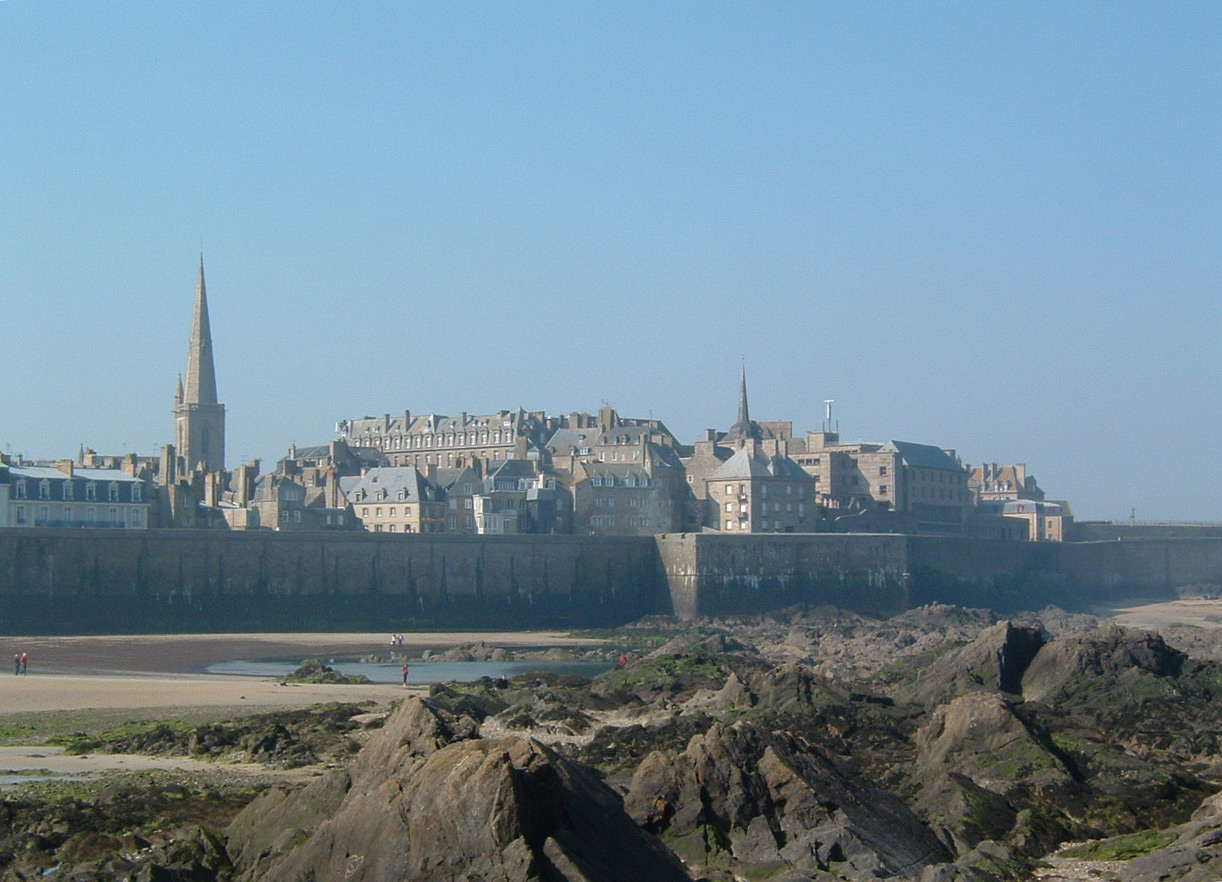
Saint-Malo (UK: /sæ̃ ˈmɑːloʊ/, US: /ˌsæ̃ məˈloʊ/, French: [sɛ̃ malo] ⓘ; Gallo: Saent-Malô; Breton: Sant-Maloù) is a historic French port commune in Ille-et-Vilaine, Brittany.
The walled city on the English Channel coast has a long history of piracy, earning much wealth from local extortion and overseas adventures. In 1944, during World War II, the Allies heavily bombed Saint-Malo. The city became a popular tourist centre, with a ferry terminal serving the Channel Islands of Jersey and Guernsey, as well as the Southern English settlements of Portsmouth, Hampshire and Poole, Dorset.
The transatlantic single-handed yacht race Route du Rhum, which takes place every four years in November, is between Saint Malo and Pointe-à-Pitre in Guadeloupe.
The population in 2017 was 46,097 – though this can increase to up to 300,000 in the summer tourist season. With the suburbs included, the metropolitan area's population is approximately 133,000 (2017).
The population of the commune more than doubled in 1967 with the merging of three communes: Saint-Malo, Saint-Servan (population 14,963 in 1962) and Paramé (population 8,811 in 1962).
Inhabitants of Saint-Malo are called Malouins in French. The population data in the table and graph below refer to the commune of Saint-Malo proper in its geography for the given years.
Founded by Gauls in the 1st century BC, the ancient town on the site of Saint-Malo was known as the Roman Reginca or Aletum. By the late 4th century AD, the Saint-Servan district was the site of a major Saxon Shore promontory fort that protected the Rance estuary from seaborne raiders from beyond the frontiers. According to the Notitia Dignitatum, the fort was garrisoned by the militum Martensium under a dux (commander) of the Tractus Armoricanus et Nervicanus section of the litus Saxonicum. During the decline of the Western Roman Empire, Armorica (modern-day Brittany) rebelled from Roman rule under the Bagaudae and in the 5th and 6th centuries received many Celtic Britons fleeing instability across the Channel. The modern Saint-Malo traces its origins to a monastic settlement founded by Saint Aaron and Saint Brendan early in the sixth century. Its name is derived from a man said to have been a follower of Brendan the Navigator, Saint Malo or Maclou, an immigrant from what is now Wales.
Saint-Malo is the setting of Marie de France's poem "Laüstic," a 12th-century love story. The city had a tradition of asserting its autonomy in dealings with the French authorities and even with the local Breton authorities.
Hub AI
Saint-Malo AI simulator
(@Saint-Malo_simulator)
Saint-Malo
Saint-Malo (UK: /sæ̃ ˈmɑːloʊ/, US: /ˌsæ̃ məˈloʊ/, French: [sɛ̃ malo] ⓘ; Gallo: Saent-Malô; Breton: Sant-Maloù) is a historic French port commune in Ille-et-Vilaine, Brittany.
The walled city on the English Channel coast has a long history of piracy, earning much wealth from local extortion and overseas adventures. In 1944, during World War II, the Allies heavily bombed Saint-Malo. The city became a popular tourist centre, with a ferry terminal serving the Channel Islands of Jersey and Guernsey, as well as the Southern English settlements of Portsmouth, Hampshire and Poole, Dorset.
The transatlantic single-handed yacht race Route du Rhum, which takes place every four years in November, is between Saint Malo and Pointe-à-Pitre in Guadeloupe.
The population in 2017 was 46,097 – though this can increase to up to 300,000 in the summer tourist season. With the suburbs included, the metropolitan area's population is approximately 133,000 (2017).
The population of the commune more than doubled in 1967 with the merging of three communes: Saint-Malo, Saint-Servan (population 14,963 in 1962) and Paramé (population 8,811 in 1962).
Inhabitants of Saint-Malo are called Malouins in French. The population data in the table and graph below refer to the commune of Saint-Malo proper in its geography for the given years.
Founded by Gauls in the 1st century BC, the ancient town on the site of Saint-Malo was known as the Roman Reginca or Aletum. By the late 4th century AD, the Saint-Servan district was the site of a major Saxon Shore promontory fort that protected the Rance estuary from seaborne raiders from beyond the frontiers. According to the Notitia Dignitatum, the fort was garrisoned by the militum Martensium under a dux (commander) of the Tractus Armoricanus et Nervicanus section of the litus Saxonicum. During the decline of the Western Roman Empire, Armorica (modern-day Brittany) rebelled from Roman rule under the Bagaudae and in the 5th and 6th centuries received many Celtic Britons fleeing instability across the Channel. The modern Saint-Malo traces its origins to a monastic settlement founded by Saint Aaron and Saint Brendan early in the sixth century. Its name is derived from a man said to have been a follower of Brendan the Navigator, Saint Malo or Maclou, an immigrant from what is now Wales.
Saint-Malo is the setting of Marie de France's poem "Laüstic," a 12th-century love story. The city had a tradition of asserting its autonomy in dealings with the French authorities and even with the local Breton authorities.
Recent media