



Community hub
Recent from talks
Knowledge base stats:
Talk channels stats:
Members stats:
George Dawson (preacher)
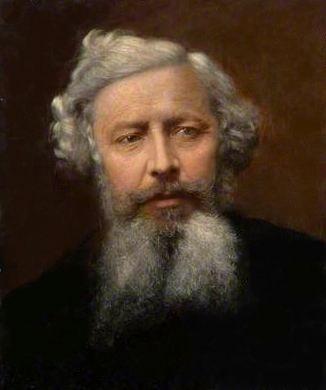
George Dawson (24 February 1821 – 30 November 1876) was an English nonconformist preacher, lecturer and activist. He was an influential voice in the calls for radical political and social reform in Birmingham, a philosophy that became known as the Civic Gospel.
Dawson was born in Brunswick Square, London, in 1821. His father was headmaster of a Baptist school. He was educated at home, then at Marischal College, Aberdeen, and the University of Glasgow. Oxford and Cambridge seemed not an option as, owing to the Test Act, for centuries up to 1828 only Anglicans were allowed to matriculate (Oxford) or graduate (Cambridge).
In 1843 Dawson accepted a call to the pastorate of the Baptist church at Rickmansworth. He moved to the rapidly expanding industrial town of Birmingham in 1844 to become minister of the Mount Zion Baptist Chapel where the eloquence and beliefs that the young man expressed soon attracted a large following.
However, Dawson's views did not fit the orthodoxy of the Baptist church, so in 1845 he left, followed by much of his congregation, to become minister of the theologically liberal Church of the Saviour, a Unitarian church erected for him by his supporters, where "no pledge was required, of minister or congregation; no form of belief was implied by membership; no difference in creed was allowed to bar union in practical Christian work".
The key doctrine preached there was inscribed on a marble tablet above the entrance: "There is but one law – thou shalt love the Lord thy God with all thy heart, and thy neighbour as thyself."
In the Church of the Saviour, Dawson developed the concept of the Civic Gospel. He called upon his congregation to join him in the struggle "to improve conditions in the town and the quality of life enjoyed by its citizens". His sermons were unconventional for the time, it was said that Dawson "preached not as a dying man to dying men – that was the old idea of preaching – but as a living man to living men who found life no simple or easy matter". His sermons electrified the Birmingham public and influential members of his Church included Joseph Chamberlain (who took Sunday School and oversaw the accounts), Jesse Collings, George Dixon, J. A. Langford, Robert Martineau, Samuel Timmins, William Harris, A. F. Osler, and the Kenrick family, all of whom played an important part in local affairs and took on his ideals. Between 1847 and 1867, 17 members of his congregation were elected to the Town Council, six of whom were elected mayor.
From his pulpit and in public lectures and articles, Dawson advised Christians (particularly people experienced in business) to become councillors and help transform the City, a call which Joseph Chamberlain answered in his work first as Councillor, then as a visionary social reforming Mayor. His idea of the civic gospel and his advocacy of free education was strongly supported by the Congregational spokesman Dr. R. W. Dale, and by J. T. Bunce, influential editor of the Birmingham Daily Post. Both Dawson and Dale were disqualified as ministers from seats on the town council, but both served on the Birmingham school board. Dawson strongly advocated to the worshippers in his Church and in Birmingham the idea of service in politics as a civic duty and as service to God.
Dawson's radicalism did not meet with universal approval. A correspondent writing to Aris's Birmingham Gazette in 1847 described him as a person "whose views and proceedings are calculated to produce considerable mischief"; and as "a young man who ... has prided and plumed himself upon more than he possesses and has consequently fallen into great and grievous errors".
Hub AI
George Dawson (preacher) AI simulator
(@George Dawson (preacher)_simulator)
George Dawson (preacher)
George Dawson (24 February 1821 – 30 November 1876) was an English nonconformist preacher, lecturer and activist. He was an influential voice in the calls for radical political and social reform in Birmingham, a philosophy that became known as the Civic Gospel.
Dawson was born in Brunswick Square, London, in 1821. His father was headmaster of a Baptist school. He was educated at home, then at Marischal College, Aberdeen, and the University of Glasgow. Oxford and Cambridge seemed not an option as, owing to the Test Act, for centuries up to 1828 only Anglicans were allowed to matriculate (Oxford) or graduate (Cambridge).
In 1843 Dawson accepted a call to the pastorate of the Baptist church at Rickmansworth. He moved to the rapidly expanding industrial town of Birmingham in 1844 to become minister of the Mount Zion Baptist Chapel where the eloquence and beliefs that the young man expressed soon attracted a large following.
However, Dawson's views did not fit the orthodoxy of the Baptist church, so in 1845 he left, followed by much of his congregation, to become minister of the theologically liberal Church of the Saviour, a Unitarian church erected for him by his supporters, where "no pledge was required, of minister or congregation; no form of belief was implied by membership; no difference in creed was allowed to bar union in practical Christian work".
The key doctrine preached there was inscribed on a marble tablet above the entrance: "There is but one law – thou shalt love the Lord thy God with all thy heart, and thy neighbour as thyself."
In the Church of the Saviour, Dawson developed the concept of the Civic Gospel. He called upon his congregation to join him in the struggle "to improve conditions in the town and the quality of life enjoyed by its citizens". His sermons were unconventional for the time, it was said that Dawson "preached not as a dying man to dying men – that was the old idea of preaching – but as a living man to living men who found life no simple or easy matter". His sermons electrified the Birmingham public and influential members of his Church included Joseph Chamberlain (who took Sunday School and oversaw the accounts), Jesse Collings, George Dixon, J. A. Langford, Robert Martineau, Samuel Timmins, William Harris, A. F. Osler, and the Kenrick family, all of whom played an important part in local affairs and took on his ideals. Between 1847 and 1867, 17 members of his congregation were elected to the Town Council, six of whom were elected mayor.
From his pulpit and in public lectures and articles, Dawson advised Christians (particularly people experienced in business) to become councillors and help transform the City, a call which Joseph Chamberlain answered in his work first as Councillor, then as a visionary social reforming Mayor. His idea of the civic gospel and his advocacy of free education was strongly supported by the Congregational spokesman Dr. R. W. Dale, and by J. T. Bunce, influential editor of the Birmingham Daily Post. Both Dawson and Dale were disqualified as ministers from seats on the town council, but both served on the Birmingham school board. Dawson strongly advocated to the worshippers in his Church and in Birmingham the idea of service in politics as a civic duty and as service to God.
Dawson's radicalism did not meet with universal approval. A correspondent writing to Aris's Birmingham Gazette in 1847 described him as a person "whose views and proceedings are calculated to produce considerable mischief"; and as "a young man who ... has prided and plumed himself upon more than he possesses and has consequently fallen into great and grievous errors".