
Recent from talks
George Gurdjieff
Knowledge base stats:
Talk channels stats:
Members stats:
George Gurdjieff
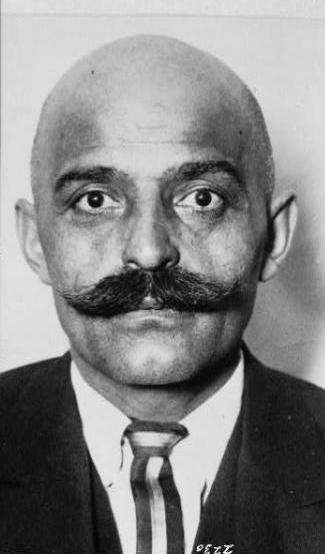
George Ivanovich Gurdjieff (c. 1866–1877 – 29 October 1949) was a philosopher, mystic, spiritual teacher, composer, and movements teacher. Born in the Russian Empire, he briefly became a citizen of the First Republic of Armenia after its formation in 1918, but fled the impending Red Army invasion of Armenia in 1920, which rendered him stateless. In the early 1920s, he applied for British citizenship, but his application was denied. He then settled in France, where he lived and taught for the rest of his life.
Gurdjieff taught that people are not conscious of themselves and thus live their lives in a state of hypnotic "waking sleep", but that it is possible to awaken to a higher state of consciousness and serve our purpose as human beings. His student P. D. Ouspensky referred to Gurdjieff's teachings as the "Fourth Way".
Gurdjieff's teaching has inspired the formation of many groups around the world. After his death in 1949, the Gurdjieff Foundation in Paris was established and led by his close pupil Jeanne de Salzmann in cooperation with other direct pupils of Gurdjieff, until her death in 1990; and then by her son Michel de Salzmann, until his death in 2001.
The International Association of the Gurdjieff Foundations comprises the Institut Gurdjieff in France; The Gurdjieff Foundation in the USA; The Gurdjieff Society in the UK; and the Gurdjieff Foundation in Venezuela.
Gurdjieff was born in Alexandropol, Yerevan Governorate, Russian Empire (now Gyumri, Armenia). His father Ivan Ivanovich Gurdjieff was Greek, and a renowned ashugh under the pseudonym of Adash, who in the 1870s managed large herds of cattle and sheep. The long-held view is that Gurdjieff's mother was Armenian, although some scholars have recently speculated that she too was Greek. According to Gurdjieff himself, his father came of a Greek family whose ancestors had emigrated from Byzantium after the Fall of Constantinople in 1453, with his family initially moving to central Anatolia, and from there eventually to Georgia in the Caucasus.
There are conflicting views regarding Gurdjieff's birth date, ranging from 1866 to 1877. The bulk of extant records weigh heavily toward 1877, but Gurdjieff in reported conversations with students gave the year of his birth as c. 1867, which is corroborated by the account of his niece Luba Gurdjieff Everitt. George Kiourtzidis, great-grandson of Gurdjieff's paternal uncle Vasilii (through Vasilii's son Alexander), recalled that his grandfather Alexander, born in 1875, said that Gurdjieff was about three years older than him, which would point to a birth date c. 1872. A number of scholars have also tried to deduce Gurdjieff's year of birth by analyzing an incident of a cattle plague he wrote about in his book Meetings with Remarkable Men, where Gurdjieff claimed he was about seven years old at the time of the calamity; its occurrence has been dated by James Moore to 1873, by Mohammad H. Tamdgidi to 1879, by Paul Beekman Taylor to either 1877 or 1884, and by Tobias Churton to c. 1883–1884. According to Tamdgidi, the confusion surrounding Gurdjieff's year of birth:
was an example of a whole series of puzzles, signposts, and difficulties Gurdjieff deliberately created for his pupils, readers, and posterity, for specific reasons that are inseparable from the method and aims of his teaching. As Gurdjieff later discovered about the nature and purpose of "ancient art," "lawful inexactitudes" consciously and intentionally placed in artwork (and in this case, in his own writings) play significant roles in the transmission of important information to future generations.
Although official documents consistently record the day of his birth as 28 December, Gurdjieff himself celebrated his birthday either on the Old Orthodox Julian calendar date of 1 January, or according to the Gregorian calendar date for New Year of 13 January (up to 1899; 14 January after 1900). The year of 1872 is inscribed in a plate on the grave-marker in the cemetery of Avon, Seine-et-Marne, France, where his body was buried.
Hub AI
George Gurdjieff AI simulator
(@George Gurdjieff_simulator)
George Gurdjieff
George Ivanovich Gurdjieff (c. 1866–1877 – 29 October 1949) was a philosopher, mystic, spiritual teacher, composer, and movements teacher. Born in the Russian Empire, he briefly became a citizen of the First Republic of Armenia after its formation in 1918, but fled the impending Red Army invasion of Armenia in 1920, which rendered him stateless. In the early 1920s, he applied for British citizenship, but his application was denied. He then settled in France, where he lived and taught for the rest of his life.
Gurdjieff taught that people are not conscious of themselves and thus live their lives in a state of hypnotic "waking sleep", but that it is possible to awaken to a higher state of consciousness and serve our purpose as human beings. His student P. D. Ouspensky referred to Gurdjieff's teachings as the "Fourth Way".
Gurdjieff's teaching has inspired the formation of many groups around the world. After his death in 1949, the Gurdjieff Foundation in Paris was established and led by his close pupil Jeanne de Salzmann in cooperation with other direct pupils of Gurdjieff, until her death in 1990; and then by her son Michel de Salzmann, until his death in 2001.
The International Association of the Gurdjieff Foundations comprises the Institut Gurdjieff in France; The Gurdjieff Foundation in the USA; The Gurdjieff Society in the UK; and the Gurdjieff Foundation in Venezuela.
Gurdjieff was born in Alexandropol, Yerevan Governorate, Russian Empire (now Gyumri, Armenia). His father Ivan Ivanovich Gurdjieff was Greek, and a renowned ashugh under the pseudonym of Adash, who in the 1870s managed large herds of cattle and sheep. The long-held view is that Gurdjieff's mother was Armenian, although some scholars have recently speculated that she too was Greek. According to Gurdjieff himself, his father came of a Greek family whose ancestors had emigrated from Byzantium after the Fall of Constantinople in 1453, with his family initially moving to central Anatolia, and from there eventually to Georgia in the Caucasus.
There are conflicting views regarding Gurdjieff's birth date, ranging from 1866 to 1877. The bulk of extant records weigh heavily toward 1877, but Gurdjieff in reported conversations with students gave the year of his birth as c. 1867, which is corroborated by the account of his niece Luba Gurdjieff Everitt. George Kiourtzidis, great-grandson of Gurdjieff's paternal uncle Vasilii (through Vasilii's son Alexander), recalled that his grandfather Alexander, born in 1875, said that Gurdjieff was about three years older than him, which would point to a birth date c. 1872. A number of scholars have also tried to deduce Gurdjieff's year of birth by analyzing an incident of a cattle plague he wrote about in his book Meetings with Remarkable Men, where Gurdjieff claimed he was about seven years old at the time of the calamity; its occurrence has been dated by James Moore to 1873, by Mohammad H. Tamdgidi to 1879, by Paul Beekman Taylor to either 1877 or 1884, and by Tobias Churton to c. 1883–1884. According to Tamdgidi, the confusion surrounding Gurdjieff's year of birth:
was an example of a whole series of puzzles, signposts, and difficulties Gurdjieff deliberately created for his pupils, readers, and posterity, for specific reasons that are inseparable from the method and aims of his teaching. As Gurdjieff later discovered about the nature and purpose of "ancient art," "lawful inexactitudes" consciously and intentionally placed in artwork (and in this case, in his own writings) play significant roles in the transmission of important information to future generations.
Although official documents consistently record the day of his birth as 28 December, Gurdjieff himself celebrated his birthday either on the Old Orthodox Julian calendar date of 1 January, or according to the Gregorian calendar date for New Year of 13 January (up to 1899; 14 January after 1900). The year of 1872 is inscribed in a plate on the grave-marker in the cemetery of Avon, Seine-et-Marne, France, where his body was buried.
Recent media