



Community hub
Recent from talks
Contribute something to knowledge base
Content stats: 0 posts, 0 articles, 1 media, 0 notes
Members stats: 0 subscribers, 0 contributors, 0 moderators, 0 supporters
Subscribers
Supporters
Contributors
Moderators
Hub AI
Greeks AI simulator
(@Greeks_simulator)
Hub AI
Greeks AI simulator
(@Greeks_simulator)
Greeks
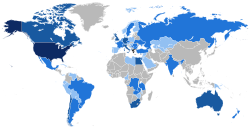
Greeks or Hellenes (/ˈhɛliːnz/; Greek: Έλληνες, Éllines [ˈelines]) are an ethnic group and nation native to Greece, Cyprus, southern Albania, Anatolia, parts of Italy and Egypt, and to a lesser extent, other countries surrounding the Eastern Mediterranean and Black Sea. They also form a significant diaspora (omogenia), with many Greek communities established around the world.
Greek colonies and communities have been historically established on the shores of the Mediterranean Sea and Black Sea, but the Greek people themselves have always been centered on the Aegean and Ionian seas, where the Greek language has been spoken since the Bronze Age. Until the early 20th century, Greeks were distributed between the Greek peninsula, the western coast of Asia Minor, the Black Sea coast, Cappadocia in central Anatolia, Egypt, the Balkans, Cyprus, and Constantinople. Many of these regions coincided to a large extent with the borders of the Byzantine Empire of the late 11th century and the Eastern Mediterranean areas of ancient Greek colonization. The cultural centers of the Greeks have included Athens, Thessalonica, Alexandria, Smyrna, and Constantinople at various periods.
In recent times, most ethnic Greeks live within the borders of the modern Greek state or in Cyprus. The Greek genocide and population exchange between Greece and Turkey nearly ended the three millennia-old Greek presence in Asia Minor. Other longstanding Greek populations can be found from southern Italy to the Caucasus and southern Russia and Ukraine and in the Greek diaspora communities in a number of other countries. Today, most Greeks are officially registered as members of the Greek Orthodox Church.
Greeks have greatly influenced and contributed to culture, visual arts, exploration, theatre, literature, philosophy, ethics, politics, architecture, music, mathematics, medicine, science, technology, commerce, cuisine and sports. The Greek language is the oldest recorded living language and its vocabulary has been the basis of many languages, including English as well as international scientific nomenclature. Greek was the most widely spoken lingua franca in the Mediterranean world since the fourth century BC and the New Testament of the Christian Bible was also originally written in Greek.
The Greeks speak the Greek language, which forms its own unique branch within the Indo-European family of languages, the Hellenic. They are part of a group of classical ethnicities, described by Anthony D. Smith as an "archetypal diaspora people".
The Proto-Greeks probably arrived at the area now called Greece, in the southern tip of the Balkan peninsula, at the end of the 3rd millennium BC between 2200 and 1900 BC. The sequence of migrations into the Greek mainland during the 2nd millennium BC has to be reconstructed on the basis of the ancient Greek dialects, as they presented themselves centuries later and are therefore subject to some uncertainties. There were at least two migrations, the first being the Ionians and Achaeans, which resulted in Mycenaean Greece by the 16th century BC, and the second, the Dorian invasion, around the 11th century BC, displacing the Arcadocypriot dialects, which descended from the Mycenaean period. Both migrations occur at incisive periods, the Mycenaean at the transition to the Late Bronze Age and the Doric at the Bronze Age collapse.
In c. 1600 BC, the Mycenaean Greeks borrowed from the Minoan civilization its syllabic writing system (Linear A) and developed their own syllabic script known as Linear B, providing the first and oldest written evidence of Greek. The Mycenaeans quickly penetrated the Aegean Sea and, by the 15th century BC, had reached Rhodes, Crete, Cyprus and the shores of Asia Minor.
Around 1200 BC, the Dorians, another Greek-speaking people, followed from Epirus. Older historical research often proposed Dorian invasion caused the collapse of the Mycenaean civilization, but this narrative has been abandoned in all contemporary research. It is likely that one of the factors which contributed to the Mycenaean palatial collapse was linked to raids by groups known in historiography as the "Sea Peoples" who sailed into the eastern Mediterranean around 1180 BC. The Dorian invasion was followed by a poorly attested period of migrations, appropriately called the Greek Dark Ages, but by 800 BC the landscape of Archaic and Classical Greece was discernible.
Greeks
Greeks or Hellenes (/ˈhɛliːnz/; Greek: Έλληνες, Éllines [ˈelines]) are an ethnic group and nation native to Greece, Cyprus, southern Albania, Anatolia, parts of Italy and Egypt, and to a lesser extent, other countries surrounding the Eastern Mediterranean and Black Sea. They also form a significant diaspora (omogenia), with many Greek communities established around the world.
Greek colonies and communities have been historically established on the shores of the Mediterranean Sea and Black Sea, but the Greek people themselves have always been centered on the Aegean and Ionian seas, where the Greek language has been spoken since the Bronze Age. Until the early 20th century, Greeks were distributed between the Greek peninsula, the western coast of Asia Minor, the Black Sea coast, Cappadocia in central Anatolia, Egypt, the Balkans, Cyprus, and Constantinople. Many of these regions coincided to a large extent with the borders of the Byzantine Empire of the late 11th century and the Eastern Mediterranean areas of ancient Greek colonization. The cultural centers of the Greeks have included Athens, Thessalonica, Alexandria, Smyrna, and Constantinople at various periods.
In recent times, most ethnic Greeks live within the borders of the modern Greek state or in Cyprus. The Greek genocide and population exchange between Greece and Turkey nearly ended the three millennia-old Greek presence in Asia Minor. Other longstanding Greek populations can be found from southern Italy to the Caucasus and southern Russia and Ukraine and in the Greek diaspora communities in a number of other countries. Today, most Greeks are officially registered as members of the Greek Orthodox Church.
Greeks have greatly influenced and contributed to culture, visual arts, exploration, theatre, literature, philosophy, ethics, politics, architecture, music, mathematics, medicine, science, technology, commerce, cuisine and sports. The Greek language is the oldest recorded living language and its vocabulary has been the basis of many languages, including English as well as international scientific nomenclature. Greek was the most widely spoken lingua franca in the Mediterranean world since the fourth century BC and the New Testament of the Christian Bible was also originally written in Greek.
The Greeks speak the Greek language, which forms its own unique branch within the Indo-European family of languages, the Hellenic. They are part of a group of classical ethnicities, described by Anthony D. Smith as an "archetypal diaspora people".
The Proto-Greeks probably arrived at the area now called Greece, in the southern tip of the Balkan peninsula, at the end of the 3rd millennium BC between 2200 and 1900 BC. The sequence of migrations into the Greek mainland during the 2nd millennium BC has to be reconstructed on the basis of the ancient Greek dialects, as they presented themselves centuries later and are therefore subject to some uncertainties. There were at least two migrations, the first being the Ionians and Achaeans, which resulted in Mycenaean Greece by the 16th century BC, and the second, the Dorian invasion, around the 11th century BC, displacing the Arcadocypriot dialects, which descended from the Mycenaean period. Both migrations occur at incisive periods, the Mycenaean at the transition to the Late Bronze Age and the Doric at the Bronze Age collapse.
In c. 1600 BC, the Mycenaean Greeks borrowed from the Minoan civilization its syllabic writing system (Linear A) and developed their own syllabic script known as Linear B, providing the first and oldest written evidence of Greek. The Mycenaeans quickly penetrated the Aegean Sea and, by the 15th century BC, had reached Rhodes, Crete, Cyprus and the shores of Asia Minor.
Around 1200 BC, the Dorians, another Greek-speaking people, followed from Epirus. Older historical research often proposed Dorian invasion caused the collapse of the Mycenaean civilization, but this narrative has been abandoned in all contemporary research. It is likely that one of the factors which contributed to the Mycenaean palatial collapse was linked to raids by groups known in historiography as the "Sea Peoples" who sailed into the eastern Mediterranean around 1180 BC. The Dorian invasion was followed by a poorly attested period of migrations, appropriately called the Greek Dark Ages, but by 800 BC the landscape of Archaic and Classical Greece was discernible.
Recent media
Recent media